- Founded in 1999 • National commercial & industrial specialty flooring contractor
- Systems: Sika Ucrete & Sherwin-Williams High Performance Flooring Poly-Crete and Hybri-Flex urethane cement systems
- In-house W-2 crews provide national service coverage
- Single-contract multi-site programs under a Master Service Agreement
- Phased installation in occupied facilities — night and weekend shutdown-window execution
- Experience Modification Rate (EMR) below the industry average
- Authorized Sherwin-Williams High Performance Flooring installer; Sika installer; Westcoat certified
- Pre-install moisture and substrate testing & audit-ready closeout documentation
- Facility assessments, compliance inspections & lifecycle maintenance programs
- Licensed • Insured • Bonded • Enterprise vendor prequalification package available (COI, W-9, capabilities statement & supporting documentation)
- Distillery zones: mash and fermentation, still house, barrel warehouse and rickhouse, proofing and bottling lines
- Chemical exposure:
- – Ethanol and high-proof spirits
- – Lactic and acetic fermentation acids
- – Sugars and mash residue
- – Caustic CIP solutions and sanitizers
- Thermal shock: 150°F+ differential tolerance; -40°F to 250°F operating range
- Construction: monolithic seam-free urethane cement, integral cove base, slope to drain formed during installation, 3/16″ to 3/8″ standard thickness
Phone: +1 (844) 687-1961
High-proof spirit spill is the design condition for distillery flooring, landing on top of the washdown chemistry the rest of beverage production already carries. Most distillery floor coating failures repeat on the same short cycle. Hot mash and boiling-still splash put 150°F+ temperature differentials on cold concrete. Lactic and acetic acids from fermentation sit on the slab between cleanings. Standard epoxy answers that duty by delaminating at the resin-concrete interface within 12-24 months, because a rigid cured film with a thermal expansion coefficient far from concrete’s works its own bond loose with every hot-cold swing.
Urethane cement resolves the mismatch at the material level. It is a cementitious mortar with a urethane resin matrix, installed at 3/16″ to 3/8″, that bonds chemically to the concrete below and flexes with the slab through thermal cycling. The cured matrix resists the full run of distillery chemistry, from low-pH fermentation acids to high-proof finished spirit, along with sugar and mash residue and the caustic CIP chemistry that follows them. Craftsman Concrete Floors installs urethane cement distillery floors nationwide.
Our Clients




















Distillery Duty by Zone
A distillery is four floors wearing one name. Spirits production flooring holds when each zone is scoped to its own duty and fails when one coating spec is stretched across the whole building. The duty runs from daily hot washdown in the still house to decades of barrel storage that rarely sees a hose.
Mash and Fermentation — Acid Exposure Between Cleanings
Lactic and acetic acids are the quiet failure mode in the mash and fermentation area. They sit on the floor at low pH between cleanings and attack bare concrete and worn coatings alike, while hot mash splash adds thermal swing on top of the acid load. Urethane cement holds across that range because the wear surface is dense, non-porous mortar. There is no thin film over the concrete for the acids to undercut.
The Still House Is the Sharpest Thermal Shock in the Building
Hot CIP solution and boiling-still splash land on concrete that can sit at cellar temperature, and the surface differential exceeds 150°F in a single event. Urethane cement absorbs the swing because the mortar’s thermal expansion coefficient is close to concrete’s, so floor and slab move together instead of shearing apart at the bond line. That property is where epoxy and urethane cement diverge hardest.
Barrel Warehouses and Rickhouses Cycle Wet and Dry for Decades
No zone sees less washdown or more moisture movement than a rickhouse. Evaporation and condensation cycle the slab wet and dry through every season, and spilled spirit soaks into anything porous. A monolithic urethane cement floor gives the warehouse a non-porous wear surface that survives the cycling, with trowel-applied builds at the heavy end of the 3/16″ to 3/8″ range where barrel and forklift traffic governs.
Proofing and Bottling — Finished Spirit on a Working Floor
High-proof spill is constant at proofing and bottling, and every spill is followed by washdown. The floor needs ethanol resistance and a texture that stays walkable while wet, at the same time. Integral slope to floor drains, formed during installation, moves spill and washwater to the drain before it can stand across the working area.
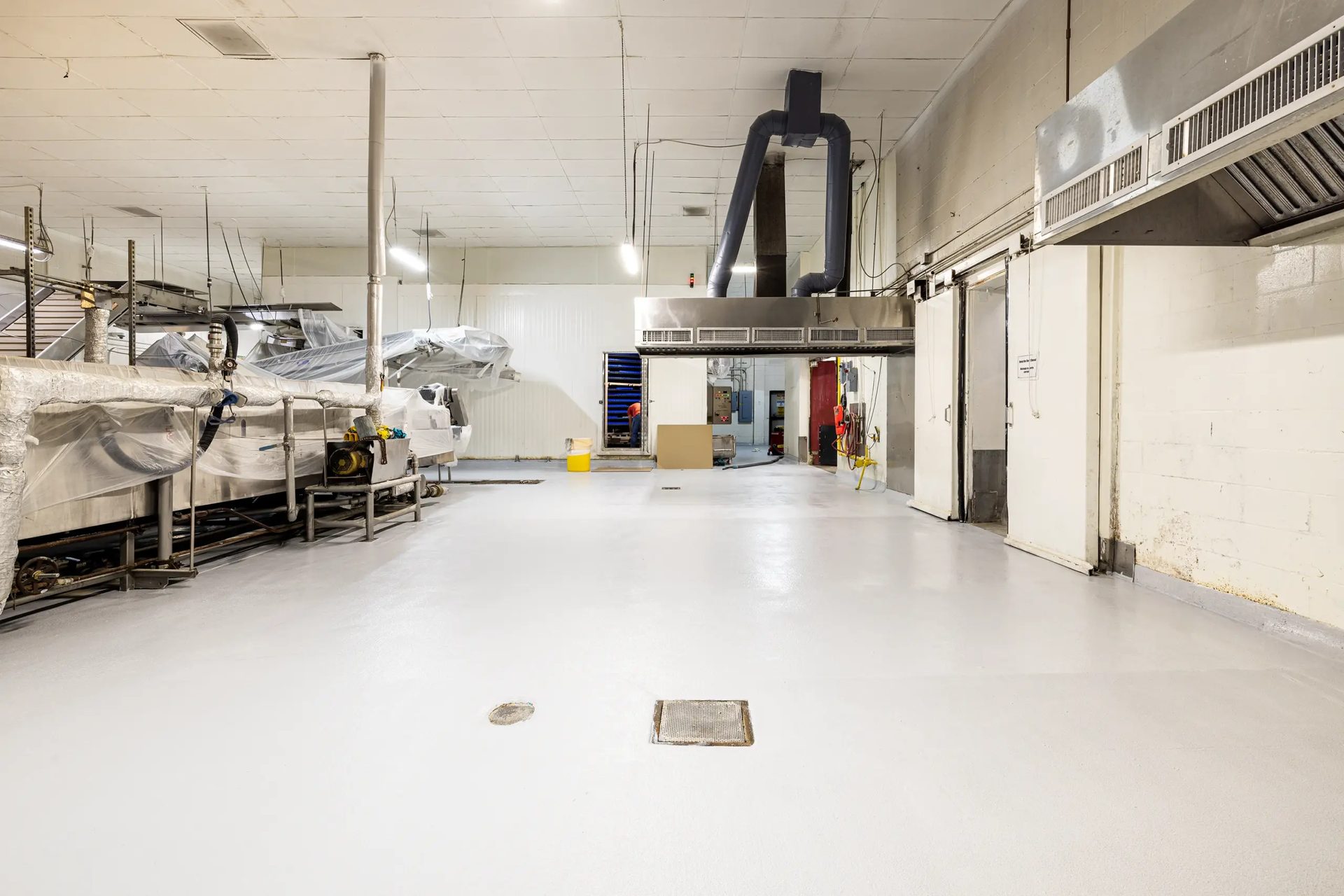
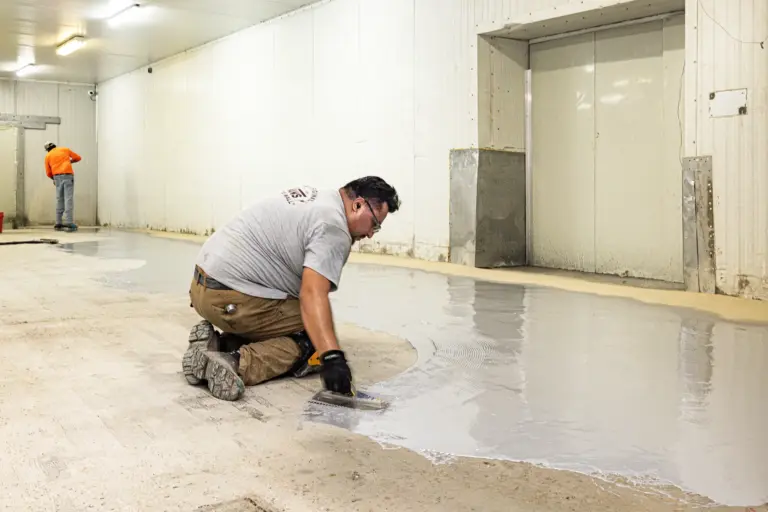
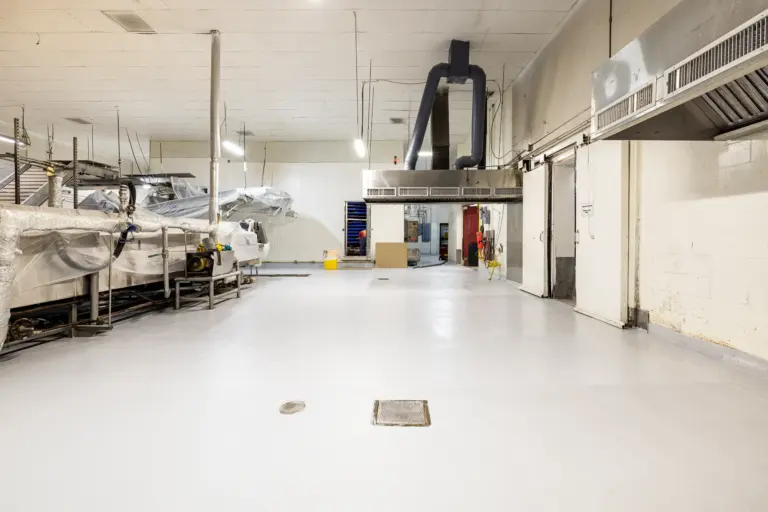
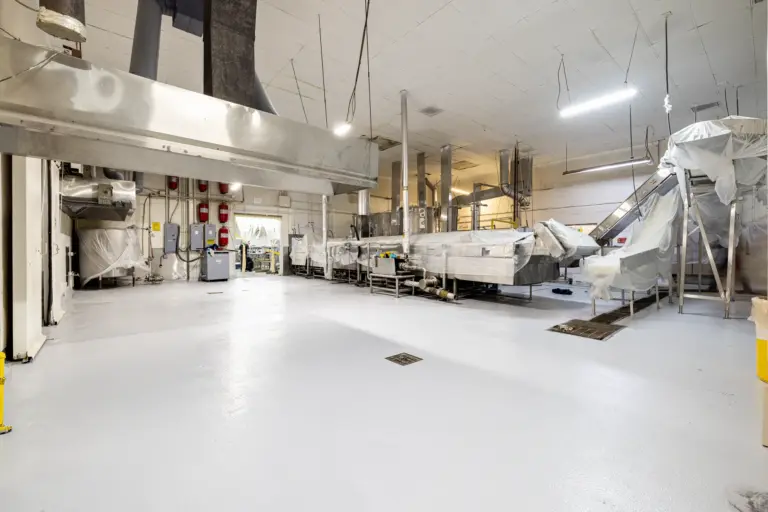
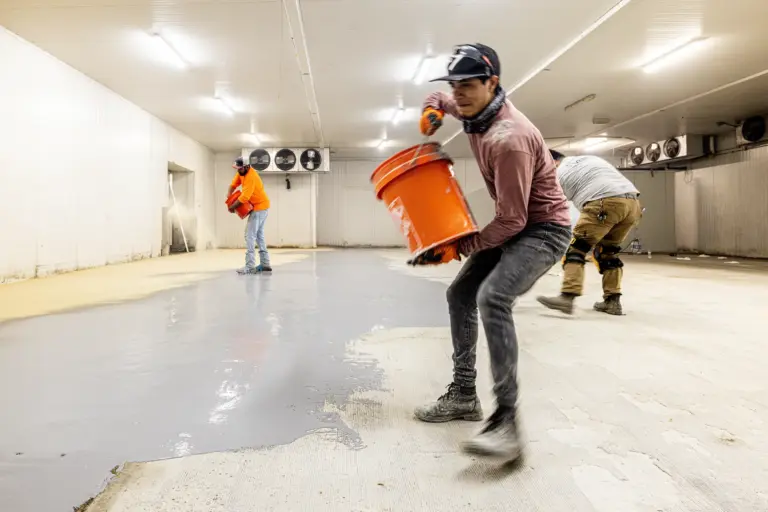
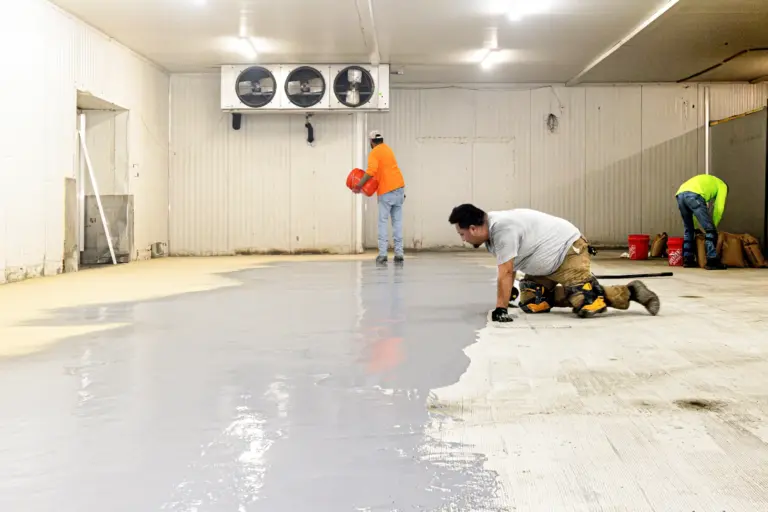
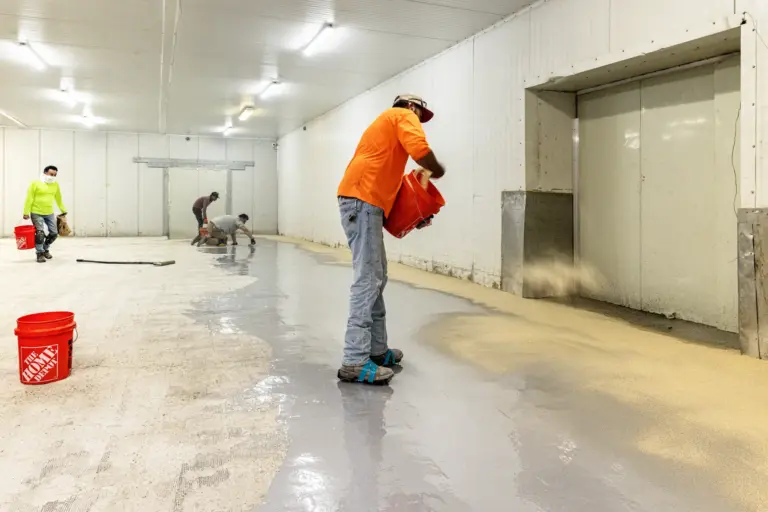
urethane Cement Installation Gallery
Request a Proposal
System Selection for Distillery Floors
Where Distillery Floor Coatings Fail
Distillery floor coating failures usually trace to the wrong system for ethanol exposure, inadequate surface preparation, or a slip rating that wears off as spirits and mash residue saturate the surface. A urethane cement system addresses all three when the floor coating for a distillery is specified as a full-depth system. The chemistry resists high-proof spirit. Surface preparation is mechanical, profiled to ICRI 310.2 before material goes down. And the slip texture is cast into the system itself.
Monolithic Pour, Integral Cove Base, Slope to Drain
The sanitary case for urethane cement is structural. A monolithic seam-free pour leaves no joints to harbor yeast and bacteria, and the integral cove base is formed in place from the same mortar, so the floor-to-wall transition is radiused and cleanable with no caulk joint to fail. Slope to floor drains is troweled into the system during installation. The inspection layer demanding this construction is the local health authority, and most health departments require coved, cleanable transitions in wet production areas.
Slip Resistance That Survives Saturation
Traction comes from aggregate in the wear course itself, not a topical grit coat, so the slip rating does not degrade as the surface abrades or as spirit and mash residue saturate it. Texture is set zone by zone during installation. Washdown and transfer aisles take an aggressive profile; proofing and bottling areas take a smoother finish that still holds under wet traffic.
Installation Around Active Distilling
Phased Distillery Flooring Installation, Zone by Zone
Phased installation in occupied facilities is the default method for an operating distillery. Zones return to service 24 hours after a self-leveling pour and 48-72 hours after trowel-applied builds, and night and weekend shutdown-window execution keeps stills and bottling lines running while the adjacent zone is floored. Lead time runs 1-3 weeks from contract execution, driven by material availability.
In-House W-2 Crews Since 1999
In-house W-2 crews provide national service coverage. The installers on a distillery project answer to the same company that signed the contract, and Craftsman has installed technical flooring with in-house crews since 1999. Phased schedules run on cure windows, and a missed window costs the facility a production day.
Documentation From Slab Test to Closeout
Every installation opens with substrate verification and closes with an audit-ready documentation package. Moisture testing per ASTM F2170 and surface profiling per ICRI 310.2 come before material is ordered, and the installation records preserve the manufacturer’s system warranty for its full term. Craftsman is certified across four urethane cement manufacturers — Sherwin-Williams High Performance Flooring, Sika, PIP, and Westcoat.
urethane Cement Flooring Knowledge Center
Resource links
Industries Served
Technical Performance
Selection & Standards
Sherwin-Williams Poly-Crete Systems
Sika Ucrete Systems
Cost, Comparisons & Legacy Names
Frequently Asked Questions
Urethane cement distillery flooring runs $4-17/sqft installed depending on project size, system thickness, and substrate condition. Project size is the dominant driver, which is why the range is wide; the urethane cement cost page carries the full size banding.
No — 27 CFR Part 19 governs how a distilled spirits plant is registered and how untaxed spirits are measured and secured, and the only construction standard it sets for the buildings themselves is that they be built of “substantial materials.” The coved, cleanable, non-porous floor a distillery inspection demands comes from the local health authority, and urethane cement meets that demand structurally with a monolithic surface and integral cove base.
Epoxy delaminates at the resin-concrete interface within 12-24 months when surface temperature differentials exceed 150°F, and hot mash and CIP cycles produce that differential daily. Urethane cement holds because its thermal expansion coefficient is close to concrete’s, so the floor moves with the slab instead of shearing off it. The urethane cement vs epoxy page carries the full comparison.
No. Rickhouse and barrel warehouse floors see decades of wet-dry cycling and barrel traffic rather than daily washdown, so the spec weights abrasion and point loading over thermal shock. Still house and mash floors carry the opposite duty. Both fit inside the 3/16″ to 3/8″ standard thickness range, with trowel-applied builds where barrel and forklift loads govern.
Yes. Phased zone-by-zone installation is the standard method in occupied facilities, with 24-hour cure-and-return-to-service on self-leveling systems and 48-72 hours on trowel-applied builds. Night and weekend shutdown-window execution keeps stills and bottling lines running while adjacent zones are floored. Lead time is 1-3 weeks from contract execution, driven by material availability.
The slip texture is aggregate in the wear course, so the rating does not wear off as the surface abrades or saturates. Texture is set by zone during installation. Washdown and transfer areas run heavier profiles than proofing and bottling, and the profile holds because the aggregate goes the full depth of a 3/16″ to 3/8″ system rather than sitting in a sacrificial topcoat.
A urethane cement distillery floor delivers 15-20+ years of service life, and documented installation preserves the manufacturer’s system warranty for its full term. Longevity is set at the substrate; moisture testing per ASTM F2170 and mechanical profiling per ICRI 310.2 are how the system gets there.