- Founded in 1999 • National commercial & industrial specialty flooring contractor
- Systems: Sika Ucrete & Sherwin-Williams High Performance Flooring Poly-Crete and Hybri-Flex urethane cement systems
- In-house W-2 crews provide national service coverage
- Single-contract multi-site programs under a Master Service Agreement
- Phased installation in occupied facilities — night and weekend shutdown-window execution
- Experience Modification Rate (EMR) below the industry average
- Authorized Sherwin-Williams High Performance Flooring installer; Sika installer; Westcoat certified
- Pre-install moisture and substrate testing & audit-ready closeout documentation
- Facility assessments, compliance inspections & lifecycle maintenance programs
- Licensed • Insured • Bonded • Enterprise vendor prequalification package available (COI, W-9, capabilities statement & supporting documentation)
- Thermal performance: -40°F to 250°F operating range; 150°F+ thermal shock differential
- Return to service: 24 hours self-leveling; 48-72 hours trowel-applied
- Installed cost: $4-17/sqft installed depending on project size, system thickness, and substrate condition
Phone: +1 (844) 687-1961
Urethane cement vs epoxy is a mechanism question with a committed answer. Specify urethane cement wherever thermal shock or moisture drive is present; specify epoxy where they are not. The urethane cement vs epoxy flooring comparison reaches most estimators after an epoxy floor has already failed, which is why this page compares the two systems by failure mode. Cementitious urethane vs epoxy comes down to two mechanisms, thermal cycling and substrate moisture, with organic acid chemistry running third. Each one attacks epoxy at the bond line. Urethane cement absorbs all three because it is a mortar bonded to the concrete, not a film sitting on it.
Epoxy is a rigid thermoset resin film. Urethane cement is a cementitious mortar carrying a urethane resin matrix, placed at 3/16 to 3/8 inch with an integral cove base formed in the same pour. The mortar’s thermal expansion coefficient sits close to concrete’s, so the floor and the slab move together through temperature swings that shear a rigid film off its bond line. That difference in construction is what separates the two systems in every environment this page covers. Searches for urethane vs epoxy floor coating usually mean this comparison, and the coating half of that phrase is the clue that a film is being asked to do a mortar’s job.
Our Clients




















The Mechanisms That Decide Urethane Cement vs Epoxy
Thermal Cycling Delaminates Epoxy Within 12-24 Months
The thermal expansion coefficient of epoxy runs roughly three times higher than the concrete substrate beneath it. Under stable temperatures nothing happens. Under a 180°F clean-in-place washdown hitting a chilled processing floor, the coating tries to move three times faster than the slab, the stress concentrates at the bond line, and the film shears loose. That cycle repeats every sanitation shift. In food and beverage service the result is delamination within 12-24 months, the window Craftsman crews see again and again when tearing out failed epoxy. Urethane cement’s mortar rides a 150°F+ differential with the slab because its expansion coefficient sits close to concrete’s own.
Moisture Vapor at the Bond Line
Substrate moisture attacks the two systems in opposite ways. Epoxy is vapor-impermeable, so on a slab without an intact vapor barrier, moisture rising through the concrete collects under the film and pushes it off as blisters. Urethane cement tolerates moisture drive because the cementitious matrix bonds chemically to the concrete instead of trapping vapor behind an impermeable membrane. Testing still governs the installation either way. Craftsman probes every slab per ASTM F2170 before installation, because a moisture failure is a substrate problem first and a coating problem second.
Organic Acid Attack on the Resin Matrix
Lactic, acetic, citric, and hop acids degrade epoxy resin over weeks to months of production exposure. The attack is chemical rather than mechanical, which is why it shows up first as softening and staining in the wettest zones instead of wear in the traffic lanes. Urethane cement’s matrix resists the same organic acid load along with caustic clean-in-place solutions and quaternary sanitizers. Facilities running daily washdown chemistry read this dimension as the whole comparison. It usually is not. Thermal cycling fails epoxy floors in those facilities before the chemistry does.
Where Each System Wins
Epoxy Keeps Dry Service and Decorative Work
Epoxy stays the reasonable answer in dry storage, retail, light manufacturing, and decorative flake or metallic work, where thermal cycling and moisture drive are absent and its lower installed price is the deciding number. Nothing in that duty profile calls for a mortar. The same boundary applies to cementitious urethane vs polished concrete. A polished slab holds up well in dry retail and warehouse service, but untreated concrete is porous and absorbs organic acids once the topical densifier wears, so it exits the comparison wherever production chemistry is present.
Urethane Cement Owns the Washdown Environment
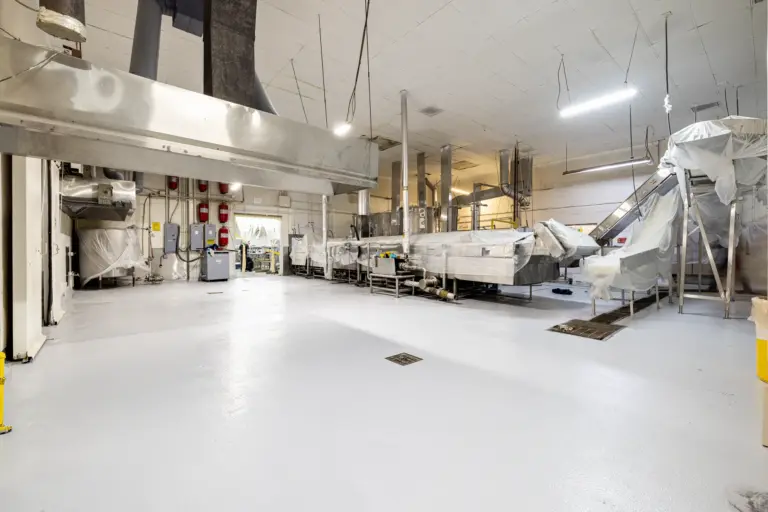
Hot washdown, steam, thermal cycling, substrate moisture, and organic acid chemistry define urethane cement’s territory across a -40°F to 250°F operating range. Food processing plants, breweries, distilleries, dairy and meat plants under USDA-FSIS inspection, commercial kitchens, and cold storage facilities run that duty cycle daily. The monolithic, seam-free mortar takes an integral cove base at the wall, so the finished floor presents no joints for washdown water or bacteria to work into. Each vertical carries its own duty profile on its own page. This page owns the head-to-head.
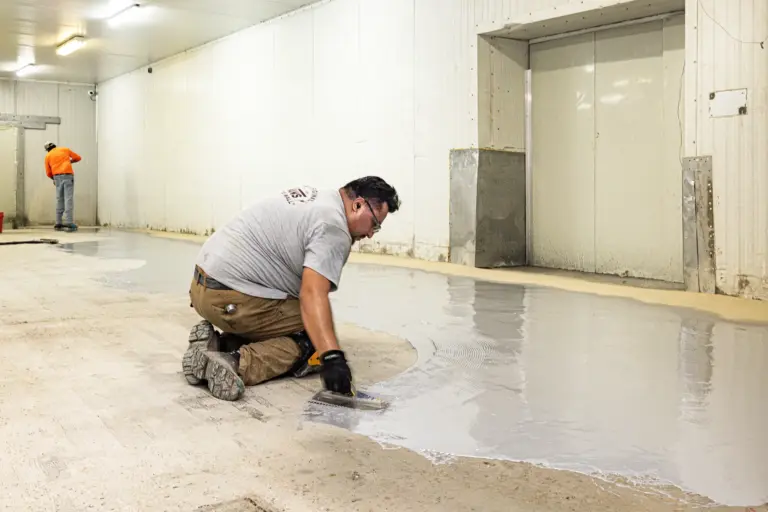
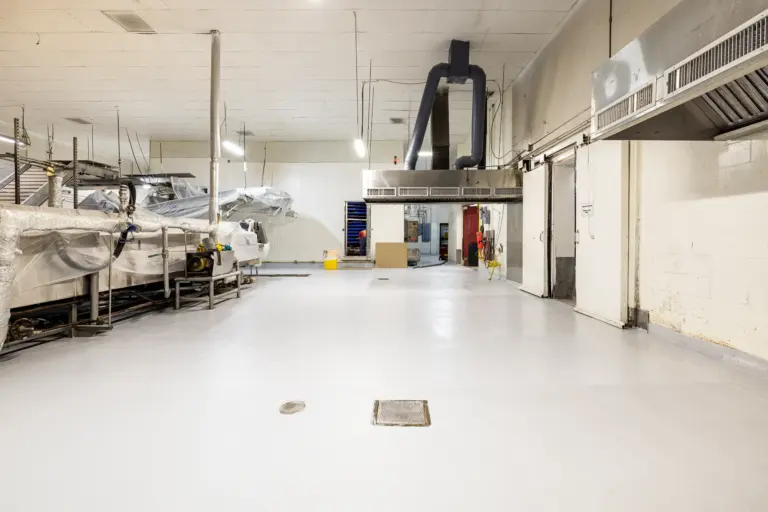
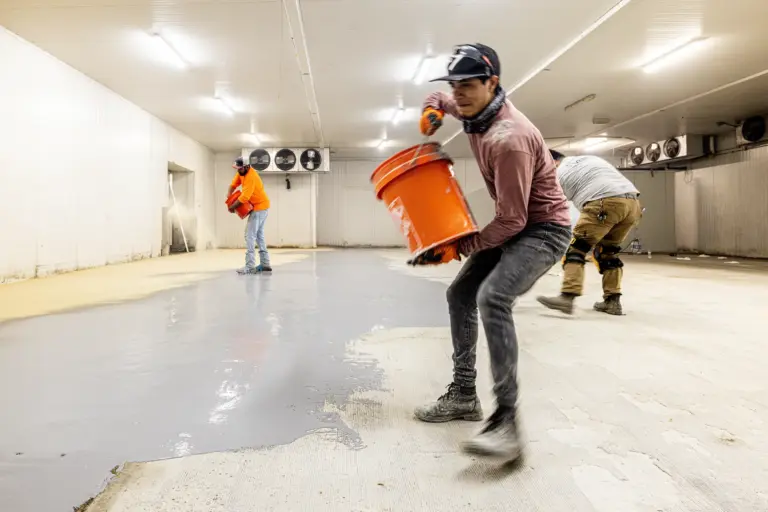
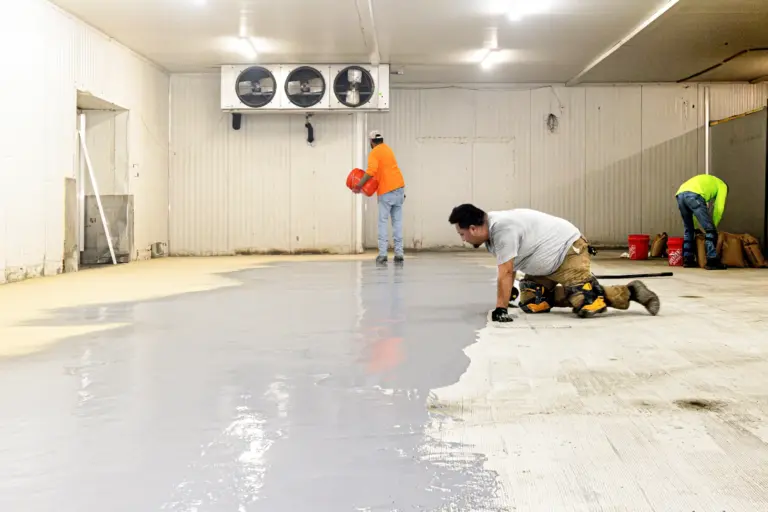
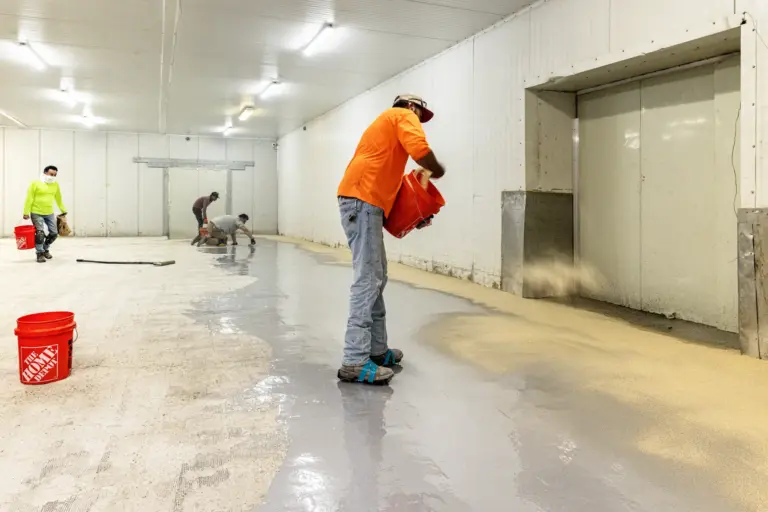
urethane Cement Installation Gallery
Request a Proposal
Submit project parameters for preliminary analysis. Commercial estimates typically returned within 24 hours.
Cost and Return to Service
Urethane Cement vs Epoxy Cost per Square Foot
Urethane cement runs $4-17/sqft installed depending on project size, system thickness, and substrate condition; standard epoxy runs $3-5/sqft. Epoxy wins the first invoice. Epoxy vs urethane cement cost inverts across the service window, because a washdown facility reinstalls epoxy every 12-24 months while a urethane cement floor stays in service 15-20+ years, and each epoxy reinstall carries tear-out, prep, and production downtime on top of material. Project size is the dominant cost driver, which is why the band is wide. The urethane cement cost page carries the size-banded table.
Cure Windows and the Replacement Decision
Lead time is 1-3 weeks from contract execution, driven by material availability. Installation is phased zone-by-zone around active operations, with 24-hour cure-and-return-to-service on self-leveling systems, 48-72 hours on trowel-applied builds, and weekend or night shutdown-window execution for facilities that cannot release zones during production hours. For a floor that has already failed, the tear-out-and-replace decision is its own scope. The replacing failed epoxy page covers it in full.
Single-Source Networks vs the Independent Installer Model
The material comparison is only half of the specification. Urethane cement reaches the market through two delivery models: manufacturer-direct networks that install a single company’s product line with that company backing both material and workmanship, and independent contractors certified across multiple manufacturers installing whichever system the spec names. Those structural differences set warranty durability, substitution options, and how a multi-site program gets staffed.
Warranty Counterparty Structure
Under the single-source model, the material warranty and the workmanship warranty depend on one company’s continued health. One accountable party is also one point of failure. Under the independent model, the manufacturer itself backs the system warranty regardless of any single installer network’s fate, and workmanship is backed by a contractor that has installed since 1999. Warranty preservation is procedural on either path. The manufacturer honors its paper when the installation is documented to its requirements, which is why substrate testing records and closeout documentation travel with every Craftsman project.
One Manufacturer’s Line vs a Four-Manufacturer Bench
Craftsman is certified across four urethane cement manufacturers — Sherwin-Williams High Performance Flooring, Sika, PIP, and Westcoat. A single-source network installs only its own material line. Any shortage in that line becomes the project’s problem. When a specified system has a lead-time or supply problem, Craftsman can propose and price an approved-equal urethane cement system from a second manufacturer, subject to the specifier’s approval. Sika Certified + Authorized Sherwin-Williams High Performance Flooring installer credentials cover the two product families this site documents in depth.
Capacity-First Staffing
Capacity-first staffing sizes and retains in-house W-2 crews against the companywide program commitments rather than any single region’s backlog, accepting the carrying cost of that capacity because multi-site program schedules pay for the optionality. W-2 installers, not 1099 day-labor. Trained, insured, and accountable to you. The prevailing model in this trade staffs to the trough and fills peaks with unskilled hires. Craftsman retains its skilled core through the slow season and adds seasonal W-2 hires under it — skill concentration stays high at every point in the cycle, while the prevailing model’s collapses exactly when workload peaks.
National Programs Under One Contract
Because the skilled core is oversized by design, program ramps are absorbed by expanding crews under veteran W-2 leads — capacity scales without quality diluting. National and multi-site accounts contract under a Master Service Agreement, one negotiated contract vehicle that delivers a multi-site program under a single contract rather than per-site paper. Craftsman’s Experience Modification Rate (EMR) is below the industry average. That record is a direct consequence of skilled, long-tenured W-2 crews. Every site in a program closes out with the same audit-ready documentation package, ASTM F2170 moisture logs and ICRI 310.2 surface profile records included.
urethane Cement Flooring Knowledge Center
Resource links
Cost, Comparisons & Legacy Names
Selection & Standards
Technical Performance
Sherwin-Williams Poly-Crete Systems
Sika Ucrete Systems
Industries Served
Frequently Asked Questions
Specify urethane cement wherever thermal shock or moisture drive is present; specify epoxy where they are not. Thermal cycling and substrate moisture are the two mechanisms that decide the comparison, and both attack epoxy at the bond line rather than the surface. Organic acid exposure runs third; acids degrade epoxy resin over weeks to months while urethane cement’s mortar matrix resists them.
Epoxy’s thermal expansion coefficient runs roughly three times higher than the concrete beneath it, so every hot washdown makes the coating and the slab move at different rates. A 180°F clean-in-place cycle on a chilled production floor drives a surface differential the rigid film cannot flex with, well past epoxy’s bond tolerance. Delamination typically starts within 12-24 months of that duty cycle.
Urethane cement runs $4-17/sqft installed depending on project size, system thickness, and substrate condition; standard epoxy runs $3-5/sqft. The gap narrows across a service window, because epoxy in a washdown environment gets torn out and reinstalled every 12-24 months while urethane cement stays down 15-20+ years. Size-banded urethane cement pricing lives on the cost page.
Expect 15-20+ years from urethane cement in the washdown environments it is specified for. Epoxy in those same rooms typically delaminates within 12-24 months. In dry, mild service the comparison flips toward epoxy on price, and a well-installed epoxy floor gives long service on a warehouse or retail slab.
Dry conditions and mild chemistry make epoxy the right specification. Warehouses, retail floors, light manufacturing, and decorative flake or metallic work get no benefit from urethane cement’s thermal and moisture tolerance, and the installed price difference matters at that duty level. The wrong system in either direction is either over-spent or headed for early failure.
Yes. Failed epoxy comes out, the substrate gets shot-blast or diamond-ground to an ICRI 310.2 profile and moisture-tested per ASTM F2170, and the urethane cement system installs over the corrected base. The replacing failed epoxy page covers the tear-out-and-replace decision in full.
A flooring warranty is only as durable as the companies behind it: manufacturer system warranties are backed by the manufacturers themselves, independent of any single installer network — and Craftsman has stood behind its workmanship since 1999. Documented installation preserves the manufacturer warranty on either system, which is why substrate moisture logs and surface profile records ship in the closeout package on every urethane cement project.
Craftsman staffs capacity-first: in-house W-2 crews cross-trained across urethane cement, ESD, polished concrete, and resinous systems, sized to the companywide program commitments rather than any single region’s backlog — crew assignments follow project requirements, qualifications, availability, schedule, and committed workload. National and multi-site accounts contract under a Master Service Agreement, one negotiated contract vehicle covering every site in the program. In-house W-2 crews provide national service coverage.
Blog
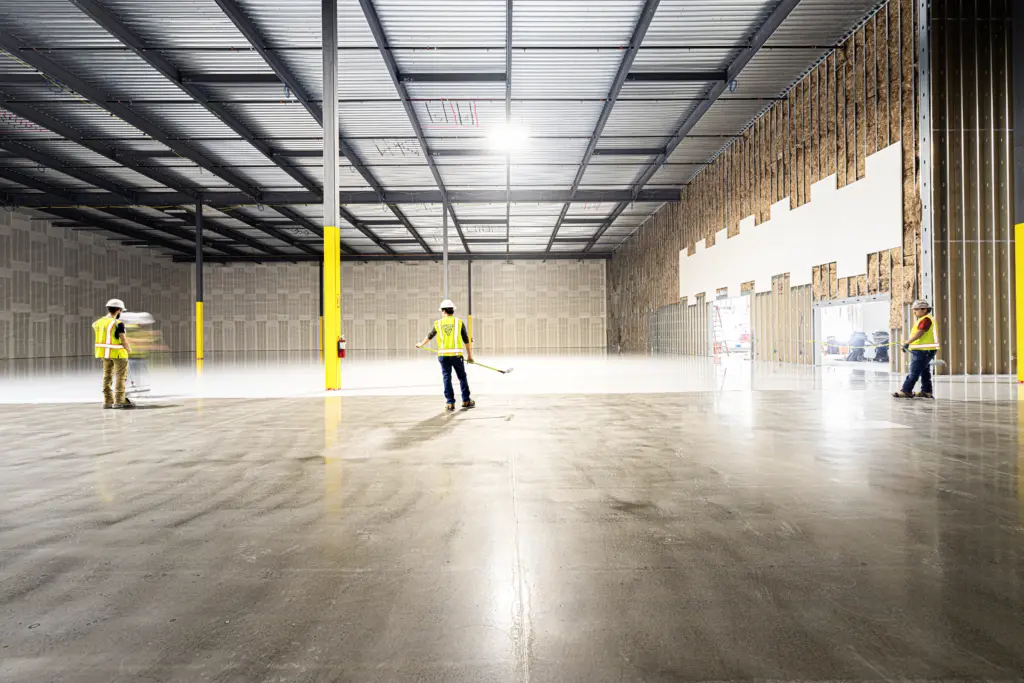
Craftsman Publishes 2026–2027 ESD Flooring Technical Guide
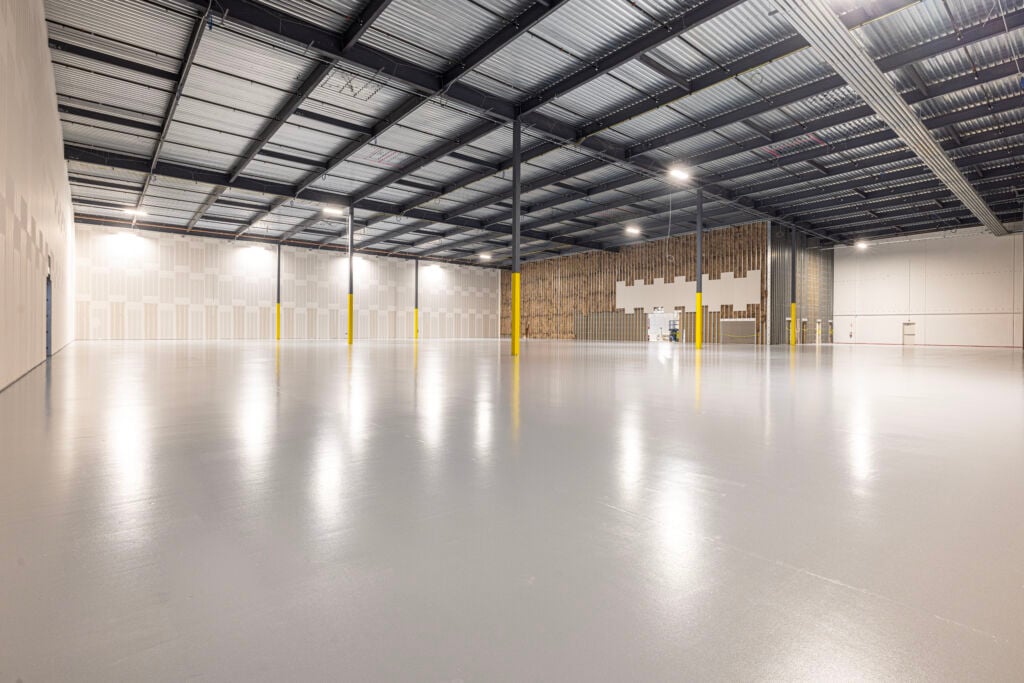
ESD Epoxy Flooring Case Study: 34,000 SF Dallas, TX