- Founded in 1999 • National commercial & industrial specialty flooring contractor
- Systems: Sika Ucrete & Sherwin-Williams High Performance Flooring Poly-Crete and Hybri-Flex urethane cement systems
- In-house W-2 crews provide national service coverage
- Single-contract multi-site programs under a Master Service Agreement
- Phased installation in occupied facilities — night and weekend shutdown-window execution
- Experience Modification Rate (EMR) below the industry average
- Authorized Sherwin-Williams High Performance Flooring installer; Sika installer; Westcoat certified
- Pre-install moisture and substrate testing & audit-ready closeout documentation
- Facility assessments, compliance inspections & lifecycle maintenance programs
- Licensed • Insured • Bonded • Enterprise vendor prequalification package available (COI, W-9, capabilities statement & supporting documentation)
- Compliance:
- – FDA 21 CFR Parts 210, 211, and 820
- – USP <797> and USP <800> surface criteria
- – ISO 14644 cleanroom classification supported, Class 5 through Class 8
- Validation: IQ/OQ/PQ installation records, ICRI 310.2 profile & ASTM F2170 moisture documentation
Phone: +1 (844) 687-1961
Pharmaceutical flooring in cGMP manufacturing and cleanroom facilities answers to FDA 21 CFR Parts 210 and 211, USP <797> and USP <800> for compounding, and the surface condition an ISO 14644 cleanroom classification has to hold shift after shift. Cementitious urethane is specified in these rooms because 21 CFR 211.42 requires floors, walls, and ceilings of smooth, hard surfaces that are easily cleanable, and a monolithic urethane-mortar floor with integral cove base meets that condition without the grout lines and welded seams that fail it. The regulation names the surface condition; it does not name a product, so the floor is chosen to hold that condition through daily chemical sanitation.
Urethane cement is a cementitious mortar carried in a urethane resin matrix, poured monolithic at 3/16 inch to 3/8 inch and coved integrally into the wall so there is no floor-to-wall joint to harbor organisms. Its resistance to 70% isopropyl alcohol runs through the full depth of the mortar, which is the property that separates GMP flooring built to last from an epoxy that survives only the first year of sanitation. This page covers pharmaceutical plant flooring by zone, from sterile fill/finish suites to warehouse staging, leading with the compliance architecture the spec engineer and validation team read first.
Our Clients




















cGMP, USP, and ISO 14644 Compliance Architecture
Compliance on a pharmaceutical floor is a surface-condition question, not a product label. Each standard demands a different thing, and naming what each one actually requires is what keeps a spec defensible in front of an FDA investigator.
21 CFR 211.42 — Cleanable Surfaces, Not a Named Floor
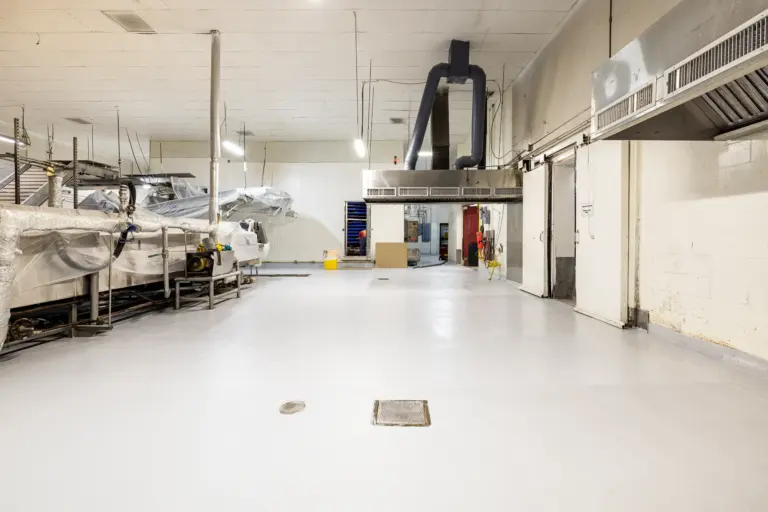
FDA cGMP requires facilities of suitable construction to facilitate cleaning and maintenance, and for aseptic processing it specifies floors, walls, and ceilings of smooth, hard surfaces that are easily cleanable (21 CFR 211.42(c)(10)). Nothing in the regulation prescribes urethane cement or any thickness. Cementitious urethane earns the spec because its seamless, non-porous, integrally coved surface holds the cleanable condition under repeated sanitation, where a jointed or porous floor loses it the moment grout absorbs a sporicide.
USP <797> and <800> — Impervious, Non-Shedding, Crack-Free
USP <797> requires surfaces in classified compounding areas to be smooth, impervious, free from cracks and crevices, and non-shedding, so they can be cleaned and disinfected without generating particles. USP <800> carries the same surface discipline into hazardous-drug and containment areas. A monolithic urethane-mortar floor with a coved base and no seams meets those four surface criteria as installed condition, and the same geometry supports the wipe-down and disinfection cycles the compounding standard governs.
ISO 14644 Classifies the Air — the Floor Holds the Class
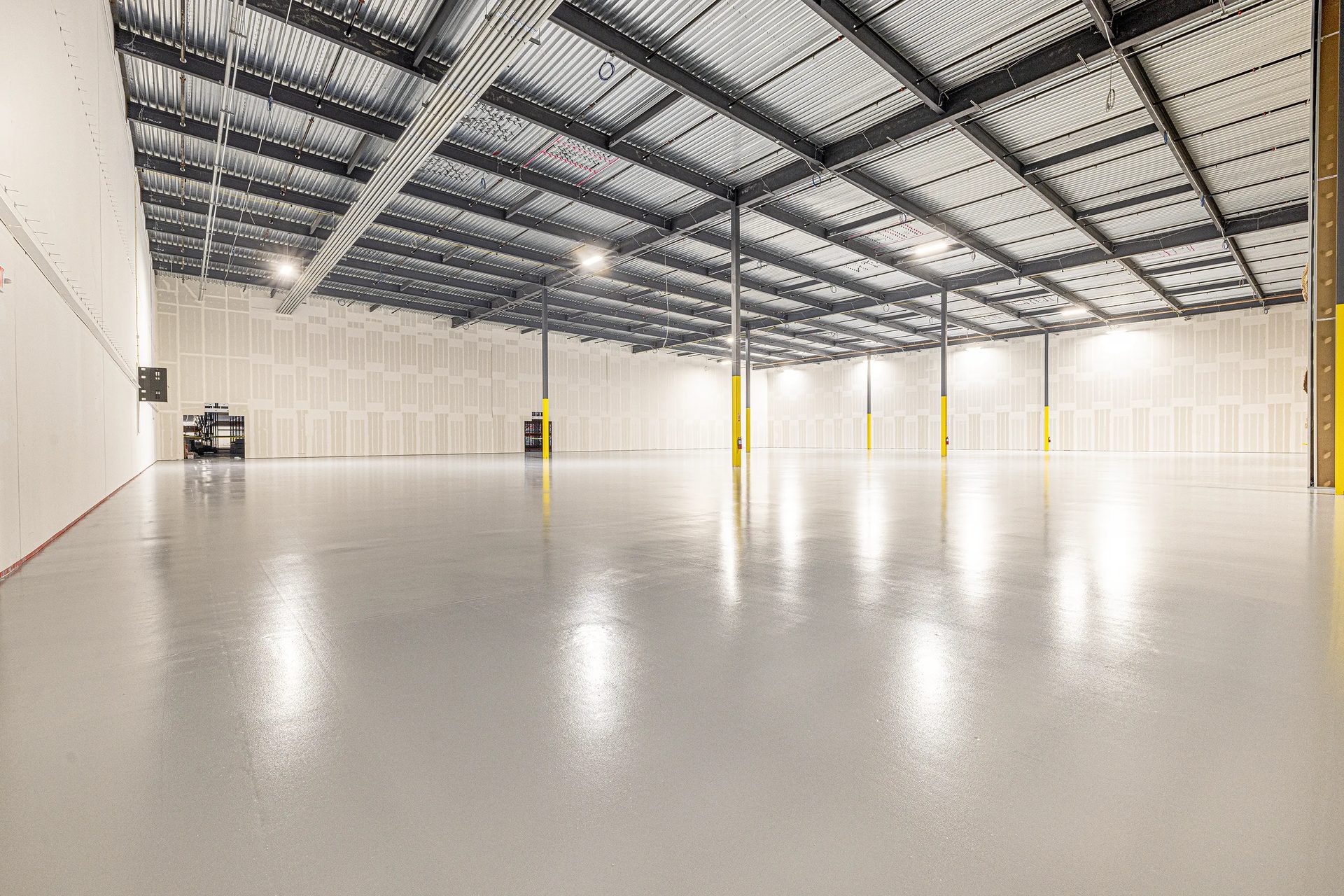
ISO 14644-1 classifies a cleanroom by airborne particle concentration; it does not specify a flooring material or thickness. What the classification drives is a floor that will not shed particles or trap contamination under the cleaning frequency the class demands. Thickness follows the traffic and load in each zone. A 3/16 inch slurry runs in low-traffic Class 5 corridors, 1/4 inch mortar in Class 7 to 8 processing suites, and 3/8 inch heavy-duty mortar where compression presses and drum traffic load the slab.
Validation-Ready Closeout Documentation
The floor’s installation records feed the facility’s IQ, OQ, and PQ protocols, which the QA or validation team owns. Craftsman delivers the installation-qualification data that supports them: substrate profile verified to ICRI 310.2 CSP 4-6, in-situ moisture confirmed per ASTM F2170 before primer, batch numbers, cure records, and documented integral cove geometry. Validation documentation is quoted separately, because it is a regulatory submission deliverable rather than an installation line item.
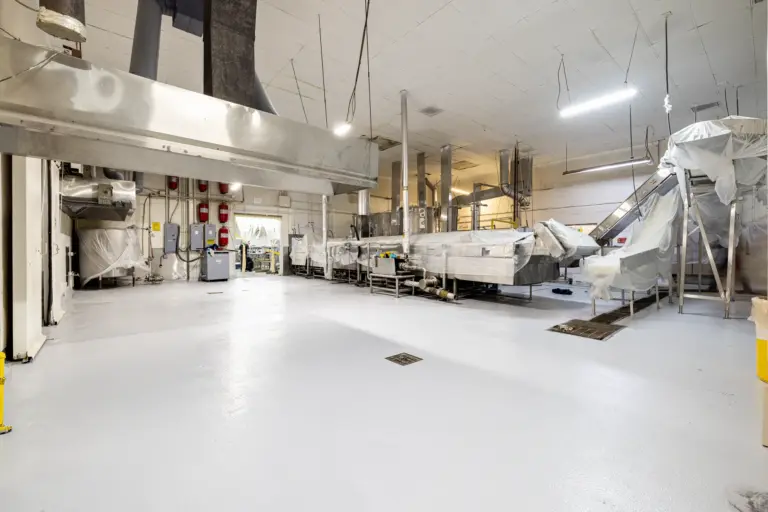
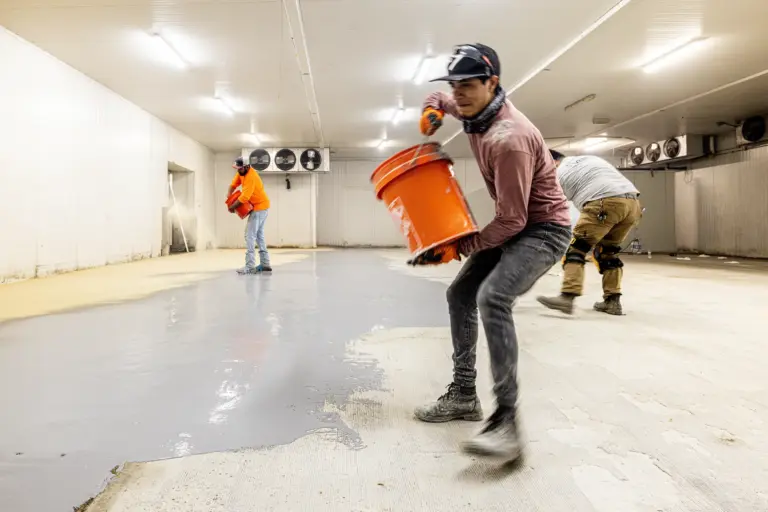
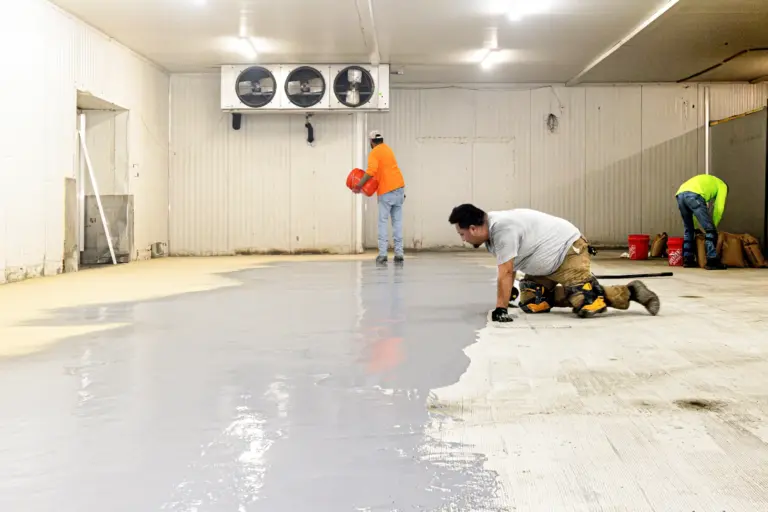
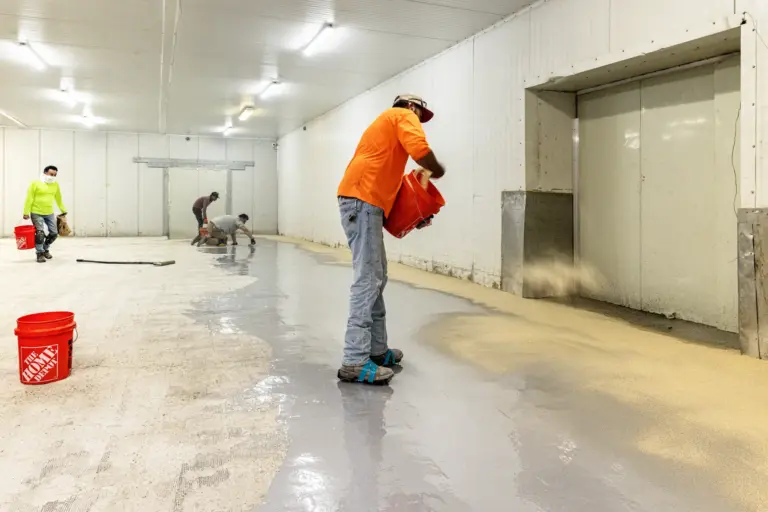
urethane Cement Installation Gallery
Request a Proposal
Submit project parameters for preliminary analysis. Commercial estimates typically returned within 24 hours.
Zone-by-Exposure System Selection
Sterile and Solid-Dose Production Suites
Production suites carry the tightest particle and chemistry discipline on the floor. Sterile fill/finish rooms, biotech cell-culture suites, weighing and dispensing, granulation, compression, and coating see continuous 70% IPA, hydrogen peroxide vapor sterilization, and sporicidal disinfectants. A seamless urethane-mortar floor with integral cove takes that chemistry structurally and gives environmental monitoring no seam or crevice to flag. Running the same system through gowning rooms and airlocks removes the material change at each classification boundary.
Washdown and Wet-Process Corridors
Wet-process corridors and central weigh corridors take standing sanitizer, spill, and hose-down duty between suites. Urethane cement carries the moisture drive and chemical load these areas impose without the interface delamination that ends epoxy in wet service. CIP skid rooms and full washdown design are specified in depth on the CIP and washdown page, which this page routes to rather than duplicates.
Warehouse, Raw-Materials Staging, and Utility
Raw-materials staging and warehouse zones trade chemical severity for mechanical severity: forklift traffic, pallet-jack point loads, and incidental API and solvent spills. A 3/8 inch trowel-applied mortar holds up under wheel and impact load where a thinner cleanroom slurry would not, while keeping the cleanable, non-porous surface the facility’s sanitation program still expects at the loading interface. Color zoning between areas is handled with finish selection, detailed on the decorative-finishes page.
Why Epoxy Fails and How Craftsman Installs Around Production
Epoxy Softens Under Continuous IPA Within 12 to 18 Months
Standard epoxy degrades under daily 70% IPA sanitation within twelve to eighteen months, yellowing, chalking, and softening at the surface because the resin film is attacked from the top down. Tile grout absorbs IPA and harbors spores that environmental monitoring detects and an investigator flags. Vinyl sheet fails at its welded seams under continuous wet cleaning, and lifted sheet edges become particle traps. Urethane cement answers all of these because IPA resistance is built into the mortar matrix itself, so daily sanitation wears nothing away.
Phased Installation Around a Validated Operation
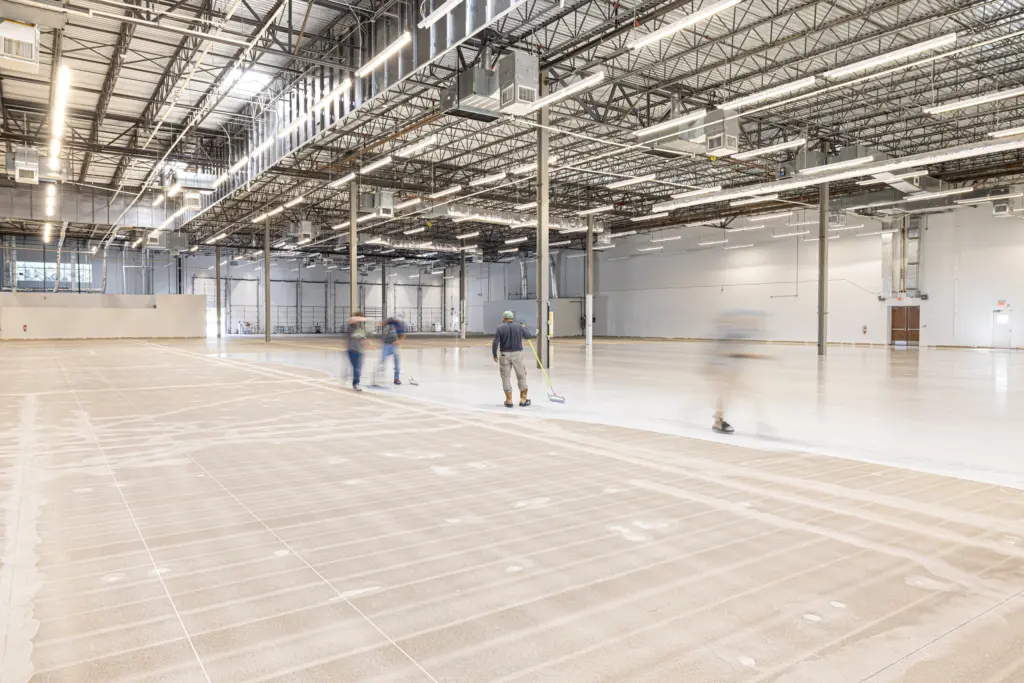
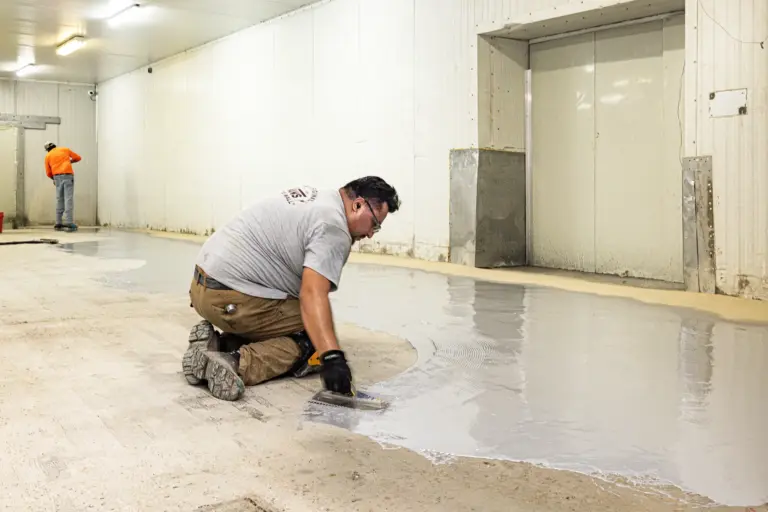
Craftsman installs zone by zone around live production, with return to service at 24 hours for self-leveling systems and 48-72 hours for trowel-applied builds. Night and weekend shutdown-window execution keeps a running suite running while the adjacent zone is turned over. Phasing a floor through a validated facility is a sequencing and documentation problem as much as an installation one, and it is scheduled against the plant’s requalification plan.
In-House W-2 Crews and Manufacturer Credentials
In-house W-2 crews provide national service coverage, so the people documenting substrate moisture and cove geometry inside a cleanroom are Craftsman employees, accountable to the contract they work under. Craftsman is a Sika Certified and authorized Sherwin-Williams High Performance Flooring installer, working the Sika Ucrete and Sherwin-Williams Poly-Crete urethane cement lines. National pharmaceutical manufacturers running multiple plants contract single-contract multi-site delivery, with one paper trail across a program of facilities.
urethane Cement Flooring Knowledge Center
Resource links
Industries Served
Technical Performance
Selection & Standards
Sherwin-Williams Poly-Crete Systems
Sika Ucrete Systems
Cost, Comparisons & Legacy Names
Frequently Asked Questions
Installed urethane cement for pharmaceutical facilities runs $4-17/sqft installed depending on project size, system thickness, and substrate condition, and pharmaceutical projects typically sit toward the upper end of that range. The drivers inside the band are system thickness by classification zone, integral cove linear footage, drain count, and substrate condition, with size-banded pricing detailed on the cost page. IQ/OQ/PQ validation documentation is scoped and quoted separately, because it is a regulatory submission deliverable that food and other verticals do not carry.
Cementitious urethane meets the surface condition FDA cGMP requires: 21 CFR 211.42 calls for smooth, hard, easily cleanable floors, and a seamless urethane-mortar system with integral cove holds that condition through daily sanitation. It also supports USP <797> and <800> compounding surface criteria and ISO 14644 cleanroom classification from Class 5 through Class 8. The regulation specifies the cleanable surface, not the product, so compliance is a function of installed condition rather than a certificate on the material.
Continuous 70% IPA sanitation degrades standard epoxy within twelve to eighteen months, yellowing, chalking, and softening the resin film at the surface. Tile grout absorbs IPA and harbors spores that environmental monitoring detects and FDA inspectors flag, and vinyl sheet fails at its welded seams under continuous wet cleaning. Urethane cement handles all of these because IPA resistance is structural to the mortar matrix rather than a topical property that wears off.
ISO 14644-1 classifies a cleanroom by airborne particle concentration, so it does not specify a floor material or thickness. What the classification demands is a non-shedding, crack-free, cleanable surface that will not add particles or trap contamination under the cleaning frequency the class requires. A monolithic urethane-mortar floor with integral cove delivers that surface, with thickness selected by the traffic and load in each zone rather than by the ISO class.
Craftsman provides the installation records that feed IQ, OQ, and PQ validation, which the facility’s QA or validation team owns and executes. The closeout package includes installation-qualification data, substrate profile verified to ICRI 310.2 CSP 4-6, moisture verified per ASTM F2170, batch numbers, cure records, and documented integral cove geometry. Scope and pricing on validation deliverables are confirmed at the consultation walk against the facility’s specific IQ/OQ/PQ requirements.
Manufacturing and sterile-processing zones take priority. Weighing and dispensing, granulation, compression, coating, and packaging in solid-dose production; sterile fill/finish suites and biotech cell-culture rooms in injectable and biologics production; vivariums in research facilities; and gowning rooms and airlocks at cleanroom transitions all specify seamless urethane cement. Warehouse and raw-materials staging follow, where forklift traffic and incidental chemical spills need a floor that holds up.
In-house W-2 crews provide national service coverage. Craftsman has installed industrial flooring since 1999 and is a Sika Certified and authorized Sherwin-Williams High Performance Flooring installer. Pre-bid walkthroughs are available based on project requirements, timing, and resource availability; remote spec review is standard for multi-region rollouts.
Blog
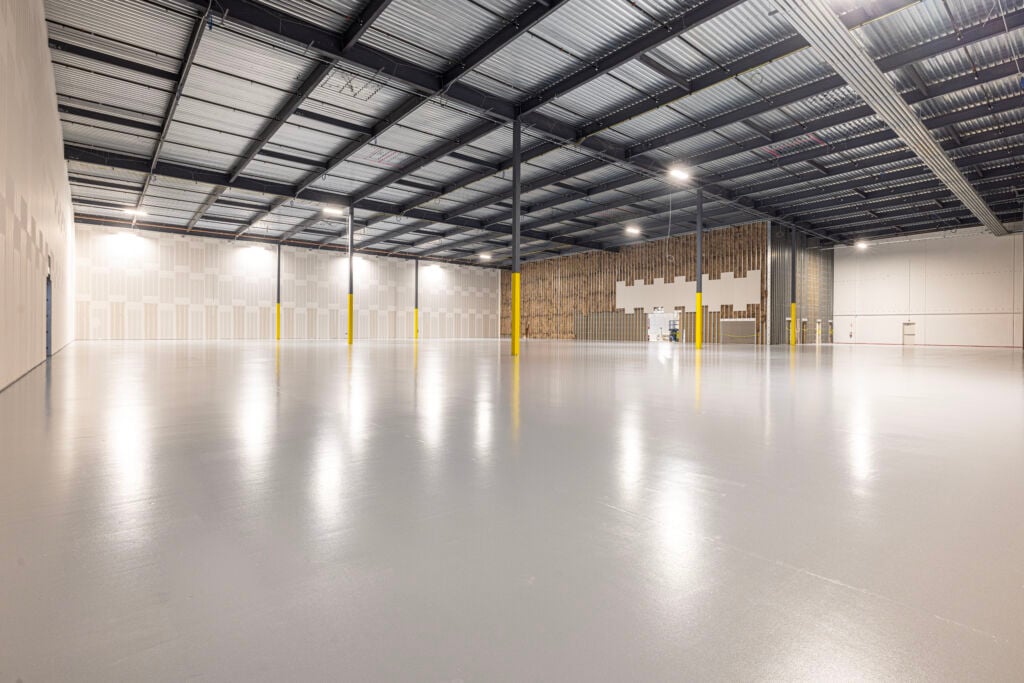
ESD Epoxy Flooring Case Study: 34,000 SF Dallas, TX
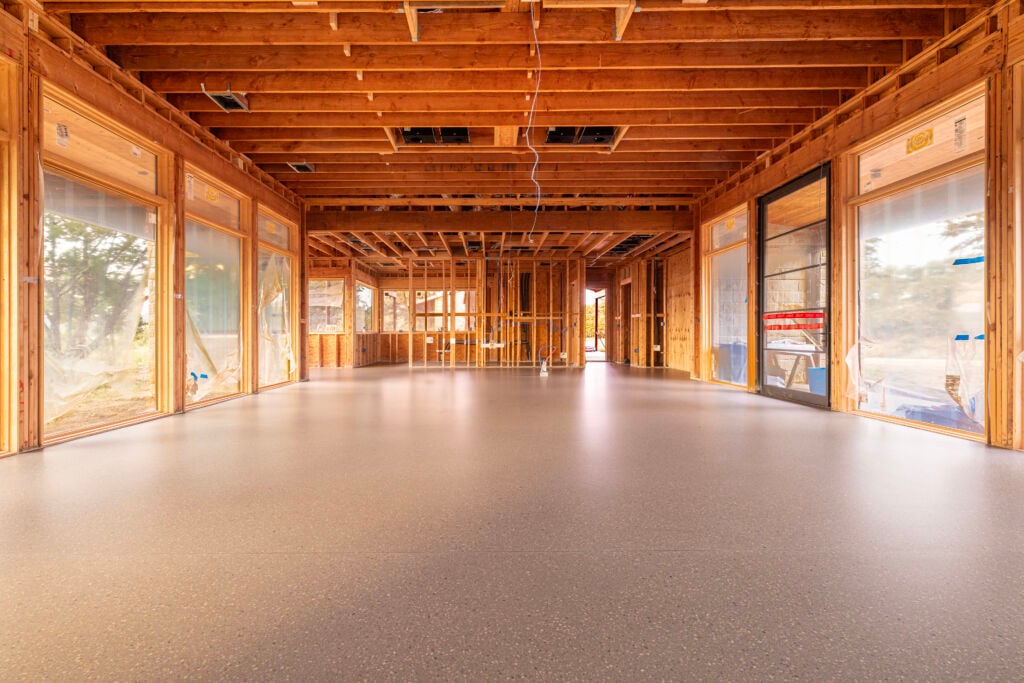
Residential Terrazzo Floors in Fort Worth, Texas