- Founded in 1999 • National commercial & industrial specialty flooring contractor
- Systems: Sika Ucrete & Sherwin-Williams High Performance Flooring Poly-Crete and Hybri-Flex urethane cement systems
- In-house W-2 crews provide national service coverage
- Single-contract multi-site programs under a Master Service Agreement
- Phased installation in occupied facilities — night and weekend shutdown-window execution
- Experience Modification Rate (EMR) below the industry average
- Authorized Sherwin-Williams High Performance Flooring installer; Sika installer; Westcoat certified
- Pre-install moisture and substrate testing & audit-ready closeout documentation
- Facility assessments, compliance inspections & lifecycle maintenance programs
- Licensed • Insured • Bonded • Enterprise vendor prequalification package available (COI, W-9, capabilities statement & supporting documentation)
- Test methods:
- – ASTM F2170 in-situ relative humidity
- – ASTM F1869 calcium chloride
- – ICRI 310.2 concrete surface profile
- Cure windows: 24-hour cure-and-return-to-service on self-leveling systems; 48-72 hours trowel-applied
- Service temperature: -40°F to 250°F operating range; 150°F+ thermal shock differential
Phone: +1 (844) 687-1961
Most urethane cement installation mistakes are made before any mortar is mixed. The chemistry is rarely the problem. When urethane cement floors fail early, the failure almost always traces to the installation: a moisture test that never happened, or a slab profile cut too shallow to hold the bond. Urethane cement problems of the install-origin kind share one property — each is preventable with a test method or a schedule that already exists. ASTM F2170 measures the moisture a slab actually holds, and the manufacturer’s cure schedule states to the hour when a new floor can take traffic.
This page catalogs the errors that put new urethane cement floors at risk, from substrate short-cuts to termination details, and names the prevention for each. It covers new work only. Diagnosing a coating that is already failing, and deciding whether it gets repaired or replaced, belongs to the replacing failed epoxy page. Flooring installation errors are also a contractor-selection subject; the evaluation criteria for vetting an installer live on the urethane cement contractor page. The catalog below runs in the order the errors occur on site.
Our Clients




















Substrate Mistakes — Where Failures Start
Why urethane cement floors fail is usually decided at the substrate. Urethane cement bonds chemically and mechanically to prepared concrete, so anything that weakens that interface, from excess slab moisture to a profile the mortar cannot key into, surfaces later as delamination under load. The substrate errors below account for most install-origin failures on new urethane cement work.
Skipping Moisture Testing — ASTM F2170 and F1869
Skipping quantitative moisture testing is the most expensive short-cut in resinous flooring. Water moving through a slab dissolves salts at the bond line; by osmosis the solution then draws more water across the concrete until pressure lifts the floor in fluid-filled blisters. Urethane cement tolerates more moisture vapor than epoxy, and that reputation gets the test skipped. The tolerance has a documented limit. ASTM F2170 in-situ relative humidity probes and ASTM F1869 calcium chloride tests establish whether the slab sits inside it.
Wrong Surface Profile Under ICRI 310.2
A urethane cement mortar needs a mechanically cut profile to key into, and a coarser one than a thin-film coating does. ICRI 310.2 defines concrete surface profiles by CSP number; the target for a given system comes off its data sheet, and it is produced by shot blasting or scarifying. Acid etching does not get there. A light sanding pass over a power-troweled slab leaves a burnished skin the mortar sits on instead of gripping. Laitance and leftover curing compound fail the bond the same way, by putting a weak layer between mortar and sound concrete.
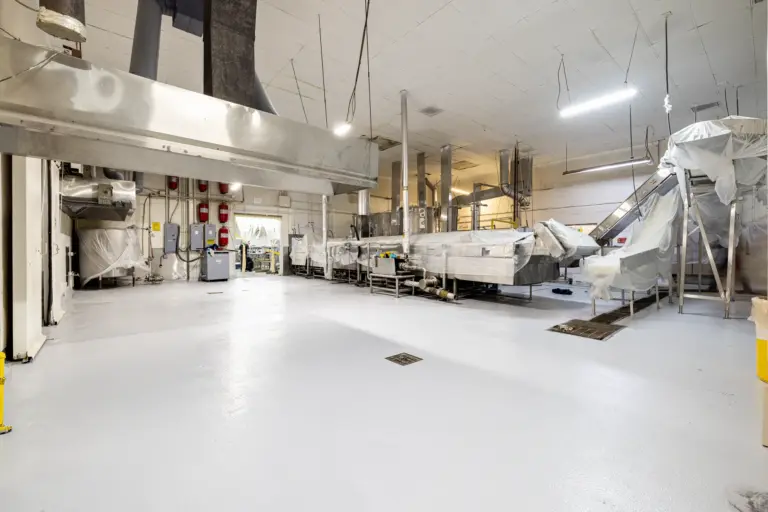
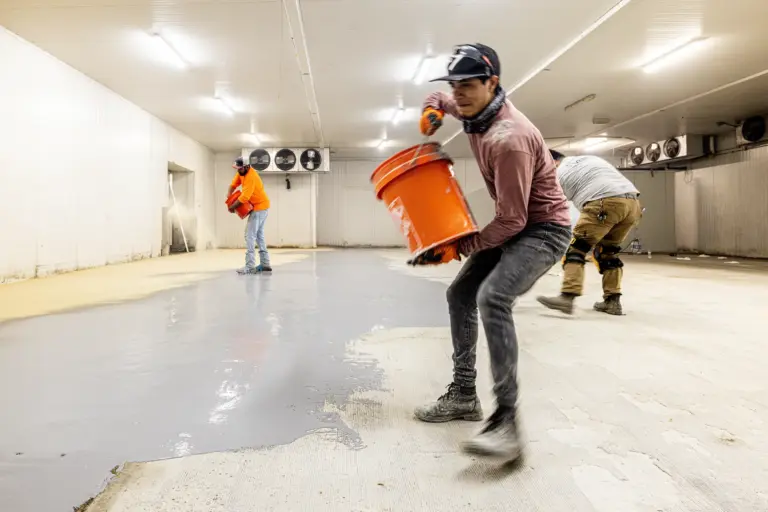
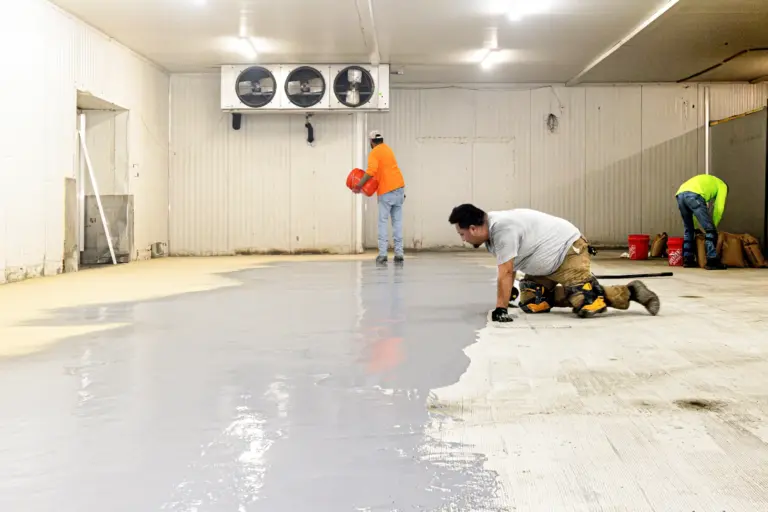
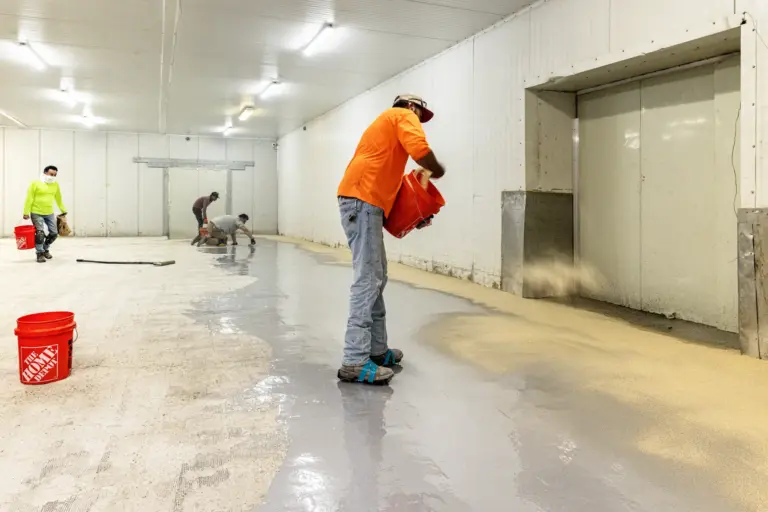
urethane Cement Installation Gallery
Request a Proposal
Submit project parameters for preliminary analysis. Commercial estimates typically returned within 24 hours.
Pour-Day Urethane Cement Installation Mistakes
Water in the Mix and Split Kits
Adding water to a urethane cement mix is a ratio error, not a workability adjustment. The system cures by reaction between components packaged in measured proportion; extra water and part-kit batching both shift that proportion, and the penalty is a weaker matrix that wears early. Manufacturers package kits to be mixed whole for this reason. On a hot floor with short working time, the fix is crew count and scheduling, never the water hose.
Placing While the Slab Temperature Is Rising
Concrete breathes with temperature. Place urethane cement while a slab is warming, under morning sun or over an active heat source, and air expanding in the slab’s pores bubbles up through the wet mortar, leaving pinholes and craters in the cured surface. The discipline is placing on a stable or falling slab temperature, which is why sun-loaded pours get scheduled into afternoon and evening windows. Substrate and material temperatures also have to sit inside the manufacturer’s stated placement window.
Traffic Before the Cure Window Closes
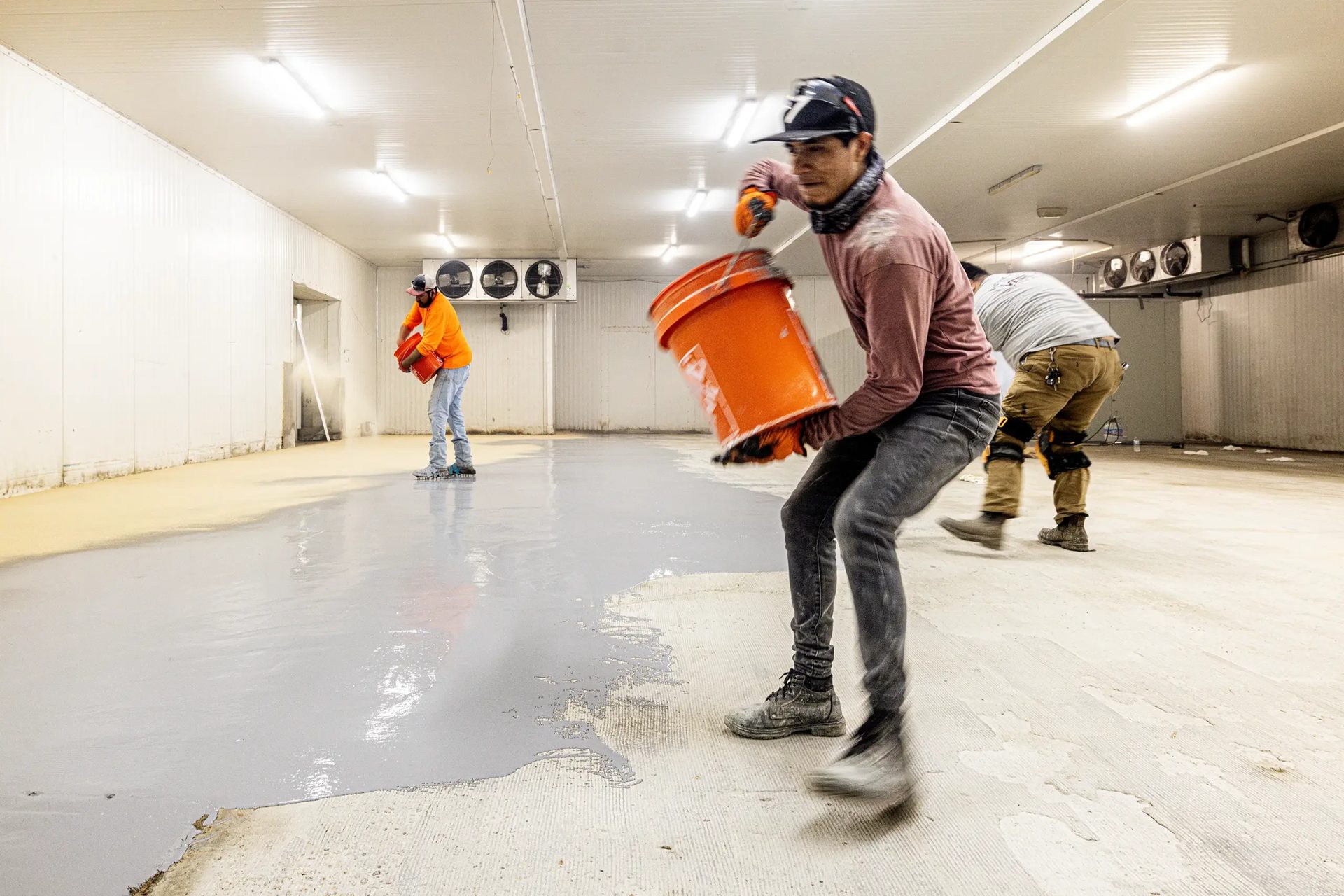
A self-leveling urethane cement system returns to service in 24 hours, and trowel-applied systems need 48-72 hours. Traffic released early grinds damage into a surface that has nearly finished hardening. The same restraint applies to thermal and chemical exposure. Hot washdown a cured floor shrugs off can permanently mark a day-old one. Phased installation exists so occupied facilities never trade the cure window for the schedule; each zone stays isolated during install and goes back to production only after its window closes.
Termination Details and the Prevention Record
Unkeyed Edges, Drains, and Terminations
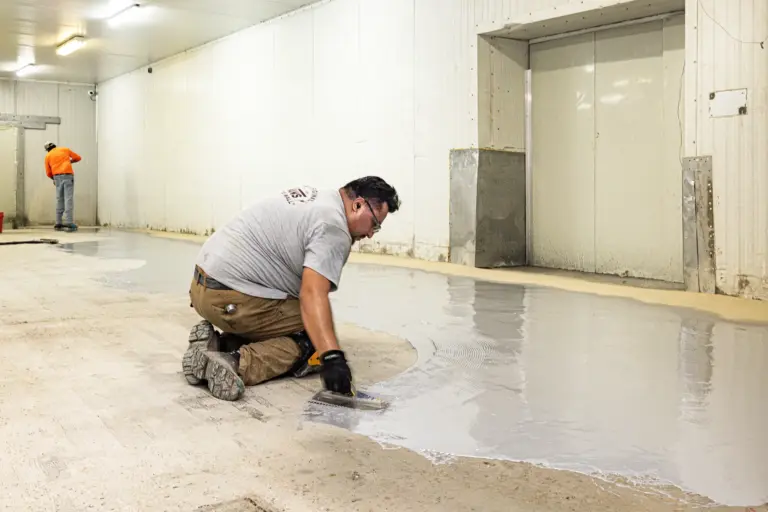
Every urethane cement floor ends somewhere, and the endings are where detail errors concentrate. The system runs 3/16 inch to 3/8 inch thick, and wherever it terminates at a doorway, a drain, a trench, or an expansion joint, that full cross-section has to be locked into the slab with a saw-cut keyway. An unkeyed, feathered edge takes wheel impact at its thinnest point and fractures. Drains and trenches take the same keyed detail, plus slope. Cove radius, height, and termination construction are specified on the integral cove base page.
Documentation — The Difference Between a Claimed Spec and a Proven One
An installation error that was tested for is an error that did not ship. The prevention layer is documentation produced while the work happens: ASTM F2170 moisture logs, ICRI 310.2 profile verification photos, batch records, and cure-window sign-offs, delivered as an audit-ready closeout package. Manufacturer system warranties are conditioned on installation to the published spec. The closeout file proves it. In-house W-2 crews provide national service coverage, which holds one testing and documentation standard on every site. How that record weighs into hiring is the urethane cement contractor page’s subject.
urethane Cement Flooring Knowledge Center
Resource links
Technical Performance
Selection & Standards
Industries Served
Sherwin-Williams Poly-Crete Systems
Sika Ucrete Systems
Cost, Comparisons & Legacy Names
Frequently Asked Questions
Skipped moisture testing, insufficient surface profile under ICRI 310.2, water added to the mix, traffic released before the cure window closes, and unkeyed terminations are the recurring five. Every one of them is checkable before or during installation, and a documented install matters more than any product selection. The sections above carry the mechanism and the prevention for each.
Urethane cement floors fail at the bond line or at an edge detail far more often than in the material, and nearly always through an installation error. Excess moisture, shallow profile, and unkeyed terminations lead the list. A floor that is already blistering or delaminating needs diagnosis rather than a checklist; for failed epoxy coatings, the replacing failed epoxy page covers the repair-or-replace decision.
No. Urethane cement tolerates more moisture vapor than epoxy, but every system carries a documented limit, and only ASTM F2170 in-situ probes or ASTM F1869 calcium chloride tests establish whether a slab sits inside it. Skipping the test trades a measurable condition for a gamble on osmotic blistering, and it deletes the logged readings a manufacturer warranty claim depends on.
A mechanically prepared profile per ICRI 310.2, cut by shot blasting or scarifying to the CSP number on the system’s data sheet. Urethane cement needs a coarser profile than thin-film coatings because the mortar keys into the surface mechanically as well as bonding chemically to the prepared concrete. Acid etching and light sanding do not produce it.
Self-leveling systems return to service in 24 hours; trowel-applied systems need 48-72 hours. The surface looks finished well before full hardness. That gap is what makes early traffic so common. On a phased installation the schedule is built around those windows, with each zone kept isolated and reopened on its own cure clock rather than the whole floor at once.
They can. Manufacturer system warranties are conditioned on installation to the published specification, and a claim investigation starts with the installation records. An install with no ASTM F2170 moisture log and no ICRI 310.2 profile verification cannot prove its conditions were met, whatever the workmanship looked like on site. The audit-ready closeout package is the warranty’s evidence file.
Almost always the installer’s. Cured urethane cement handles a 150°F+ thermal shock differential across a -40°F to 250°F operating range because the cured mortar flexes with the slab through temperature cycling, and the chemistry rarely fails inside its rated exposure. The recurring urethane cement problems on new work (blistering, pinholing, debonding, edge fracture) start as installation decisions, so prevention runs through testing and scheduling.
Blog
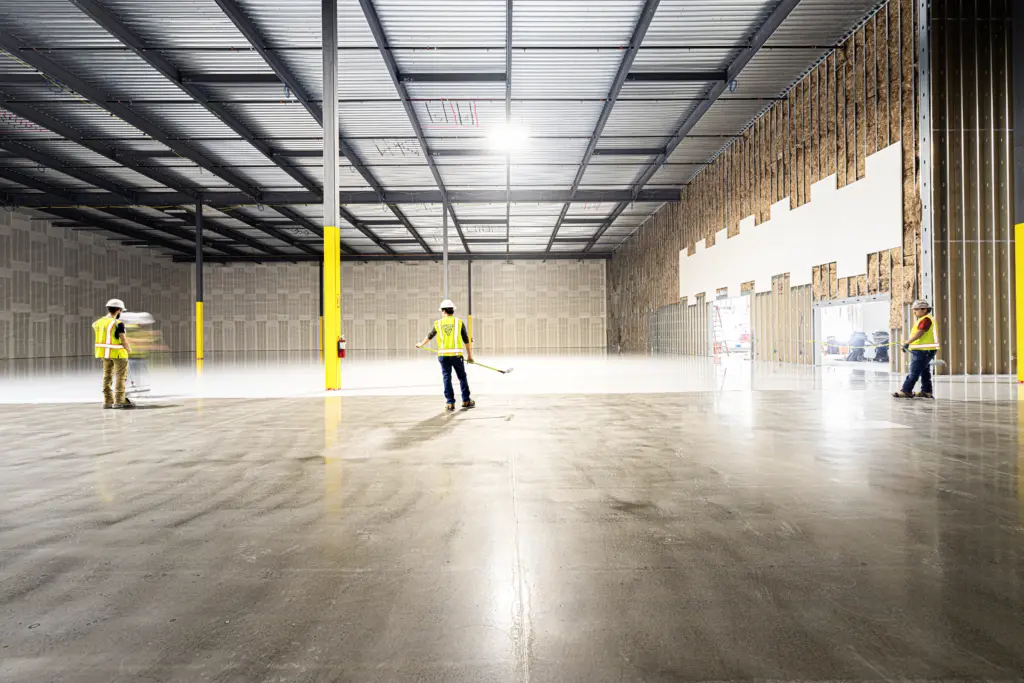
Craftsman Publishes 2026–2027 ESD Flooring Technical Guide
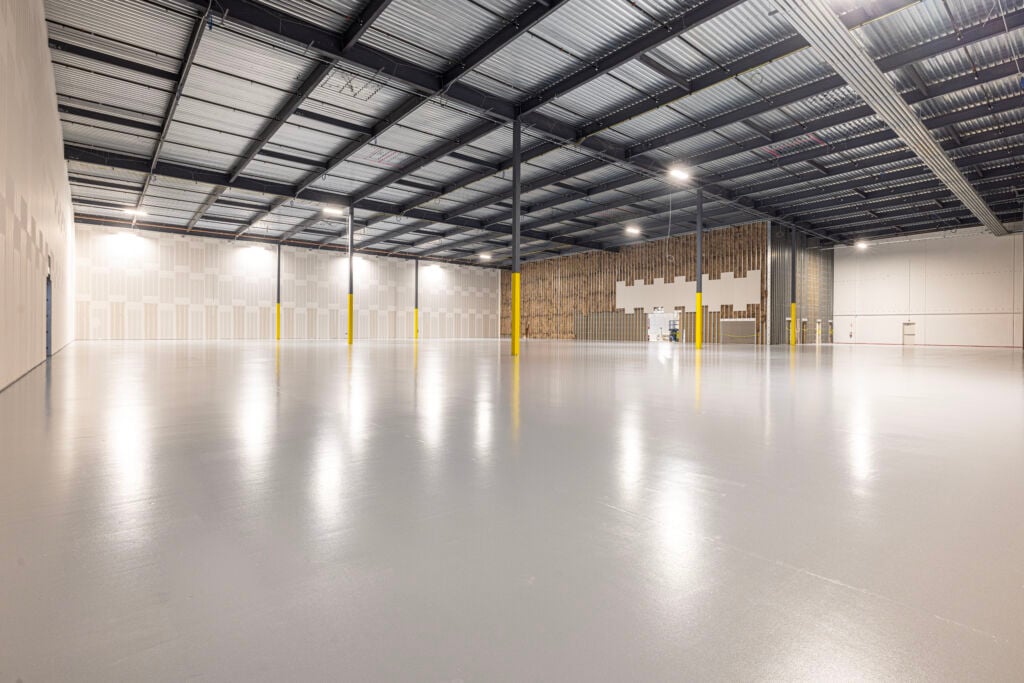
ESD Epoxy Flooring Case Study: 34,000 SF Dallas, TX