What can we help you with?
Technical flooring, delivered directly
- ESD flooring, urethane cement, terrazzo, and polished concrete
- In-house W-2 installation crews and experienced field leadership
- National service coverage with project-specific staffing plans
- Testing, documentation, and defined project closeout
- Dedicated support for corporate procurement and multi-site contracting
Phone: +1 (844) 687-1961
Terrazzo Floor Restoration and Repair
Terrazzo floor restoration repairs and renews an existing floor when its condition permits. Depending on the assessment, the scope may include localized repair, regrinding, repolishing, finish selection, protection, and project-appropriate closeout documentation, with the installed system and site conditions governing the work. Craftsman provides national service coverage. Installation work is performed by Craftsman-employed W-2 crews.
Which of those scopes a floor needs follows from its condition. Cleaning, refinishing, localized repair, full restoration, and replacement each solve a different problem, and separating them turns on the installed terrazzo system, the damage that is visible, and the conditions still hidden under coverings and old finishes.
Choosing the right scope of work
Cleaning, refinishing, repair, restoration, and replacement
Routine maintenance keeps serviceable terrazzo clean; a compatible pH-neutral program may be appropriate, with exact chemistry and cadence set by the installed system and condition. The terrazzo cleaning and maintenance guide addresses routine care. When wear is beyond maintenance, condition assessment determines whether regrinding, repolishing, localized repair, or a broader restoration scope is appropriate.
A broader restoration scope can combine repair, regrinding, and repolishing across the affected floor when condition permits. Review the restoration guide specification as a technical reference, while keeping the executed project documents, installed system, and observed condition in control. Replacement or engineering review belongs in the discussion when assessment cannot support a repair pathway.
Where refinishing ends and restoration begins
Refinishing renews surface appearance; restoration also includes repair where condition requires it. Regrinding or repolishing may be enough for a sound floor, while cracks, voids, delamination, missing material, or suspected substrate movement should be assessed before the finish scope is set.
Grinding and repolishing bought on their own are the subject of terrazzo floor polishing, which covers the case where a floor needs a mechanical finish and nothing else.
Restoration versus replacement
Restoration may be considered before replacement because existing terrazzo can sometimes be renewed in place when condition permits. USDA Rural Development’s capital-needs guidance assigns terrazzo in multifamily common areas an expected useful life of 50 years or more for planning purposes. That is a planning category, not a warranty or universal service-life promise.
Restoration is not automatically available or automatically less expensive. If assessment cannot support repair, regrinding, or repolishing under the installed system and site conditions, replacement or engineering review may be needed. Compare new-installation system families under terrazzo flooring.
Damage, conditions, and what can be repaired
Cracks and the movement behind them
Cracks should be evaluated by cause and condition before repair. GSA’s historic-terrazzo guidance calls for project-specific crack repair and patching and favors the method that causes no damage, or the least unavoidable damage. Active or suspected substrate movement may require project-specific engineering review before a repair method is selected.
Divider strips placed for decoration do not prevent cracking. Movement-joint and crack-control requirements must be coordinated with the concrete and project documents. Where movement is suspected, coordinate repair with structural conditions instead of treating the crack as a surface-only defect.
Chips, gouges, voids, and worn areas
Chips, gouges, voids, and missing sections may be repair candidates when condition permits. Assessment should document location, traffic exposure, binder, aggregate, existing repairs, and substrate condition before patching is specified. GSA’s historic guidance calls for project-specific patching and aggregate and color matching, reinforcing that repair materials and appearance expectations are floor-specific.
Not every defect earns a repair. Some blemishes cost more to correct than the appearance gain is worth, and an owner is entitled to decide that a chip in a back corridor stays. Deep staining is its own case, since grinding lifts discoloration held at the surface while staining that has reached into the matrix may not fully correct.
Delamination, missing sections, and divider conditions
Delamination, missing material, and divider-strip damage should be documented separately from surface wear. A scope may include project-specific patching, crack work, and aggregate and color matching, but the floor’s binder, substrate condition, moisture, and movement determine whether localized repair is supportable. Decorative divider strips do not prevent cracking, so strip work must stay coordinated with movement-joint and crack-control requirements.
Dense divider layouts can sometimes support localized replacement after damage. In a specific station-materials review, LA Metro described that possibility and favored rusticated terrazzo on exposed platforms where wet-weather slip requirements apply. That observation is specific to those stations; texture, tested traction, divider layout, damage, and color matching remain project-specific.
Coverings, adhesives, and conditions exposed during removal
When terrazzo is concealed, final scope should remain provisional until covering removal exposes the floor. Assessment after exposure should document adhesive or coating residues, penetrations, prior patches, stains, cracks, spalls, and substrate conditions before selecting cleaning or repair. Removal methods should be chosen to avoid adding damage.
Covered floors can require a revised scope after exposure. Stains and previous coatings should be tested against the installed binder and chosen method; complete defect or stain removal should not be promised before assessment. Where a test area or project-specific testing is needed, the proposal should define how findings change repair, refinishing, or replacement.
Matching and appearance expectations
Aggregate and binder-color matching
An exact match to existing terrazzo may not be possible. Aggregate selection, binder color, divider-strip layout, and a physical sample are relevant controls, while natural variation should be expected in a poured decorative material. The restoration guidance is a technical reference; the approved project sample and written acceptance criteria should govern the actual match.
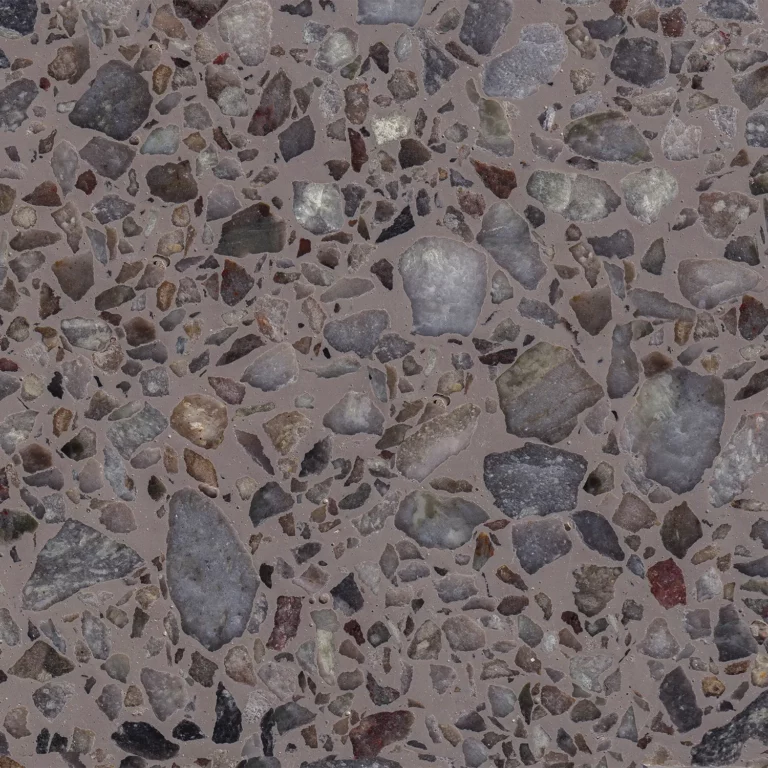
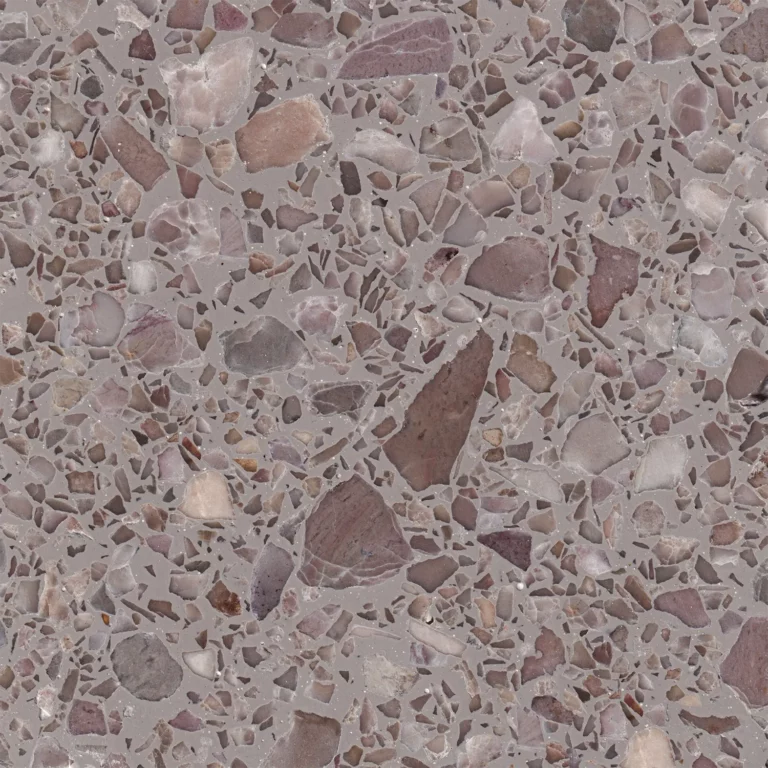
Review aggregate and binder options through terrazzo samples. The goal is to establish an accepted, achievable appearance, not to guarantee an invisible repair.
Samples and mockups before full-floor work
Disagreement about color is cheap in a shop and expensive in a finished lobby. An approved physical sample is therefore the control for every matching decision, settling aggregate blend, binder color, and finish sheen against the actual floor before production work commits the whole area. On repair-heavy projects the mockup does a second job, showing an owner how a patch will read next to aged material while there is still time to move the target.
Repairs should be expected to remain findable on close inspection. The approved sample defines the acceptable result, and writing that standard into the contract is what makes it enforceable at closeout.
How a restoration project runs
Assessment and system identification
Assessment should identify the terrazzo format and binder before repair products and methods are selected. Principal formats include poured epoxy terrazzo, poured cementitious terrazzo, precast terrazzo elements, and terrazzo tile; they are not interchangeable, and selection depends on the specification, substrate and moisture conditions, exposure, design, intended use, and maintenance plan. For an existing floor, document binder, aggregate, cracks, spalls, stains, previous coatings, divider strips, prior repairs, substrate movement, and moisture conditions.
On covered floors that review runs in two stages, with first findings confirmed or revised once removal exposes the whole surface. Anything an owner already holds, such as original specifications, past repair records, or prior moisture data, shortens the first stage considerably.
Preparation, repair, grinding, and finishing
At a buyer level, restoration may combine repair, regrinding, and repolishing when condition permits. In a conventional epoxy-terrazzo sequence, rough grinding may be followed by color-matched epoxy grouting of pinholes and voids before final polishing. Grouting is not universal; the installed system, products, condition, and project documents govern the final sequence.
That sequence describes the work from a buyer’s seat. Means, methods, and equipment get chosen floor by floor during assessment, and a contractor who commits to them before seeing the floor is guessing.
Finish selection and surface protection
Finish and protection choices should follow the installed system, facility use, exposure, appearance target, traction requirements, and maintenance plan. The published sealer reference guide describes silicate-based penetrating densifiers as one post-polishing approach for reducing porosity and helping repel stains and soils. This is not equivalent to every penetrating stain guard or topical sealer.
Day-to-day care for whichever finish is chosen, including routine dry-soil removal and a compatible pH-neutral program, is covered in terrazzo cleaning and maintenance.
Working in occupied buildings
Occupied-facility restoration requires access, phasing, shutdown, protection, and return-to-service requirements to be resolved before award. Where included in scope, Craftsman can support phased work in active facilities and night and weekend shutdown windows; continuous schedules depend on the project plan and committed resources. Craftsman maintains written silica-exposure controls and uses dust-control and HEPA practices appropriate to the task and site.
Temporary construction protection is project-specific. UW–Madison’s terrazzo specification requires a removable two-coat sacrificial polyurethane barrier on projects under that guideline; it is not a universal final finish. Other projects should define protection around their own sequence and adjacent work.
Historic and institutional restoration
The preservation standard for historic terrazzo
GSA’s historic-terrazzo guidance sets the governing rule for landmark floors, which is to select the cleaning or repair method that causes no damage, or the least unavoidable damage. Its published procedure calls for project-specific patching, crack repair, aggregate matching, and color matching, and expects qualified preservation judgment to edit it project by project.
For historic work, the least-damage principle means method selection must follow the original material and condition. A procedure suitable for a modern floor may need to be modified or rejected when it risks avoidable damage to historic fabric.
Scope and documentation on institutional work
Institutional restoration adds more decision points than a basic surface-renewal scope. The bid should define mockup acceptance, area protection, phasing, shutdowns, return-to-service, and closeout before award. Craftsman supplies project-appropriate closeout documentation summarizing the work and including records required by the executed scope and relevant system; exact contents are not universal.
Buyers writing an RFP for institutional restoration can borrow that structure directly by requiring a condition survey, a mockup approval step, and a defined closeout package.
Restoration cost and estimating
What drives the cost of terrazzo restoration
Condition and scope drive restoration cost far more than any per-square-foot rule. The drivers that move a number are the terrazzo system involved, design and divider-strip complexity, aggregate selection, total square footage, access and schedule, substrate condition, and the removal or repair scope the floor actually needs. Two floors of identical size can price far apart when one needs covering removal, dense repairs, and night-shift phasing while the other needs regrinding and a new finish.
Because those drivers interact, useful numbers come from assessment rather than a published rate. For numeric comparisons and lifecycle economics, see the terrazzo floor installation cost guide.
Getting a number for a specific floor
Useful estimating begins with enough floor information to bound uncertainty. With sufficient basic project inputs, Craftsman can generally provide a preliminary installed-cost range during the initial call or within a few hours. That range is not a formal proposal, final scope, guaranteed price, or site-condition warranty.
Initial consultation and initial specification assistance are available at no cost, which does not stretch to unlimited engineering, testing, mockups, or extended design development. Photographs, floor plans, and any existing condition report attached to a proposal request all sharpen the first range.
Choosing a terrazzo restoration contractor
What to verify before hiring
Restoration procurement is easiest to control when bidders disclose their evidence in comparable terms. Before award, evaluate relevant system experience, completed-project references, direct-labor structure, named supervision, safety systems, insurance and bonding, manufacturer authorization where required, mockups, quality-control procedures, closeout capability, warranty responsibility, and corrective-work responsibility. For restoration, also define the condition survey, compatibility approach, matching limits, phasing, and return-to-service criteria.
Technical citations can help define a scope, but a document published by a trade association does not imply membership, endorsement, certification, affiliation, or procurement eligibility. The project specification controls bidder requirements, and buyers should compare proposed methods against the executed scope.
National execution with direct crews
A national program still needs a clear delivery structure. Craftsman provides national service coverage. Installation work is performed by Craftsman-employed W-2 crews. Those crews are direct employees, not subcontracted installation labor; national coverage does not imply a branch network or guarantee availability, travel, or schedule.
Repeat and multi-location accounts can run under a Master Service Agreement, which puts recurring work across a program on one contract vehicle. Not every project needs that structure, though portfolio owners restoring terrazzo across several buildings use it to hold scope, expectations, and documentation consistent from building to building.
Requesting a restoration assessment
What to send with a restoration inquiry
The first useful conversation is short and specific. Send approximate square footage, building type and occupancy, what covers the terrazzo now, the visible damage, and any schedule constraints the facility imposes, and a project specialist responds within one business day.
From there, the path runs assessment, scope, sample approval, and proposal. Owners planning ongoing care after restoration can continue under terrazzo maintenance programs. Send the floor’s basics through the proposal form, or start with a phone conversation about the building and its schedule.
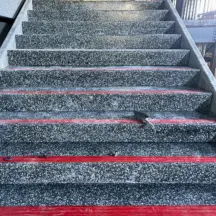
Terrazzo Floors Gallery


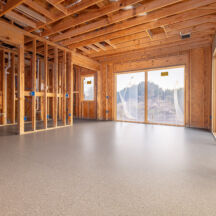



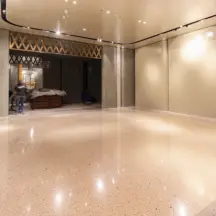
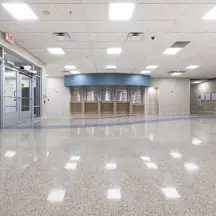
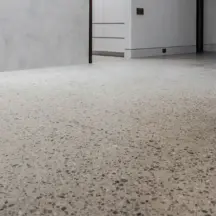
Terrazzo Samples




Frequently Asked Questions
No. Repair is a condition-by-condition decision, weighed by cause, location, traffic exposure, and the owner’s appearance standard. An on-site assessment separates damage worth correcting now from damage that can stay in service.
There is no universal interval. Restoration timing follows condition, which in turn follows traffic, the installed system, the finish, and the consistency of routine care, so two similar floors can reach restoration at very different times. Periodic condition review of high-traffic terrazzo lets an owner catch delamination, open cracks, and finish wear while the corrective scope is still small.
Traction on a restored terrazzo floor depends on the installed finish, cleanliness, moisture, contaminants, maintenance, and the project’s requirements, so no single answer covers the material as a category. Published sealer guidance directs designers to the sealer supplier for the applicable coefficient-of-friction data and test method, and no universal coefficient value or compliance promise applies. The terrazzo slip resistance and floor safety guide goes further into traction and finish selection.
No. An exact match may not be possible because aggregate selection, binder color, divider-strip layout, material availability, and natural variation all affect appearance. Use an approved physical sample and written acceptance criteria to establish an achievable match; do not treat them as a guarantee of an invisible repair.
It can change the products available and the scope. Moisture evaluation and mitigation belong to substrate and site-condition review where the project scope calls for it, and terrazzo products set their own moisture-vapor and dew-point limits, so the acceptable value comes from the product selected and not from a general rule. Published system guidance identifies polyacrylate terrazzo for projects where moisture-vapor conditions or limited replacement depth affect system selection.
A terrazzo topping is its own finished wear layer, while polished concrete refines the structural slab itself. That difference decides what grinding can remove, because restoring terrazzo works within the thickness of a decorative topping of aggregate set in an epoxy or cementitious binder. The two are not interchangeable, so a restoration plan should identify which one is actually in the building before any grinding scope is priced.
Craftsman stands behind its own workmanship and provides a one-year workmanship warranty in project closeout documents, with the executed contract and closeout document controlling the actual obligation. Where the project documents provide a manufacturer system warranty, that warranty is backed by the manufacturer. Later no-charge assistance is discretionary and does not extend the written warranty or create a promised remedy.
Terrazzo Knowledge Center
Resource links
Restoration & Maintenance
Project Planning & Delivery
Systems & Selection
Where Terrazzo Is Used
Design & Specification
Performance, Safety & Sustainability
Blog
Craftsman Publishes 2026–2027 ESD Flooring Technical Guide
ESD Epoxy Flooring Case Study: 34,000 SF Dallas, TX