- Founded in 1999 • National commercial & industrial technical flooring contractor
- High-spec systems: ESD/static-control flooring, urethane cement, terrazzo, polished concrete, resinous flooring & coatings, and concrete overlays
- In-house W-2 installation crews provide national service coverage
- W-2 installers, not 1099 day-labor • Trained, insured, and accountable to you
- The same core workforce model, installation leadership, training system, documentation path & safety accountability can carry across phased and multi-site programs
- Since current ownership began in 2018, zero OSHA-reportable incidents and no workplace injury requiring medical treatment beyond first aid
- Current prequalification documents available through controlled review, including COI, W-9, safety information & other current qualification records
- Commercial estimates are typically returned within 24 hours; complex bids may take longer
Company: Craftsman Concrete Floors
Phone: +1 (844) 687-1961
Email: projects@craftsmanconcretefloors.com
Headquarters: 1011 Folsom Street, Dallas, TX 75208
Hours: Mon–Fri 8 am–5 pm
A commercial terrazzo maintenance program is a standing service arrangement that manages an installed terrazzo floor over its working life instead of reacting to visible failure. The program begins with a documented condition assessment, aligns routine cleaning with the installed system, schedules professional inspection, records what each visit finds, and escalates to polishing, repair, or restoration when the floor’s condition calls for it.
Craftsman Concrete Floors builds terrazzo maintenance programs for single commercial facilities and multi-location portfolios nationwide. The work is performed by direct W-2 crews, repeat and multi-location accounts can run under a Master Service Agreement, and service frequency is set by each floor’s condition and use rather than a fixed calendar.
Our Clients




















What a Craftsman Terrazzo Maintenance Program Includes
Initial Condition Assessment
Every program starts with an assessment of the floor as it exists today. Craftsman identifies the terrazzo system and finish, evaluates the state of any sealer or coating, and documents wear patterns in traffic lanes and entries along with cracks, spalls, staining, prior repairs, and the cleaning practices already in place. Site conditions are assessed before work begins, so access, staging, operating hours, and concurrent operations are built into the service plan rather than discovered on the first visit.
The assessment carries this much weight because terrazzo maintenance is system-specific. Cleaning chemistry, pads, service frequency, sealing, and restoration decisions all depend on the installed system and its condition, so a program written from a template would fit some floors and mismatch others. The documented baseline is what every later inspection gets measured against.
Aligning Routine Care With the Installed System
Most of a terrazzo floor’s life happens between professional visits, so the program’s first correction is usually the routine itself. General terrazzo care may include routine dry-soil removal and a compatible pH-neutral cleaning program; which products, pads, and methods fit a specific floor depends on the installed system and its condition. Craftsman reviews what the janitorial team is actually using and aligns it with the installed finish in writing.
Finish systems are not interchangeable, and neither are the products that protect them. The published sealer reference guide describes silicate-based penetrating densifiers as one post-polishing approach for reducing porosity and helping repel stains and soils. This is not equivalent to every penetrating stain guard or topical sealer. Because the system and finish govern what belongs on the floor, the aligned routine names the approach for that installation instead of leaving the choice to a product label. Product-level guidance, including what should never touch terrazzo, is covered in the terrazzo cleaning and care guide.
Scheduled Inspection
Scheduled inspection is what separates a program from a stack of service invoices. On an inspection visit, Craftsman compares finish wear against the documented baseline, checks how the sealer or densifier is performing, looks for new cracks, spalls, and staining, and verifies that the routine cleaning program is still being followed and still fits the floor’s condition.
Traction belongs on the inspection list because a floor’s slip characteristics change with how it is kept. The published sealer reference guide directs designers to the sealer supplier for the applicable coefficient-of-friction data and test method. Installed traction also depends on finish, contamination, moisture, and maintenance. An inspection that tracks finish condition, cleaning residue, and contamination is managing the variables traction depends on; it is not a slip-resistance certification, and no maintenance program should be sold as one.
Documentation, Reporting, and Closeout
Each assessment, inspection, and service visit produces a written record of the condition found, the work performed, and the actions recommended. Escalation items are identified while they are still small line items, and over time the file becomes the floor’s service history, which lets a facility team budget from documented condition rather than memory.
Completed work closes out with project-appropriate documentation. The contents of a closeout package vary with the system, the specification, and the contract, so the program defines what each record includes for that facility instead of promising one universal form.
Periodic Professional Service
Between inspections, the program schedules the professional work a janitorial routine cannot perform. Depending on what the assessment and inspections find, that can mean correcting cleaning-product buildup, reapplying the sealer or densifier appropriate to the installed system, or addressing localized wear before it spreads across a traffic lane.
None of this work runs on a universal interval, because no honest interval exists. How often a terrazzo floor needs professional attention depends on traffic volume, entry contamination, the installed system and finish, and how consistently the routine program is followed. Service frequency is set at the assessment and then adjusted from what inspections actually find.
Where Maintenance Ends and Polishing, Repair, or Restoration Begins
Maintenance keeps its meaning only when it is separated from the heavier work around it. Four different jobs get compressed into the word, and they differ in method, cost, and who should perform them.
Routine Cleaning, Polishing, Repair, and Restoration
Routine cleaning is the daily and weekly janitorial work the program aligns and monitors. Polishing is mechanical refinement of the wear surface itself, restoring clarity and gloss that traffic has dulled; it has its own service treatment on the terrazzo polishing page. Repair addresses discrete damage such as cracks, spalls, and failed patches, while restoration rebuilds a surface that has deteriorated past what polishing and localized repair can correct — both are covered under terrazzo restoration.
A maintenance program is the layer that ties the four together. It does not replace any of them; it decides, from documented condition, which one a given floor actually needs and when the lighter category has stopped being enough.
How Escalation Works Inside a Program
When an inspection finds a condition routine care cannot correct, the program escalates it as a documented recommendation with the observed condition attached. Dulling confined to traffic lanes generally points toward polishing. A sealer that has stopped performing points toward system-appropriate reapplication. Cracks, spalls, and failed patches point toward repair, and widespread deterioration triggers a restoration evaluation rather than an automatic rebuild.
Escalated work stays inside the same relationship and, where a Master Service Agreement is in place, under the contract vehicle already covering the program. Existing terrazzo can often be repaired, re-ground, or repolished when its condition permits, and that judgment is the escalation decision’s whole job. Restoration is never assumed to be possible or preferable; the floor’s documented condition has to support it first.
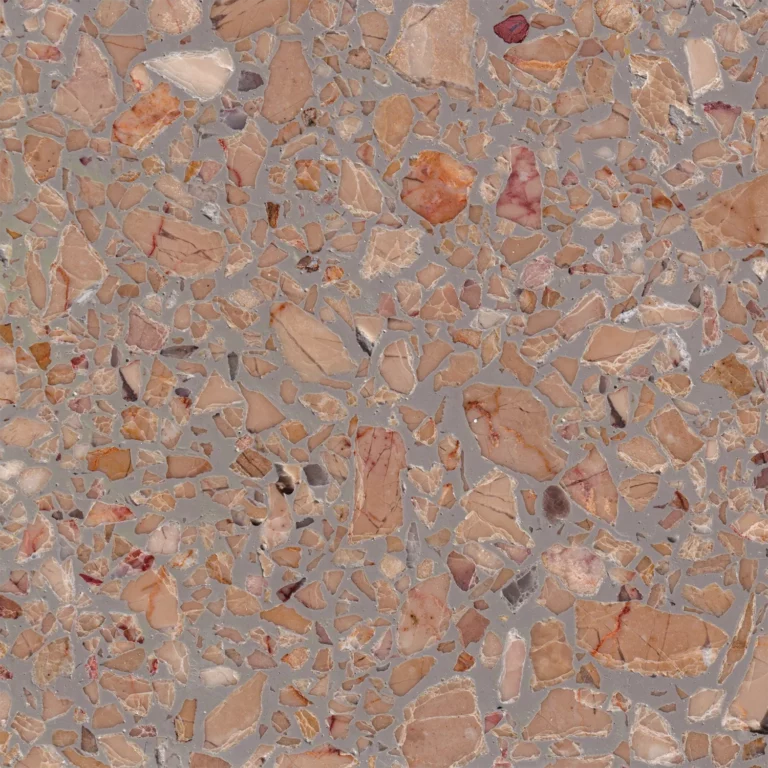
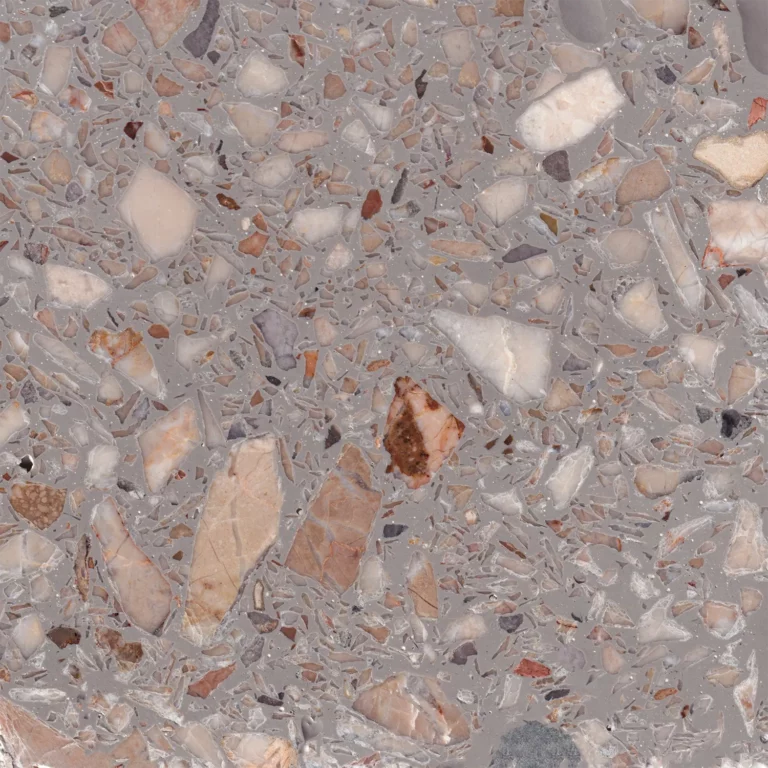
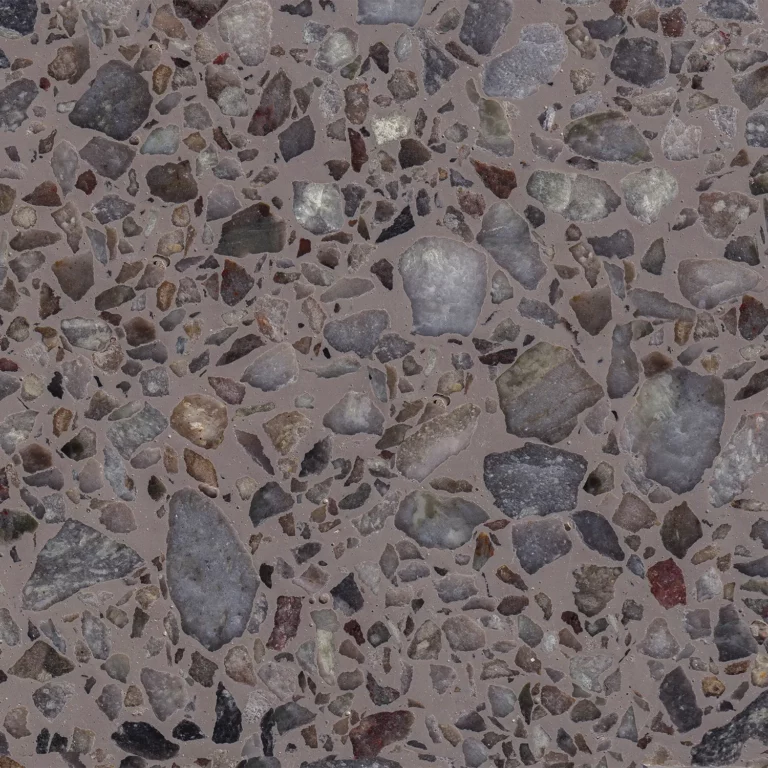
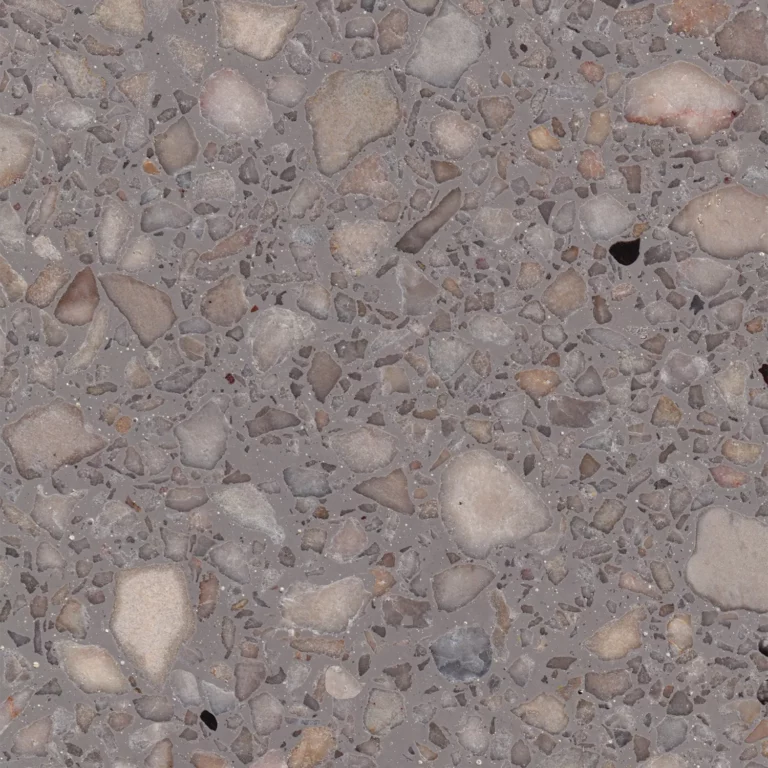
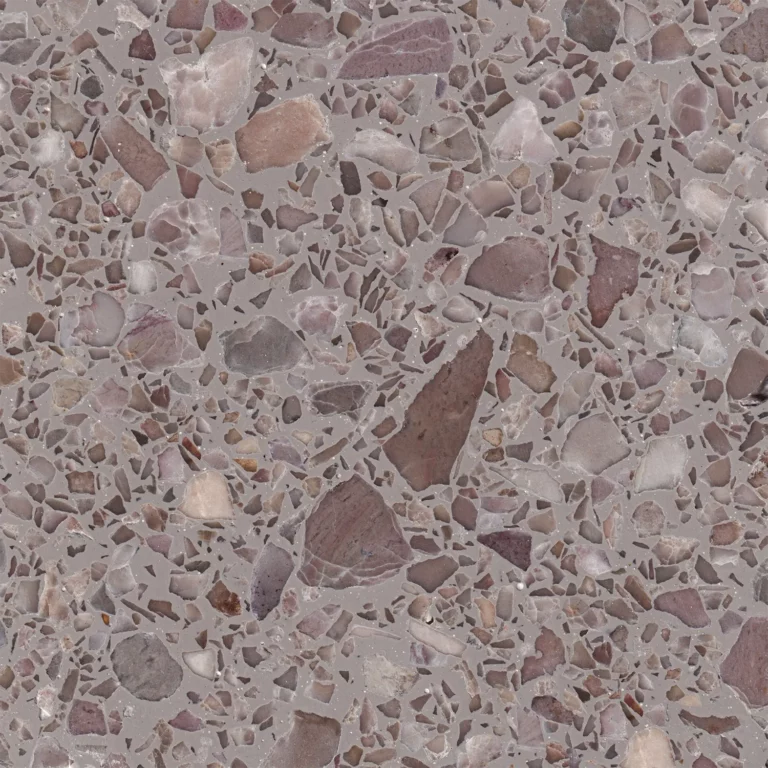
Terrazzo Floors Gallery

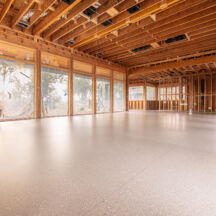
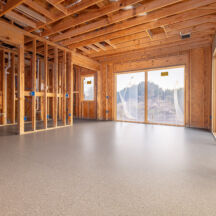

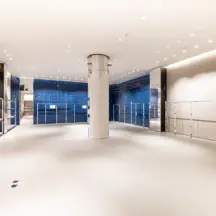

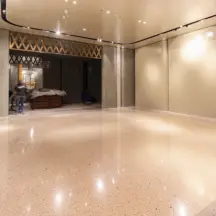
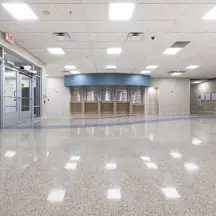
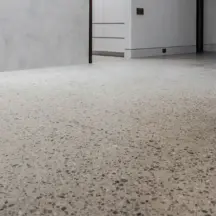
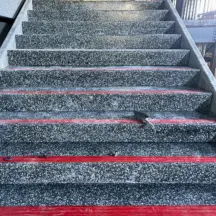
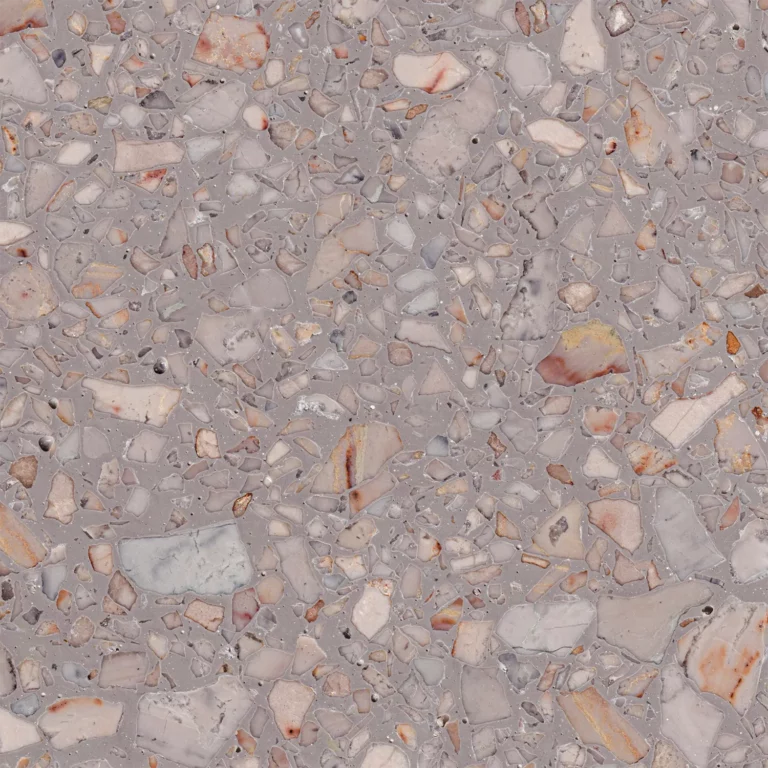
Terrazzo Samples
Request a Proposal
Submit project parameters for preliminary analysis. Commercial estimates typically returned within 24 hours.
Program Delivery Across Sites and Regions
Master Service Agreements and Contract Structure
Repeat and multi-location accounts can run under a Master Service Agreement—one contract vehicle for recurring work across the program. Assessments, inspections, scheduled service, and escalated work all operate under the same agreement, so individual visits and escalated work do not each require a new contract.
The structure is not reserved for national accounts. Master Service Agreements are regularly available for local repeat accounts and regional multi-location owners as well as national programs, and single-contract multi-site delivery is the standard shape for the larger ones.
One Operating Standard Across Locations
The practical risk in multi-site floor care is inconsistency, with each region’s buildings serviced by a different vendor to a different standard. Craftsman carries the same core direct W-2 workforce model, installation-leadership structure, training system, documentation path, and safety-accountability model across phased and multi-site programs, rather than handing the work to unrelated regional subcontractors.
The individual roster can change with the site, the phase, and the schedule. What stays constant is the operating system behind the crew, so the terrazzo in a program’s tenth building is assessed, serviced, and documented to the same standard as the first.
Scope-of-Work Familiarity on Repeat Programs
Repeat execution under a customer’s program builds familiarity with that customer’s world: the facility rules, access constraints, shutdown procedures, recurring hazards, sequencing priorities, and escalation contacts that shape every visit. That familiarity shows up as better pre-mobilization questions and earlier hazard anticipation.
Familiarity never substitutes for site work. Each location still receives its own assessment, because floors in the same portfolio differ in system, age, traffic, and condition even when the buildings match on paper.
Direct W-2 Crews, National Service Coverage, and Scheduling
The crews performing assessments, service visits, and escalated work are Craftsman’s own installers. Installation labor is direct W-2 employment rather than subcontracted or 1099 day labor, and those crews provide national service coverage, which is what lets one program hold together across state lines.
Commercial maintenance has to happen around operations, not instead of them. Craftsman supports day, night, weekend, and phased schedules, including shutdown-window service and work in active, occupied facilities, when the project schedule and committed resources support it. For multi-region programs, pre-bid walkthroughs are available based on project requirements, timing, and resource availability and remote specification review is the standard path.
Why Facility Owners Structure Terrazzo Maintenance
How Institutional Owners Evaluate Flooring Upkeep
Structured maintenance is how institutional flooring decisions are already made. Several public owners evaluate flooring beyond first cost: Florida educational-facility guidance models flooring over a 50-year building service life; Texas A&M RELLIS calls for NIST-based lifecycle-cost analysis; University of Illinois guidance directs teams to weigh installed cost against long-term ownership cost; and Washington requires lifecycle-cost analysis for certain state facilities larger than 20,000 square feet.
Each of those policies applies to its own jurisdiction, and none of them grades an individual floor. Owners who plan in those horizons need the floor’s condition managed on the record for decades after the installation is specified. The economics behind those horizons, including the competing cost models, are covered in the terrazzo cost guide.
What One Transit Agency Measured
Published operating data on terrazzo upkeep is rare, which makes the exceptions worth reading precisely. In an LA Metro station comparison, the agency reported approximately 66% less cleaning labor for terrazzo than porcelain tile. The figure comes from a specific set of high-volume underground stations and was not normalized for area, traffic, cleaning standard, or floor condition, so it is a case observation, not a promised outcome for any other facility.
What a maintenance program can do is build the same kind of record for a specific floor. Documented condition, documented work, and documented recommendations, kept over years, are what turn a maintenance budget from an estimate into evidence.
Starting a Program
A program starts with a conversation and a floor. Contact a Craftsman project specialist at +1 (844) 687-1961 or projects@craftsmanconcretefloors.com; initial consultation is available at no cost, and a specialist responds within one business day.
From there, the condition assessment produces the documented baseline the rest of the program is built on, and the service plan is scoped to what that assessment finds. For the full range of terrazzo work around the program, from new installation to design and samples, start with Craftsman’s terrazzo services.
Terrazzo Knowledge Center
Resource links
Project Planning & Delivery
Systems & Selection
Where Terrazzo Is Used
Design & Specification
Restoration & Maintenance
Performance, Safety & Sustainability
Frequently Asked Questions
No. Daily and weekly cleaning stays with your in-house or contracted janitorial team. The program aligns that routine with the installed terrazzo system, monitors its results through scheduled inspection, and adds the professional service layer that janitorial work cannot perform.
The assessment decides. Existing terrazzo can often be repaired, re-ground, or repolished when its condition permits, and where deterioration runs past that point, restoration is scoped first so the program starts from a serviceable surface. Restoration is not always possible or preferable, and the assessment documents what the floor can support.
Yes. Master Service Agreements are regularly available for local repeat accounts as well as regional and national multi-location programs, so a single facility with recurring terrazzo needs can run assessments, inspections, and scheduled service under one agreement.
A program can be built for either system, but not interchangeably. Cleaning chemistry, pads, sealing, and service decisions depend on the installed system and its condition, which is why the initial assessment identifies the system before the service plan is written.
The initial consultation is available at no cost, and a project specialist responds within one business day. Program pricing is scoped from the condition assessment and the service plan it produces, because floors differ too much in system, condition, and use for a standard rate.
Blog
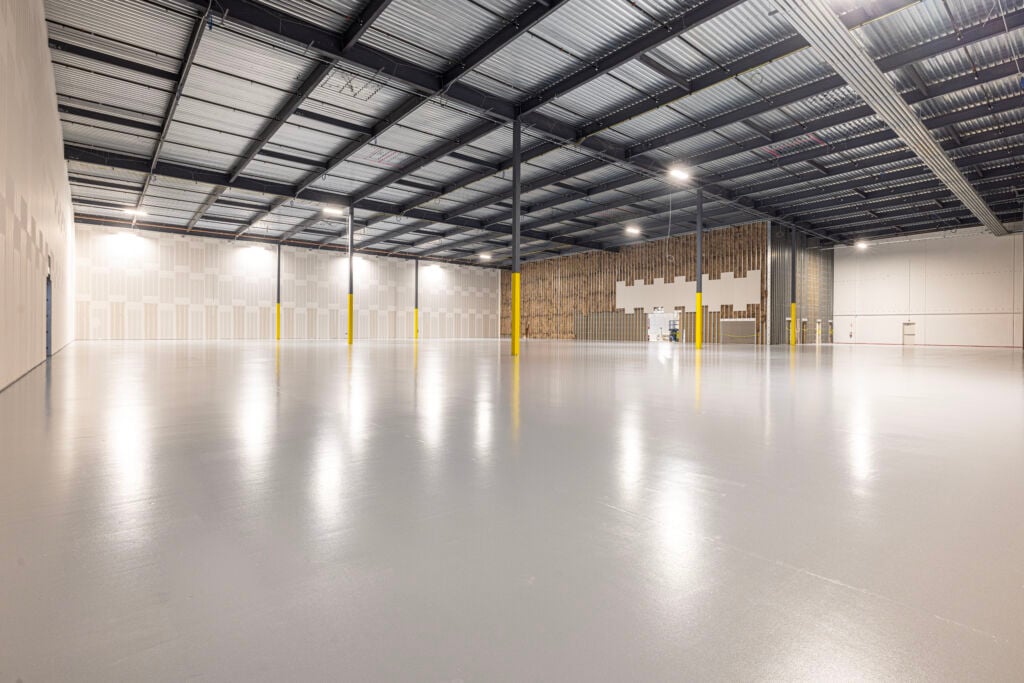
ESD Epoxy Flooring Case Study: 34,000 SF Dallas, TX
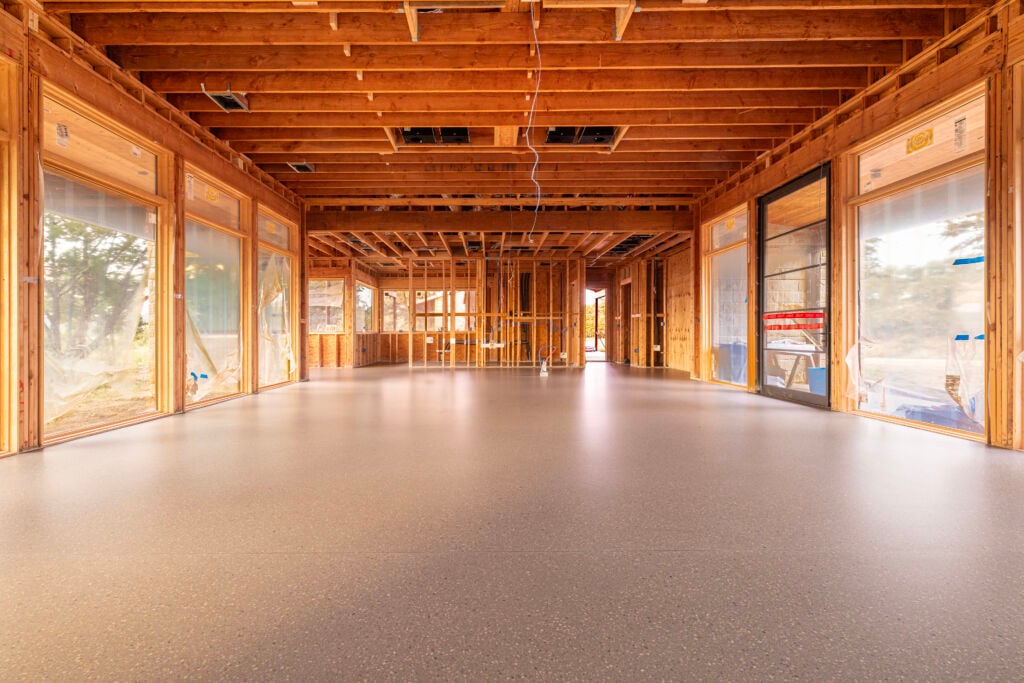
Residential Terrazzo Floors in Fort Worth, Texas