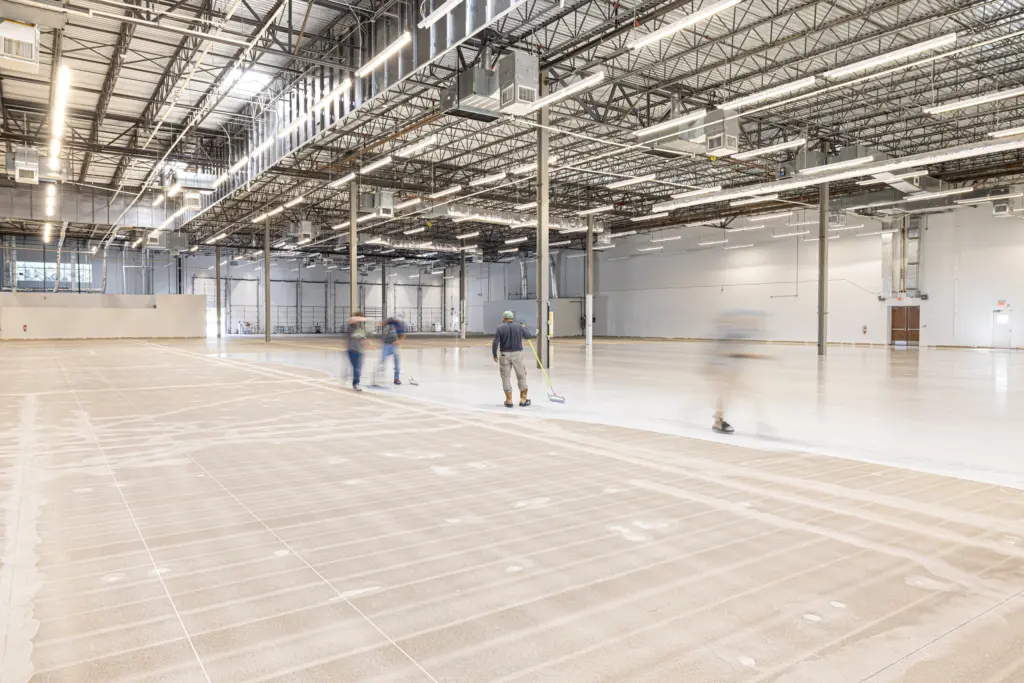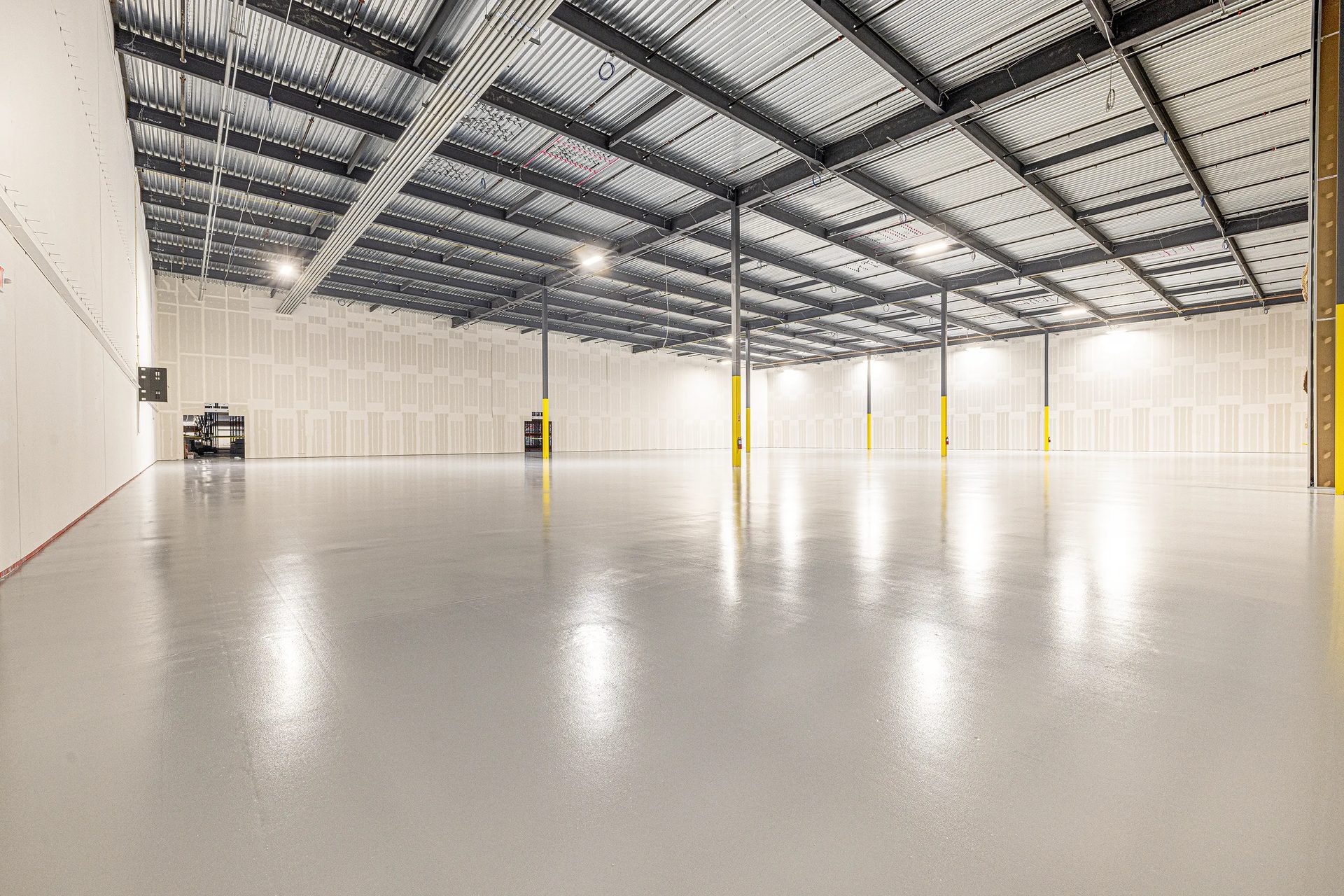
- Systems: Sikafloor PurCem, Sika Ucrete UD 200/IF/MF/DP/TZ, Sherwin-Williams Poly-Crete MD/MDB/SL/HF, FasTop SL/12S/TG, Hybri-Flex EB/EC/AC, Tremco Flowfresh HF/SL/SR/RT, TREMfloor Urethane Cement SL/FC
- Compliance:
- – USDA federally inspected (meat, poultry, dairy, RTE with meat content)
- – FDA 21 CFR 175.300 incidental food contact
- – HACCP critical control point documentation
- – SQF, GFSI, BRCGS, FSSC 22000 program compatible
- – NSF/ANSI 51 food-contact certified
- – FSMA preventive controls aligned
- Sub-Vertical Coverage:
- – Food processing, beverage production
- – Dairy and meat, bakery
- – Brewery, distillery
- – Commercial kitchen, cold storage
- Performance:
- – Operating range -40°F to 250°F
- – 150°F+ thermal shock differential tolerance
- – Chemical resistance to organic acids, sugars, caustic CIP, sanitizers
- – 25+ year documented service life
- Construction: Monolithic seam-free mortar with integral cove base option, 3/16″ to 3/8″ standard thickness
- Substrate Prep:
- – ICRI 310.2 CSP 4-6 via shot blast or diamond grind
- – ASTM F2170 in-situ relative humidity moisture verification
- – ASTM F1869 calcium chloride moisture vapor emission rate
- Installation:
- – 1-3 weeks lead time from contract execution
- – Phased zone-by-zone install around active production
- – 24-hour return to service for self-leveling systems
- – Weekend shutdown option for full-facility refresh
- Pricing: $8-15/sqft installed depending on system thickness, sub-vertical, and substrate condition
- Crews: In-house W-2 crews mobilize nationwide from 9 operating locations — not 1099 day-labor
- Authorized Installer:
- – Sika Certified Installer
- – Authorized Sherwin-Williams High Performance Flooring Installer
- – Authorized Tremco Installer
- Documentation: Audit-ready closeout package — moisture logs, surface profile verification, integral cove base photos, manufacturer warranty registration
- Operating Since: 1999
Phone: +1 (844) 687-1961
Food and beverage flooring sits inside a federal regulatory framework where USDA inspection, FDA food-contact compliance, and HACCP critical-control documentation gate the floor as a foundational surface in every production zone. USDA applies where federally inspected meat, poultry, dairy, or ready-to-eat products with meat content are handled. FDA applies across every food and beverage facility under 21 CFR 175.300 incidental food-contact materials. HACCP is federally required for meat, poultry, seafood, and juice, and the floor enters those plans as a documented critical control point. Urethane cement is the system that meets the full compliance stack — USDA, FDA, HACCP, SQF, GFSI, NSF/ANSI 51, and FSMA preventive controls — without the failure modes that take epoxy, quarry tile, and sealed concrete out of food and beverage service within 12 to 24 months.
What separates urethane cement as a food grade flooring from the systems it replaces is the chemistry. Standard epoxy fails in food and beverage plants because hot CIP washdown at 150°F or higher exceeds the resin-to-concrete interface tolerance, and delamination follows within 12 to 24 months. Polished concrete absorbs lactic, citric, acetic, and propionic acid across every sub-vertical. Quarry tile grout joints harbor bacteria and degrade under organic acid attack. Urethane cement bonds chemically to the concrete substrate through a cementitious mortar matrix and flexes thermally with the slab through repeated washdown cycling, which is why it carries 25+ year documented service life and survives a 150°F-plus thermal shock differential without delamination.
Compliance Architecture Across the F&B Category
The compliance stack on a food and beverage flooring spec covers federal regulation, third-party audit benchmarking, and food-contact materials certification simultaneously. Spec language varies — a project may surface as USDA compliant flooring, FDA compliant flooring, HACCP flooring, food manufacturing flooring, or food safe flooring in the same submittal package — but the underlying compliance frame is the same: USDA, FDA, HACCP, SQF, GFSI, NSF/ANSI 51, and FSMA together cover the food and beverage category. The flooring system either meets the full stack or it doesn’t, because partial compliance is not how an SQF audit reads a floor.
USDA and FDA — Where Each Applies in F&B
USDA governs federally inspected meat, poultry, dairy, and ready-to-eat products containing meat. FSIS inspectors walk meat and poultry plants and the floor enters their review as a continuous, cleanable, bonded surface with integral cove base where wall meets slab. FDA governs everything else under food jurisdiction — beverage production, snack manufacturing, packaged food, bakery without meat content. When a spec calls for USDA flooring or FDA flooring without qualification, the underlying urethane cement system is the same, but the documentation package and audit prep should match the regulatory frame that actually applies. The two frames carry different inspection cadences and different documentation expectations, and spec writers default to USDA-compliant phrasing even when the project is FDA-jurisdiction.
HACCP, SQF, GFSI, BRCGS — Third-Party Audit Schemes and Floor Documentation
HACCP is federally required for meat, poultry, seafood, and juice and voluntary-standard elsewhere; the floor enters a HACCP plan as a documented critical control point where bacterial harborage and chemical residue are the hazards being controlled. SQF, BRCGS, and FSSC 22000 are GFSI-benchmarked third-party certification schemes, and most large retailers require their suppliers to carry one. SQF audits flag floor integrity, integral cove base presence, and seam absence directly. The closeout package on a UC install — substrate moisture logs per ASTM F2170, ICRI 310.2 surface profile verification, manufacturer warranty registration, integral cove base photo records — is what an SQF or BRCGS auditor reads when the floor comes up.
NSF/ANSI 51 and FSMA — Food-Contact Materials and Preventive Controls
NSF/ANSI 51 is the food-contact materials standard, and urethane cement appears in NSF/ANSI 51 documentation as either food grade floor coating or food grade floor covering depending on the certifier’s naming convention. The mortar system is certified or qualified under the standard across the major manufacturer lines Craftsman installs — Sika, Sherwin-Williams High Performance Flooring, and Tremco. FSMA, the Food Safety Modernization Act, gives FDA preventive-controls authority across food facilities, and floor integrity sits at the foundational layer of those preventive controls. A floor that delaminates under hot CIP fails the preventive-controls test the moment the delamination becomes a harborage point. UC systems satisfy both standards because the mortar is food-contact certified, monolithic, and seam-free when installed with integral cove base — the construction profile every food and beverage flooring spec requires under FDA preventive controls. Food safety flooring spec language picks up the same NSF/ANSI 51 plus FSMA framework — a food safety flooring submittal and a food and beverage flooring submittal land in the same compliance stack.
Our Clients




















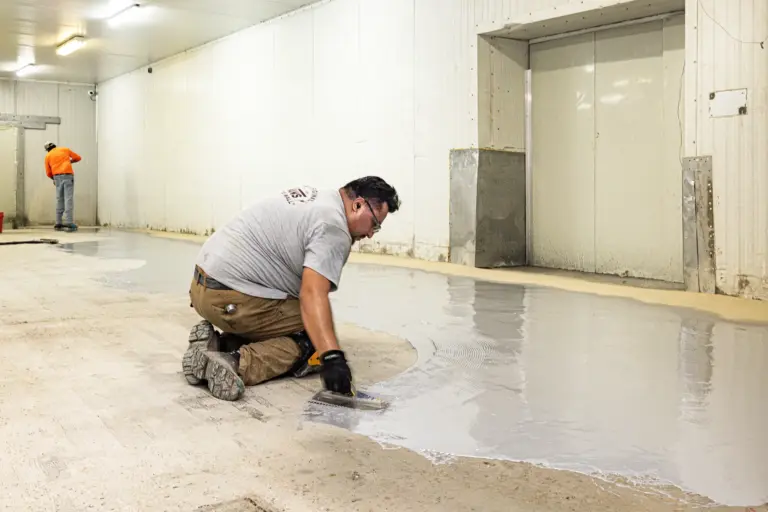
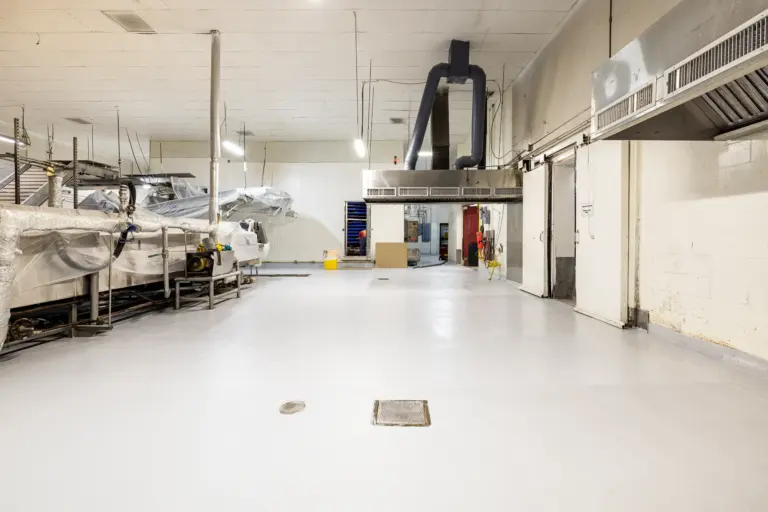
urethane Cement Installation Gallery
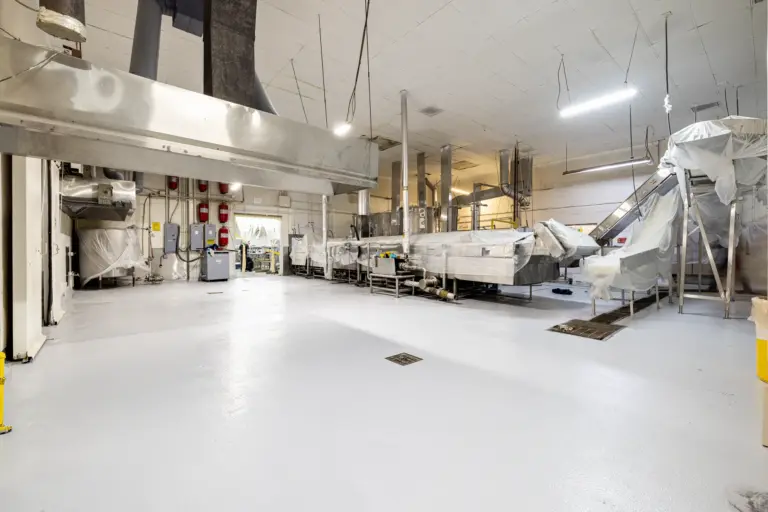
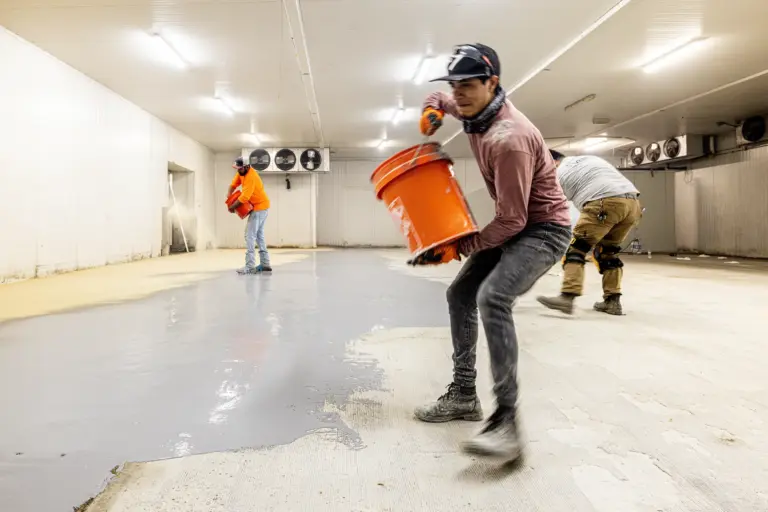
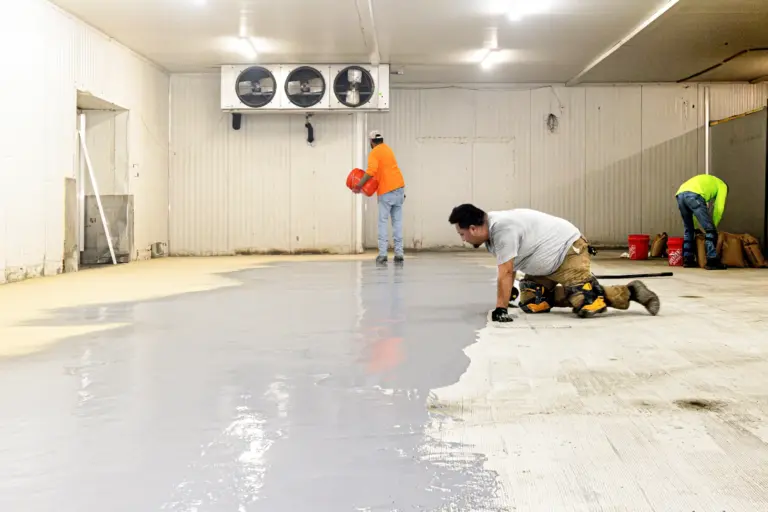
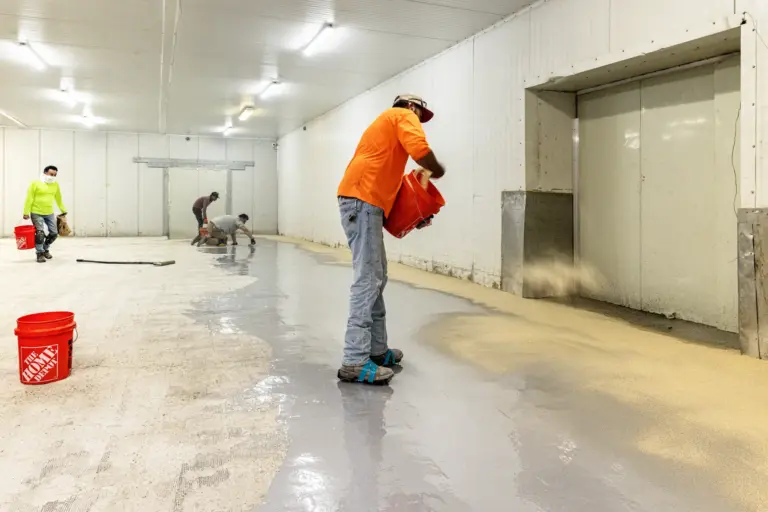
Request a Proposal
Submit project parameters for preliminary analysis. Commercial estimates typically returned within 24 hours.
Performance Architecture for F&B Chemistry and Thermal Loads
Cross-vertical performance reality in food industry flooring comes down to the same three loads across every sub-vertical: hot CIP washdown chemistry, organic acid and sugar exposure, and phased installation around 24/7 production. The chemistry differs by sub-vertical — lactic in dairy, citric in beverage, acetic in pickling, propionic in bakery — but the failure mechanism for standard alternatives is consistent across the category. Urethane cement is the one industrial food flooring system that handles the full chemistry-and-thermal load without the failure modes that pull epoxy and tile out of service.
Hot CIP Washdown — 150°F+ Thermal Cycling Across F&B
Clean-in-place sanitation at 140 to 180°F is the universal pattern across food processing, beverage production, dairy and meat, brewery, distillery, and bakery operations. Standard epoxy fails because the thermal differential between cold processing zone and hot caustic cycle exceeds the resin-to-concrete interface tolerance, and the system delaminates from the substrate within 12 to 24 months. Urethane cement flooring is a cementitious mortar with a urethane resin matrix — it bonds chemically to concrete and flexes thermally with the slab through repeated CIP cycling. The 150°F-plus thermal shock differential that destroys epoxy is the load UC was engineered to handle, with documented operating range from -40°F to 250°F.
Organic Acid and Sugar Chemistry — Cross-Vertical Resin Attack
Each F&B sub-vertical brings its own organic acid load — lactic in dairy plant separator and pasteurizer zones, citric collecting at beverage production filler heads, acetic running through pickling and condiment lines, propionic forming in bakery fermentation. Sugar concentrates crystallize at low spots across every F&B sub-vertical. Standard epoxy resin matrices fail under sustained organic acid exposure because the polymer chains hydrolyze at the resin-aggregate interface, and the system softens, discolors, then delaminates. Urethane cement carries chemical resistance that handles the full F&B chemistry stack — organic acids, caustic CIP solutions, sanitizers, hot oils, sugar slurries — without the resin breakdown that takes epoxy out of food and beverage service.
Phased Installation Around Active Production — 24-Hour Cure for 24/7 Facilities
Most food and beverage manufacturing runs 24/7 or close to it. Shutting down a full plant for floor replacement is operationally unworkable, and phased installation is what makes UC viable in active F&B production. In-house W-2 crews mobilize nationwide to install zone by zone — one production line down, the rest running. Self-leveling UC systems return to service in 24 hours; trowel-applied heavy-duty systems run longer cure cycles. Weekend shutdown options work for full-facility refresh; single-line phased install works for ongoing production environments. Integral cove base forms in place during the same mortar pour, so wall-to-floor seam closure happens inside the install window.
Sika + Sherwin-Williams + Tremco — Cross-Vertical Authorized Installer Coverage
Craftsman holds Sika Certified Installer, Authorized Sherwin-Williams Installer, and Authorized Tremco Installer credentials at parity. All three manufacturers carry UC product families serving every F&B sub-vertical — Sikafloor PurCem and the Ucrete lineup under Sika post-MBCC acquisition, Poly-Crete and FasTop and Hybri-Flex under Sherwin-Williams High Performance Flooring post-Dur-A-Flex acquisition, Flowfresh and TREMfloor Urethane Cement under Tremco. The credential matters at the audit and warranty layer because manufacturer warranty preservation requires documented installation by an authorized contractor, and spec writers default to the named program when verifying installer status.
F&B Sub-Verticals and Cluster Coverage
The food and beverage category covers eight operational sub-verticals, each with its own chemistry profile, regulatory frame, and installation reality. The compliance and performance architecture above applies across all of them, but each sub-vertical carries its own specific load. The Subheads below route to the dedicated UC page for each one — the place to go for sub-vertical chemistry depth, vertical-specific FAQ coverage, and project references in that operating context.
Food Processing and Beverage Production — Core F&B Manufacturing Sub-Hubs
Food processing covers the broad manufacturing category — snack production, RTE prepared food, condiment and sauce manufacturing, frozen food production. Organic acid chemistry leads and USDA applies where meat content is involved. Beverage production covers non-alcoholic and dairy beverage manufacturing — bottling, canning, juice, RTD coffee and tea. Sugar slurry, CO2 carbonation, and 180°F filler-head CIP define the load, with FDA jurisdiction broad and HACCP federally required for juice.
Dairy, Meat, and Bakery — USDA-Inspected Production
Dairy plants run lactic acid load with constant hot CIP at separator and pasteurizer lines. Meat and poultry plants run animal fat and protein chemistry with daily caustic sanitation and FSIS federal inspection. Bakery covers cracker, bread, and snack production with propionic acid from fermentation and allergen color zoning across product lines. USDA applies to bakery only where meat-content products are made; FDA applies broadly.
Brewery and Distillery — TTB-Regulated Alcohol Production
Brewery and distillery operations sit under TTB federal alcohol regulation rather than primary food regulation, with FDA jurisdiction where food-adjacent operations exist on the same floor. Brewery chemistry runs mash acidity, hot CIP at brewhouse and fermentation cellar, and CO2 saturation. Distillery chemistry adds high-proof spirit exposure at still floors and barrel rickhouse environments. The compliance frame differs from food production but the UC performance stack is identical.
Commercial Kitchen and Cold Storage — Operational Adjacencies
Commercial kitchens — restaurants, hotels, institutional kitchens, food service back-of-house — carry hot oil splatter, food acid exposure, slip-fall safety code, and steam washdown as the load. Cold storage covers walk-in coolers, walk-in freezers, blast freezers, and refrigerated warehouse with thermal cycling at loading dock transitions as the primary performance load. Both sit adjacent to F&B production but read as operationally distinct categories. See /urethane-cement-installation/commercial-kitchen/ and /urethane-cement-installation/cold-storage/.
urethane Cement Flooring Knowledge Center
Resource links
Industries Served
Capabilities
Systems & Selection
Maintenance & Cost
Frequently Asked Questions
Food and beverage flooring runs $8-15/sqft installed depending on system thickness, sub-vertical, and substrate condition. Pricing is consistent across F&B sub-verticals because chemistry and thermal loads are similar — a dairy plant install and a beverage production install land in the same range. Heavy-duty trowel-applied systems at 3/8 inch sit at the upper end; self-leveling slurry systems at 3/16 to 1/4 inch sit at the lower end. Substrate moisture, existing floor removal scope, and integral cove base linear footage drive where a project lands inside that range.
Food and beverage flooring sits under USDA where federally inspected meat, poultry, dairy, or RTE-with-meat products are made, and FDA under 21 CFR 175.300 incidental food contact across all other F&B operations. HACCP is federally required for meat, poultry, seafood, and juice. SQF, GFSI, BRCGS, and FSSC 22000 are third-party audit programs most large retailers require from their suppliers. NSF/ANSI 51 is the food-contact materials standard; FSMA is the FDA preventive controls framework. Urethane cement meets the full stack.
Standard epoxy fails because the 150°F-plus thermal differential at hot CIP washdown exceeds the resin-to-concrete interface tolerance, and the system delaminates within 12 to 24 months. Organic acids — lactic, citric, acetic, propionic — attack the resin matrix at the aggregate interface and soften the polymer. Sugar concentrates crystallize in seams and force them apart. Urethane cement bonds chemically to concrete through a cementitious mortar matrix and flexes thermally with the slab through repeated washdown cycling, which is why it carries 25+ year documented service life across F&B.
Urethane cement carries 25+ year documented service life across food processing, beverage production, dairy and meat, brewery, distillery, bakery, commercial kitchen, and cold storage. Manufacturer warranties on UC systems are conditional on the install being performed by a credentialed contractor — Sika Certified, Authorized Sherwin-Williams, and Authorized Tremco are the named programs spec writers verify at the submittal layer. The closeout package on a UC install captures the documentation needed for warranty registration and downstream audit defense.
Lead time is 1-3 weeks from contract execution, driven by material availability. Install time runs 3-5 days per zone for standard scope. Phased zone-by-zone installation around active production is the standard methodology — one production line down, the rest running. Self-leveling UC systems return to service in 24 hours; trowel-applied heavy-duty systems carry longer cure cycles. Weekend shutdown works for full-facility refresh; single-line phased install works for 24/7 operations.
Both use urethane cement and both share the same compliance stack at the category level. The chemistry differs — food processing runs organic acid heavy (lactic, citric, acetic, propionic depending on the product), beverage production runs sugar slurry, CO2 carbonation, and 180°F filler-head CIP. Standards differ in emphasis — USDA applies to food processing where meat content is involved; FDA applies broadly to beverage production with HACCP federally required for juice. Project references and operational install context live on the sub-pages: /urethane-cement-installation/food-beverage/food-processing/ and /urethane-cement-installation/food-beverage/beverage-production/.
Craftsman installs food processing flooring nationwide from multiple operating locations. In-house W-2 crews — trained, insured, and accountable — mobilize to project sites instead of subcontracted 1099 day-labor. Craftsman Concrete Floors has been installing industrial flooring since 1999, with hundreds of urethane cement food and beverage installs — large-format food processing facilities up to 60,000 sq ft anchoring a deep portfolio of commercial kitchens and quick-service restaurants.
Blog
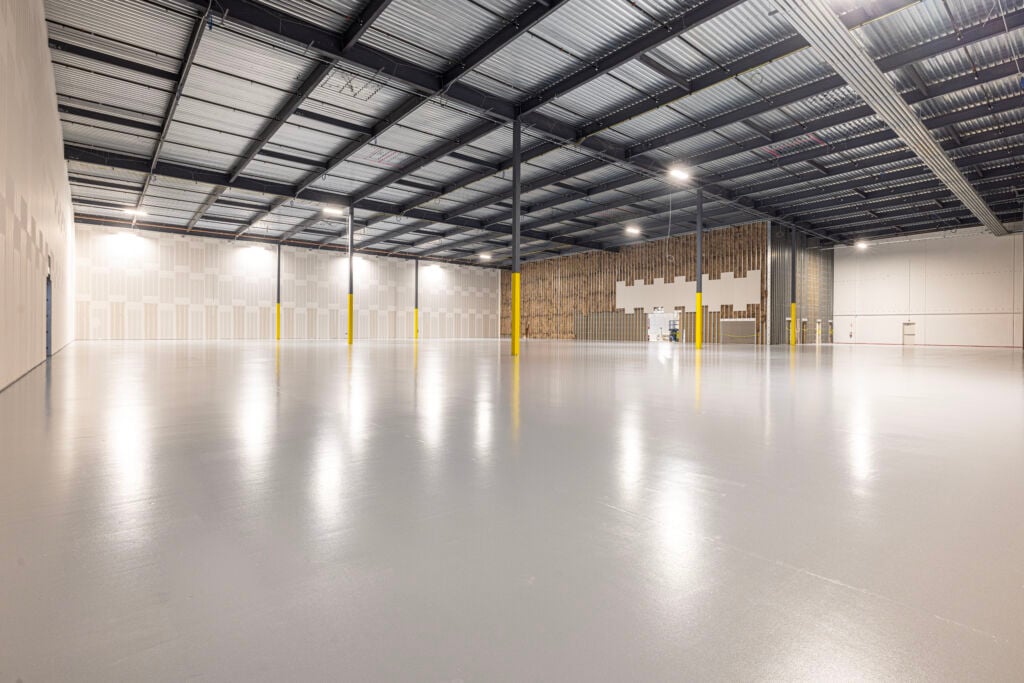
ESD Epoxy Flooring Case Study: 34,000 SF Dallas, TX
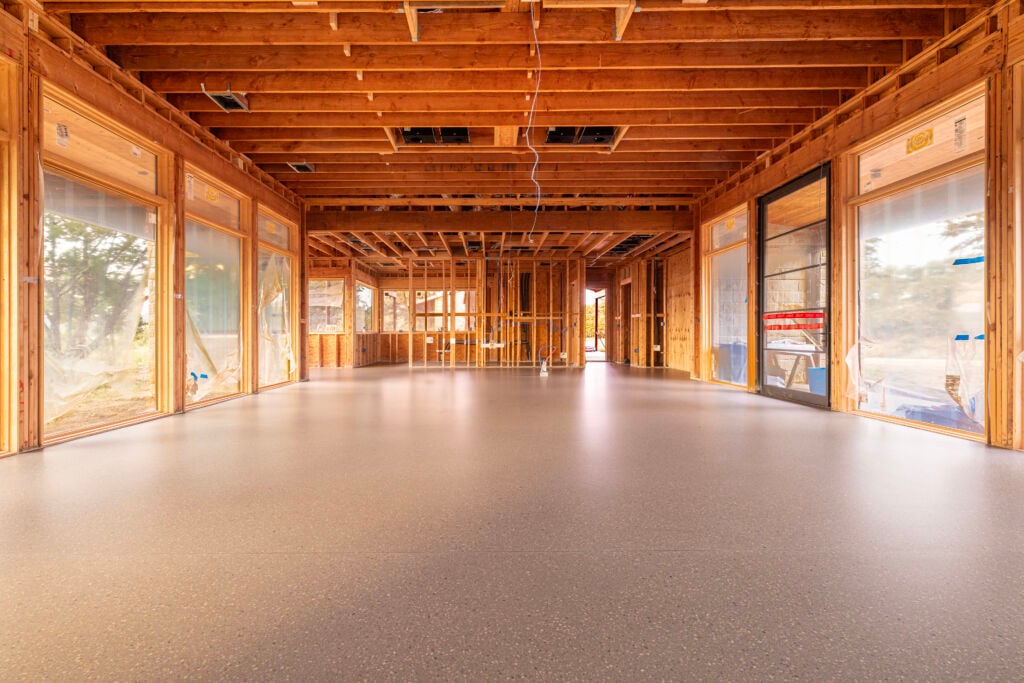
Residential Terrazzo Floors in Fort Worth, Texas