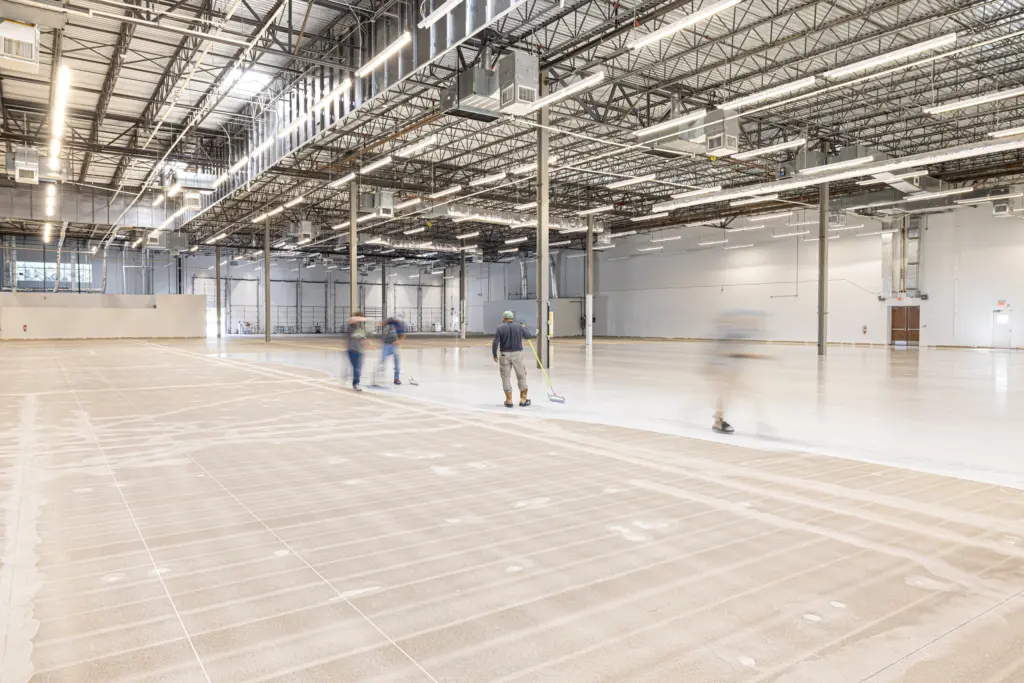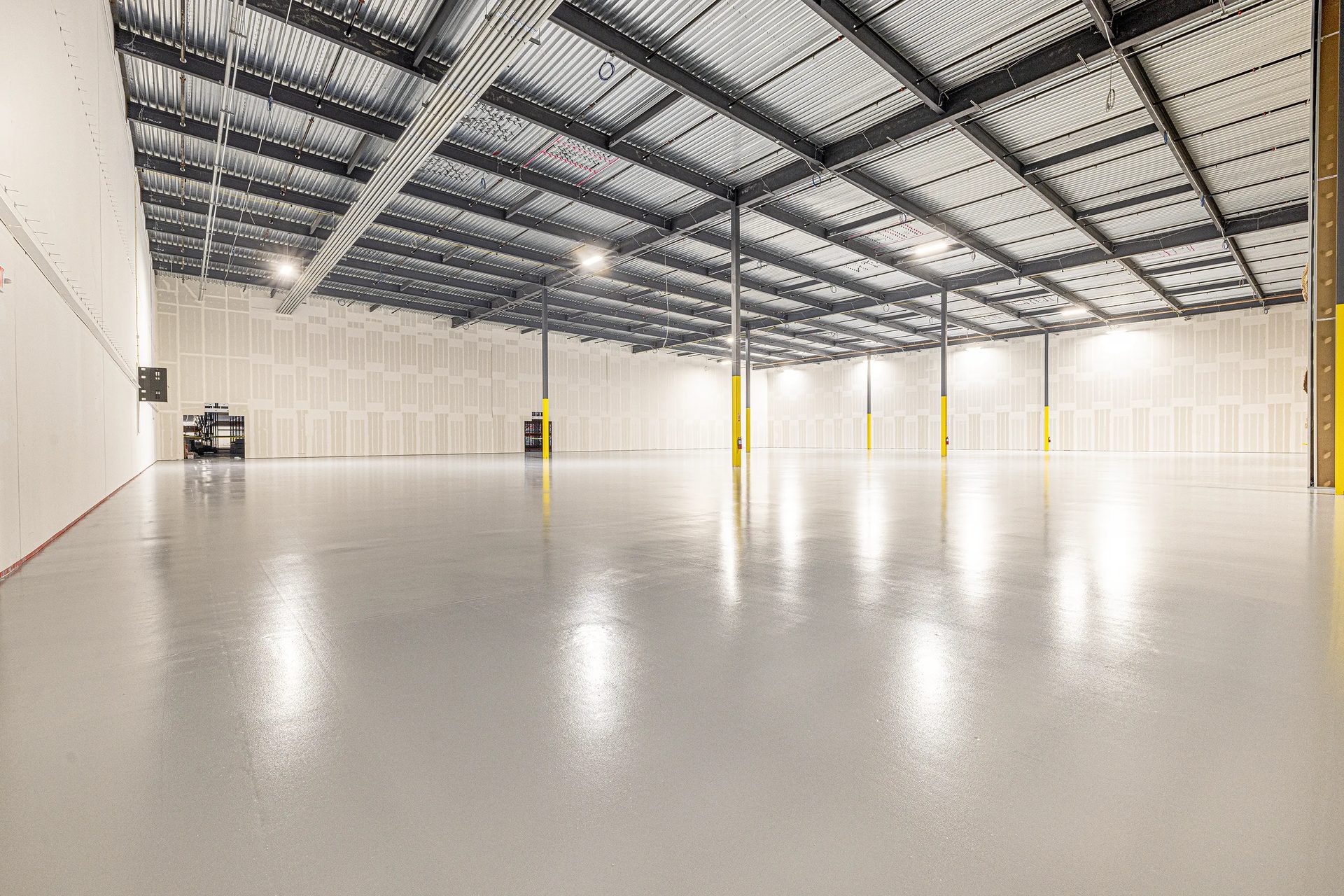
- Operating Temperature Range: holds bond at -20°F freezer slab and 33-38°F refrigerated warehouse conditions; accommodates dimensional movement across defrost cycles without delamination at the bond line
- Thermal Shock Resistance: 150°F+ differentials when hot washdown sanitation hits cold-process substrate; UC handles the cycle; rigid epoxy delaminates within 50-100 cycles
- MVER Tolerance: cold storage slabs run high MVER from ground-temperature vapor drive pushing up through a cooled slab; UC’s mortar matrix breathes; impermeable epoxy blisters from below inside the first heating cycle
- Installation Temperature: manufacturer-published low-temperature install limits respected; partial defrost coordinated with the facility’s refrigeration team where operating conditions are below the published limit; no cold-condition placement that voids warranty
- Integral Cove Base: poured monolithic with the slab to 4-6 inch height; no caulked seams to fail under freeze-thaw movement; no harborage points for USDA inspectors to flag
- Drain Terminations: sealed monolithic with the membrane; no pinholes where defrost runoff or washdown water can migrate under the coating
- Slip Resistance: broadcast aggregate built into the body coat for wet-floor traction during sanitation cycles and condensate exposure; integral to the system, not a topical coating that strips under hot washdown
- USDA-FDA Compliance: USDA acceptance for federally inspected cold storage of meat, poultry, dairy, and RTE product; FDA 21 CFR 175.300 incidental food contact; HACCP/SQF/GFSI program support
- Surface Preparation: shot blast or diamond grind to ICRI 310.2 CSP 4-5; ASTM F2170 in-situ moisture probe testing before primer, with construction-sequence interpretation for slabs that have been refrigerated and thawed
- Phased Installation: 3-5 day windows per room, sequenced around inventory-relocation windows; foot traffic returns at 12-24 hours, full chemical service within 72 hours
- Applications:
- – freezer warehouses
- – refrigerated distribution centers
- – cold rooms in food and beverage processing
- – dairy and meat cold storage
- – RTE staging coolers
- – beverage distribution coolers
- – pharmaceutical cold storage
- – walk-in freezers in commercial kitchens
- Pricing: $8-15/sqft installed depending on system thickness, cove base linear footage, drain count, and substrate condition (including any defrost sequencing required for installation temperature)
Phone: +1 (844) 687-1961
Cold storage flooring fails the spec test most resinous systems are written against. Most products are not formulated to install below 50°F or hold bond at sustained sub-freezing temperatures. Freezer warehouses run their slabs at -10°F to -20°F, while refrigerated warehouses and cold rooms hold 33-38°F. The substrate moves dimensionally with every defrost cycle. And anywhere food is stored — which is most cold storage in this country — periodic washdown sanitation puts a hot wet load on a cold floor, generating exactly the thermal shock that takes rigid coatings apart at the bond line. Operators searching for cold storage flooring or freezer floor coating usually arrive after the previous floor failed, after a sanitation audit flagged the substrate, or after a new building’s GC realized halfway through the project that the resinous flooring spec’d in section 09 67 23 cannot be installed in the conditions on site.
Cementitious urethane holds up because the urethane-mortar matrix bonds to concrete at temperatures and moisture conditions that defeat epoxy. UC handles the dimensional movement of a slab cycling between deep-freeze and defrost. It accommodates the 150°F+ thermal shock of a hot washdown landing on -20°F substrate without delaminating at the bond. It tolerates the moisture vapor drive that runs high in cold storage — slabs cool from above while ground temperature pushes vapor up, generating the exact MVER conditions that lift impermeable epoxy from below within the first heating-and-cooling cycle. UC manufacturers publish lower installation-temperature limits than epoxy, which matters when the building is already under refrigeration and shutdown is not on the table. Where the published low-temperature limit is still above the operating condition, partial defrost is coordinated with the facility’s refrigeration team and sequenced with the install rather than running cold during placement.
Specifying cold storage flooring correctly means treating it as a thermal-cycling problem first and a chemistry problem second. Integral cove base poured monolithic with the slab eliminates the floor-to-wall seam where condensate collects and where a caulked cove will fail under freeze-thaw movement. Drains in cold rooms get the same monolithic seal — pinholes around drain bodies are the first place water from defrost or washdown finds its way under the coating. Slip resistance is built in with broadcast aggregate sized to wet conditions. For USDA-inspected cold storage handling meat, poultry, dairy, or RTE product, the UC system delivers USDA acceptance and FDA 21 CFR 175.300 compliance from the same construction that handles the thermal load.
Craftsman has been installing industrial flooring since 1999. Cold storage projects in food and beverage processing, dairy and meat plants, RTE staging and beverage distribution coolers, and dedicated freezer warehouse and pharmaceutical cold storage facilities. In-house W-2 crews mobilize nationwide. Surface prep is shot blast or diamond grind to ICRI 310.2 CSP 4-5. Slab moisture is verified with ASTM F2170 in-situ probes, which for cold storage are read with attention to the construction sequence — slabs that have been refrigerated and then thawed for installation read differently than slabs that have never been cooled. Pricing for installed UC sits in the $8-15/sqft range. Foot traffic returns at 12-24 hours after final coat, full chemical service within 72 hours. For active cold storage operations, installation is sequenced one room or zone at a time around inventory-relocation windows so the rest of the cold chain keeps running.
Our Clients




















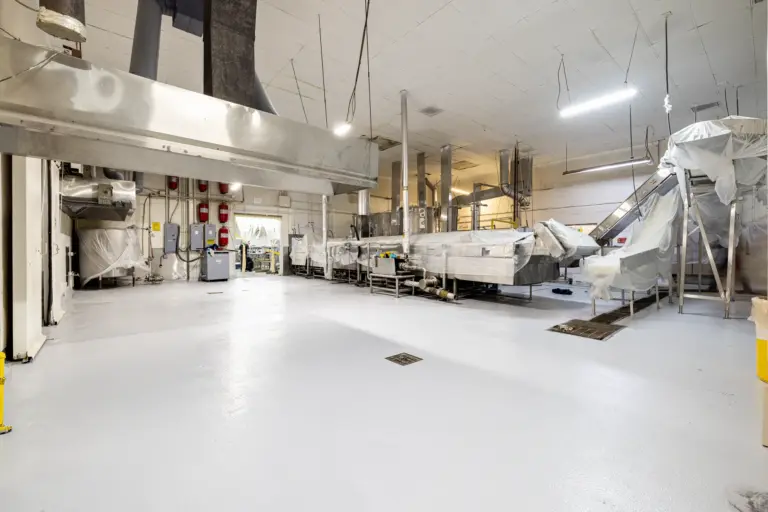
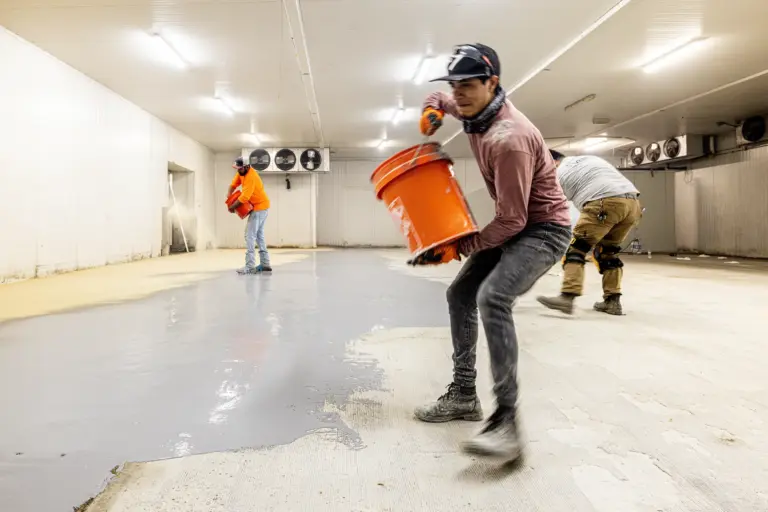
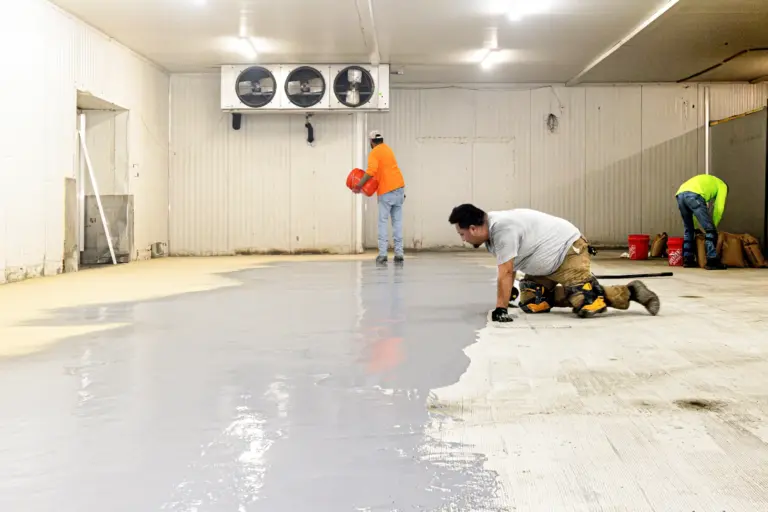
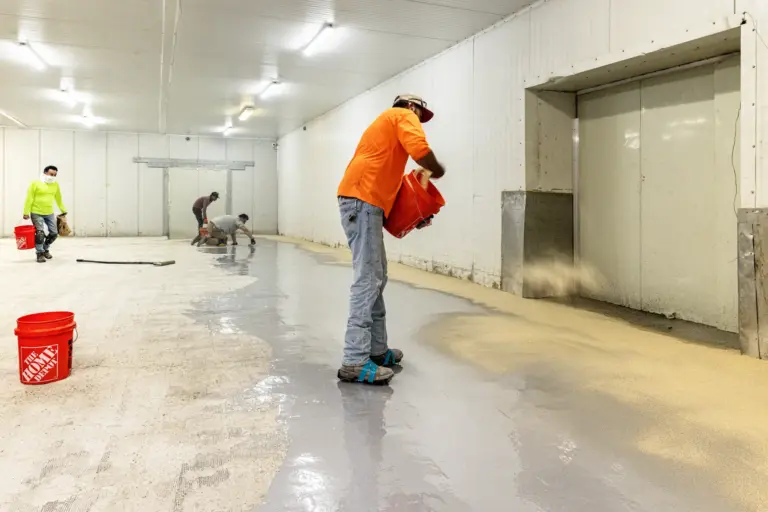
urethane Cement Installation Gallery
Request a Proposal
Submit project parameters for preliminary analysis. Commercial estimates typically returned within 24 hours.
urethane Cement Flooring Knowledge Center
Resource links
Industries Served
Capabilities
Systems & Selection
Maintenance & Cost
Frequently Asked Questions
Installed UC pricing for cold storage runs $8-15/sqft. The drivers inside that range are system thickness (washdown zones in cold storage typically spec 3/8″ mortar with broadcast aggregate; deep-freeze warehouses with no sanitation washdown can run 3/16″), integral cove base linear footage, drain count, and whether substrate condition or defrost sequencing add to the install scope. New construction with the slab still warm reads at the lower end. Replacement work in an active freezer warehouse with sequenced inventory relocation lands at the upper end.
Cold storage takes epoxy apart through three failure modes, all on a 24-30 month timeline once the slab and the building start cycling. Moisture vapor blistering shows up first — cold storage slabs cool from above while ground temperature pushes vapor up, generating MVER readings that exceed epoxy manufacturer tolerances and lift the impermeable coating from below within the first heating-and-cooling cycle. Thermal shock from washdown sanitation hitting cold-process substrate cycles the floor across 150°F+ differentials, pulling the rigid coating off the bond line. Freeze-thaw dimensional movement opens cracks through the rigid coating that follow slab joints and stress lines. Cementitious urethane handles all three because the mortar matrix accommodates movement, breathes, and bonds at temperatures epoxy cannot.
Sometimes, depending on the manufacturer’s published low-temperature install limit and the operating temperature of the room. UC products generally have lower install temperature minimums than epoxy, but most still require ambient and substrate temperatures above freezing during placement. For deep-freeze warehouses operating at -10°F to -20°F, partial defrost during installation is the standard approach — coordinated with the facility’s refrigeration team and operations leads so the cold chain is preserved through inventory relocation. For refrigerated warehouses at 33-38°F, installation conditions are usually within manufacturer limits and the room can stay running with minor temperature adjustment. The consultation walk confirms which approach applies to a given project.
Yes. UC systems meet USDA acceptance for federally inspected cold storage of meat, poultry, dairy, and RTE product, and FDA 21 CFR 175.300 for incidental food contact. The seamless, non-porous, monolithic-cove-base construction supports HACCP, SQF, and GFSI program requirements. The same UC system that handles the thermal cycling and MVER conditions of cold storage also delivers the food-safety compliance USDA inspectors and third-party auditors require.
Freezer warehouses and refrigerated distribution centers, cold rooms inside food and beverage processing plants, dairy and meat cold storage, RTE staging coolers, beverage distribution coolers, pharmaceutical cold storage, and walk-in freezers in commercial kitchens and central commissaries. Anywhere a slab runs below 50°F operating temperature and either thermal cycling, washdown sanitation, or USDA inspection is part of the operating reality.
Nationwide installation. Estimating and scheduling coordinated through Dallas headquarters. In-house W-2 crews mobilized to project sites. Craftsman Concrete has been installing industrial flooring since 1999.
Blog
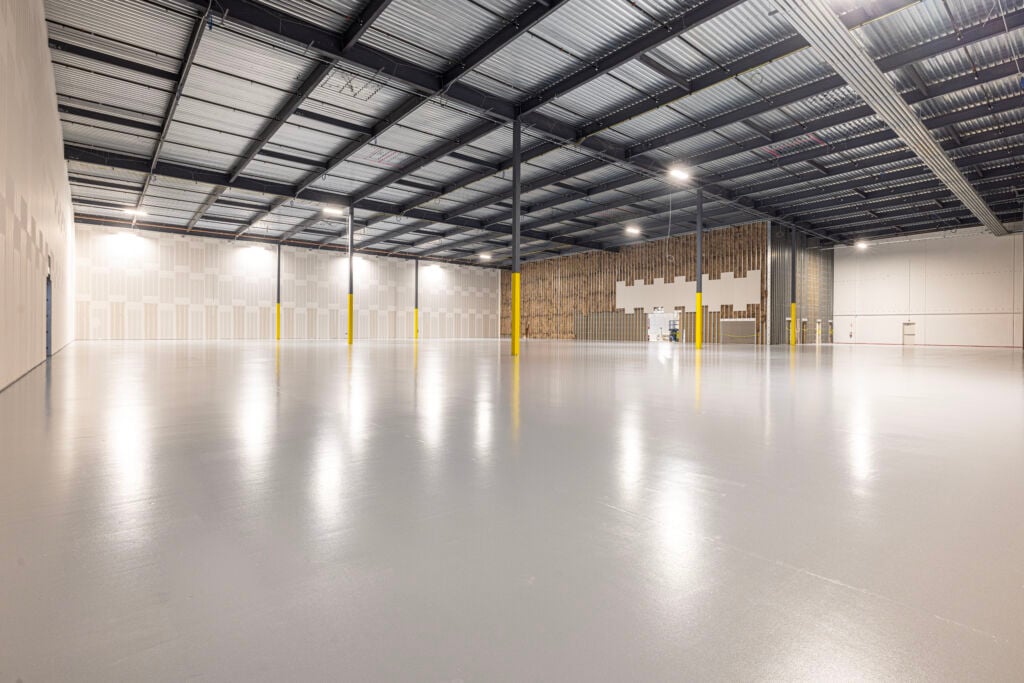
ESD Epoxy Flooring Case Study: 34,000 SF Dallas, TX
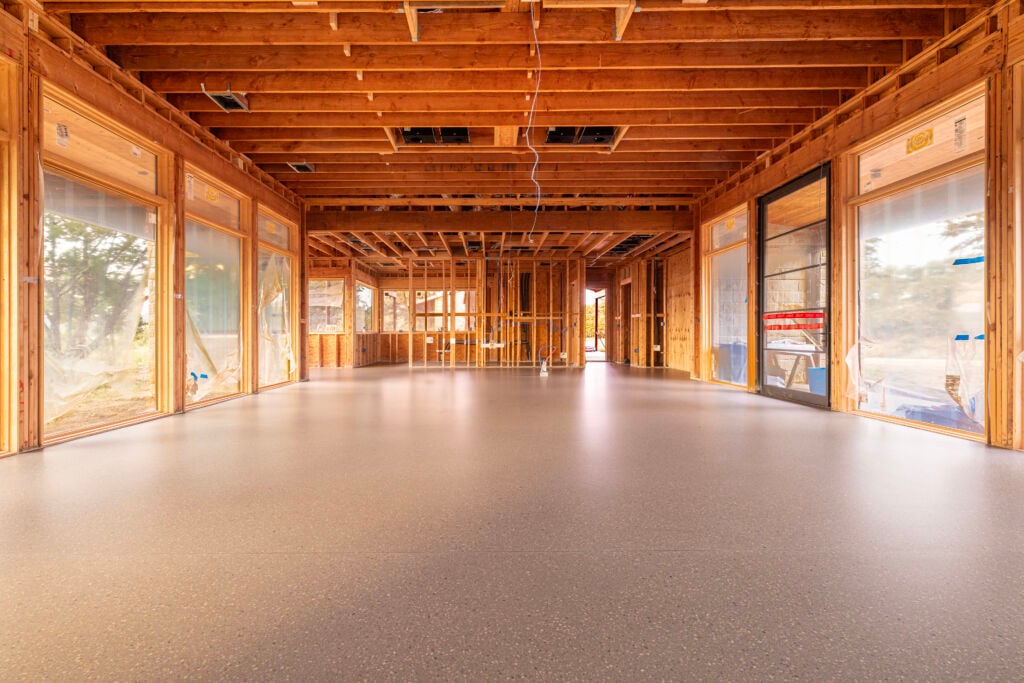
Residential Terrazzo Floors in Fort Worth, Texas