- Current Name: Sherwin-Williams Poly-Crete SL
- Former Names: Dur-A-Flex Poly-Crete SL; General Polymers FasTop Multi Topfloor SL23
- System Type: 100% solids, aromatic, cementitious urethane self-leveling floor system
- Nominal Thickness: 1/8 inch
- Finish: Smooth, self-leveling
- Hardness: Shore D 75–80 (ASTM D2240)
- Compressive Strength: 9,000 psi (ASTM C579)
- Tensile Strength: 2,175 psi (ASTM D638); 1,000 psi (ASTM C307)
- Flexural Strength: 5,076 psi (ASTM D790); 2,400 psi (ASTM C580)
- Abrasion Resistance: 24 mg loss (ASTM D4060)
- Coefficient of Friction: >0.6 static (ASTM D2047)
- Moisture Tolerance: Moisture mitigating; installs in environments up to 99% relative humidity per the 02/26 system overview
- Substrate Preparation: Shot blast to CSP 3–4; keyway terminations at doorways and exposed edges; no feathered edges
- Cure to Light Foot Traffic: 8 hours minimum at 70°F; 24 hours minimum at 50°F
- Topcoats: Optional, for added chemical and abrasion resistance
Phone: +1 (844) 687-1961
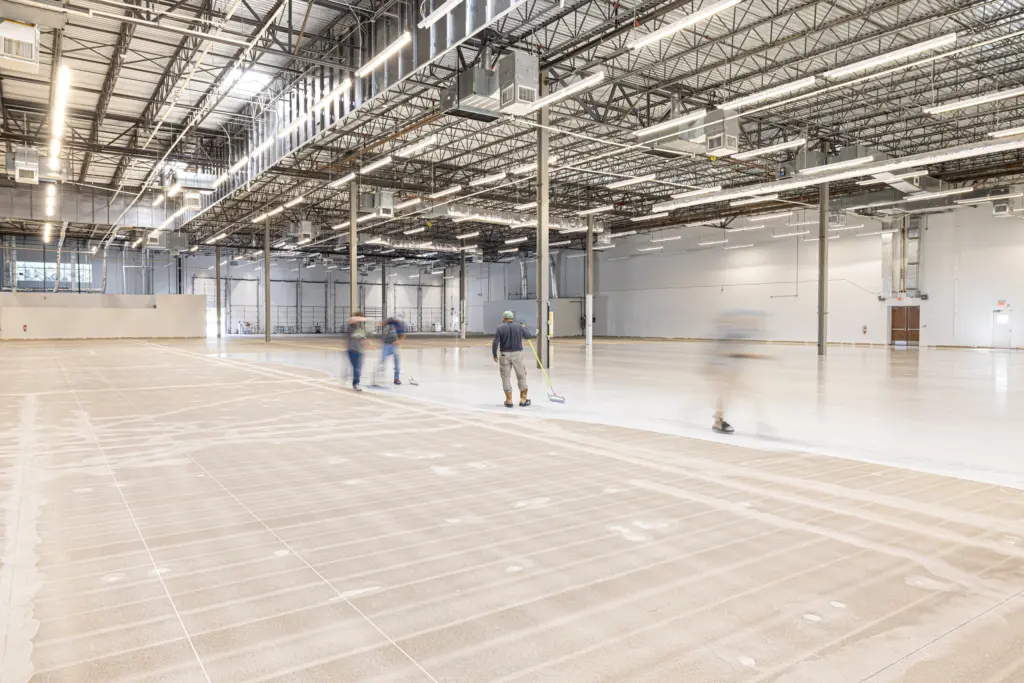
Sherwin-Williams Poly-Crete SLB is a 100% solids, seamless cementitious urethane self-leveling floor system, installed at a nominal 3/16 inch with a flintshot quartz aggregate broadcast that produces a slip-resistant finish. Specs written as General Polymers FasTop Topfloor SL13 map to Poly-Crete SLB, and the older Dur-A-Flex Poly-Crete SLB name refers to the same product under its pre-2022 ownership. The system pours as a self-leveling base coat and takes the quartz broadcast. A grout coat and seal coat finish it. Poly-Crete Color-Fast serves where UV color retention matters; Resuflor Glaze or Resutile AT where abrasion governs. The base coat installs over concrete measuring up to 99% relative humidity per ASTM F2170, which on damp or green slabs removes the separate moisture-mitigation primer an epoxy specification would require.
Craftsman Concrete Floors installs Poly-Crete SLB as an authorized Sherwin-Williams High Performance Flooring installer, with in-house W-2 crews and pre-install substrate testing on every project. Sherwin-Williams documents the system for commercial kitchens, food processing, breweries and distilleries, warehouses, storage, light manufacturing, veterinary and kennel spaces, and high-traffic areas. This page holds the product data. Duty-context depth lives on the vertical pages, and the rest of the line is compared on the Sherwin-Williams family page. Where wash water, grease, or process spillage makes slip resistance the governing spec, SLB is the broadcast member of the Poly-Crete line.
Our Clients




















Poly-Crete SLB System Data and Naming
Every value in this section traces to current Sherwin-Williams documentation, meaning the Poly-Crete SLB submittal package and the PM-1530952-08 system overview. The subheads cover the build sequence, the moisture and temperature behavior that drives most SLB specifications, and the naming history a spec reader needs when a construction document carries a legacy product name. Per-component data lives on the manufacturer documents linked below.
Build Sequence — Base Coat, Broadcast, Grout, and Seal
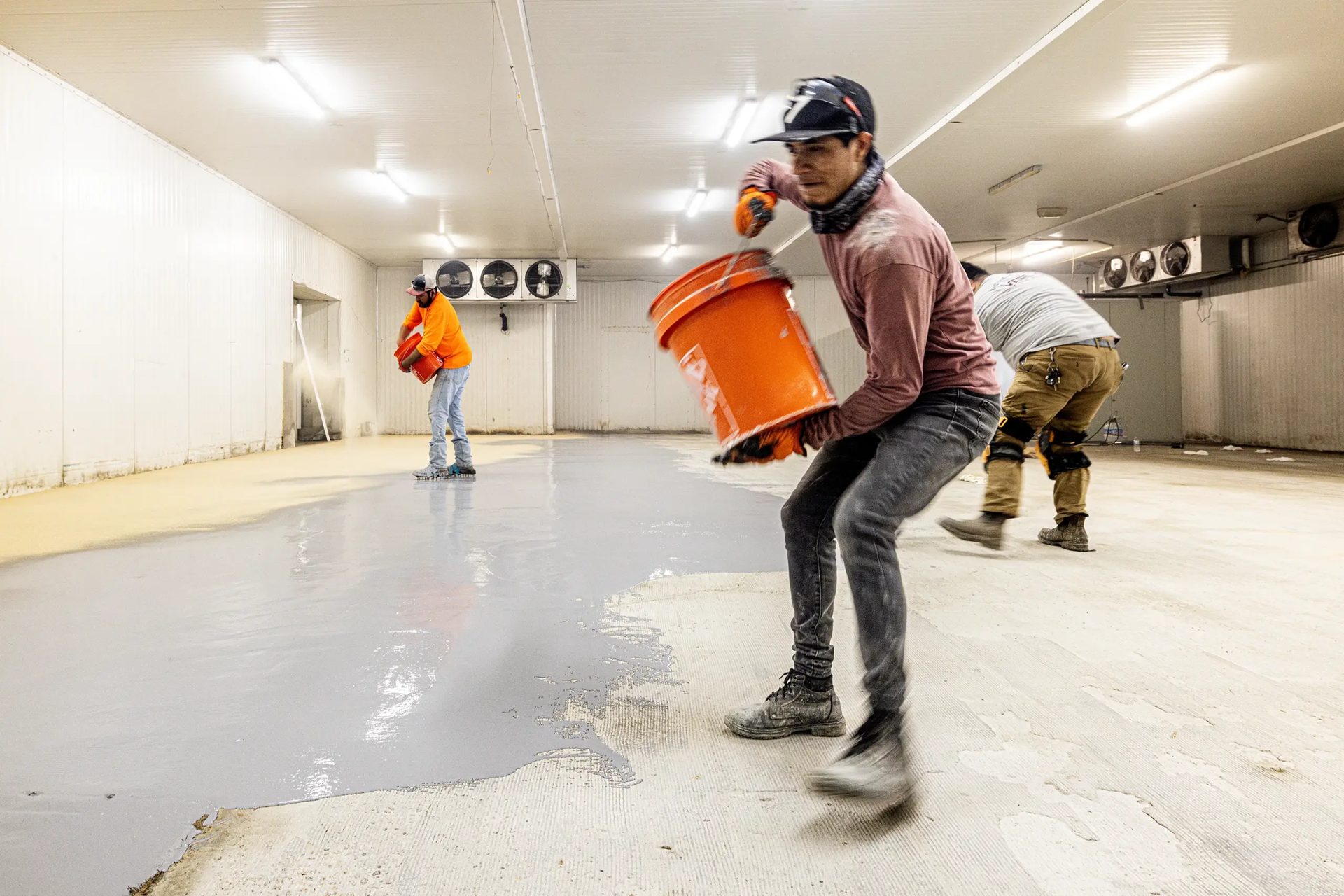
The system installs in up to five passes. An optional Poly-Crete TF Plus primer goes down first where the substrate is very porous or where F60 aggregate will be broadcast; most slabs skip it. The Poly-Crete SL base coat pours at 1/8 inch, receives the flintshot quartz broadcast, and a grout coat locks the aggregate down before the seal coat goes on. Because the quartz sits in the urethane matrix rather than on top of a cured film, the texture is structural; it does not wear away the way a topical grit does. Compressive strength is 9,000 psi per ASTM C579, with Shore D hardness of 65 in the submittal package and 65 to 85 by seal-coat selection in the current system overview.
Moisture and Temperature Behavior on Real Slabs
Poly-Crete SLB installs over concrete measuring up to 99% relative humidity per ASTM F2170, which qualifies green slabs and damp on-grade pours that would force a mitigation primer under an epoxy specification. Craftsman verifies the number rather than assuming it. In-situ RH probes go into every substrate before the pour, and mechanical preparation follows the ICRI 310.2 surface profile the application instructions call for. On temperature, the current system overview reports no slip or flow at 158°F under MIL-D-3134J, a resistance-to-elevated-temperatures result, and Sherwin-Williams rates the system thermal shock resistant for environments with high thermal cycling or rapid temperature change — hot washdown over a chilled production slab is the duty case that language describes.
If Your Spec Still Reads FasTop Topfloor SL13
A construction document citing General Polymers FasTop Topfloor SL13 is calling for today’s Poly-Crete SLB. The FasTop urethane cement line folded into Poly-Crete after Sherwin-Williams acquired Dur-A-Flex on July 1, 2022, and completed the High Performance Flooring branding transition in 2025; the mapping runs one legacy code to one current product, so the code routes here and nowhere else in the line. Naming has also moved at the document level. The current PM-1530952-08 system overview is titled Poly-Crete SLB-UV, while the submittal package and specification language remain Poly-Crete SLB, and both names describe one system. Craftsman installs against either name; project scoping starts on the urethane cement contractor page.
Request a Proposal
Submit project parameters for preliminary analysis. Commercial estimates typically returned within 24 hours.
urethane Cement Flooring Knowledge Center
Resource links
Sherwin-Williams Poly-Crete Systems
Selection & Standards
Technical Performance
Industries Served
Cost, Comparisons & Legacy Names
Sika Ucrete Systems
Frequently Asked Questions
Poly-Crete SLB is specified for wet-duty floors where slip resistance governs, including commercial kitchens, food processing areas, breweries and distilleries, veterinary and kennel spaces, warehouses, and high-traffic zones. Those uses come from current Sherwin-Williams documentation, and the flintshot quartz broadcast is what earns them: aggregate seated in the body of the wear surface. Facilities that need a smooth finish at lighter duty specify Poly-Crete SL instead.
Two former names apply. Under Dur-A-Flex ownership the product was Dur-A-Flex Poly-Crete SLB, and a specification that reads General Polymers FasTop Topfloor SL13 routes to Poly-Crete SLB today. Sherwin-Williams acquired Dur-A-Flex on July 1, 2022, and the 2025 High Performance Flooring branding transition consolidated the legacy General Polymers urethane cement naming into the Poly-Crete line.
Poly-Crete SLB-UV is the title on Sherwin-Williams’ current system overview, document PM-1530952-08, for the same Poly-Crete SLB system described on this page. The build, thickness, and broadcast are unchanged, and the submittal package and specification naming remain Poly-Crete SLB, so the two names describe one product. Within the system, documented UV stability attaches to the Poly-Crete Color-Fast topcoat, which Sherwin-Williams lists with UV stability for color retention and a semi-gloss finish.
3/16 inch nominal finished thickness. The Poly-Crete SL base coat goes down at 1/8 inch, and the flintshot quartz broadcast plus grout and seal coats bring the system to its finished height. That places SLB between the 1/8-inch smooth Poly-Crete SL and the heavier trowel-applied Poly-Crete HF in the line.
The broadcast is the difference. Poly-Crete SL cures smooth at 1/8 inch; SLB adds a flintshot quartz aggregate broadcast and finishes at a nominal 3/16 inch with a slip-resistant texture specified to meet ANSI A326.3, which sets a wet DCOF threshold of 0.42 for level interior floors walked on when wet. Dry areas where cleanability drives the selection take SL; wet-process floors take SLB.
Current Sherwin-Williams documentation lists Poly-Crete Color-Fast, Poly-Crete TF Plus, Resuflor Glaze, Resuflor 3741, Resuflor UVE, Accelera 4850, and Resutile AT. Seal-coat selection also moves the system’s hardness; the current system overview reports Shore D 65 with Color-Fast, 69 with Accelera 4850, 75 to 80 with Resuflor Glaze or Resutile AT, 80 with Resuflor 3741, and 80 to 85 with Resuflor UVE.
Yes. The system installs over concrete measuring up to 99% relative humidity per ASTM F2170, and on most damp or green slabs that removes the separate moisture-mitigation primer an epoxy system would need. Craftsman confirms the slab qualifies with in-situ testing ahead of installation, and the readings go into the project closeout file.
Light foot traffic is allowed 8 hours after the final coat at 70°F per the Sherwin-Williams application instructions, and cooler conditions stretch the wait to a minimum of 24 hours at 50°F. Earlier in the sequence, the base coat needs 8 hours at 70°F before the broadcast goes down. Zone-by-zone phasing around production is scheduled at the project level.
Craftsman Concrete Floors installs Poly-Crete SLB against both current and legacy specification language — a document citing General Polymers FasTop Topfloor SL13 is fulfilled with Poly-Crete SLB under the current naming, with the substitution recorded in the submittal. In-house W-2 crews provide national service coverage, and the current manufacturer documentation linked on this page is what the installation is built from.
Blog
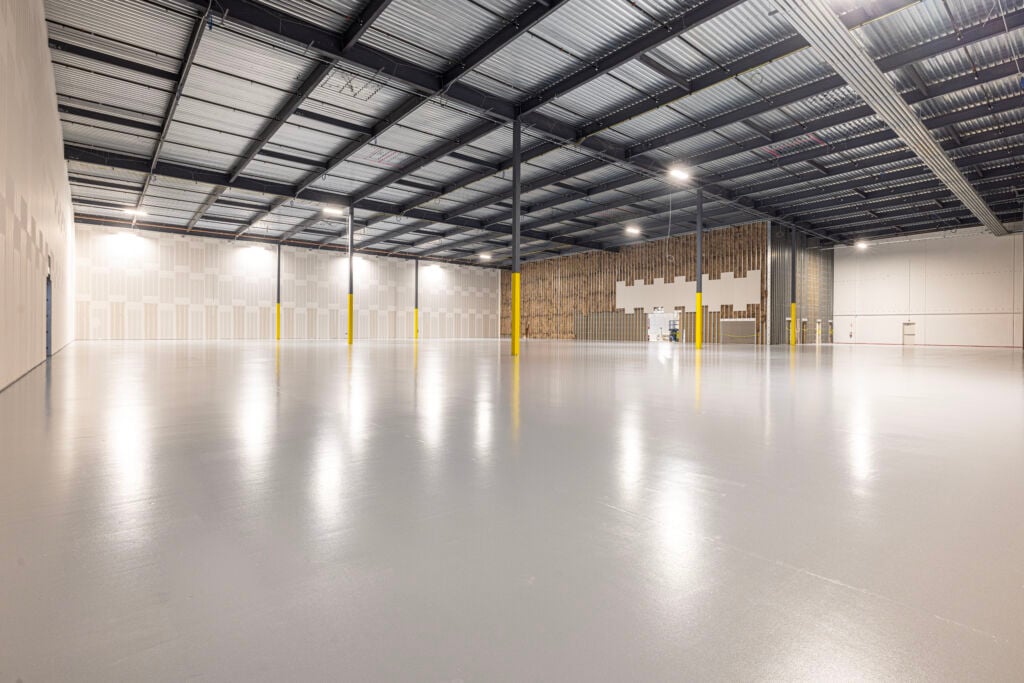
ESD Epoxy Flooring Case Study: 34,000 SF Dallas, TX
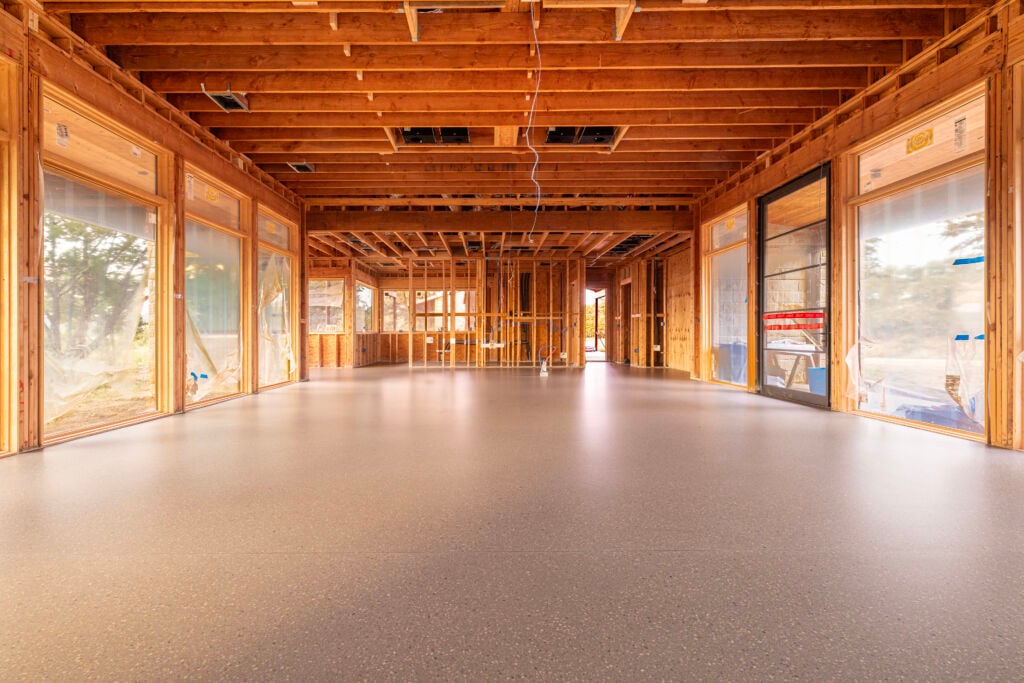
Residential Terrazzo Floors in Fort Worth, Texas