- Current Name: Sherwin-Williams Poly-Crete SL
- Former Names: Dur-A-Flex Poly-Crete SL; General Polymers FasTop Multi Topfloor SL23
- System Type: 100% solids, aromatic, cementitious urethane self-leveling floor system
- Nominal Thickness: 1/8 inch
- Finish: Smooth, self-leveling
- Hardness: Shore D 75–80 (ASTM D2240)
- Compressive Strength: 9,000 psi (ASTM C579)
- Tensile Strength: 2,175 psi (ASTM D638); 1,000 psi (ASTM C307)
- Flexural Strength: 5,076 psi (ASTM D790); 2,400 psi (ASTM C580)
- Abrasion Resistance: 24 mg loss (ASTM D4060)
- Coefficient of Friction: >0.6 static (ASTM D2047)
- Moisture Tolerance: Moisture mitigating; installs in environments up to 99% relative humidity per the 02/26 system overview
- Substrate Preparation: Shot blast to CSP 3–4; keyway terminations at doorways and exposed edges; no feathered edges
- Cure to Light Foot Traffic: 8 hours minimum at 70°F; 24 hours minimum at 50°F
- Topcoats: Optional, for added chemical and abrasion resistance
Phone: +1 (844) 687-1961
Sherwin-Williams Poly-Crete SL is a 100% solids, aromatic cementitious urethane floor system that self-levels to a smooth, seamless finish at a nominal 1/8 inch, specified where finish flatness and cleanability govern rather than broadcast slip texture. It is the smooth grade of the Poly-Crete urethane cement line. Specifications written as Dur-A-Flex Poly-Crete SL or General Polymers FasTop Multi Topfloor SL23 map to Poly-Crete SL, the same system under its current Sherwin-Williams High Performance Flooring name. Craftsman Concrete Floors installs Poly-Crete SL as an authorized Sherwin-Williams High Performance Flooring installer, and the current manufacturer data sheet is embedded on this page for submittals.
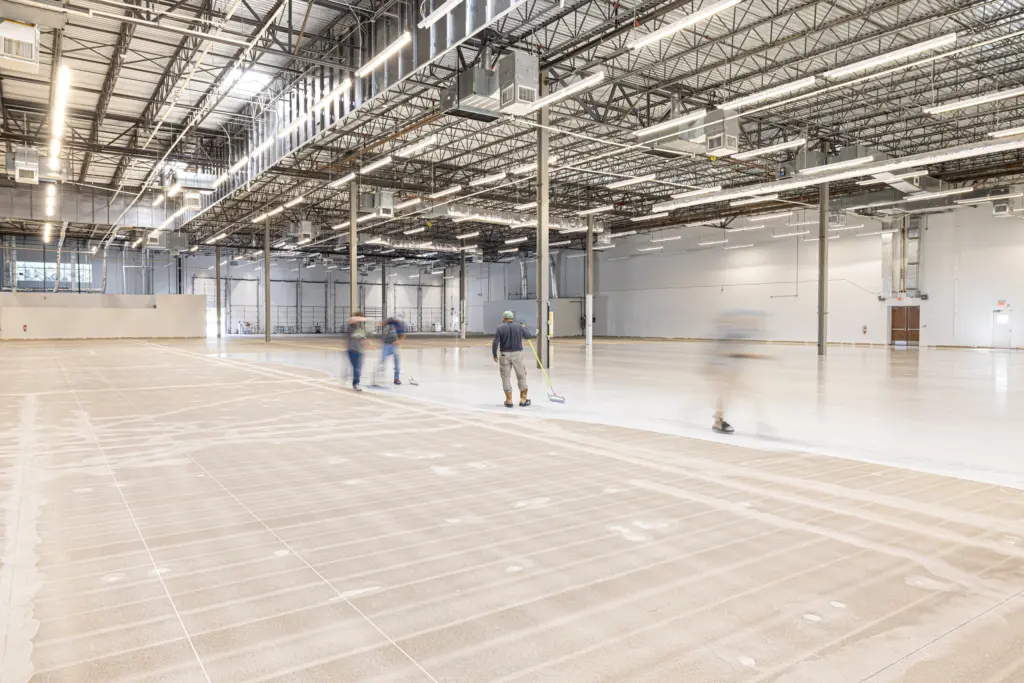
Its published duty contexts run to cleanrooms, laboratories, light manufacturing, and aircraft hangar or high-bay floors, placements where a flat urethane cement surface earns the specification without a quartz broadcast. Thickness sorts the line. Poly-Crete SL runs 1/8 inch; the broadcast Poly-Crete SLB installs at approximately 3/16 inch; the smooth medium-duty Poly-Crete MD self-levels at 3/16 to 1/4 inch. The 02/26 system overview publishes 9,000 psi compressive strength (ASTM C579) and Shore D 75-80 hardness (ASTM D2240) for this system specifically, and the exact figures for any build belong on the embedded data sheet.
Our Clients




















About Sherwin-Williams Poly-Crete SL
Poly-Crete SL is one of the Poly-Crete floor builds Craftsman installs; inside the line, duty and texture drive the selection. Smooth systems clean faster; broadcast systems grip wet. The numbers on this page come from the Sherwin-Williams Poly-Crete SL system overview and application instructions, both dated 02/26 and linked in the data sheet section below, so a submittal can cite them directly.
Smooth Self-Leveling at a Nominal 1/8 Inch
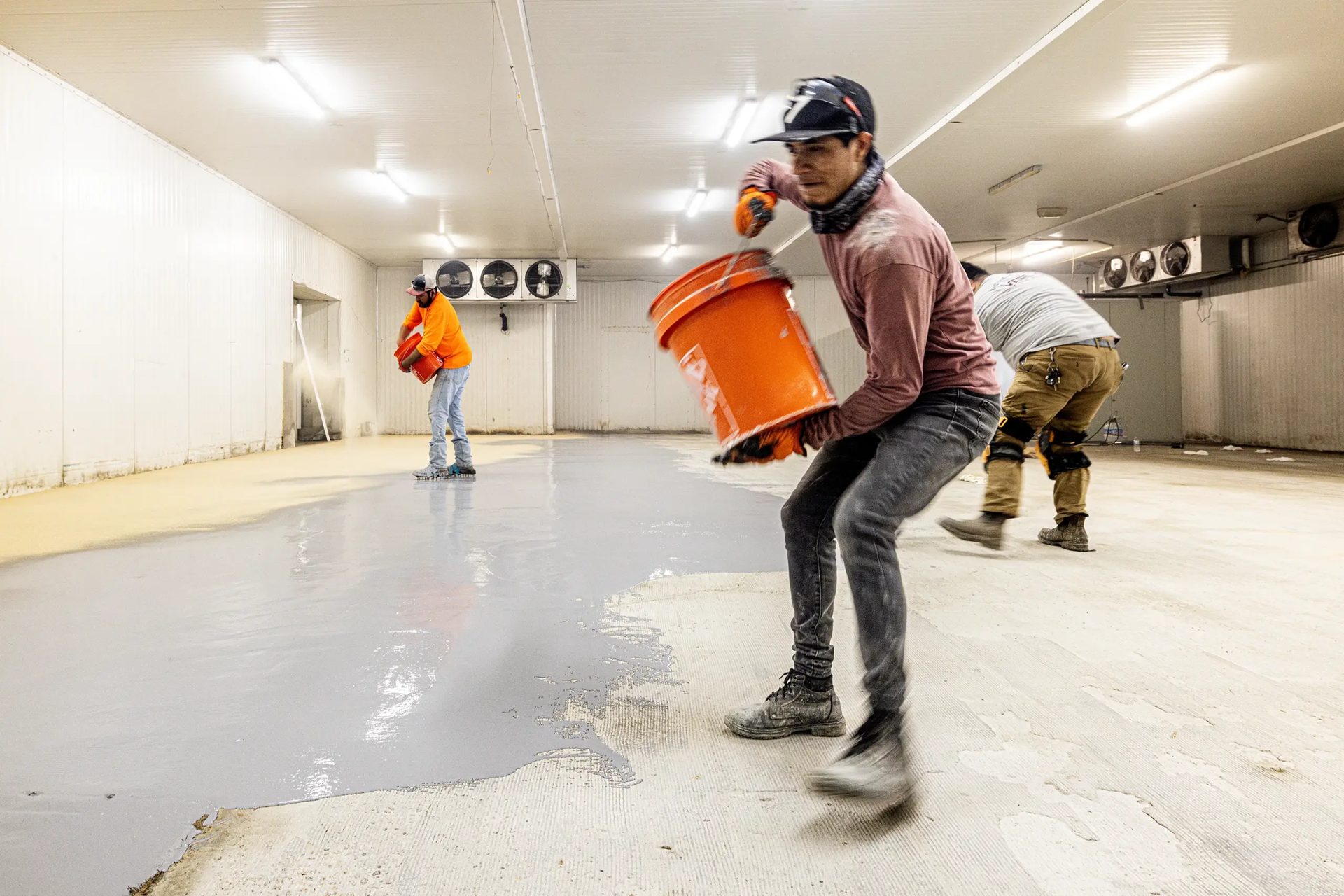
A 1/2-inch V-notched squeegee places Poly-Crete SL at 1/8 inch, and the material levels to a smooth wearing surface with no joints in the field of the floor. The current application instructions bound placement at 60°F to 85°F and call for laying out sections a crew can finish inside 15 minutes at 70°F, which is scheduling detail that matters in occupied buildings. Slip performance is published as a static coefficient of friction above 0.6 (ASTM D2047); where wet or greasy traffic makes broadcast grip the governing requirement, the specification moves to Poly-Crete SLB and its quartz broadcast. Optional topcoats add chemical and abrasion resistance where service demands them.
Poly-Crete SL Installs Where Epoxy’s Moisture Limits Stall the Schedule
Moisture headroom is the working reason cementitious urethane gets specified on compressed schedules: the 02/26 system overview lists Poly-Crete SL as moisture mitigating at slab readings up to 99% relative humidity, with a body coat that eliminates the separate primer in most environments. Epoxy films on the same slab would wait on dry-down or a mitigation coat. The substrate work still governs the result. Craftsman verifies slab moisture with ASTM F2170 in-situ probes before placement, shot-blasts the surface to a CSP 3-4 profile per ICRI 310.2, and terminates the system in keyway grooves at doorways and exposed edges because the application instructions bar feathered edges outright.
Two Retired Names, One Current System
Legacy routing for this floor is exact: specifications written as General Polymers FasTop Multi Topfloor SL23 map to Poly-Crete SL, and specifications written as Dur-A-Flex Poly-Crete SL carry the name forward unchanged. One code, one destination. Sherwin-Williams acquired Dur-A-Flex on July 1, 2022 and retained the Poly-Crete product names; the separate 2025 High Performance Flooring transition folded the General Polymers FasTop urethane cement line into Poly-Crete. Each FasTop code routes to exactly one current product, so a submittal built on this page’s data sheet with a one-line name-succession note typically clears review without a substitution request. The Sherwin-Williams brand page covers the full Poly-Crete and Hybri-Flex line, and the urethane cement contractor page covers engaging Craftsman for the install.
Request a Proposal
Submit project parameters for preliminary analysis. Commercial estimates typically returned within 24 hours.
urethane Cement Flooring Knowledge Center
Resource links
Sherwin-Williams Poly-Crete Systems
Selection & Standards
Technical Performance
Industries Served
Cost, Comparisons & Legacy Names
Sika Ucrete Systems
Frequently Asked Questions
Poly-Crete SL is the smooth self-leveling floor in the Sherwin-Williams High Performance Flooring cementitious urethane line, installed at a nominal 1/8 inch. Sherwin-Williams publishes 9,000 psi compressive strength (ASTM C579) and Shore D 75-80 hardness (ASTM D2240) for the system, with cleanrooms, laboratories, light manufacturing, and aircraft high bays as its listed uses. Older specifications may call it Dur-A-Flex Poly-Crete SL or General Polymers FasTop Multi Topfloor SL23; both names land on this system.
A nominal 1/8 inch, placed with a 1/2-inch V-notched squeegee and left to self-level. For comparison inside the line, Poly-Crete SLB broadcasts to approximately 3/16 inch and Poly-Crete MD self-levels at 3/16 to 1/4 inch, so SL is the pick where a thin, flat, smooth section does the job. Exact build details for a given spec come from the data sheet embedded on this page.
Dur-A-Flex Poly-Crete SL and General Polymers FasTop Multi Topfloor SL23 are the two retired names. Sherwin-Williams acquired Dur-A-Flex on July 1, 2022 and kept the Poly-Crete product names; the separate 2025 High Performance Flooring transition folded the General Polymers FasTop urethane cement line into Poly-Crete. Both legacy names route to the same current catalog listing, so a legacy callout resolves to this page’s data sheet; no product substitution is involved.
Poly-Crete SL installs. General Polymers FasTop Multi Topfloor SL23 maps to Poly-Crete SL, and no other current product claims that code. Submit the current Poly-Crete SL data sheet with a one-line name-succession note; reviewers typically treat that as a naming update rather than a substitution request. Craftsman confirms the mapping during spec review so the submittal cycle does not stall on a renamed product.
Specify SL when the floor should be flat, smooth, and fast to clean in dry-to-damp service; specify SLB when wet or greasy traffic makes broadcast grip the governing safety requirement. SLB carries a quartz broadcast at approximately 3/16 inch for exactly that duty. Texture is the whole difference in service, and over-texturing a dry-area floor surfaces later as a cleanability complaint.
Up to 99% relative humidity — the system overview lists Poly-Crete SL as moisture mitigating to that level, and the body coat eliminates the separate primer in most environments. Epoxy at the same readings typically waits on dry-down or a mitigation system, which is why cementitious urethane wins compressed construction schedules. Craftsman probes the slab per ASTM F2170 before placement; a sound, shot-blasted, keyed substrate remains a hard requirement.
Eight hours minimum at 70°F before light foot traffic, per the application instructions, and 24 hours minimum when the space holds 50°F. Heavier loads and colder slabs extend the schedule. Placement itself is bounded at 60°F to 85°F, so temporary conditioning is part of sequencing an occupied building.
Craftsman Concrete Floors installs Poly-Crete SL as an authorized Sherwin-Williams High Performance Flooring installer. In-house W-2 crews provide national service coverage, and every install closes out with audit-ready documentation of substrate testing and surface profile. The urethane cement contractor page covers scoping and scheduling an installation.
Blog
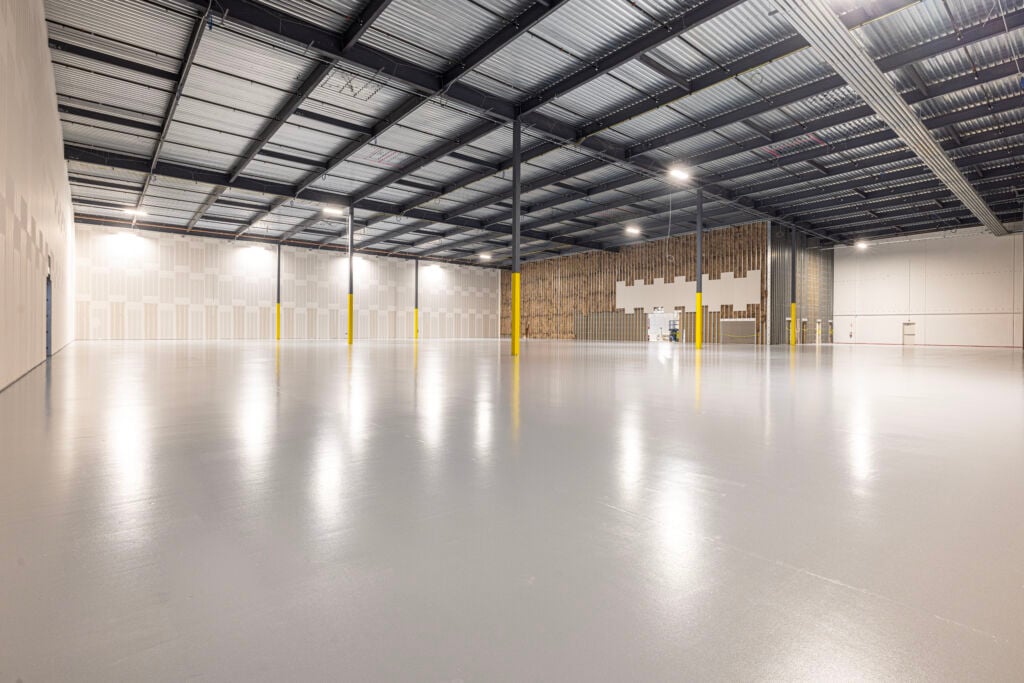
ESD Epoxy Flooring Case Study: 34,000 SF Dallas, TX
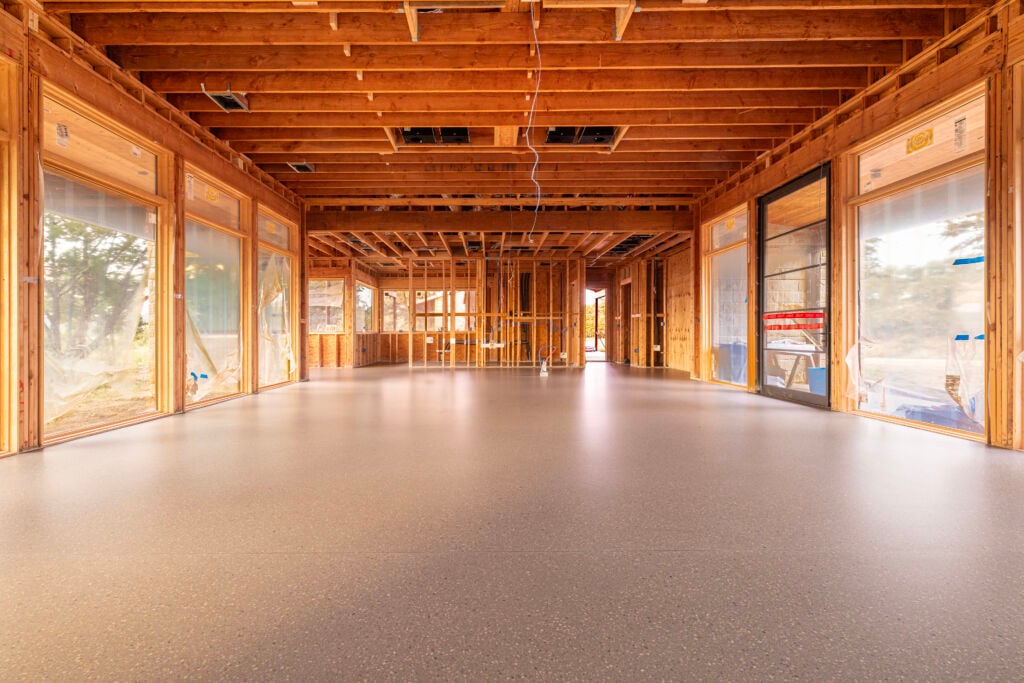
Residential Terrazzo Floors in Fort Worth, Texas