Stonhard and an independent ESD flooring contractor such as Craftsman Concrete Floors sell two different operating models for the same measurable requirement. Stonhard describes a single-source, turnkey model, manufacturing proprietary resin systems and selling material and installation under one contract with one point of contact from start to finish. Its public materials describe two kinds of field crews, its own specially trained application crews and the crews of Installation Partner businesses. Craftsman contracts as an independent ESD flooring contractor, authorized across Sherwin-Williams High Performance Flooring, PIP, and Sika, and self-performs installation with direct W-2 crews. Which model fits a given project depends on whether the specification locks one system, who employs and supervises the field crew, the testing and closeout the ESD program requires, how the warranty is administered, whose material and installer availability can hold the schedule, and how the price is formed. One-off installations and multi-site programs run under both models.
Stonhard is the practical choice when its exact system is already mandated by a valid specification, or when an addition must stay compatible with an existing Stonhard floor and its written warranty conditions. Craftsman is generally the stronger choice when the specification is open or performance-based, because compliant systems from three manufacturers can then compete against one scope, installation stays inside one contracting organization with direct W-2 crews, and the installed floor is verified per STM7.1, STM97.1, and STM97.2 with mapped readings and calibration records in the closeout package.
| Decision factor | Stonhard (manufacturer-led) | Craftsman (independent) |
|---|---|---|
| Product choice | Stonhard-manufactured systems (Stonlux ESD, Stonshield ESD, Stonclad ESD, Stonkote ESD) | Compliant systems from Sherwin-Williams High Performance Flooring, PIP, and Sika, bid against one scope |
| Who employs the installers | Describes both its own application crews and Installation Partner businesses; verify the crew’s legal employer in the project documents | Direct W-2 installation crews; installation labor is not subcontracted |
| ESD testing and closeout | States ESD properties are tested after installation; verify methods, mapping, and calibration records in the proposal | STM7.1 mapped resistance logs; STM97.1 + STM97.2 where the program requires; calibration records in closeout |
| Grounding and electrical verification | Verify ground-path design and continuity documentation in the proposal | Conductive primer and ground straps tied to building steel; documented continuity checks |
| Material and installer availability | Verify confirmed stock and assigned crew window in writing | 1–3 weeks from contract execution, driven by material availability |
| Approved-equal flexibility | Substitution within its own product family | Approved-equal proposals across three authorized manufacturers, subject to specifier approval |
| Warranty administration | Written warranty covering materials and workmanship, per its published FAQ | Manufacturer system warranty per written terms plus a Craftsman workmanship warranty; one closeout package |
| Price formation | Single-manufacturer pricing; verify line-item scope in the proposal | Multi-manufacturer system competition under an open specification |
| Field oversight | Describes field engineers, site superintendents, and project managers | Veteran W-2 leads plus corporate installation leadership and a written safety program |
| One-off project fit | Practical when its system is specified, already installed, or available for an urgent window | Full fit under open or performance-based specifications |
| Multi-site program fit | Manufacturer-led delivery through its global organization | Master Service Agreement structure for repeat and multi-location programs |
Two Contracting Models, One Measurable ESD Requirement
The two models have to produce the same result, a floor that reads inside its specified resistance band and holds that reading under the facility’s ANSI/ESD S20.20 program. The differences live upstream, in who selects the system, who employs and supervises the installers, and where accountability attaches by contract. Each is a contract term that can be confirmed before award.
How Stonhard Describes Its Single-Source Model
Stonhard manufactures its own resin flooring systems and installs them, describing itself as manufacturer, installer, and single point of contact, with project management, construction management, and architectural design and engineering support behind the sale. The company was established in 1922. Its published model is explicitly single-source and turnkey, with one organization taking responsibility for both products and installation. The ESD line is proprietary to that channel, covering Stonlux ESD, Stonshield ESD, Stonclad ESD, and Stonkote ESD along with conductive Stonchem coatings. A Stonhard contract therefore buys one manufacturer’s product family and its delivery channel together, evaluated as a single package.
What an Independent Multi-Manufacturer Contractor Sells
Craftsman Concrete Floors is a national commercial and industrial technical flooring contractor founded in 1999, and an Authorized SW + PIP + Sika installer with all three authorizations held at parity. Under an open or performance-based specification, that authorization lets compliant ESD systems from Sherwin-Williams High Performance Flooring, PIP, and Sika compete against the same scope. Installation is self-performed with direct W-2 crews. The manufacturer supplies the system and, where applicable, its written warranty; Craftsman owns surface preparation, grounding, application, testing, and closeout under one contract. The buyer keeps competitive system selection while still contracting with one accountable organization.
A Single-Source Label Is Not a Field-Employer Fact
A single-source label describes the contract path. One entity sells the material and the installation. Stonhard’s single-source promise establishes the customer’s contract and warranty path; it does not establish the legal employer of the field crew on a particular project. Stonhard’s published FAQ describes its own specially trained application crews working with the guidance of its field engineers, site superintendents, and project managers, and its Installation Partners material covers long-running relationships with installation businesses, many of them family-owned, whose crews deliver Stonhard projects. The descriptions are Stonhard’s own, and they do not say which arrangement a specific project gets. Verify in the project documents who legally employs and supervises the crew, whose insurance covers the work, which entity signs the installation contract, and who performs corrective work. Craftsman’s answers are on record. Installation crews are direct W-2 employees, and installation labor is not subcontracted.
One Point of Accountability Without a Manufacturer-Installer
One-point accountability is created by the contract. A direct agreement with a qualified independent contractor makes that contractor responsible for material procurement, substrate preparation, grounding, application, testing, and corrective response as one counterparty. A manufacturer-installer is accountable within its own product line, while an independent multi-manufacturer contractor can also move to another compliant system inside the specification when supply, schedule, or substrate conditions change. Under each structure, accountability comes down to the named counterparty and the remedy path in the executed documents.
ESD Performance Is Proven by the Installed System
Manufacturer identity appears nowhere in an ESD acceptance test. What the program reads is the installed system, and every element of it is observable no matter which model installs the floor. The specified resistance band, the ground path beneath the coating, the cure ahead of testing, and the records delivered at closeout can each be demanded from any bidder in the proposal stage.
Conductive or Dissipative Comes From the Specification
The specification sets the resistance class before any brand question arises. Static dissipative systems read 1.0×10⁶ to 1.0×10⁹ Ω and handle the bulk of electronics assembly and data center specifications. Conductive systems read below 1.0×10⁶ Ω and are specified where the hazard is ignition, as in munitions and flammable-solvent handling. Stonhard’s published ESD material describes the same two classes in megohm form. Craftsman matches the class from three authorized lines, including the Sherwin-Williams Resuflor SCT dissipative topcoat at 15 to 20 mils, PIP 100 ESD HB at 12 to 20 mils, and the Sikafloor 2xx ESD series in dissipative and conductive classes. The band, thickness, and primer requirements follow the specified system’s data sheet.
Grounding Is Where Installed Floors Fail
Most installed ESD failures trace to grounding rather than to the coating. A conductive primer thinned below its coverage rate, ground straps that never reach building steel, or a continuity check skipped under schedule pressure will each produce a floor that passes visual inspection and fails STM7.1. The walkthrough catches none of this. Craftsman installs the conductive primer or ground-plane coat at the manufacturer’s coverage rate, ties ground straps to building steel, and documents the continuity checks in the closeout file; the installation process page walks the sequence step by step. Whichever provider bids the work, the ground-path design belongs in the proposal and the continuity log in the turnover package.
Cure, Test Methods, and Mapped Readings
Resistance verification per ANSI/ESD STM7.1 runs 24 to 72 hours after the final coat, because uncured resin reads unreliably and early readings drift as cure completes. Facilities operating S20.20 programs add two system-level methods. STM97.1 measures the combined resistance of floor, footwear, and person to ground. STM97.2 measures body voltage generated while a person walks, against the program’s 100V threshold. Readings are recorded point by point and mapped to floor-plan locations, with instrument calibration records filed alongside them, so any reading that drifts in service can be traced back to a mapped as-built value. The compliance standards page defines each method in reference detail.
What Belongs in the Closeout File
The closeout file is what an audit reads after the crew is gone. A Craftsman ESD closeout includes moisture records per ASTM F2170, surface-profile documentation per ICRI 310.2, grounding locations with continuity results, mapped STM7.1 resistance logs, STM97.1 and STM97.2 results where the program requires them, calibration certificates, and the installed products’ data sheets. Stonhard states that ESD properties are tested after installation to confirm proper readings for the space. The useful buyer question for any bidder is which test methods, how many mapped points, and which calibration records the delivered file will contain. Recurring verification after turnover is covered on the ESD floor testing programs page.
Labor, Supervision, and Occupied-Facility Execution
Labor structure is where the comparison gets concrete. The practices below are how Craftsman staffs, supervises, and documents ESD work; a fair comparison requests the same specifics from every bidder, because crew structure and field oversight determine whether grounding, cure, and testing discipline holds through night shifts and weekend turns in an occupied facility.
Direct W-2 Crews and Training Continuity
Craftsman’s installation crews are trained, insured, direct W-2 employees; installation labor is not subcontracted and does not run through 1099 day-labor. The skilled core is cross-trained across the company’s installation classes, including ESD and static-control work, and is retained through seasonal changes instead of being rebuilt project by project, which keeps system knowledge, equipment familiarity, and testing discipline inside the company. Craftsman provides national service coverage with installation performed by Craftsman-employed W-2 crews. During surge periods, Craftsman can approximately double field installation capacity by adding mid-skilled W-2 installers beneath veteran leads—the skilled-supervision layer remains intact as crew capacity grows. Crew structure is covered in more depth on the ESD flooring installer page.
Corporate Safety and Operations Oversight
Every Craftsman project has direct Craftsman field leadership. Craftsman’s Safety and Operations leadership visits every job site, and the managers responsible for that oversight bring decades of onsite construction and installation-management experience. Their review runs beyond the working foreman, covering existing site conditions, site-specific hazards and safety controls, substrate condition and preparation, product storage, handling and mixing, application details, concurrent-trade constraints, documentation, and closeout requirements. The same safety-and-operations structure carries across phased and multi-site work. Beneath it runs a written safety and health program with documented toolbox talks and equipment- and task-specific qualification. Since current ownership began in 2018, Craftsman Concrete Floors has had zero OSHA-reportable incidents and no workplace injury requiring medical treatment beyond first aid. The comparable question for any bidder is who visits the site, how often, and what record backs the safety claim.
Site Conditions, Substrate, and Product Handling
Site conditions are assessed before work begins, so access, staging, power, concurrent operations, and scope-specific hazards enter the project plan and the crew briefing before they can surface mid-pour. Substrate work is documented against the shared industry methods: moisture per ASTM F2170 and F1869, surface profile per ICRI 310.2, and slab evaluation against ACI 302.1R. Because standard installations repeatedly use the same approved products, crews carry direct familiarity with mixing ratios, application sequence, recoat windows, and cleanup, with SDS review and task-specific qualification still controlling each assignment. Each record lands in the project file.
Phasing Around Live Operations and Corrective Response
Craftsman phases installation zone by zone around live operations, holding a cure-and-test window of 24 to 72 hours before resistance verification per STM7.1. Each zone runs its own prep, coat, cure, and test cycle, so verified floor opens behind the crew while production continues elsewhere. Two projects show the model at scale. In Dallas, Craftsman phased 34,000 sq ft of dissipative ESD epoxy through a Fortune 500 telecom-equipment manufacturer’s Tier-1 electronics QA facility, moving zone by zone through occupied space with resistance verification closing each phase. In Houston, Craftsman installed 67,000 sq ft of hyperscale-grade static-control flooring across a full data hall. When corrective field work is covered under the applicable written terms, the organization that installed the floor is the one that returns to it.
Availability, System Choice, and Price Efficiency
Availability and pricing decide more ESD awards than brand preference does. Some projects cannot absorb material lead time or installer lag, and an open specification changes who competes and on what terms. Each condition can favor Stonhard on one project and Craftsman on the next, and each resolves into questions a buyer can put in writing before the contract is signed.
When Schedule Reality Controls the Decision
For an immediate project, the award may simply go to the qualified provider that can confirm material and installer availability for the required window. When Stonhard can confirm availability and an alternative cannot, schedule may control the decision; the same is true of Craftsman when it holds the available compliant system and crew. No provider should be assumed to hold standing inventory or idle crews, and availability has to be established for each project. Confirm the proposed system’s stock, the assigned qualified crew, and the mobilization date in writing, because an urgent window without those confirmations has not been secured.
What the 1–3 Week Lead Time Includes
Craftsman’s lead time is 1–3 weeks from contract execution, driven by material availability. The clock starts at contract execution, and the driver is the resin manufacturer’s ship date, which no contracting model shortens. With basic project size, system, condition, and schedule inputs, Craftsman can usually provide a preliminary installed-cost range during the initial call or within a few hours, and commercial estimates are typically returned within 24 hours, so schedule feasibility is known before award rather than after mobilization slips.
Approved-Equal Substitution Under an Open Specification
An approved-equal substitution replaces a specified product with a compliant alternative from another qualified manufacturer. It is a proposal, subject to specifier and owner approval, compatibility with the assembly, actual availability, and the written warranty requirements of the substituted system. Craftsman can propose across the Sherwin-Williams High Performance Flooring, PIP, and Sika ESD lines without changing installers, because all three authorizations are held at parity. A manufacturer-led channel substitutes within its own product family. Which path serves the project depends on what the specification permits and which compliant system can actually reach the site on schedule.
Where Price Efficiency Comes From
When an ESD specification permits qualified alternatives, Craftsman’s multi-manufacturer, direct-W-2 model is often more price-efficient because compliant systems can compete against the same scope and installation remains inside one contracting organization. Actual pricing depends on the system, substrate, schedule, geography, quantity, testing, and warranty requirements. The comparison a buyer can control is scope equivalence. Require each bidder to price the same square footage, preparation scope, grounding design, test methods, warranty terms, and schedule assumptions, then compare line items. Category pricing by system type and project size is broken down on the ESD flooring cost page.
Warranty, Documentation, and the Selection Framework
Warranty Administration Under Either Model
Stonhard’s published FAQ describes a written warranty covering both materials and workmanship. Craftsman’s structure names two counterparties in writing. Where the selected system and project documents provide a manufacturer warranty, the system warranty is backed by the manufacturer itself—and Craftsman has stood behind its workmanship since 1999. Craftsman provides a one-year workmanship warranty in project closeout documents, and the executed contract and closeout package control the actual obligations. In each model, coverage follows the written terms rather than the sales channel, so the productive comparison is document against document: what each warranty covers, for how long, under which maintenance and testing conditions, and with which exclusions.
The Contact Path After Turnover
On a Craftsman project, the installer administers the warranty paperwork. Craftsman installs to the manufacturer’s written warranty requirements, assembles and submits the records those requirements call for, and delivers the applicable manufacturer warranty inside the closeout package. After turnover, Craftsman remains the customer’s operating contact, and covered corrective field work is performed by Craftsman’s own crews in coordination with the manufacturer under the applicable written terms. The project delivery framework page maps who does what from award through closeout.
A Selection Framework for One-Off and Multi-Site Projects
Choose Stonhard when its exact system is mandated by a valid specification, when an addition or repair must remain compatible with an existing Stonhard assembly and its written warranty conditions, when the owner specifically values its proprietary single-source channel, or when Stonhard has confirmed material and qualified-installer availability for an urgent window no alternative can meet. Choose Craftsman when the specification is open or performance-based, when compliant systems from more than one manufacturer should compete on the same scope, when direct W-2 installation and corporate safety oversight are required, when independent verification with mapped readings and calibration records must land in the closeout file, or when approved-equal flexibility protects the schedule.
The Practical Next Step for a Project or Program
The next step is a specification review. Send the current specification or performance requirement to Craftsman; initial consultation and specification assistance are available at no cost, and a project specialist responds within one business day. Repeat and multi-location accounts can run under a Master Service Agreement—one contract vehicle for recurring work across the program. The direct W-2 workforce model, installation leadership, documentation path, and safety accountability carry across phased and multi-site programs; the work is not handed off to unrelated regional subcontractors.
- Model: Independent ESD flooring contractor — open system selection across three authorized manufacturers
- Systems: Conductive and static dissipative ESD epoxy — Sherwin-Williams High Performance Flooring, PIP, and Sika ESD lines
- Compliance:
- – ANSI/ESD S20.20 program standard
- – STM7.1 resistance testing
- – STM97.1 system resistance + STM97.2 body voltage testing
- Resistance:
- – Conductive: below 1.0 × 10⁶ ohms
- – Static dissipative: 1.0 × 10⁶ to 1.0 × 10⁹ ohms
- – Body voltage: under 100V per STM97.2
- Credentials: Authorized SW + PIP + Sika installer
- Installation: Installation performed by Craftsman-employed W-2 crews; phased zone-by-zone around live operations; 24–72 hour cure-and-test window
- Lead time: 1–3 weeks from contract execution, driven by material availability
- Service life: 25+ years floor system service life; ESD properties verified at install and maintained through periodic program testing
- Coverage: National service coverage; est. 1999
- Closeout:
- – STM7.1 resistance logs with mapped readings
- – STM97.1 + STM97.2 verification where the program requires
- – Grounding continuity documentation
- – Instrument calibration records
Phone: +1 (844) 687-1961
Our Clients




















Request a Proposal
ESD Flooring Knowledge Center
Resource links
Where ESD Flooring Is Used
Project Planning & Delivery
Compliance Requirements & Testing
Systems & Selection
- ESD Flooring Explained
- Conductive vs Dissipative Flooring
- Why Facilities Use ESD Flooring
- Conductive Flooring Systems
- ESD Flooring Options
- Method names versus measured results — Request the supporting results behind a supplier’s list of test standards.
Maintenance & Troubleshooting
Manufacturer ESD Flooring Systems
Frequently Asked Questions
No. Site count does not decide between a manufacturer-installer and an independent ESD contractor; one-off installations run under both models. The choice turns on whether the specification locks one system, who employs and supervises the crew, and how testing, warranty, and pricing are handled. A single-site project with an open specification gets full value from multi-manufacturer system competition.
Stonhard is the practical choice when a valid specification mandates its exact system, when an addition or repair must stay compatible with an existing Stonhard assembly and its written warranty conditions, when the owner wants its proprietary single-source channel, or when it alone can confirm material and qualified-installer availability for an urgent window. Each condition can be confirmed in writing before award.
No. ANSI/ESD S20.20 conformance is demonstrated by the installed system: the specified resistance band verified per STM7.1 after the 24 to 72 hour cure window, system resistance per STM97.1, body voltage under 100V per STM97.2, and documentation the program can file. Any qualified contractor delivering that system selection, grounding, and verification record supports the program.
Often, when the ESD specification permits qualified alternatives. Craftsman’s multi-manufacturer, direct-W-2 model lets compliant systems compete against the same scope inside one contracting organization. Price still depends on system, substrate, schedule, geography, quantity, testing, and warranty requirements, so the dependable comparison is equivalent-scope bids read line by line. Category pricing by system and project size is on the ESD flooring cost page.
An approved-equal substitution is the working alternative: a compliant ESD system from another qualified manufacturer, proposed with product data, resistance class, and warranty terms, subject to specifier and owner approval, compatibility, availability, and written warranty requirements. Craftsman can propose across the Sherwin-Williams High Performance Flooring, PIP, and Sika ESD lines using Craftsman-employed crews assigned to the project.
No. Warranty eligibility follows the selected manufacturer’s actual written terms, and Craftsman’s current Sherwin-Williams High Performance Flooring, PIP, and Sika authorizations support systems whose terms require an authorized installer. Craftsman installs to those conditions, submits the required records, and delivers the applicable warranty in the closeout package. After turnover it remains the customer’s operating contact, performing covered corrective work with its own crews in coordination with the manufacturer.
Craftsman performs the testing assigned by the facility specification and executed scope. When required, floor-material resistance is measured under ANSI/ESD STM7.1 after the specified cure period, with point-to-point and resistance-to-ground readings mapped to floor-plan locations. A facility program may also assign STM97.1 system-resistance and STM97.2 body-voltage testing. The applicable closeout package may include grounding-continuity results, instrument-calibration records, installed-product data, and the required test reports.
On a Craftsman project, installation crews are direct W-2 employees, installation labor is not subcontracted, and direct Craftsman field leadership with Safety and Operations review runs above the working foreman. Stonhard’s published materials describe its own specially trained application crews as well as Installation Partner businesses, without resolving which arrangement a particular project gets. The project documents identify the crew’s legal employer, the covering insurance, the contract signer, and who performs covered corrective work.
No. One-point accountability is created by the contract, and a direct agreement with one qualified contractor makes that organization answerable for procurement, installation, testing, and corrective response. A single-source product-and-installation channel is one way to structure it, and a direct contract with an independent multi-manufacturer contractor is another. The executed documents name the counterparty and the remedy path.
Yes. Every project runs under direct Craftsman field leadership, and Safety and Operations managers with decades of onsite construction and installation-management experience visit every job site, reviewing conditions from substrate preparation and product handling through documentation and closeout. The same structure carries across phased and multi-site work. Since current ownership began in 2018, Craftsman Concrete Floors has had zero OSHA-reportable incidents and no workplace injury requiring medical treatment beyond first aid.
Case Studies
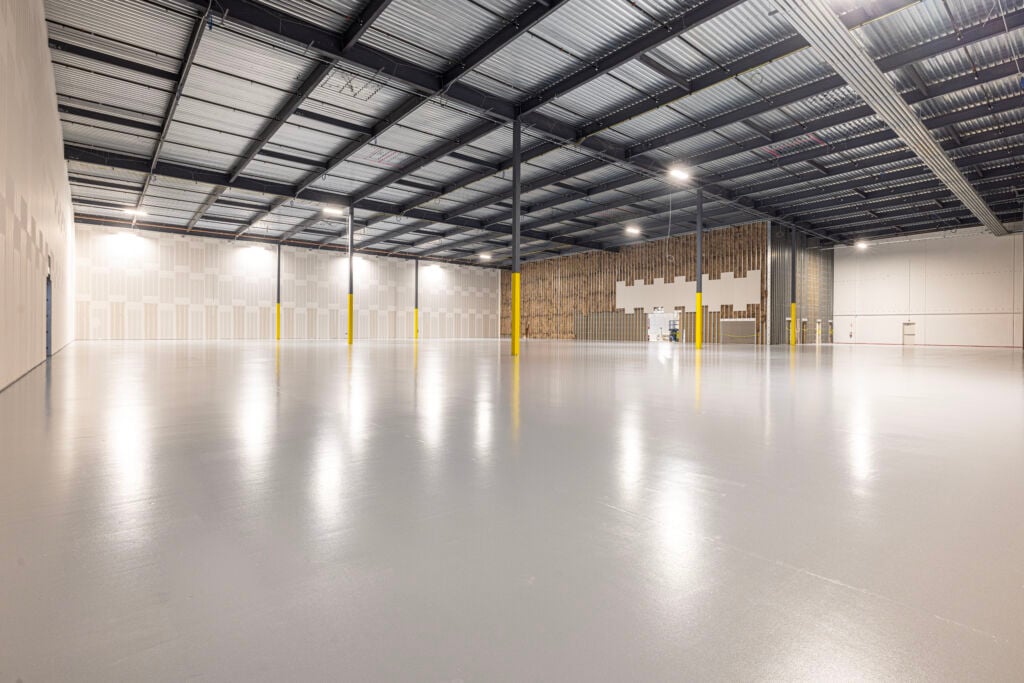
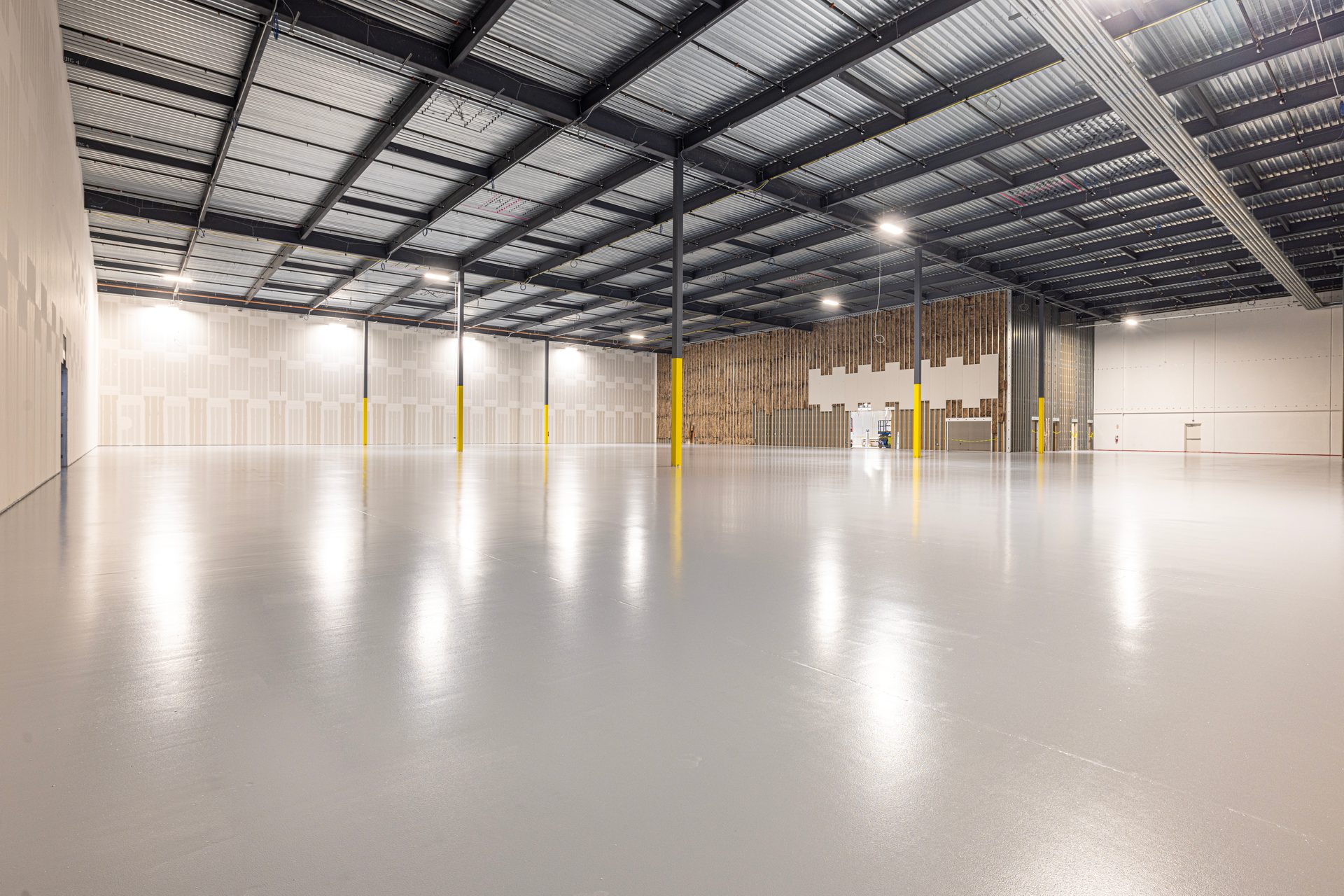
ESD Epoxy Flooring Case Study: 34,000 SF Dallas, TX
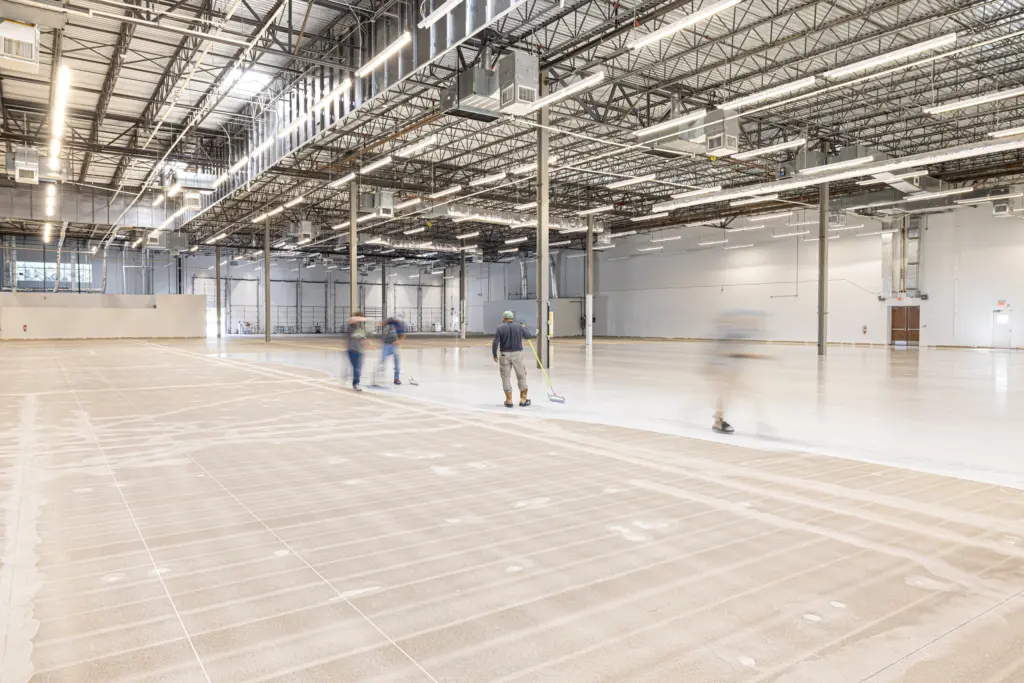
ESD Epoxy Flooring Case Study: 67,000 SF | Houston, TX