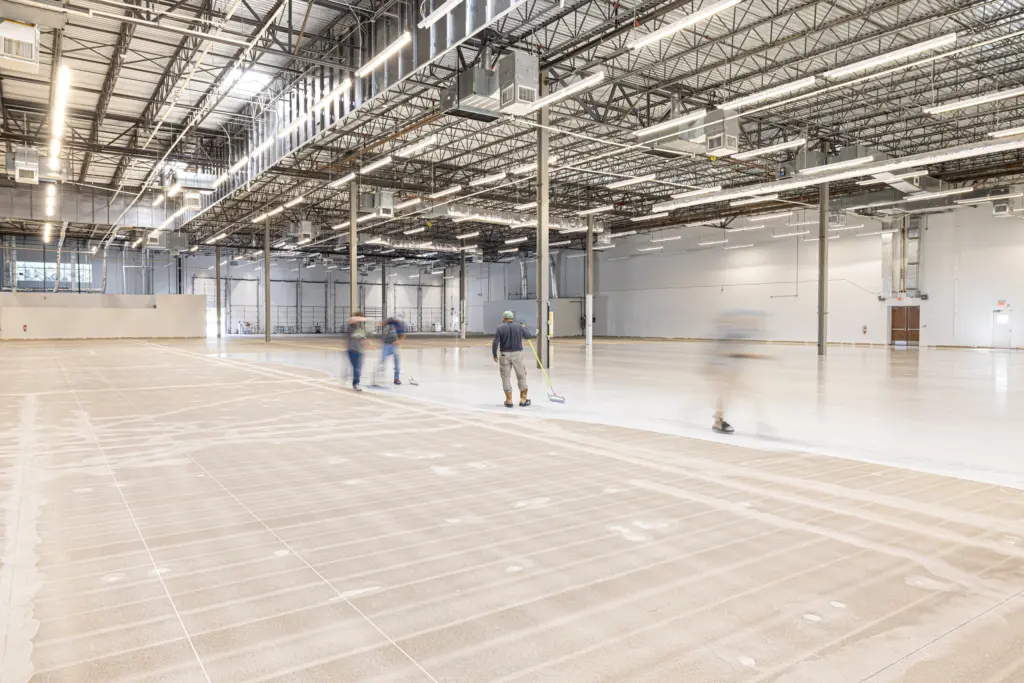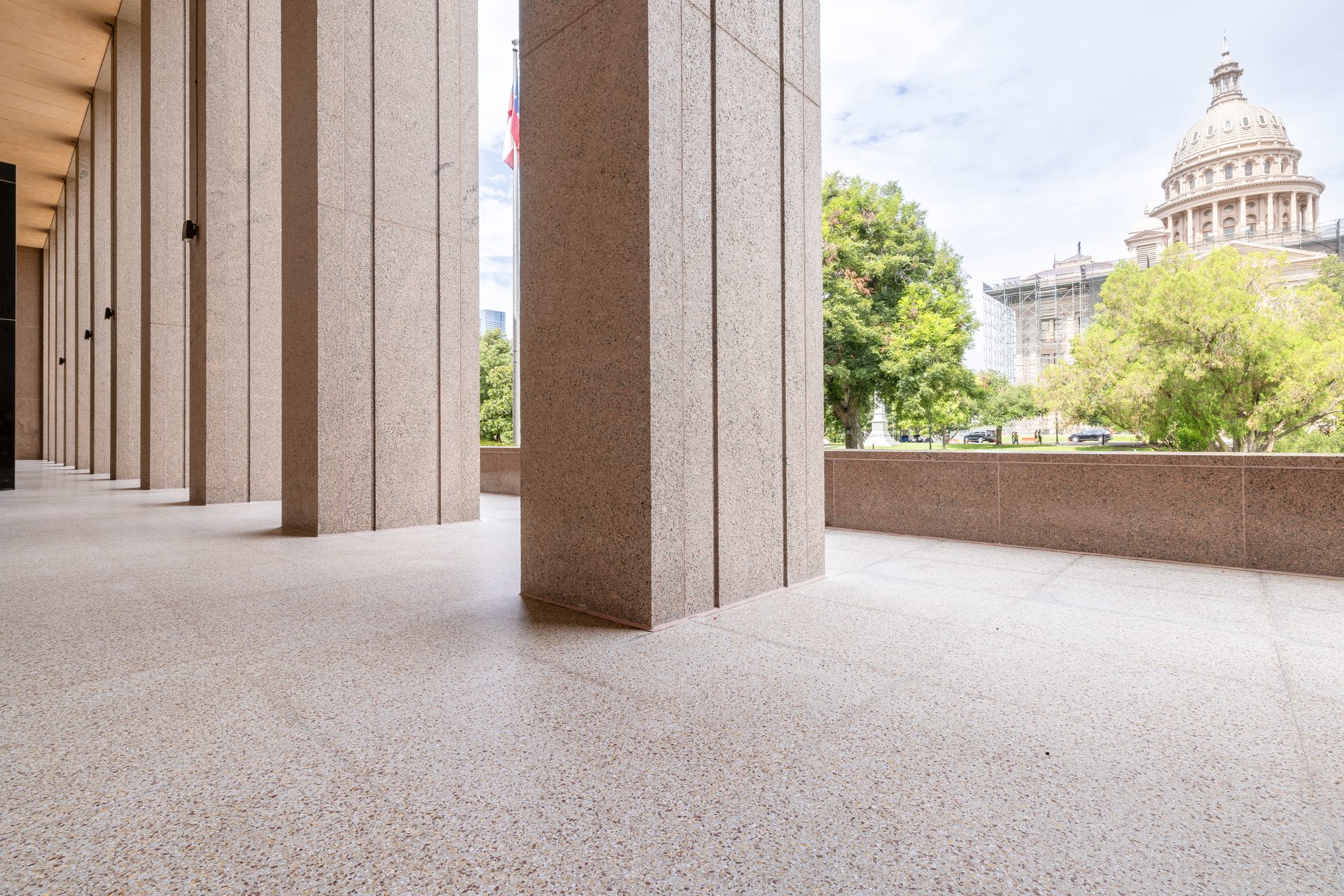
Craftsman Concrete Floors installs terrazzo floors for commercial, institutional, and public-sector projects across the United States, working in poured epoxy, poured cementitious, and precast formats. The company is a national commercial and industrial technical flooring contractor, founded in 1999. In-house W-2 installation crews provide national service coverage.
Terrazzo is decorative aggregate set in an epoxy or cementitious binder, placed over a prepared substrate, then ground and polished as the finished surface. That definition covers several distinct systems, and the differences among them drive most of the selection, budget, and schedule decisions that follow.
What Terrazzo Is and How the Formats Differ
How Terrazzo Differs From Polished Concrete
A terrazzo floor is its own finished wear layer, installed as a topping over the substrate. Polished concrete is a different scope because it refines the structural concrete slab itself into the finished floor. Distinguishing the two during planning keeps the specification, budget, and installation scope aligned with the intended floor.
If a project brief says terrazzo but the intent is a refined concrete slab, the specification should be corrected before pricing.
The Four Principal Terrazzo Formats Are Not Interchangeable
The principal terrazzo formats are poured epoxy, poured cementitious, precast elements, and terrazzo tile, and they are not interchangeable. Selection and installation scope differ by format, so a specification that names terrazzo without naming the format leaves the most consequential decision open.
Poured terrazzo uses marble or other aggregate in a cementitious or resin matrix; after placement and cure, the surface is ground smooth. That description comes from the National Terrazzo and Mosaic Association’s Terrazzo Systems Reference Guide and applies to poured-in-place work; precast is a separate format.
Thickness follows the system, not the category. Published epoxy-terrazzo options run to a nominal 1/4 inch with #0 and #1 aggregate, or 3/8 inch when #2 aggregate is used, at roughly 3 to 4 pounds per square foot. Cementitious assemblies vary much more. Monolithic cement terrazzo direct-bonds a nominal 1/2-inch topping to the slab and depends heavily on slab flatness and crack-control design; polyacrylate uses a nominal 3/8-inch topping where moisture-vapor conditions or limited replacement depth affect selection; a sand-cushion assembly separates the terrazzo from the structural slab with an underbed, reinforcement, isolation sheet, and sand layer, running about 2 1/2 to 3 inches thick at roughly 25 to 30 pounds per square foot; and rustic terrazzo runs from about 1/2 inch to 6 inches depending on whether its base is monolithic, bonded, or sand cushion. Those are published system references, and the specified system controls the project.
| System | Nominal topping | Assembly characteristics |
|---|---|---|
| Epoxy terrazzo | 1/4 in. with #0 and #1 aggregate; 3/8 in. with #2 aggregate | Resin matrix; general system weight about 3 to 4 lb per sq ft |
| Monolithic cement terrazzo | 1/2 in. nominal | Direct-bond interior system with no thick underbed; performance depends heavily on slab flatness and crack-control design |
| Polyacrylate terrazzo | 3/8 in. nominal | Polymer-modified cement system identified where moisture-vapor conditions or limited replacement depth affect selection |
| Sand-cushion terrazzo | 1/2 in. nominal topping | Underbed, reinforcement, isolation sheet and sand layer separate the assembly from the structural slab; about 2 1/2 to 3 in. total and 25 to 30 lb per sq ft |
| Rustic terrazzo | Varies with the base used | About 1/2 in. to 6 in. total assembly depth depending on a monolithic, bonded or sand-cushion base; exterior freeze-thaw restrictions still govern |
Precast Terrazzo Is Fabricated In-House
Precast terrazzo is a major Craftsman business line, and all Craftsman precast terrazzo is fabricated in-house. The company casts, grinds, polishes, and installs its own precast elements.
The precast scope includes stairs and treads, countertops, wall panels and cladding, cove base, and related precast elements. Precast pieces are often specified alongside a poured field so stairs, bases, and vertical surfaces match the floor.
Choosing a Terrazzo System
Project Conditions Control System Choice
Terrazzo system selection depends on the project specification, substrate and moisture conditions, exposure, design intent, intended use, and the maintenance plan. Those variables should be reviewed together, so selection starts with project conditions instead of a preferred product.
No single indoor-versus-outdoor shortcut substitutes for that review, and the same review is worth finishing before a specification hardens.
Exterior Terrazzo Is a Conditional Decision
Exterior use is decided by system and exposure; the category name alone does not resolve it. Exposure is one of the conditions that controls system selection, and it can rule a system in or out on its own.
Raise exterior scope early in design, so the system, finish, and details are selected for the exposure instead of adapted to it after the fact.
Terrazzo Floors Gallery

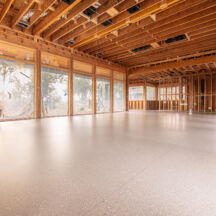
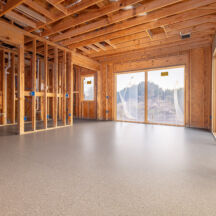
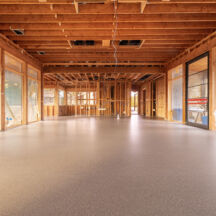
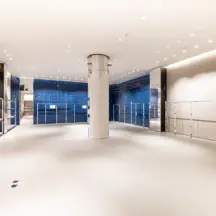

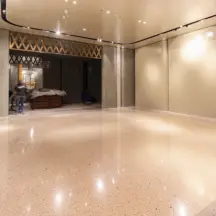
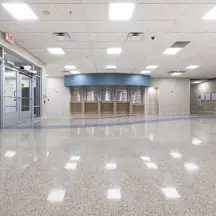
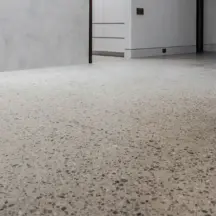
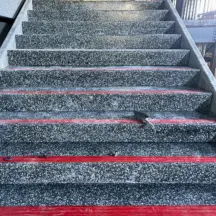
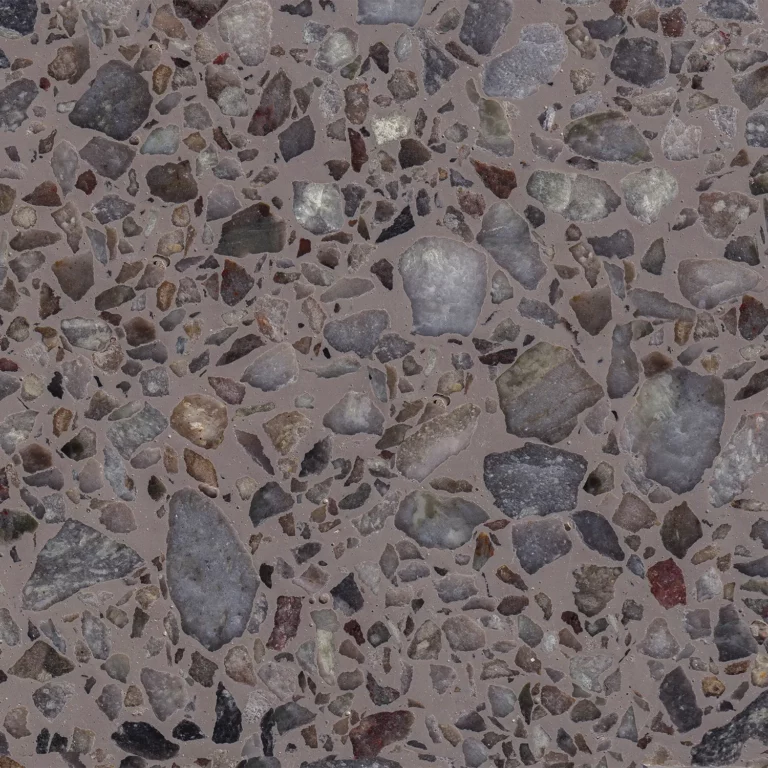
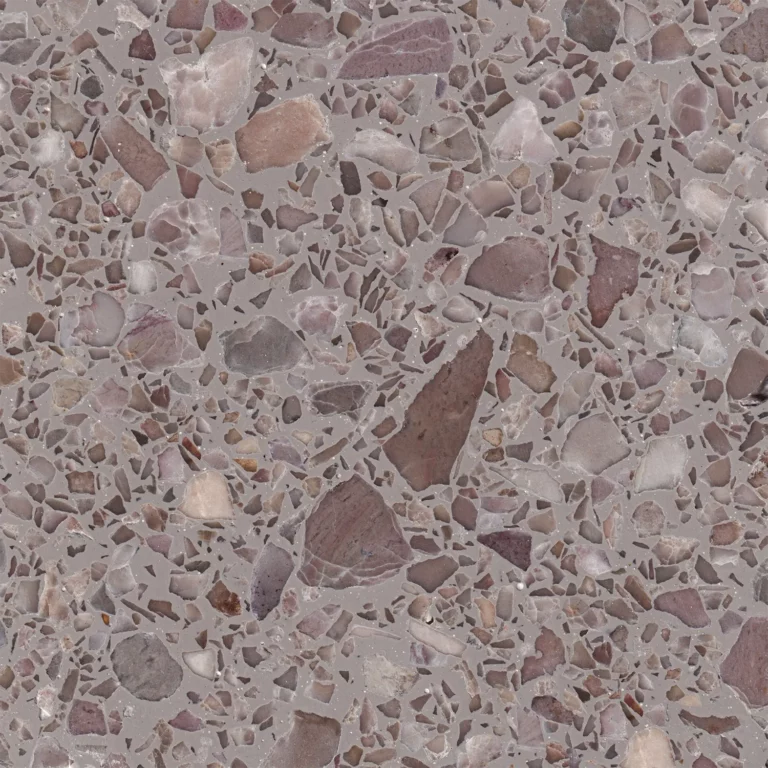
Terrazzo Samples




Design, Color, and Samples
Appearance Is Controlled Through Aggregate, Binder Color, Layout, and an Approved Sample
Terrazzo appearance is controlled through aggregate selection, binder color, divider-strip layout, and an approved physical sample. The approved sample is the reference document for appearance. Terrazzo is a poured decorative material, and natural variation between a small sample and a full installed field should be expected.
Terrazzo design services covers collaboration on aggregate selection, color balance, and layout. Terrazzo samples covers physical samples, including color and aggregate matching for existing floors.
Divider Strips Are Layout Tools, Not Crack Control
Divider-strip layout is one of the variables that controls terrazzo appearance. Divider strips placed for decoration do not prevent cracking. Movement-joint and crack-control requirements must be coordinated with the concrete and project documents.
That guidance comes from the published epoxy terrazzo reference. Treat strip layout as a design decision and crack control as an engineering coordination item, and resolve both in the project documents before field work begins.
What a Terrazzo Floor Installation Involves
The Path Runs From Substrate Review to Final Polish
A poured terrazzo installation follows one high-level path: substrate and site-condition review, surface preparation, placement of the terrazzo topping, cure, then grinding and polishing to the finished surface. Substrate condition and moisture behavior should be evaluated before the topping system and preparation scope are finalized.
Where the project scope includes them, Craftsman can perform or coordinate substrate and site-condition review, surface preparation, moisture evaluation and mitigation, and installation-related testing, and can close the project with documentation appropriate to the specified system. The specific tests, tolerances, and mitigation steps come from the specified system and the project documents, not from a universal checklist.
Occupied Facilities and Tight Windows Are Normal Conditions
Phased work in active facilities and night or weekend shutdown-window work are available when included in the project scope. Sequencing, protection, and access planning should be resolved with the project schedule.
Craftsman can support day, night, weekend, phased, and continuous-operation schedules, including approximately 24/7 availability across most of the year, when the project schedule and committed resources support it.
Evaluating a Terrazzo Contractor
Qualification Shows Up in Checkable Facts
Useful evaluation rests on facts a buyer can check, and the first is completed work in the system actually specified, since the principal formats are not interchangeable and experience in one does not demonstrate capability in another. Objective evaluation also reaches direct-labor structure, named supervision, completed-project references, safety systems, insurance and bonding, manufacturer authorization where the specification requires it, mockups, quality-control procedures, closeout capability, warranty responsibility, and responsibility for corrective work. Which of those carry weight depends on the system, the project documents, and the procurement rules, so decide what the project needs before the bid list is set.
Verify Who Employs, Supervises, and Performs the Installation
Ask which entity will employ and supervise the installers, and which crew will actually place, grind, and polish the surface. On some projects, fabrication, supply, installation, warranty administration, and corrective work all sit with one company; on others they are divided among several. Where those functions are divided, the bid documents should identify the entity responsible for each one, because those are the parties the owner relies on when the floor needs attention after closeout.
Craftsman Installs With Direct W-2 Crews
Craftsman’s installation crews are direct W-2 employees, and the company does not use subcontracted installation labor. The claim is deliberately narrow. It covers installation labor, not every employee and not every outside service, so hauling, disposal, testing providers, and similar specialty scopes sit outside it.
Craftsman’s skilled installation core is cross-trained across urethane cement, ESD, polished concrete, and resinous flooring installation types. Task-specific and equipment-specific qualification still controls individual assignments.
Craftsman retains a skilled W-2 installation core through seasonal changes and carries capacity to support program ramps. During ramp-up, experienced W-2 leads, company training, field leadership, documentation paths, and safety accountability remain within Craftsman’s direct organization even when the individual roster varies.
Repeat and Multi-Site Programs Run Under One Contract Vehicle
Repeat and multi-location accounts can run under a Master Service Agreement—one contract vehicle for recurring work across the program. An MSA is available where recurring work justifies it; not every customer or project uses one.
Pre-bid walkthroughs are available within regional drive radius, and remote specification review is standard for multi-region work.
The Safety Record Has a Defined Period
A safety claim is only as useful as the period attached to it. Since current ownership began in 2018, Craftsman Concrete Floors has had zero OSHA-reportable incidents and no workplace injury requiring medical treatment beyond first aid. Pre-2018 operations sit outside that claim, it does not mean zero first-aid events, and it does not promise that an incident can never occur. What sits behind it is documented and ordinary. Toolbox talks with retained acknowledgments, written silica-exposure controls with dust-control and HEPA practices matched to the task and site, a hazard-communication process with SDS review and employee access to safety information, and a reporting path that routes unsafe conditions, incidents, and near misses to field and safety leadership for corrective action.
Warranty responsibility splits along the same line. Where project documents provide a manufacturer system warranty, that warranty is backed by the manufacturer, and Craftsman separately stands behind its workmanship. Project closeout documents carry a one-year Craftsman workmanship warranty, and the executed contract and closeout package control the actual obligation. Later no-charge assistance is discretionary and does not extend the written warranty.
Membership and Demonstrated Qualification Are Separate Facts
A project specification or an owner’s procurement rules can impose trade-association membership or other eligibility requirements, and where they do, those requirements govern the bid. Membership and demonstrated execution qualification are still separate facts: one is a status the project documents may require, and the other is shown by completed work on the specified system, the workforce and supervision behind it, and the safety, quality-control, and warranty record that goes with it. Check the actual project requirements, then verify each fact on its own terms.
Bid Count Alone Does Not Establish Independent Competition
Bid count alone does not establish that competing bids represent independent sources of scope and price. Buyers may ask whether apparently competing bidders have ownership, management, fabrication, distribution, dealer, affiliate, subcontracting, or installation-partner relationships to disclose, and may ask each bidder to name any scope it intends to transfer after award. These are diligence questions, not accusations or conclusions about any bidder, and a qualified bidder can answer them in writing. Choosing a terrazzo contractor carries the full contractor-evaluation and bidder-independence framework.
Care, Renewal, and Cost Context
Routine Care Is a Compatibility Question
Routine terrazzo care starts with regular dry-soil removal and a compatible pH-neutral cleaning program. The exact chemistry, pads, cadence, sealing, and any restoration step depend on the installed system and its condition, so care instructions follow the specific floor, not the category. The cleaning and maintenance guide carries the routine-care depth.
One transit agency has published a measured cleaning comparison. In an LA Metro station comparison, the agency reported approximately 66% less cleaning labor for terrazzo than porcelain tile. That figure comes from a specific high-volume underground-station comparison in the agency’s station surfaces white paper, and it is not normalized for area, traffic, cleaning standard, or condition.
Existing Terrazzo Can Often Be Renewed When Condition Permits
Existing terrazzo can often be repaired, re-ground, or repolished instead of replaced, and a floor can sometimes be renewed in place. Condition is the controlling word. Renewal is not always possible, not always cheaper than replacement, and repairs are not guaranteed to disappear into the surrounding field.
An assessment of the actual floor decides the path. Terrazzo restoration covers repair and restoration decisions, and terrazzo floor polishing covers mechanical repolishing.
Seven Drivers Move Terrazzo Pricing
Terrazzo pricing moves with the system, design and divider-strip complexity, aggregate selection, square footage, access and schedule, substrate condition, and any removal or repair scope. Those drivers explain why quotes for similar-looking floors can land far apart, and they are worth settling before comparing bids.
The terrazzo floor installation cost guide carries numeric detail and long-term cost comparisons.
Where Terrazzo Is Used
Institutional Owners Specify Terrazzo Deliberately
Terrazzo appears in institutional specifications because owners select it for defined areas, in writing. The 2021 U.S. Courts Design Guide directs certain public-circulation courtroom areas to terrazzo or stone and identifies polished concrete as unacceptable in those areas. That direction applies to the specified court areas, not to buildings generally.
An Airport Cooperative Research Program synthesis identifies smooth monolithic terrazzo as reducing surface transitions and qualitatively improving baggage-cart rolling compared with carpet or jointed tile. The context there is airport design for aging travelers, and the finding is qualitative.
Craftsman’s own work spans commercial, industrial, institutional, and public-sector environments, and project teams in each can start from the same consultation path.
Healthcare and Multifamily Uses Turn on Written Requirements
Room type, the adopted FGI edition, the authority having jurisdiction, and the facility program decide whether a healthcare flooring requirement applies at all. In identified critical clinical environments, including procedure and operating rooms, FGI application guidance calls for seamless flooring with an integral 6-inch cove, which is a written requirement a terrazzo system either meets or does not, and the guidance does not establish that every terrazzo system meets it. Outside healthcare, USDA Rural Development’s capital-needs guidance assigns terrazzo in multifamily common areas an expected useful life of 50 years or more for planning purposes, which is a planning category and not a warranty or a service-life promise.
For any of these, the first practical step is the same one: settle the governing requirement in writing, then select a system that satisfies it and a maintenance plan the owner can actually staff.
Starting a Terrazzo Project
A Specialist Responds Within One Business Day
Contact a Craftsman project specialist at +1 (844) 687-1961 or projects@craftsmanconcretefloors.com, and a project specialist responds within one business day. With basic project size, system, condition, and schedule inputs, Craftsman can usually provide a preliminary installed-cost range during the initial call or within a few hours. Commercial estimates are typically returned within 24 hours.
Initial consultation is available at no cost, and so is initial design and specification assistance. A preliminary range is a planning number, not a formal proposal or a guaranteed price; the written estimate and executed contract control scope and cost.
Terrazzo Knowledge Center
Resource links
Where Terrazzo Is Used
Project Planning & Delivery
Systems & Selection
Design & Specification
Restoration & Maintenance
Performance, Safety & Sustainability
- Founded in 1999 • National commercial & industrial technical flooring contractor
- High-spec systems: ESD/static-control flooring, urethane cement, terrazzo, polished concrete, resinous flooring & coatings, and concrete overlays
- In-house W-2 installation crews provide national service coverage
- W-2 installers, not 1099 day-labor • Trained, insured, and accountable to you
- The same core workforce model, installation leadership, training system, documentation path & safety accountability can carry across phased and multi-site programs
- Since current ownership began in 2018, zero OSHA-reportable incidents and no workplace injury requiring medical treatment beyond first aid
- Current prequalification documents available through controlled review, including COI, W-9, safety information & other current qualification records
- Commercial estimates are typically returned within 24 hours; complex bids may take longer
Company: Craftsman Concrete Floors
Phone: +1 (844) 687-1961
Our Clients




















Request a Proposal
Submit project parameters for preliminary analysis. Commercial estimates typically returned within 24 hours.
Frequently Asked Questions
Poured terrazzo is installed over a prepared substrate, and an existing concrete slab is often that substrate. Whether a specific slab qualifies depends on its condition, flatness, and moisture behavior, so substrate and moisture evaluation comes before system selection, and the evaluation may add surface preparation or moisture mitigation to the scope.
No. Craftsman does not set or install terrazzo tile as a standalone service. On qualifying large-format commercial terrazzo-tile projects, Craftsman may perform grinding-flat and polishing in collaboration with the setting contractor, and the terrazzo tiles page covers the tile format and how it compares with poured terrazzo.
Terrazzo traction depends on the installed finish, cleanliness, moisture, contaminants, maintenance, and the project’s requirements. No single traction value describes every terrazzo floor, so slip performance is specified and maintained for the particular installation rather than assumed from the material name. See terrazzo slip resistance and floor safety for the full decision guide.
It depends on the project: an individual specification or a public owner’s procurement rules may impose association-membership or other eligibility requirements, and a bidder has to meet the requirements that actually apply. Membership and demonstrated installer competence are nevertheless separate facts. Evaluate the actual project requirements together with relevant system experience, workforce and supervision, safety systems, quality-control procedures, documentation, warranty administration, and responsibility for executing and correcting the work. See choosing a terrazzo contractor for the full evaluation framework, including the bidder-independence disclosure questions.
There is no universal installed price for commercial terrazzo. Cost moves with the system, design and divider-strip complexity, aggregate selection, square footage, access and schedule, substrate condition, and any removal or repair scope. With basic size, system, condition, and schedule inputs, Craftsman can generally provide a preliminary installed-cost range during the initial call or within a few hours, and commercial estimates are typically returned within 24 hours, though complex bids may take longer. A preliminary range is a planning number, not a formal proposal or a guaranteed price.
No single duration applies, because the schedule follows the system, the floor area, the substrate work required, the cure the topping needs before grinding, and the access the building allows. Craftsman can support day, night, weekend, phased, and continuous-operation schedules, including approximately 24/7 availability across most of the year, when the project schedule and committed resources support it. Sequencing, protection, and access constraints belong in the schedule conversation at the first walkthrough.
Yes. Current prequalification documents can be supplied through controlled review, including the current certificate of insurance, W-9, safety information, and other qualification records that exist and are current. Craftsman is insured with a current certificate available on request, licensed where required, and bondable when supported by the current surety letter. Signatures, employee records, insurance limits, and controlled manuals are not published.
Blog
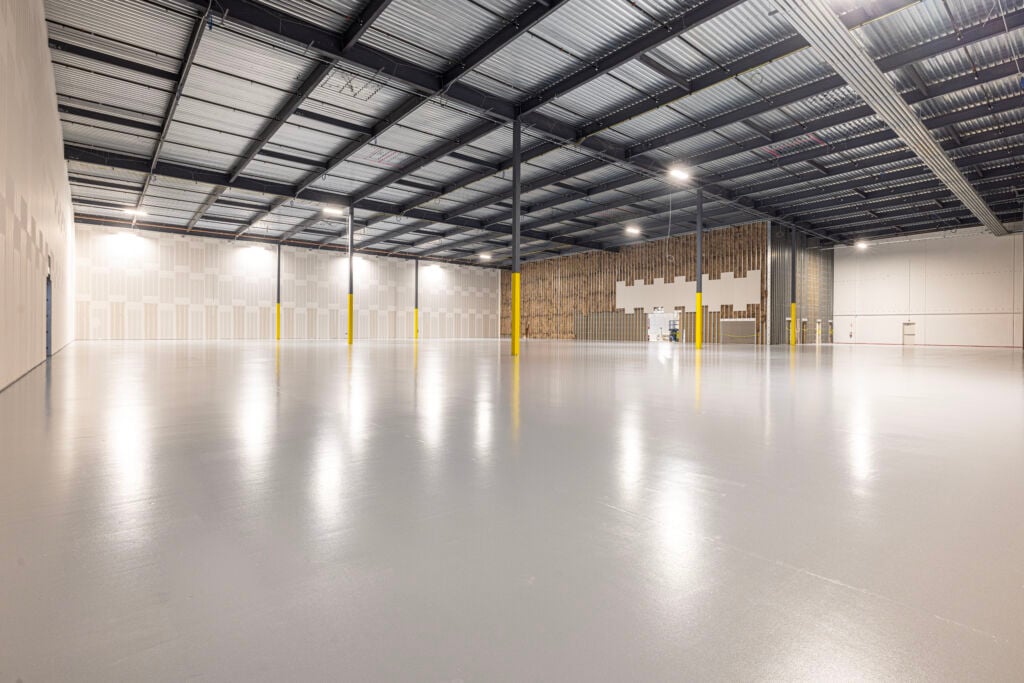
ESD Epoxy Flooring Case Study: 34,000 SF Dallas, TX
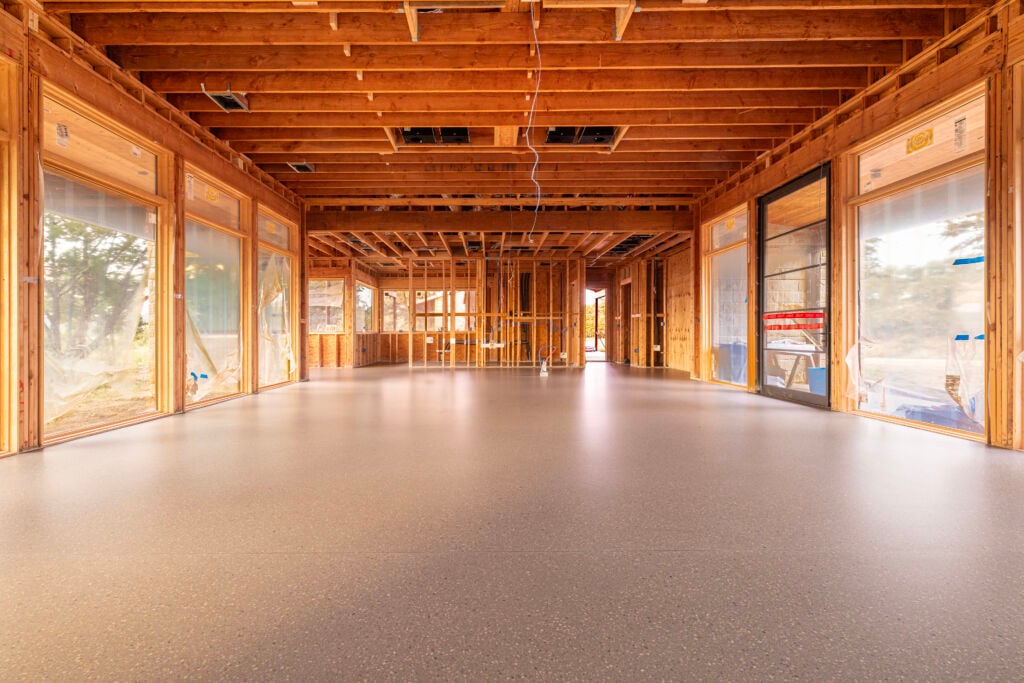
Residential Terrazzo Floors in Fort Worth, Texas