What can we help you with?
Technical flooring, delivered directly
- ESD flooring, urethane cement, terrazzo, and polished concrete
- In-house W-2 installation crews and experienced field leadership
- National service coverage with project-specific staffing plans
- Testing, documentation, and defined project closeout
- Dedicated support for corporate procurement and multi-site contracting
Phone: +1 (844) 687-1961
Terrazzo Floor Installation
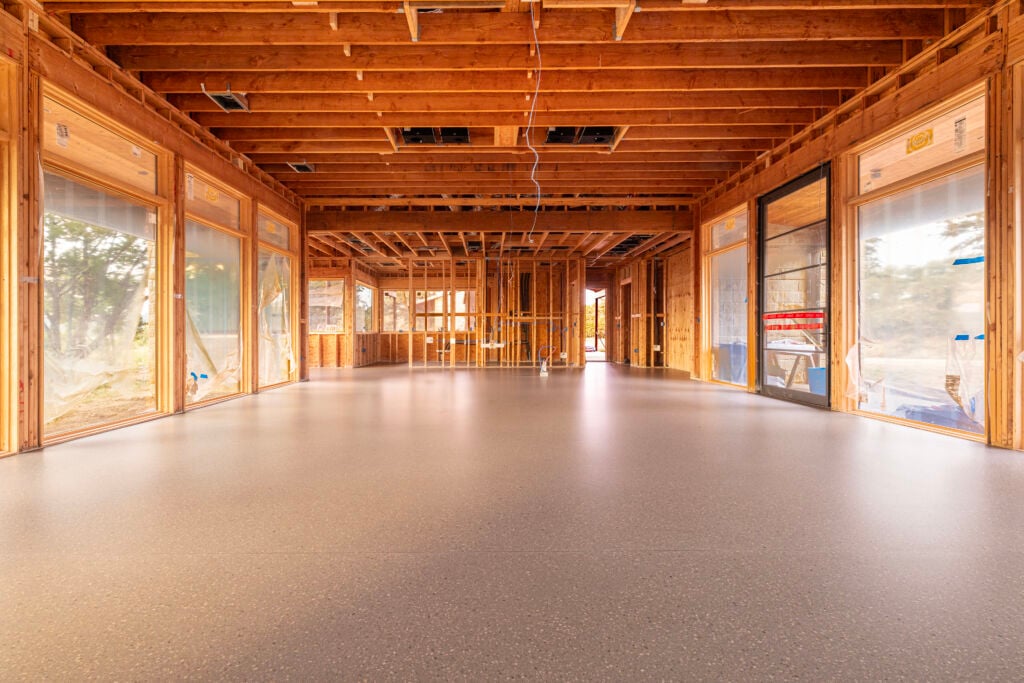
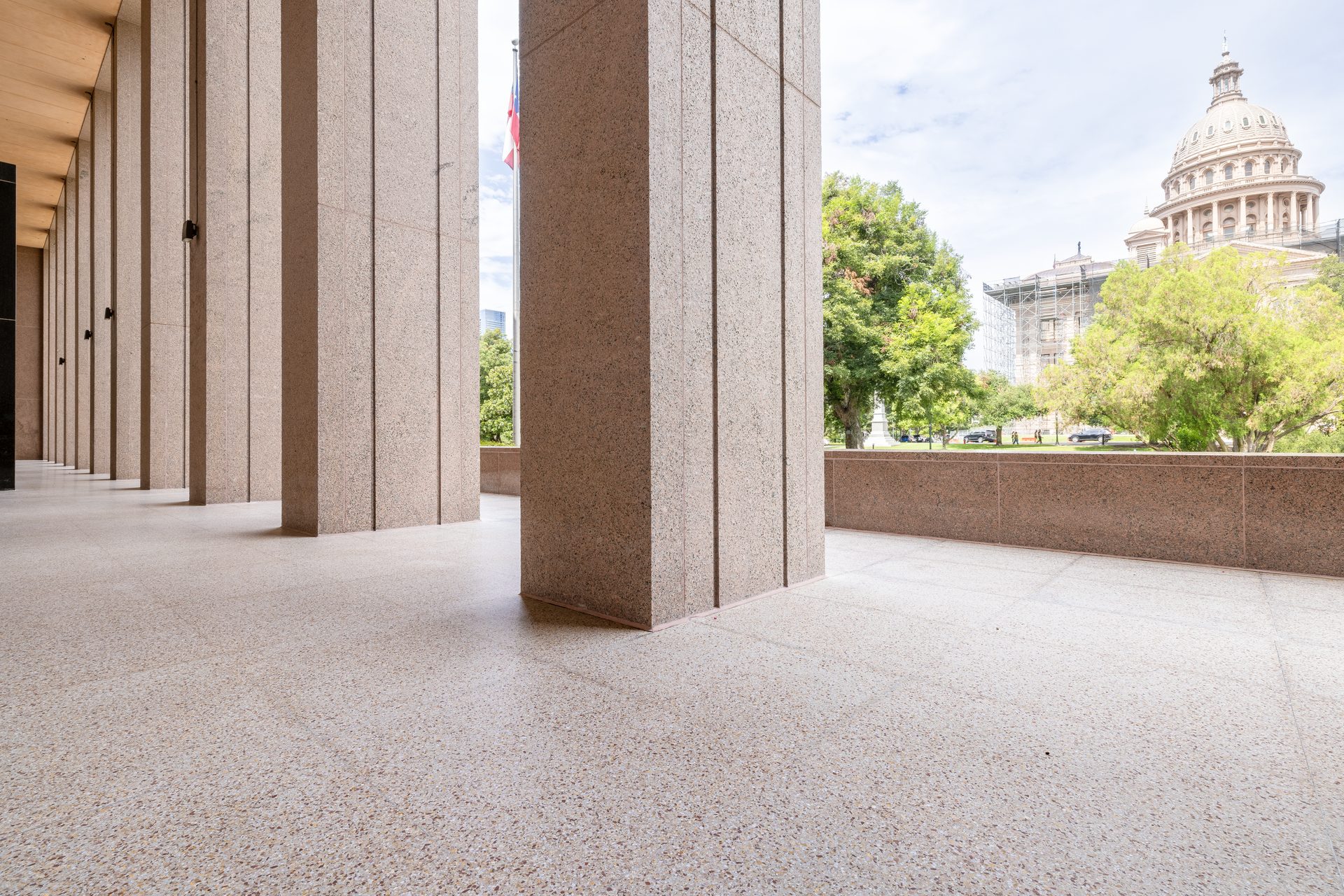
Craftsman Concrete Floors installs commercial terrazzo floors and fabricates precast terrazzo stairs, treads, cove base, countertops and wall panels in-house. We work with owners, architects and general contractors to define the system, design, slab preparation and installation schedule.
Founded in 1999, Craftsman is a national commercial and industrial technical flooring contractor. Our installation crews are direct W-2 employees, and we do not use subcontracted installation labor. Outside services such as testing or hauling are separate from that installation workforce.
Terrazzo flooring and precast fabrication
Terrazzo combines decorative aggregate with an epoxy or cementitious binder. The installed surface is ground and polished to reveal the aggregate and produce the selected finish.
Terrazzo adds a separate topping over a prepared substrate. Polished concrete refines the concrete slab itself. Our comparison of terrazzo and polished concrete explains the differences.
| Format | What to decide before pricing |
|---|---|
| Poured epoxy terrazzo | Resin system, slab condition, moisture, exposure and design. |
| Poured cementitious terrazzo | Assembly, substrate requirements, exposure and design. |
| Precast terrazzo | Identify stairs, treads, cove base, countertops or wall panels, their quantities and the fabrication and installation scope. |
| Terrazzo tile | Identify the setting contractor. Craftsman does not offer standalone tile setting. Qualifying large-format commercial tile may receive grinding-flat and polishing in collaboration with that contractor. Small-format terrazzo tile is not a Craftsman service. |
Craftsman casts, grinds, polishes and installs its own precast terrazzo elements. These components can be planned alongside the floor installation.
For factory-made products, compare terrazzo tile with poured terrazzo before defining the installation scope.
Choosing the terrazzo system
System selection depends on the substrate, moisture conditions, exposure, design, intended use and maintenance plan. Compare specified assemblies rather than choosing from a general indoor-versus-outdoor rule.
Our terrazzo system-selection guide covers those decisions, with additional detail on epoxy terrazzo.
Where environmental requirements affect procurement, review the actual product and project documentation. Our guide to terrazzo environmental considerations explains that evaluation.
Planning by building use
Different facilities bring different circulation, design and construction requirements. Application guides cover terrazzo in airports and transit facilities, schools and universities and government and courthouse buildings.
Design, samples and appearance approval
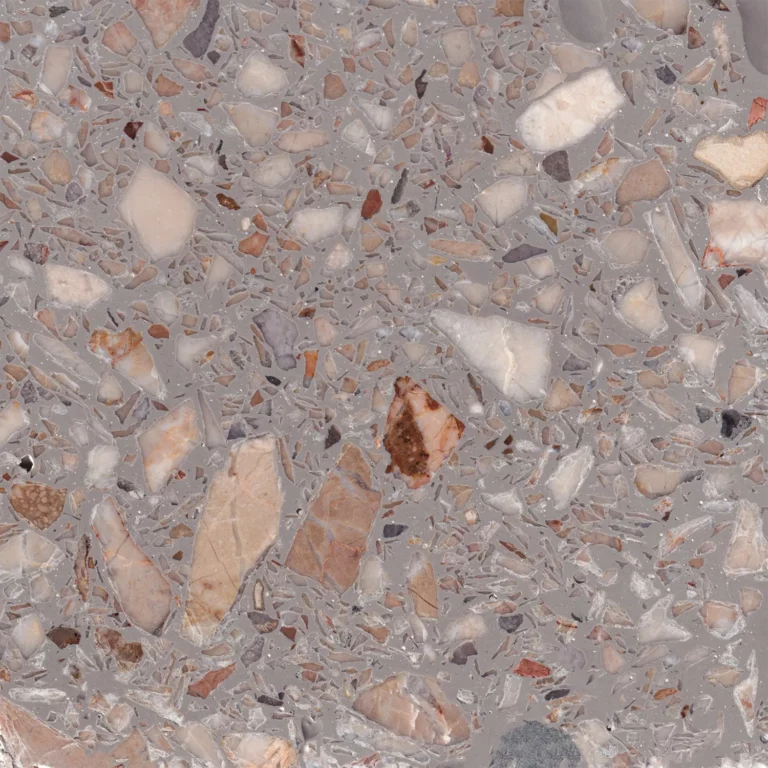
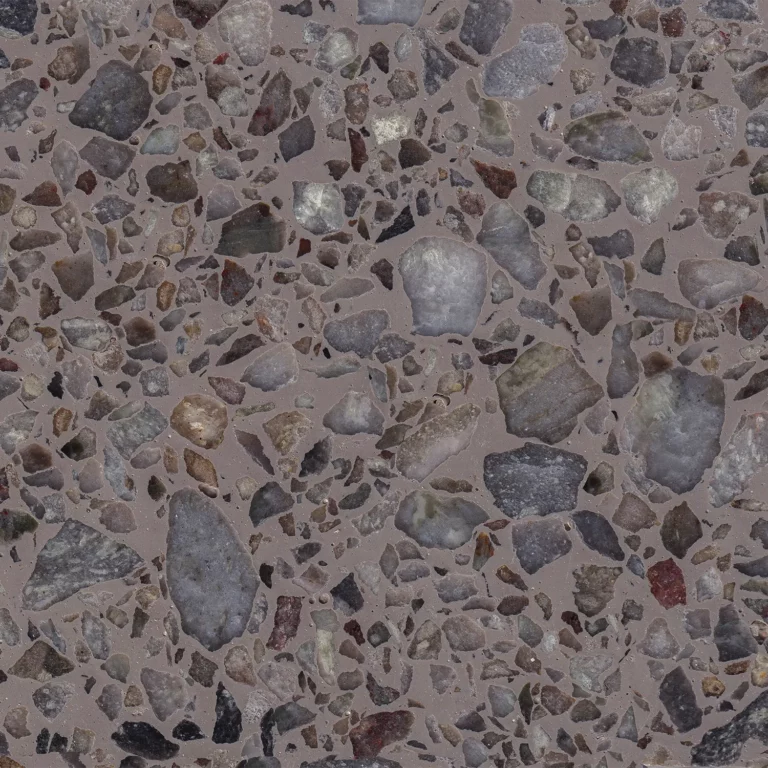
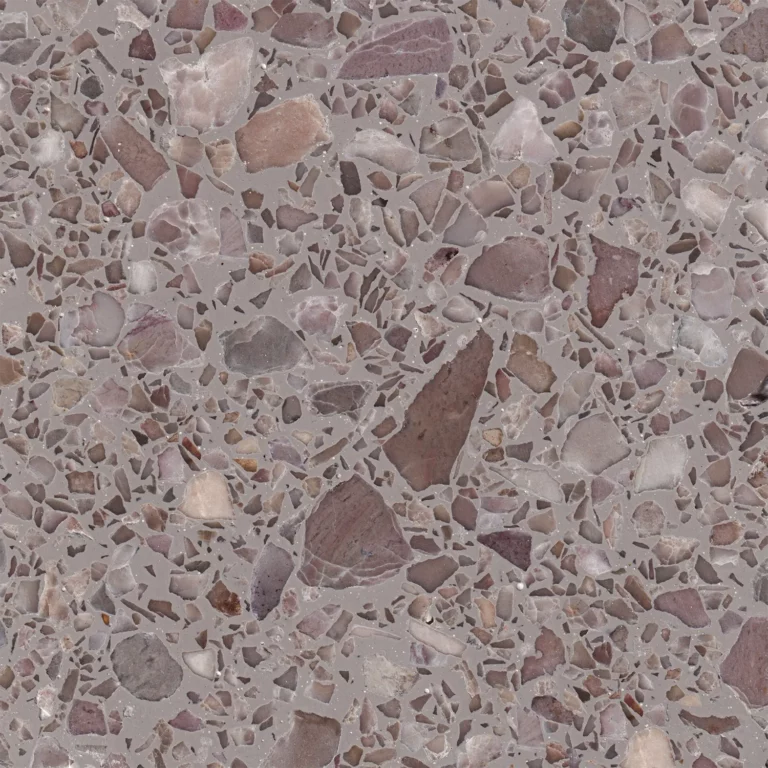
Aggregate selection, binder color and divider-strip layout establish the floor’s appearance. An approved physical sample communicates the expected color, texture and natural variation.
For Scanlan Theodore at NorthPark Center in Dallas, Craftsman installed a two-color terrazzo floor using native river-rock aggregate and a brass divider between the colors.
Samples should represent the materials, colors, patterns and accessories specified for the project. Requirements for onsite mockups and other submittals belong in the project documents. A poured decorative finish has natural variation; sample approval does not promise exact uniformity across the floor.
Our terrazzo samples and design guide covers aggregate, color and sample selection.
Slab preparation, moisture and cracks
Accepting the substrate
Resolve substrate acceptance before the topping is placed. For epoxy terrazzo, the NTMA’s 2019 guide specification calls for review of slab flatness, cracks, joints and moisture, with unacceptable conditions corrected before installation.
Epoxy terrazzo follows the slab contour. It is not a leveling layer, so any necessary correction must be addressed before placement using materials compatible with the selected system.
Moisture mitigation and crack suppression
Moisture mitigation and crack suppression solve different problems.
Under the NTMA epoxy guide, each is recommended when required and must be specified to be included. Moisture acceptance follows the resin manufacturer’s instructions and project documents. Crack suppression addresses horizontal crack movement, not vertical differential movement or active structural joints.
The project documents should identify testing, corrective work, responsibilities and any alternate or change-order pricing. These provisions come from an epoxy guide specification; the selected system and executed project documents govern the installation.
Installation and construction coordination
The installation plan coordinates substrate preparation, materials, personnel, equipment and other trades before work begins.
Poured epoxy terrazzo sequence
For poured epoxy terrazzo, the NTMA guide describes this general sequence:
- Locate and install divider and accessory strips.
- Prime the substrate and place the terrazzo.
- Rough-grind the surface.
- Apply epoxy grout and allow it to cure.
- Fine-grind and polish.
- Clean and apply the specified sealer according to its manufacturer’s instructions.
Thickness, abrasives, cure requirements and other installation details follow the specified system. This is an epoxy installation sequence, not a procedure for every terrazzo assembly or an existing-floor restoration.
How long installation takes
The schedule depends on area, design, preparation, access, trade coordination and the availability of materials, personnel and equipment. Required curing and release times follow the selected products.
Crew availability, equipment, material sourcing and mobilization are confirmed in the project plan.
Finished-floor protection and closeout
Agree before installation who will protect the completed floor, how it will be protected and when responsibility transfers.
Final inspection follows sealer application under the NTMA epoxy guide. The guide assigns protection to the general contractor after final grinding and sealing. Confirm the protection method, duration and responsibility in the project documents.
Closeout documentation should identify the installed system, compatible cleaning products, maintenance instructions and applicable treatment-renewal requirements. Establish which documents are required and who receives them.
Before later repair or restoration, confirm compatibility with the existing system and any proprietary sealer requirements that affect maintenance or warranty conditions.
What affects terrazzo installation cost?
The main cost factors are:
- Terrazzo system and assembly.
- Aggregate selection.
- Design and divider-strip complexity.
- Floor area.
- Substrate preparation, removal and repairs.
- Access, phasing and schedule.
- Precast components and their installation scope.
A project proposal defines how those items are priced. Our terrazzo flooring cost guide provides Craftsman’s bid-based ranges and examples.
Cleaning, repairs and surface renewal
Follow the care instructions for the installed system. Routine care may include dry-soil removal and compatible pH-neutral cleaning, but chemistry, pads, frequency and sealing requirements depend on the floor. Our terrazzo cleaning and maintenance guide covers ongoing care.
An existing floor with damage or deterioration needs a terrazzo restoration and repair assessment. A structurally serviceable floor that needs mechanical surface renewal belongs under terrazzo grinding, honing and polishing.
Repair or renewal can preserve an existing floor when its condition permits. It is not always possible or preferable to replacement.
Traction also requires consideration of the finish, contaminants, cleaning and conditions of use. Our terrazzo slip-resistance and floor-safety guide explains how to evaluate the specified finish and its test data.
Choosing a terrazzo installation contractor
Compare relevant system experience, completed-project references, installation labor, supervision, quality control and closeout capability. Confirm project requirements for safety documentation, insurance, bonding and manufacturer authorization where applicable.
Our guide to choosing a terrazzo contractor covers qualification and procurement requirements in more detail.
Request commercial terrazzo installation pricing
Send Craftsman the project location, approximate area, desired system and design, known slab conditions and schedule.
A project specialist responds within one business day. With basic size, system, condition and schedule information, Craftsman can generally discuss a preliminary installed-cost range during the initial call or within a few hours. That range is not a formal proposal or guaranteed price.
Commercial estimates are typically returned within 24 hours; complete bids requiring drawings, testing, takeoffs, vendor pricing or unusual specifications may take longer.
Initial consultation and initial design and specification assistance are available at no cost. Engineering, testing, extensive design development, mockups, professional design services and repeated estimating revisions are not automatically included.
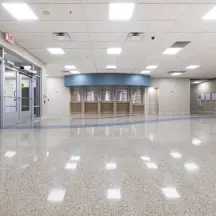
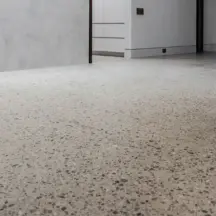
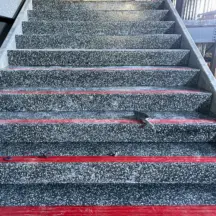
Terrazzo Floors Gallery

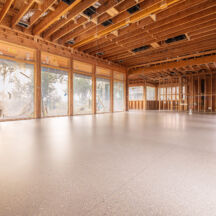
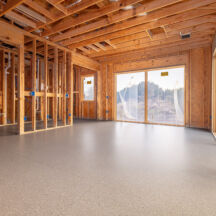
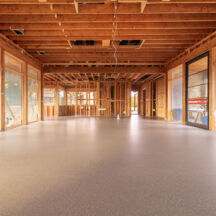
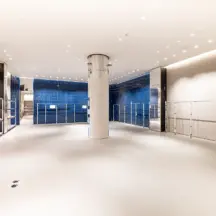


Terrazzo Samples



Frequently Asked Questions
An existing slab can receive terrazzo when its condition can meet the selected system’s requirements. Review flatness, cracks, joints and moisture before defining preparation and mitigation. Epoxy terrazzo follows the slab contour; it is not a leveling layer.
Traction depends on the installed finish, cleanliness, moisture, contaminants and maintenance. A gloss level or material name does not establish slip performance. Use supplier data and the stated test method for the finish and sealer specified for the project.
Terrazzo Knowledge Center
Resource links
Where Terrazzo Is Used
Project Planning & Delivery
Systems & Selection
Design & Specification
Restoration & Maintenance
Performance, Safety & Sustainability
Blog
Craftsman Publishes 2026–2027 ESD Flooring Technical Guide
ESD Epoxy Flooring Case Study: 34,000 SF Dallas, TX