What can we help you with?
Technical flooring, delivered directly
- ESD flooring, urethane cement, terrazzo, and polished concrete
- In-house W-2 installation crews and experienced field leadership
- National service coverage with project-specific staffing plans
- Testing, documentation, and defined project closeout
- Dedicated support for corporate procurement and multi-site contracting
Phone: +1 (844) 687-1961
Food & Beverage
Food and beverage flooring is specified against a federal compliance stack before chemistry enters the conversation: USDA FSIS inspection expectations in federally inspected meat and poultry plants, FDA food-contact requirements under 21 CFR 175.300 in every facility, and HACCP documentation that third-party schemes like SQF and GFSI audit. Under each of those frameworks, inspectors evaluate the installed condition rather than a product certificate: impervious, cleanable, sloped to drain, intact. Urethane cement clears the full compliance stack. It also survives the washdown duty that removes epoxy, quarry tile, and sealed concrete from food and beverage service within 12 to 24 months.
The compliance stack is shared. The duty each facility type puts on the floor is what changes. A kill floor, a brewhouse, a bottling hall, and a walk-in freezer load the same chemistry differently, and each has its own page in this cluster with the zone maps, inspection detail, and cost drivers for that facility type. What belongs at this level is what every food and beverage concrete flooring project shares. That means the regulatory architecture, the washdown duty cycle, and the delivery model that covers single plants and multi-site programs.
Compliance Architecture Across Food and Beverage
Where USDA and FDA Each Apply to Food and Beverage Flooring
USDA FSIS holds inspection presence in federally inspected meat and poultry plants, and the floor’s condition falls under its sanitation performance standards at 9 CFR 416. FDA jurisdiction covers food-contact materials in every food and beverage facility through 21 CFR 175.300, including plants FSIS never enters. No agency maintains an approved-flooring list under either framework. What a spec that still reads USDA approved flooring means today, and how to comply with it, is covered on the USDA approved flooring page.
HACCP, SQF, and GFSI Audit the Paper Trail
Audit schemes reach the floor through the plant’s sanitation program, and what HACCP, SQF, and GFSI auditors pull is documentation. HACCP compliant flooring, in practice, means the installed floor plus a complete paper trail. Craftsman builds the closeout to that audit. The package carries ASTM F2170 substrate moisture logs, ICRI 310.2 surface profile verification, integral cove base photos, and the manufacturer warranty registration that keeps the system warranty enforceable.
NSF/ANSI 51 and FSMA Preventive Controls
Monolithic seam-free construction with an integral cove base is what FSMA preventive-control thinking asks of a floor, because the wall-to-floor joint and the grout line are where harborage starts. Urethane cement systems support NSF/ANSI 51 food-contact requirements, while certified status belongs to specific product listings. The sanitation case is structural. Microbial control in regulated facilities is achieved through cleaning validation, and the floor’s job is to make that validation pass.
Flooring by Food and Beverage Facility Type
Food and beverage facility flooring is not one spec, and treating it as one is how the wrong floor lands in the wrong zone of the wrong plant. Each facility type in this cluster has a dedicated page scoped to that facility’s duty and inspection reality. The short answer for each sits below. Plants that span several types are covered by the program model in the last section.
Processing Plants and Production Lines
A food processing plant zones the floor by exposure, wet process through packaging, and the food processing flooring page carries the full zone specification for it. Bottling, canning, juice, and RTD production lines run 24/7 duty under conveyor traffic, and beverage production flooring is its own page, phasing included. Ready-to-eat and post-lethality zones are a separate scope. The RTE flooring page carries their sanitation load.
Dairy, Meat, and Bakery
Meat and dairy processing floors answer to USDA and FSIS inspection expectations, and the dairy and meat flooring page covers kill floors, evisceration lines, and impervious-flooring requirements. Failing acid brick in a dairy plant is a replacement scope of its own, covered on the dairy brick replacement page. Bakery floors take sugar carbonization and oven-zone heat. The bakery flooring page carries that spec.
Brewery, Distillery, and Winery
Brewery floors take mash sugars, caustic CIP, and hose-down duty from brewhouse through taproom, and the brewery flooring page owns that spec from fermentation cellar to front of house. Distillery flooring, still house through barrel warehouse and bottling zone, has its own page. Winery floors run fermentation acids and barrel-room cycling against the same system, and the winery flooring page owns that spec from crush pad to tasting room.
Kitchens, Cold Storage, and Walk-In Boxes
Commercial kitchen flooring is a different duty cycle with its own page. Restaurant and institutional kitchen intent belongs there. Facility-scale cold storage, freezer warehouses and cold rooms, is covered on the cold storage flooring page, including insulated-slab construction and pull-down sequencing before the room goes cold. The walk-in cooler and freezer page covers the small box, roughly 100 to 2,000 square feet, including single-night replacement around a live kitchen.
National Program Delivery for Multi-Plant Operators
Single-Contract Multi-Site Programs
Multi-plant food and beverage operators contract flooring as one program. National accounts run under a Master Service Agreement — one contract vehicle across every site in the program. Phased installation runs zone-by-zone around each plant’s production schedule, with 24-hour return to service on self-leveling systems and 48-72 hours on trowel-applied, and each site’s closeout documentation lands in that plant’s audit file.
W-2 Crews, Not 1099 Day-Labor
In-house W-2 crews provide national service coverage. W-2 installers, not 1099 day-labor. Trained, insured, and accountable to you. Lead time runs 1-3 weeks from contract execution, driven by material availability, and pre-bid walkthroughs are available based on project requirements, timing, and resource availability with remote spec review standard for multi-region rollouts. Night and weekend shutdown-window execution is standard where a zone cannot come down during production hours.
Certified Across Four Manufacturers
Craftsman is certified across four urethane cement manufacturers — Sherwin-Williams High Performance Flooring, Sika, PIP, and Westcoat. Day-to-day food and beverage work runs on the Ucrete, Poly-Crete, and Hybri-Flex families, installed as a Sika Certified Installer and an authorized Sherwin-Williams High Performance Flooring installer. Documented installation preserves the manufacturer system warranty.
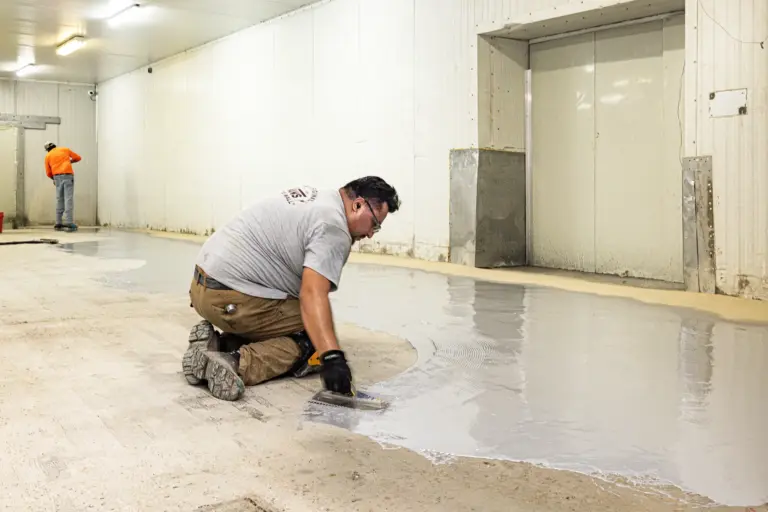
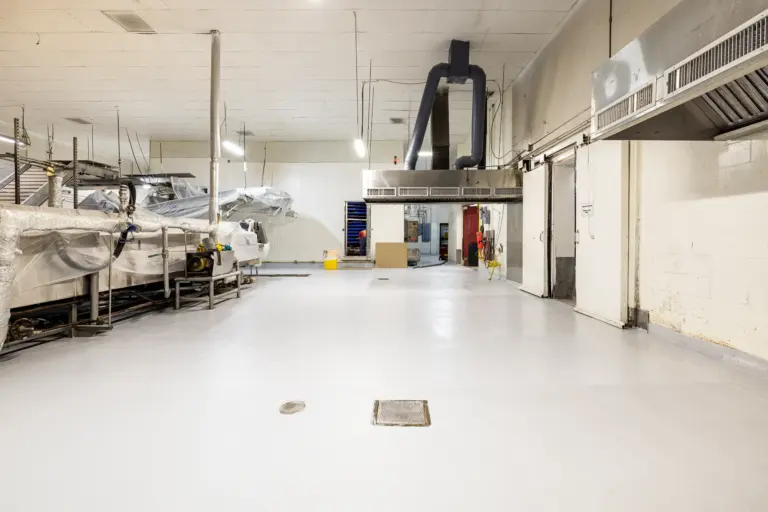
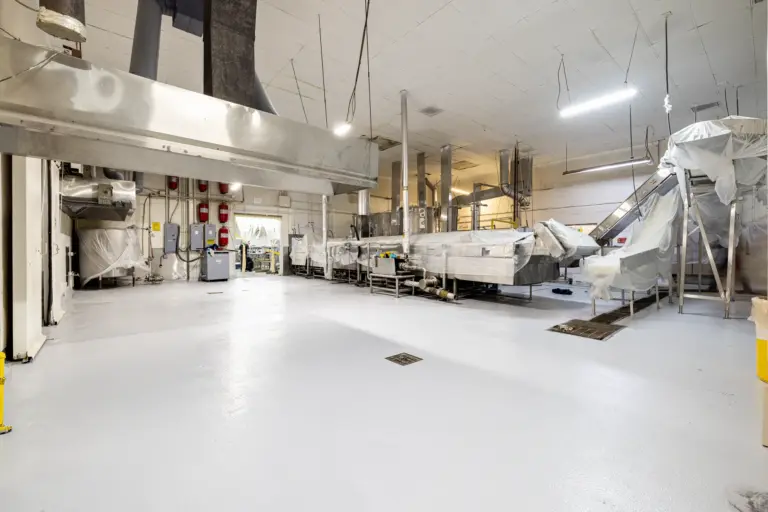
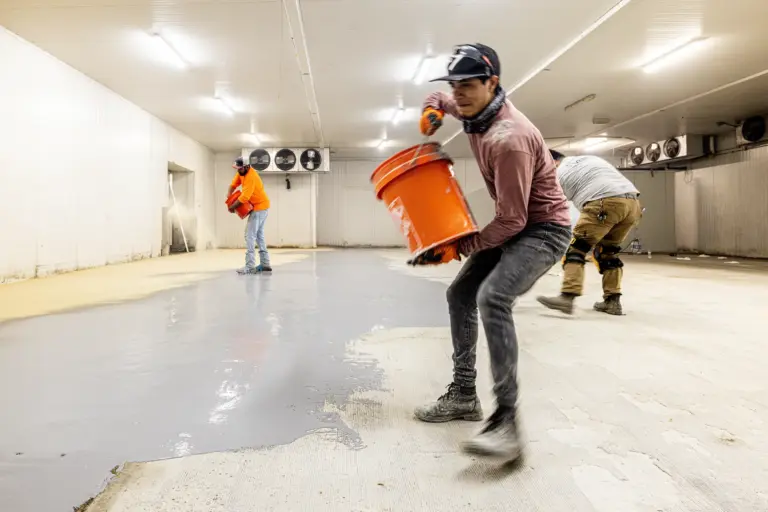
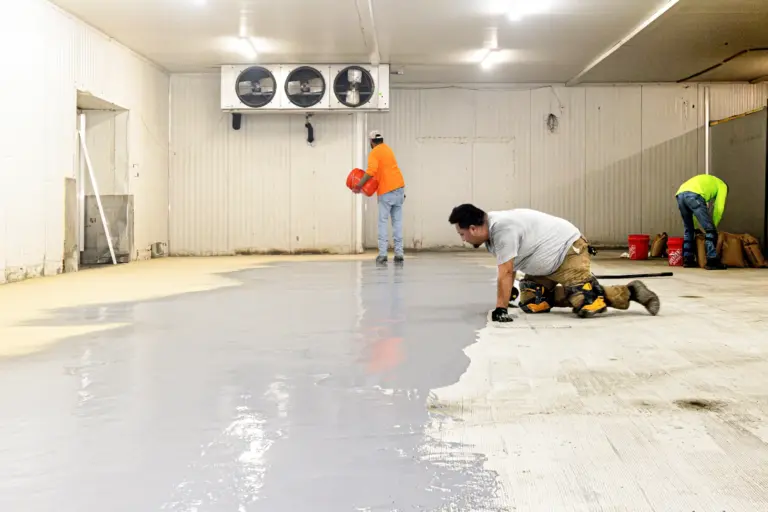
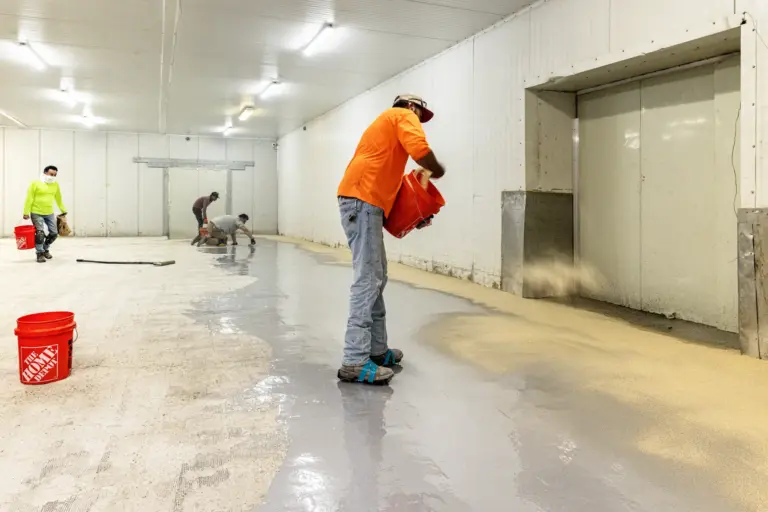
urethane Cement Installation Gallery
Frequently Asked Questions
Urethane cement is the standard flooring for food and beverage manufacturing because it survives hot CIP washdown, organic acid exposure, and 150°F+ thermal shock differentials that delaminate epoxy within 12 to 24 months. Texture grades match each zone’s wetness, from smooth dry storage to aggressive wet-process broadcast, and integral cove base closes the wall-to-floor joint sanitation programs inspect. Craftsman installs them nationwide, single rooms to multi-plant programs.
Zone the plant by exposure. Wet process areas take the heaviest textured urethane cement with full cove and drain detailing, packaging halls step down in texture for cleanability under conveyor lines, and dry storage runs smooth economical grades. Coolers and freezers need cold-rated systems installed before pull-down, and non-process support space takes standard resinous floors, because spending process-floor money in offices is specification waste.
Epoxy rated food safe still fails washdown zones, because food safe describes the cured film’s contact status while hot CIP at 140 to 180°F attacks the resin-to-concrete bond and delaminates it within 12 to 24 months. Urethane cement carries equal food-contact compatibility and absorbs the 150°F+ differential. Epoxy remains a reasonable choice in dry support areas, and the full comparison lives on the urethane cement vs epoxy page.
Condition standards govern, with FSIS sanitation performance standards at 9 CFR 416 in USDA-inspected plants and FDA 21 CFR 175.300 covering incidental food-contact materials everywhere else. No agency certifies a floor product as approved. Third-party schemes like SQF and GFSI audit the floor’s documentation package rather than the product, and urethane cement systems support NSF/ANSI 51 requirements. What USDA approved means on a spec today is covered on the USDA approved flooring page.
Sika and Sherwin-Williams High Performance Flooring manufacture the food grade urethane cement systems specified in US plants, Ucrete for Sika and Poly-Crete and Hybri-Flex for Sherwin-Williams. Documented installation keeps the manufacturer system warranty valid. Craftsman installs both families nationwide as a Sika Certified Installer and an authorized Sherwin-Williams High Performance Flooring installer.
Food and beverage flooring runs $4-17/sqft installed depending on project size, system thickness, and substrate condition, and project size is the dominant driver of where a job lands. Small single-room installs price at the top of that band and large multi-zone plants at the bottom. The full size-band table lives on the urethane cement cost page.
One contract can cover a program of plants. Craftsman delivers single-contract multi-site programs with in-house W-2 crews that provide national service coverage, phased around each plant’s production schedule with 24-hour return to service on self-leveling systems. Every site closes out with its own audit-ready documentation package, so each plant’s food-safety file stays complete.
urethane Cement Flooring Knowledge Center
Resource links
Industries Served
Technical Performance
Selection & Standards
Sherwin-Williams Poly-Crete Systems
Sika Ucrete Systems
Cost, Comparisons & Legacy Names
Blog
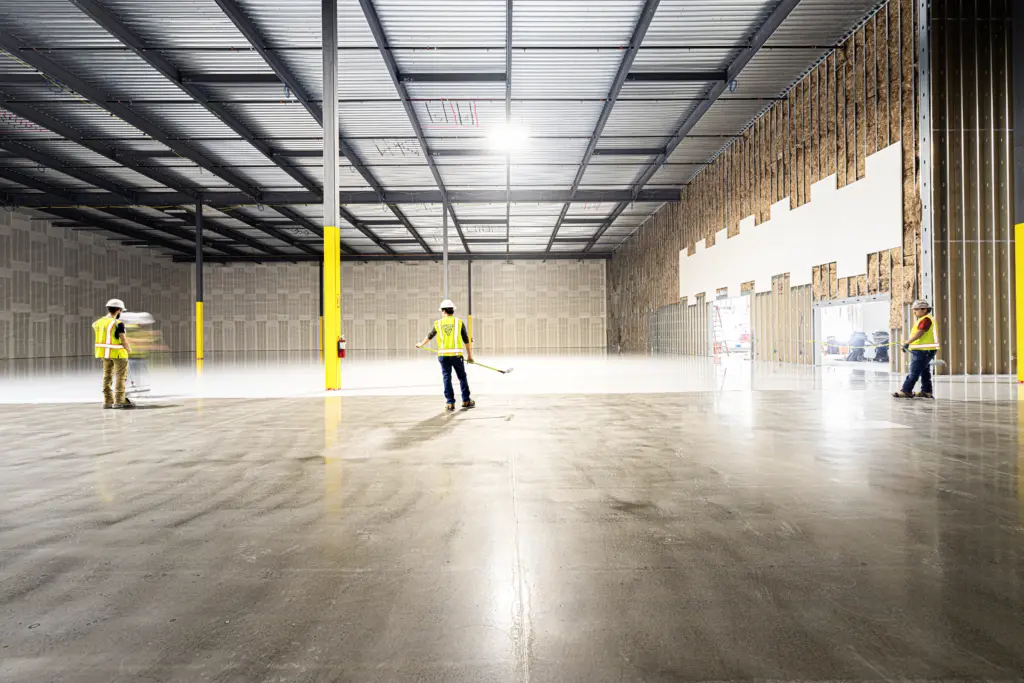
Craftsman Publishes 2026–2027 ESD Flooring Technical Guide
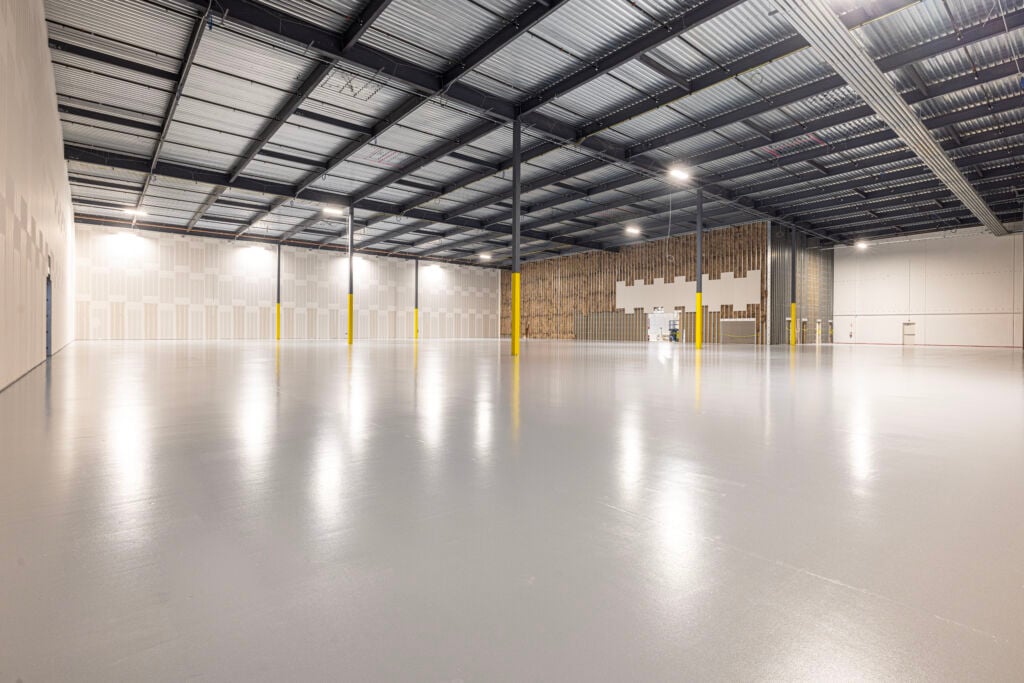
ESD Epoxy Flooring Case Study: 34,000 SF Dallas, TX