What can we help you with?
Technical flooring, delivered directly
- ESD flooring, urethane cement, terrazzo, and polished concrete
- In-house W-2 installation crews and experienced field leadership
- National service coverage with project-specific staffing plans
- Testing, documentation, and defined project closeout
- Dedicated support for corporate procurement and multi-site contracting
Phone: +1 (844) 687-1961
Cold Storage
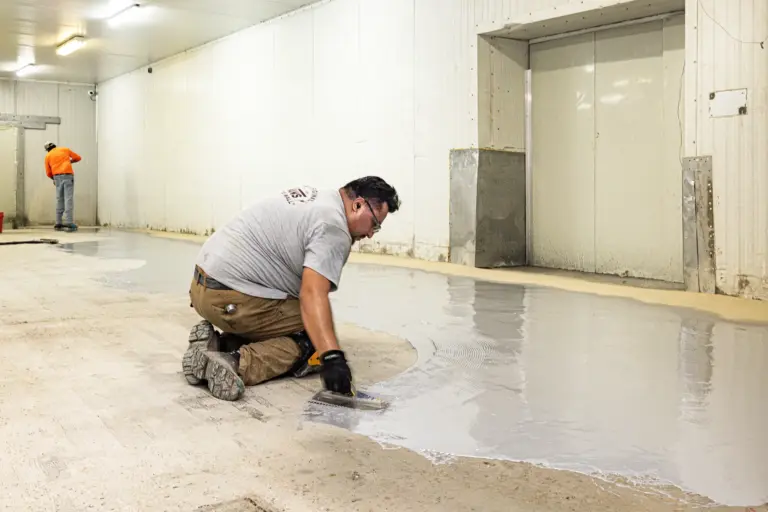
Cold storage flooring has one requirement most resin systems cannot meet: it must survive service at -40°F while absorbing the thermal swings that arrive with every door cycle, defrost, and blast-freeze pull-down. Craftsman Concrete Floors installs urethane cement freezer flooring in freezer warehouses, refrigerated distribution centers, cold rooms, and blast-freeze bays nationwide. Urethane cement holds a -40°F to 250°F operating range because the mortar’s thermal expansion behavior stays close to the concrete beneath it. Rigid epoxy films do not track the slab. In freezer service they crack and delaminate, typically within 6 to 18 months of pull-down. Systems install at 3/16″ to 1/4″ self-leveling in interior freezer and packaging zones, and 1/4″ to 3/8″ trowel-applied at dock transitions and high-load traffic lanes.
This page covers the facility-scale end of the category — commercial freezer flooring for warehouses and cold storage plants, and food processing cold storage flooring where forklift traffic and cold-chain uptime set the specification. Box-scale walk-in coolers and freezers are a different installation problem, scoped as single-night work around live refrigeration, and they are covered on the walk-in cooler and freezer flooring page. In-house W-2 crews provide national service coverage. Phased installation lets a facility keep product frozen while zones are rebuilt one at a time, with substrate moisture logs and audit-ready closeout documentation shipping with the install.
Thermal Performance in Freezer and Cold Storage Service
Urethane cement tolerates 150°F+ thermal differentials because cementitious chemistry bonds the mortar to the slab and the cured system moves with the concrete through temperature cycling. Cold storage duty tests that tolerance from the cold side. Freezer rooms hold -10°F to -40°F while docks sit at 60 to 90°F, and the threshold between them takes the full swing on every pallet crossing.
Minus-40°F Rooms Crack Rigid Coatings Within 6 to 18 Months
Standard epoxy fails in freezer service because the cured film is rigid while the slab beneath it keeps contracting as the room pulls down. The differential stress concentrates at the resin-concrete interface. The coating cracks or delaminates, typically within 6 to 18 months. Urethane cement is a mortar whose expansion tracks the slab, so a -40°F hold puts no differential stress on the bond line once the room reaches temperature.
Dock Transitions Put 100°F+ Across Cold Storage Flooring
A dock threshold separates a -10°F to -40°F room from a 60 to 90°F staging floor, and every door cycle drives that 100°F+ differential into the first few feet of slab. This zone is where cold storage floors fail first. Craftsman specifies trowel-applied urethane cement at 1/4″ to 3/8″ through dock transitions and threshold lanes, with slip-resistant aggregate broadcast into the body coat where condensation freezes at the door. The added section thickness carries the thermal cycling and the wheel traffic together.
Forklift Point Loads on 3/16″ to 3/8″ Mortar Sections
Forklift wheels and pallet-jack casters put point loads into a freezer floor that a thin freezer floor coating transfers straight to the bond line. At 3/16″ to 3/8″, urethane cement carries and spreads those loads through the mortar section, which is the difference between a wear surface and a failure plane under wheel traffic. Cold room flooring takes racking legs the same way.
Freezer Floor Construction and Installation Logistics
Insulated Slab Construction — Where the Flooring System Sits
Freezer floor construction stacks a structural wear slab over under-slab insulation, and the flooring system bonds to that wear slab; the urethane cement never contacts the insulation below. What the flooring contractor controls is the bond: moisture verification per ASTM F2170 in-situ relative humidity testing, ASTM F1869 calcium chloride testing where the specification calls for it, and mechanical preparation to an ICRI 310.2 CSP 4-6 profile before any material goes down.
Install Before Pull-Down on New Construction
Before pull-down is the right sequence whenever the schedule allows. A warm slab cures the mortar predictably at published windows, and self-leveling systems hit 24-hour cure-and-return-to-service with no tenting or supplemental heat anywhere in the budget. Material lead time runs 1-3 weeks from contract execution, driven by material availability, so the flooring package slots into the refrigeration commissioning sequence.
Tented, Phased Replacement in Operating Freezers
Floor replacement does not require shutting an operating freezer down. Work sections are tented and locally heated while the rest of the room holds temperature, and phased installation rebuilds the floor zone by zone with product still frozen on the racking. Night and weekend shutdown-window execution covers zones the day shift cannot release. A failed coating is removed, not overcoated — a topical cold storage floor treatment will not survive the service that broke the original floor.
Compliance, Systems, and Cold-Chain Programs
USDA, FDA, and Audit Programs in Food Cold Storage
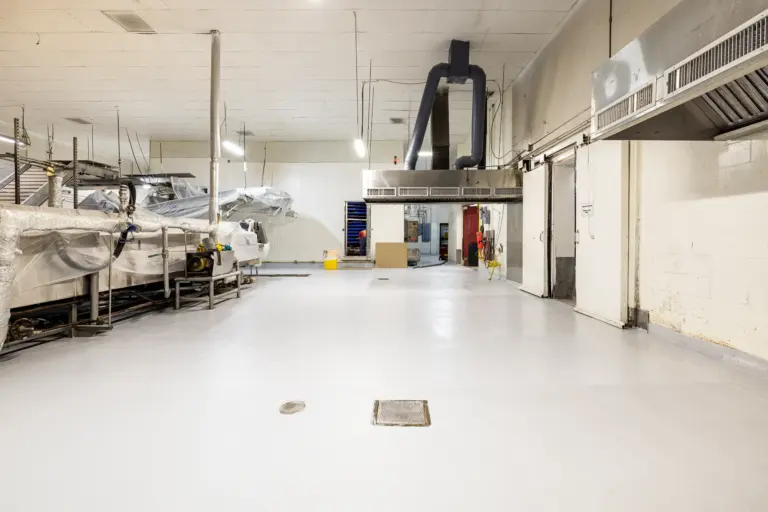
Food cold storage carries the compliance load of the product it holds. USDA requirements apply in federally inspected food storage, FDA 21 CFR 175.300 governs incidental food contact, and the installed system supports HACCP, SQF, and GFSI audits that document floor integrity as a control point. NSF/ANSI 51 food-contact requirements are supported at the system level. In washdown areas the sanitation case is structural. A monolithic, seam-free surface with an integral cove base formed in the same pour leaves no wall-floor joint to harbor bacteria.
Cold-Rated Systems from Sika and Sherwin-Williams
Sika Ucrete UD 200 (UD 200 SR where slip texture is specified) carries the heavy-duty end of the range, and Sherwin-Williams Poly-Crete SL and Poly-Crete HF cover self-leveling interior zones and trowel-applied high-load areas. Craftsman installs both lines as a Sika Certified + Authorized Sherwin-Williams High Performance Flooring installer, matching self-leveling urethane cement flooring to packaging and interior freezer areas and trowel-applied sections to docks. System selection is made zone by zone. Docks rarely get the same build as interior rooms.
Cold-Chain Networks Contract the Flooring Program Once
Operators running refrigerated distribution across multiple sites contract the program once. Single-contract multi-site delivery puts the same in-house crews and the same closeout documentation on every site in the network, and pre-bid walkthroughs are available based on project requirements, timing, and resource availability with remote spec review standard for multi-region rollouts.
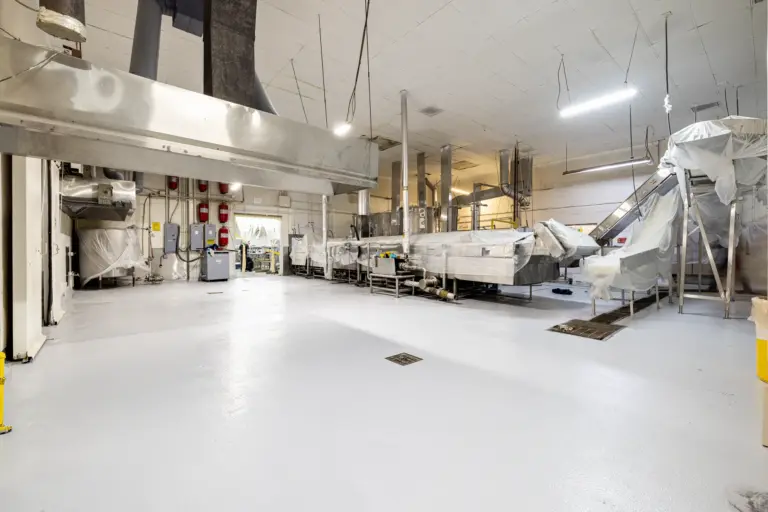
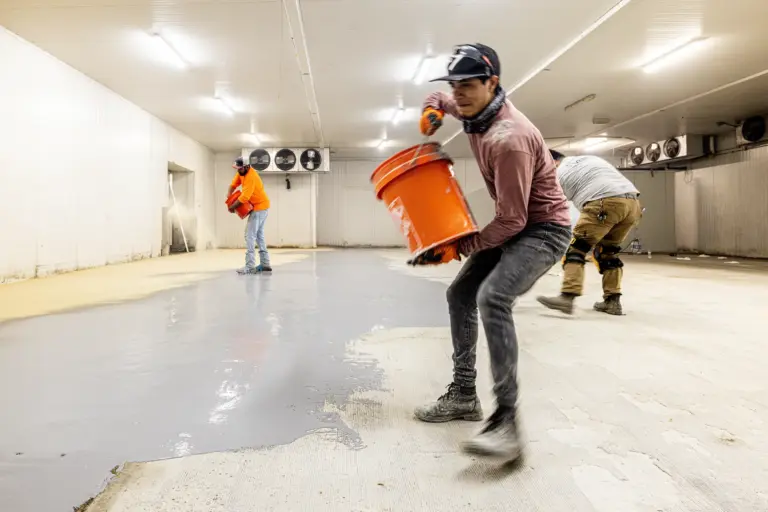
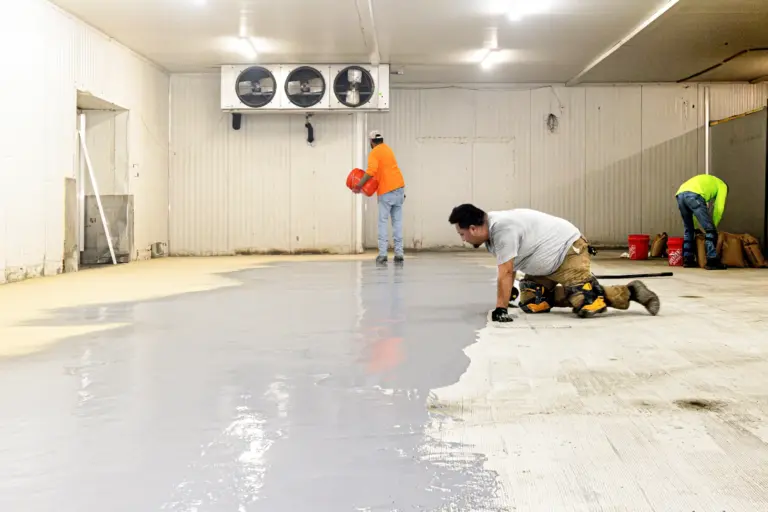
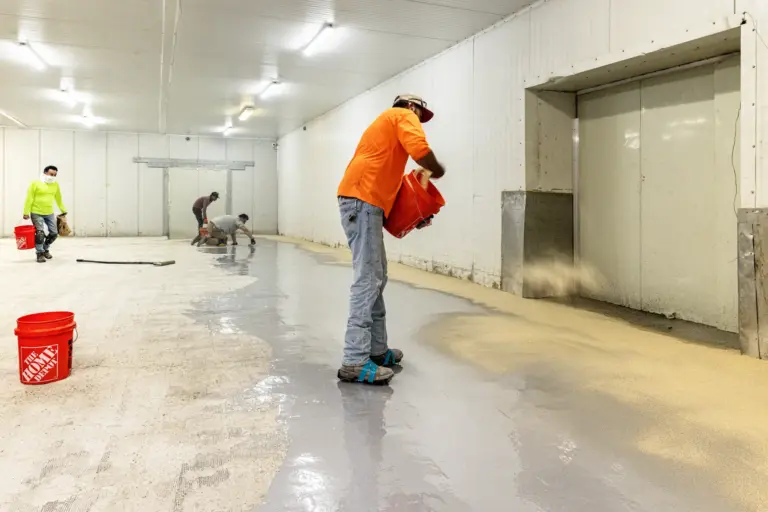
urethane Cement Installation Gallery
Frequently Asked Questions
Urethane cement is the standard flooring for cold storage and freezer warehouses because it holds a -40°F to 250°F operating range and moves with the slab through thermal cycling. Rigid epoxy films crack within 6 to 18 months. Facility-scale systems run 3/16″ to 1/4″ self-leveling in interior zones and 1/4″ to 3/8″ trowel-applied at docks and traffic lanes.
Before pull-down. A warm slab cures the mortar at published windows and self-leveling systems return to service in 24 hours, with no tenting or supplemental heat in the budget. After pull-down, installation is still possible, but it becomes tented, locally heated work and is priced accordingly.
Yes. The work section is tented and locally heated while the rest of the room holds temperature, and the floor is rebuilt zone by zone with product still frozen on the racking. Night and weekend shutdown windows cover zones the day shift cannot release.
The flooring system bonds to the concrete wear slab that sits above the under-slab insulation; the urethane cement itself never contacts the insulation layer at any point. Before installation, the wear slab is tested for moisture per ASTM F2170 and mechanically profiled to ICRI 310.2 CSP 4-6. Freezer floor construction details below the wear slab, including insulation and vapor protection, belong to the building design. The flooring scope starts at the slab surface.
$4-17/sqft installed depending on project size, system thickness, and substrate condition. Project size is the dominant driver of where a job lands in the range, and dock-transition zones specified at 1/4″ to 3/8″ trowel-applied carry more material than interior self-leveling areas. Service life runs 15-20+ years, and the full size-band breakdown lives on the urethane cement cost page.
Craftsman Concrete Floors installs cold storage and freezer flooring nationwide. In-house W-2 installation crews handle every phase of the work, and Craftsman holds Sika Certified + Authorized Sherwin-Williams High Performance Flooring installer credentials, installing industrial floors since 1999.
Yes, as a separate box-scale service covered on the walk-in cooler and freezer flooring page. Walk-in work is single-night installation around live refrigeration, a different scope from the facility-scale freezer warehouses and distribution centers this page covers.
urethane Cement Flooring Knowledge Center
Resource links
Industries Served
Technical Performance
Selection & Standards
Sherwin-Williams Poly-Crete Systems
Sika Ucrete Systems
Cost, Comparisons & Legacy Names
Blog
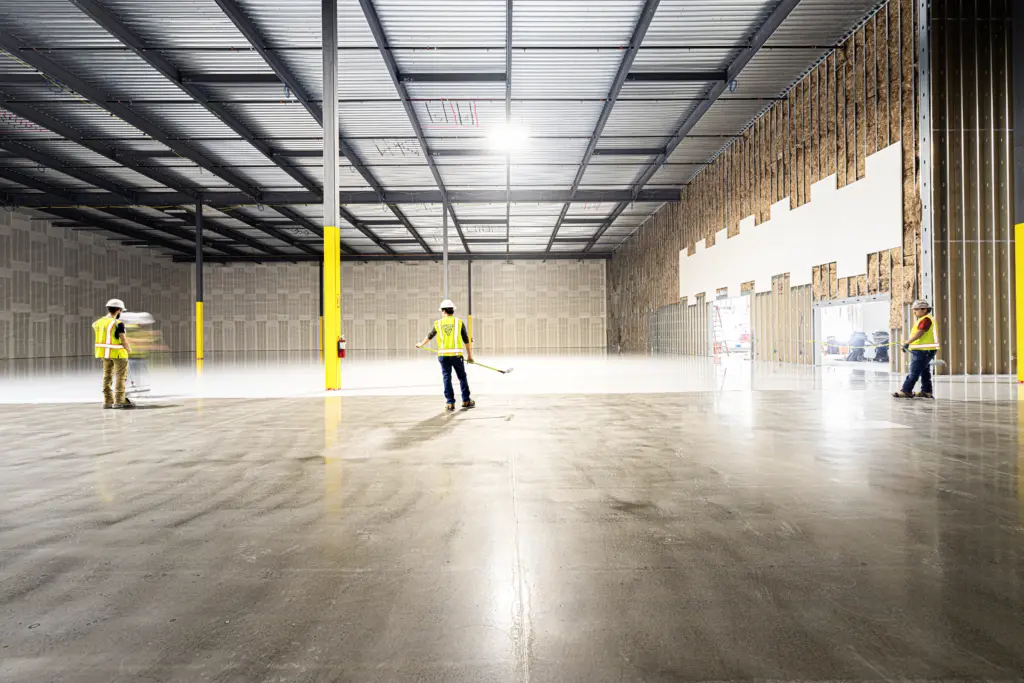
Craftsman Publishes 2026–2027 ESD Flooring Technical Guide
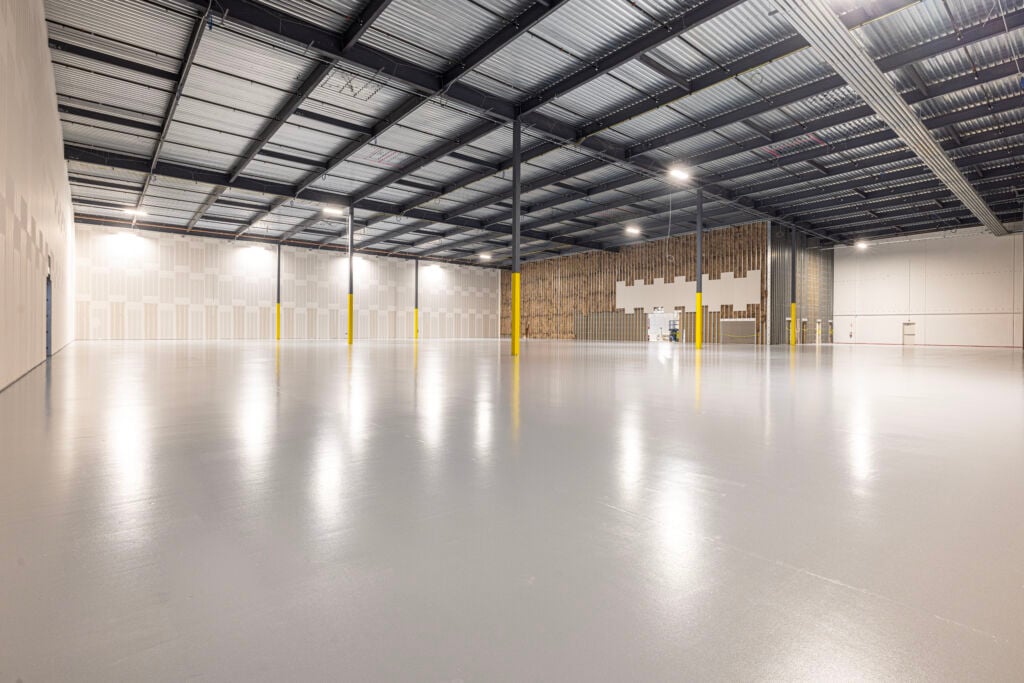
ESD Epoxy Flooring Case Study: 34,000 SF Dallas, TX