What can we help you with?
Technical flooring, delivered directly
- ESD flooring, urethane cement, terrazzo, and polished concrete
- In-house W-2 installation crews and experienced field leadership
- National service coverage with project-specific staffing plans
- Testing, documentation, and defined project closeout
- Dedicated support for corporate procurement and multi-site contracting
Phone: +1 (844) 687-1961
Dairy & Meat Processing
Meat processing flooring in a federally inspected plant is measured against the USDA-FSIS sanitation performance standards in 9 CFR 416: floor surfaces impervious to moisture, cleanable, sloped to drain, and kept free of cracks and pooling. Dairy processing flooring answers the same condition-based standard, with FDA food-contact requirements under 21 CFR 175.300 and HACCP documentation layered on top. No product certificate satisfies any of it. The floor is judged in place, every operating day, under the plant’s own chemistry. Urethane cement is specified for meat, poultry, and dairy plants because a monolithic mortar with an integral cove base formed in the same pour holds that condition structurally, without the grout joints and bond-line seams that inspectors write up.
Craftsman Concrete Floors has installed industrial flooring since 1999, and in-house W-2 crews provide national service coverage. Food grade flooring work in an operating plant is phased zone by zone around slaughter schedules, milk receiving, and sanitation windows; self-leveling sections return to service in 24 hours. Documentation is part of the deliverable, from substrate moisture verification through cove base completion photos. Plants replacing failed acid brick rather than coated concrete are a different scope, covered on the dairy brick replacement page.
USDA-FSIS, FDA, and HACCP Compliance Architecture
FSIS retired its prior-approval program for flooring materials in 1997, and no current USDA approval list for floor systems exists. What replaced the list is a condition standard the floor must hold at every inspection. That moves the buying question from which product is listed to which system keeps an impervious, cleanable surface under production chemistry for 15-20+ years. Urethane cement is that system in most federally inspected meat and dairy environments.
USDA-FSIS 9 CFR 416 — Impervious, Cleanable, Sloped to Drain
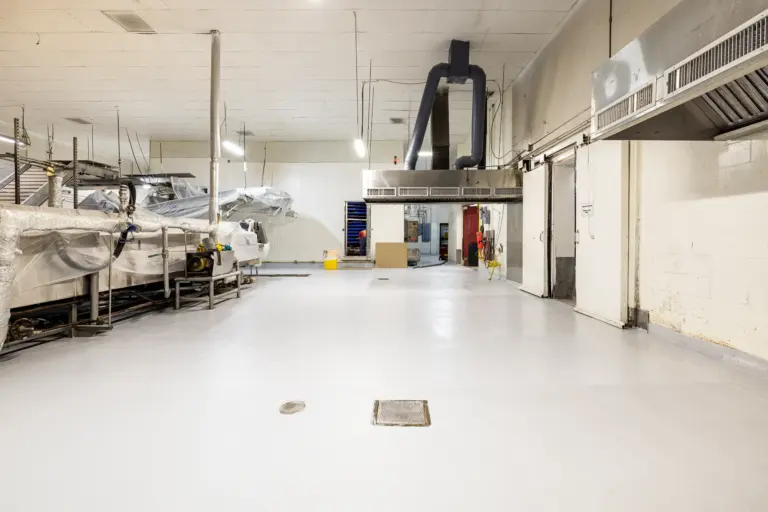
The sanitation performance standards in 9 CFR 416 are condition-based, and an FSIS inspector evaluates the floor that exists on inspection day. Grout joints harboring soil in quarry tile and exposed porosity in worn sealed concrete read as sanitation findings; so do gaps at drain perimeters and cove base seams. A monolithic urethane cement surface removes those finding classes structurally: there is no grout joint to harbor bacteria, no bond line to lift at a drain perimeter, and the cove base is formed in place from the same mortar as the floor. The surface the inspector walks is one continuous pour from wall cove to drain edge.
The Audit Documentation Package Is Built at Installation
HACCP, SQF, and GFSI audits ask for records. When the floor surface is identified as a sanitation control point, the auditor wants substrate moisture verification, surface profile documentation, food-contact status for the installed material, and evidence the cove base was formed rather than glued. Craftsman delivers that package at closeout. It includes ASTM F2170 in-situ moisture readings and ICRI 310.2 surface profile verification, with manufacturer documentation supporting FDA 21 CFR 175.300 food-contact status and NSF/ANSI 51 requirements, filed once and produced on demand at the next audit.
Dairy Audits — Where Impervious Flooring Requirements Come From
Impervious dairy flooring requirements trace to FDA food-contact rules under 21 CFR 175.300 and to SQF audit criteria that name surface monolithicity and cove base treatment alongside drain cleanability in audited dairy operations. The practical test is absorption. A floor that takes in milk solids or cleaning chemistry between washdowns fails the condition standard regardless of its datasheet, which is why worn sealed concrete and cracked acid brick draw findings. Urethane cement passes as a non-porous monolithic mortar, not a film sitting on porous concrete.
Plant Chemistry From Kill Floor to Cheese Vat
Lactic Acid Sets the Spec in a Dairy Plant
Milk residue ferments under operating conditions and generates lactic acid directly at the floor surface, so pH from the pasteurizer to the brine tank cycles daily. Epoxy softens at the resin-to-concrete interface under that cycling. Whey concentrate is harder still, attacking both epoxy bond lines and the cementitious grout between quarry tiles. A dairy plant floor coating specified as urethane cement mortar is documented against exactly this organic acid exposure, at 3/16 inch and up rather than as a thin film. Plants running failing acid brick at the vat line face a replacement decision rather than a recoat; that decision is mapped on the dairy brick replacement page.
Meat Processing Flooring Chemistry — Fats, Blood, and Brine
Slaughterhouse flooring takes chemistry that destroys thin-film systems on a predictable schedule. Animal fats penetrate epoxy and soften it from the surface down, while blood and protein residue decomposing in cracks generates hydrogen sulfide, an automatic finding under FSIS inspection. Brine attacks epoxy bond lines through osmotic pressure at chill and packaging lines. Poultry processing flooring at the evisceration line carries the same load delivered wet, shift after shift. Trowel-applied urethane cement at 1/4 inch to 3/8 inch holds kill floor, evisceration, primal cut, and deboning zones because the attack lands on a monolithic mineral-and-resin matrix with no bond line to fail.
180°F CIP Washdown Over a 35°F Cooler Floor
Cooler and processing floors in meat and dairy plants hold at 28-35°F while adjacent zones take 180°F caustic CIP washdown, and sanitation runs that cycle every operating day. The resulting differential approaches 150°F. Past that point a rigid epoxy film can no longer follow the slab, and delamination at the resin-to-concrete interface follows within 12-24 months. Urethane cement is rated for a 150°F+ thermal shock differential inside a -40°F to 250°F operating range because the cementitious mortar expands and contracts with the concrete instead of fighting it. Washdown-zone design detail, from drain layout and slope to texture selection by zone, is covered on the CIP washdown page.
Installation Around Live Production
Zone-by-Zone Phasing at 24-Hour Return to Service
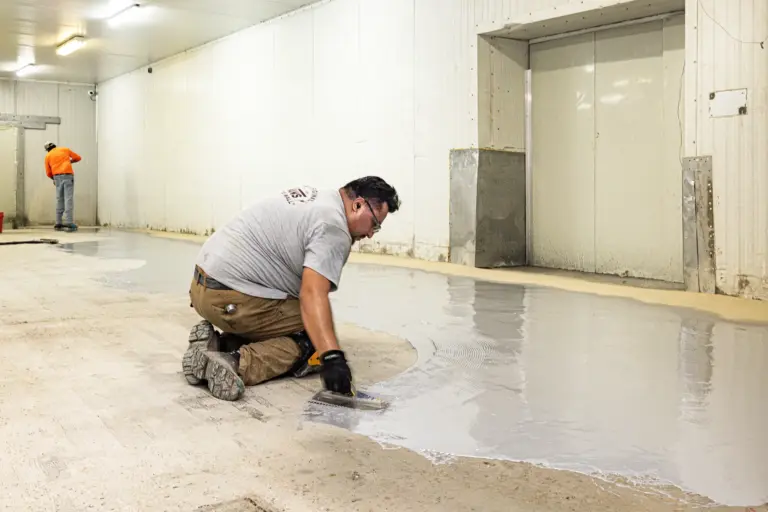
Phased zone-by-zone install around active operations is the standard methodology, with 24-hour cure-and-return-to-service on self-leveling systems and 48-72 hours on trowel-applied mortar. Crews take one zone per shutdown window and work nights and weekends where sanitation schedules demand it. Containment protects exposed product zones per the plant’s food-safety program, and fixed equipment stays in place, rails and drains included, with keyed terminations at each phase line. Lead time is 1-3 weeks from contract execution, driven by material availability, so a reflooring program can track planned downtime instead of creating new downtime.
One Crew Model Across a Multi-Plant Program
Multi-plant processors contract floor programs as single-contract multi-site delivery, with the same W-2 crews and the same closeout documentation format at every site. W-2 installers, not 1099 day-labor. Trained, insured, and accountable to you. That accountability matters inside a facility that is slaughtering or pasteurizing product the same week the floor goes in. Craftsman installs as a Sika Certified + Authorized Sherwin-Williams High Performance Flooring installer, so the urethane cement flooring that goes down is installed to the manufacturer’s published requirements and carries its system warranty.
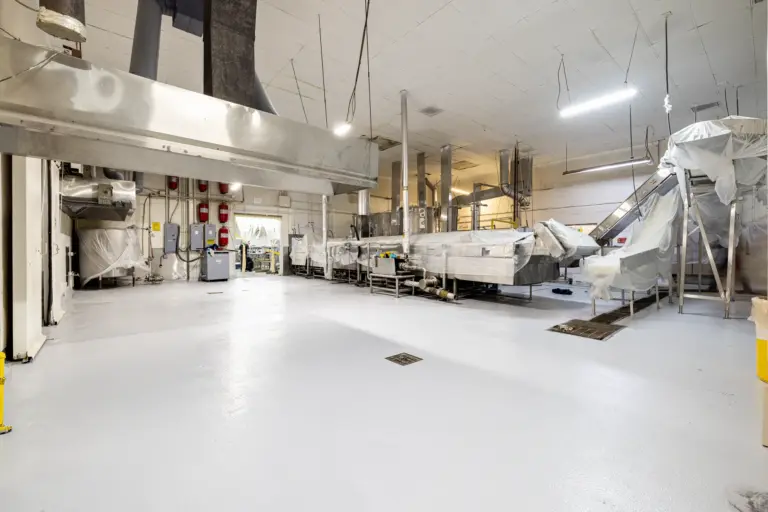
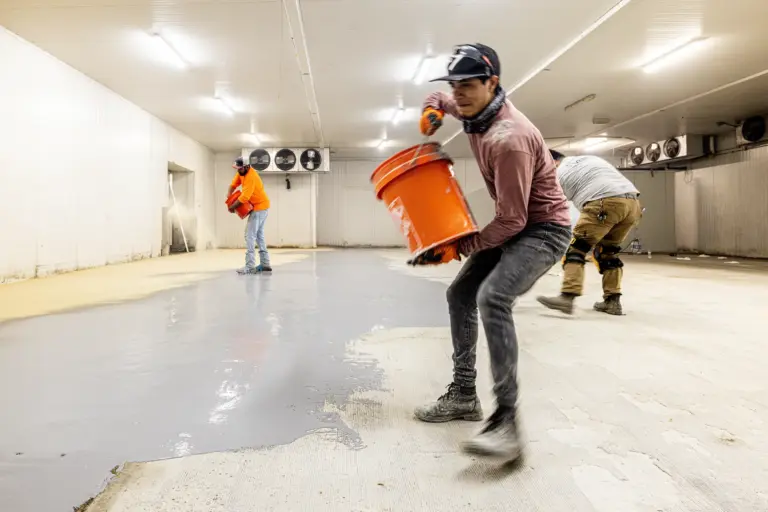
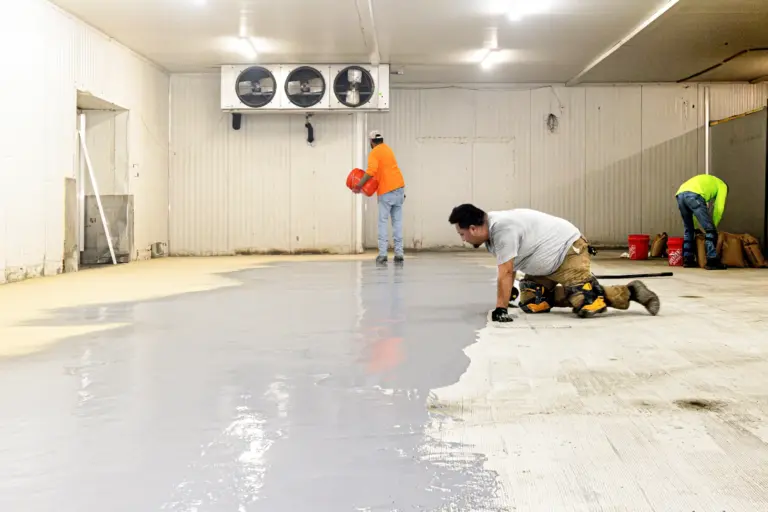
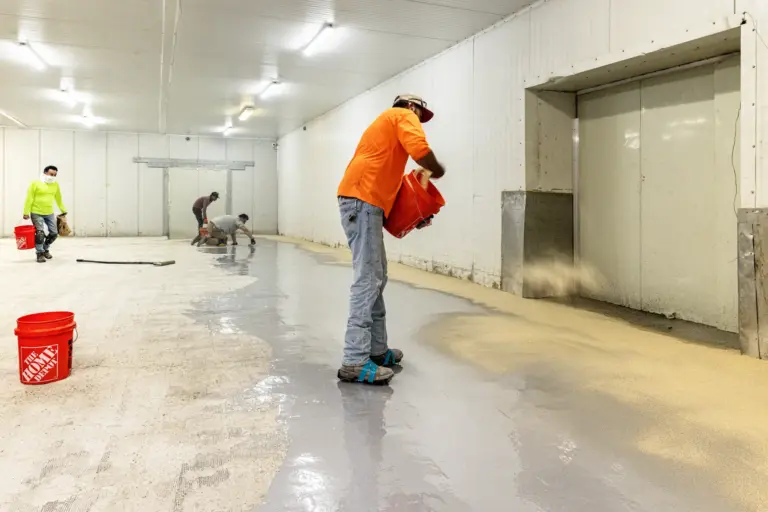
urethane Cement Installation Gallery
Frequently Asked Questions
FSIS holds processing floors to the sanitation performance standards in 9 CFR 416, which require surfaces kept impervious to moisture, cleanable, sloped to drain, and free of cracks and pooling. There has been no USDA approval list for flooring materials since the prior-approval program ended in 1997; the standard is the floor’s condition on inspection day. Monolithic urethane cement with an integral cove base is specified because it holds that condition without grout joints or bond-line seams.
$4-17/sqft installed depending on project size, system thickness, and substrate condition. Kill floors and pasteurizer rooms typically take trowel-applied mortar at 1/4 inch to 3/8 inch, which prices above the 3/16 inch self-leveling systems used in packaging and cooler zones. Size-band pricing detail lives on the urethane cement cost page.
Yes. Replacement is phased zone by zone around slaughter schedules and sanitation windows, with containment protecting exposed product zones per the plant’s food-safety program. Self-leveling urethane cement returns a zone to service in 24 hours and trowel-applied sections in 48-72 hours, so most plants never take an unplanned production day for the floor.
Textured urethane cement mortar, because lactic acid is the defining dairy hazard and cementitious urethane is documented against it. Milk residue ferments to lactic acid at the floor surface, and whey concentrate attacks epoxy bond lines and quarry tile grout alike. Broadcast texture holds footing on wet floors between washdowns, and the same mortar forms the integral cove base at the wall.
Impervious means the floor absorbs nothing that production or sanitation puts on it. Dairy audits apply that test through FDA food-contact rules under 21 CFR 175.300 and SQF criteria that put surface condition and drain cleanability on the audit checklist. Urethane cement meets the requirement as a non-porous monolithic mortar bonded to the slab, which is what keeps milk solids and cleaning chemistry out of the floor between washdowns.
Trowel-applied urethane cement at 1/4 inch to 3/8 inch is the standard slaughterhouse flooring for kill floor and evisceration zones. Animal fats soften epoxy from the surface down, blood decomposing in cracks generates hydrogen sulfide that reads as an automatic FSIS finding, and brine attacks epoxy through osmotic pressure. A monolithic urethane cement mortar takes that chemistry plus 180°F washdown with no bond line to fail.
In-house W-2 crews provide national service coverage, installing industrial floors since 1999. Multi-plant processors run reflooring programs as single-contract multi-site delivery with the same spec and documentation format at every site. Walkthroughs before bid are available inside regional driving range, and multi-plant spec review runs remotely as the standard path.
urethane Cement Flooring Knowledge Center
Resource links
Industries Served
Technical Performance
Selection & Standards
Sherwin-Williams Poly-Crete Systems
Sika Ucrete Systems
Cost, Comparisons & Legacy Names
Blog
Craftsman Publishes 2026–2027 ESD Flooring Technical Guide
ESD Epoxy Flooring Case Study: 34,000 SF Dallas, TX