- Founded in 1999 • National commercial & industrial specialty flooring contractor
- Systems: Sika Ucrete & Sherwin-Williams High Performance Flooring Poly-Crete and Hybri-Flex urethane cement systems
- In-house W-2 crews provide national service coverage
- Single-contract multi-site programs under a Master Service Agreement
- Phased installation in occupied facilities — night and weekend shutdown-window execution
- Experience Modification Rate (EMR) below the industry average
- Authorized Sherwin-Williams High Performance Flooring installer; Sika installer; Westcoat certified
- Pre-install moisture and substrate testing & audit-ready closeout documentation
- Facility assessments, compliance inspections & lifecycle maintenance programs
- Licensed • Insured • Bonded • Enterprise vendor prequalification package available (COI, W-9, capabilities statement & supporting documentation)
- Winery zones:
- – Crush pad & fermentation hall
- – Barrel room & wine cellar
- – Bottling line & tasting room
- Chemical exposure: Tartaric, malic, lactic & acetic acid resistance — juice, wine & sanitation chemistry
- System: 3/16″ to 3/8″ monolithic urethane cement • integral cove base • 24-hour return to service on self-leveling systems
Phone: +1 (844) 687-1961
Winery flooring carries a chemical load most facility floors never see. Every gallon of juice that crosses the slab brings tartaric and malic acid, the same acids 27 CFR 24.182 authorizes winemakers to add to correct natural deficiencies. Malolactic conversion adds lactic acid, and acetic acid follows wherever spoilage organisms find oxygen. A winery floor coating has to stand up to that chemistry for decades, and urethane cement is the system specified for the job: a cementitious mortar with a urethane resin matrix that bonds chemically to the concrete and resists the organic acid attack that etches bare slabs and stains epoxy films.
Craftsman Concrete Floors installs urethane cement winery flooring as one monolithic system across five duty zones: crush pad, fermentation hall, barrel room, bottling line, and tasting room. Thickness runs 3/16 inch to 3/8 inch by zone. An integral cove base forms in the same pour wherever walls meet washdown, and because the mortar’s thermal expansion coefficient tracks concrete’s, hot-water sanitation against a cellar-cool slab does not shear the bond the way it does under a rigid epoxy film.
Our Clients




















Winery Floor Duty, Zone by Zone
Breweries fight hot wort and caustic CIP chemistry, and distilleries fight ethanol and grain mash; both have their own pages on this site. Wine duty is its own problem. It changes room by room inside one building. Harvest hits the crush pad in a short surge, the tank line sees acid year-round, and the barrel room cycles wet and dry for decades.
Crush Pad — One Harvest Window, a Year of Wear
Crush pad flooring does a year’s work in one harvest window. Through crush the slab takes fruit bins, forklift traffic, press and destemmer equipment, and juice loaded with skins, seeds, and fermentable sugar, then gets hosed to the drains several times a shift. Most crush pads sit outdoor-adjacent, so the floor also rides ambient temperature swings a conditioned cellar never sees. Trowel-applied urethane cement at 1/4 to 3/8 inch takes the impact load and the hose-down cycles. Texture is graded to hold wet footing under harvest traffic.
Organic Acid Never Leaves the Fermentation Hall
Fermentation halls put organic acid on the floor every day of the production year. Tartaric and malic acid arrive with the juice. Lactic follows malolactic conversion, and acetic appears wherever spoilage organisms reach the wine. Sealed and polished concrete fail this duty because the substrate is porous. Once the topical densifier wears, the slab absorbs acid and etches from the surface down, typically within 12 to 18 months in active production zones. Urethane cement carries the same exposure in a non-porous mortar matrix bonded chemically to the substrate, so acid stays on the surface and rinses to the drain.
Barrel Room — Wet-Dry Cycling Under Static Load
Barrel room flooring earns its keep slowly. Traffic is light, but the duty never stops. Racked barrels concentrate load on small footprints for years at a stretch, and the room stays humid to limit evaporation loss. Every topping and racking pass puts wine on the floor. That constant wet-dry cycling is what retires sealed concrete in wine cellars — the topical seal degrades under repeated wetting, and the slab beneath starts drinking spilled wine and rinse water. Urethane cement has no sacrificial film to wear through. The mortar itself is the wearing course, and it handles wine cellar flooring duty through humidity that never drops.
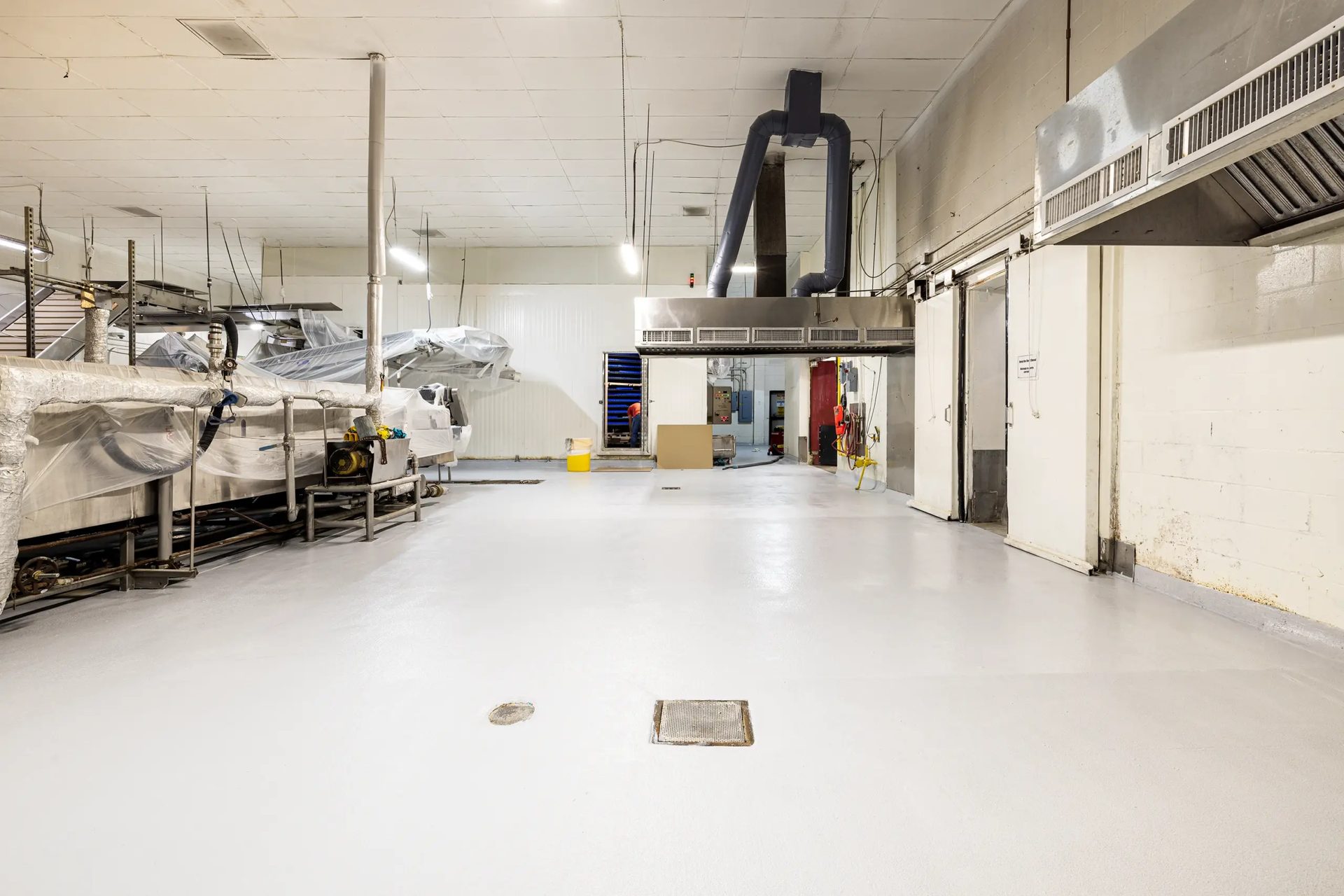
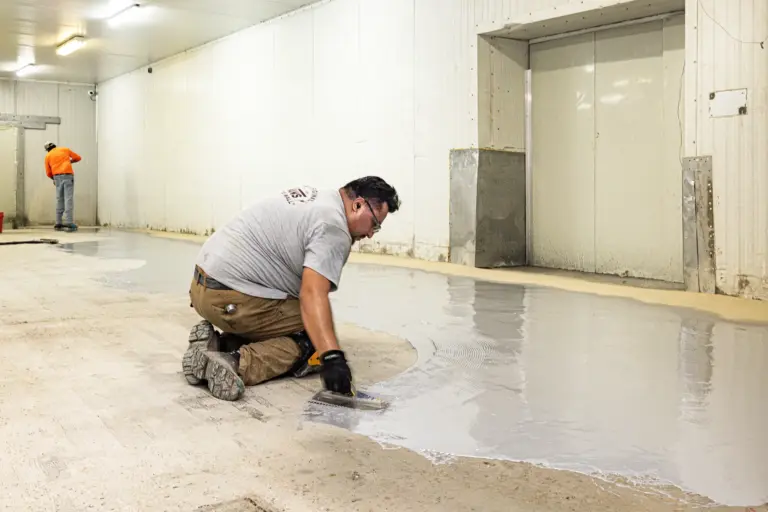
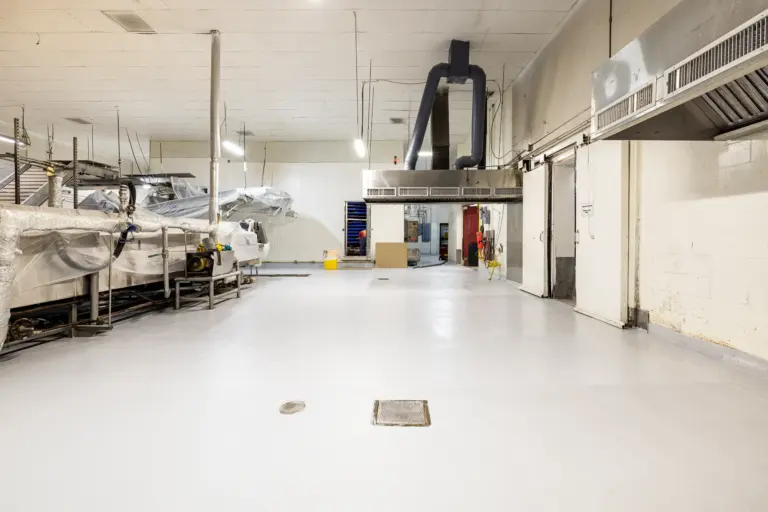
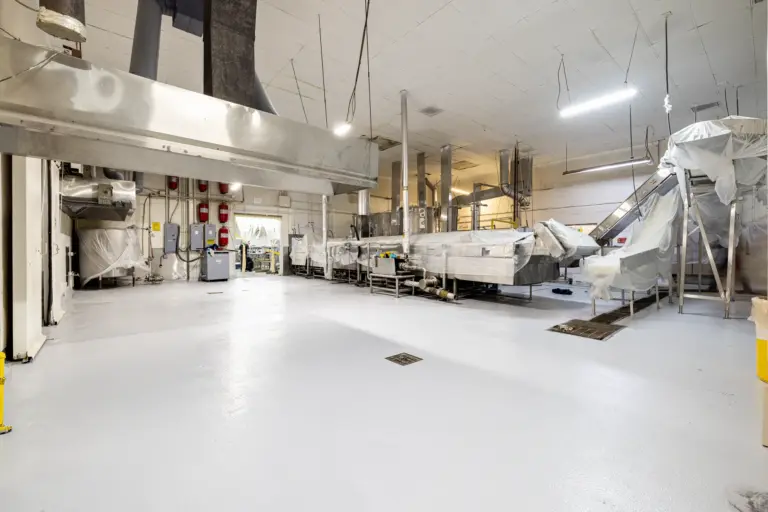
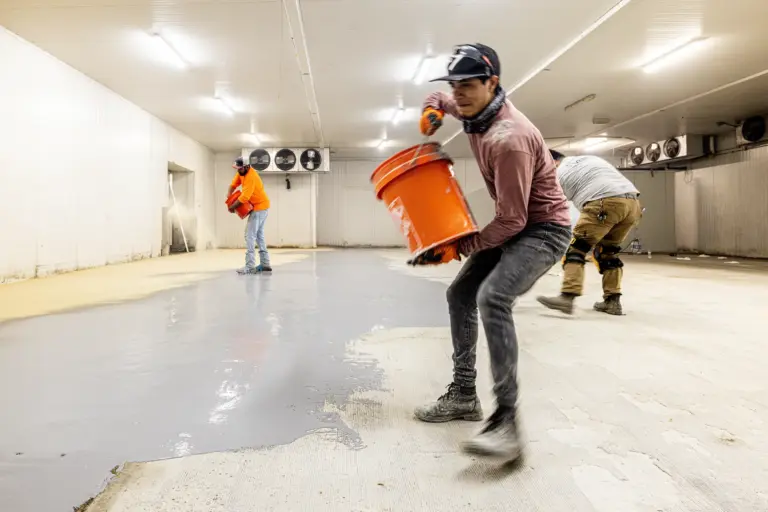
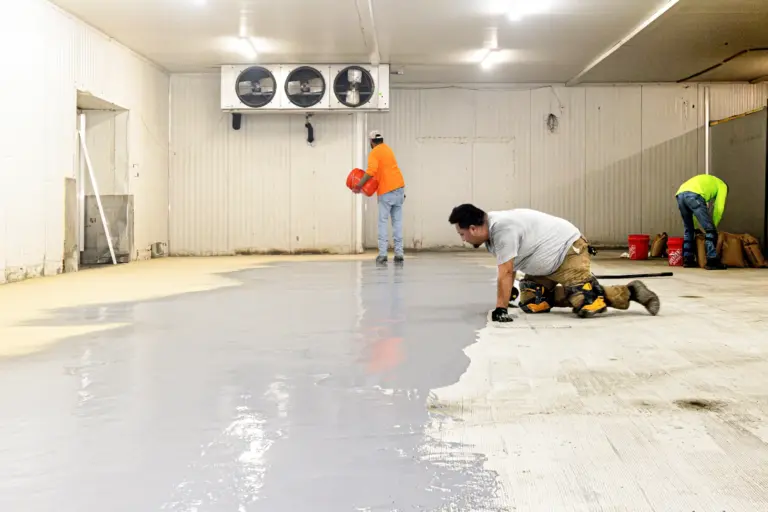
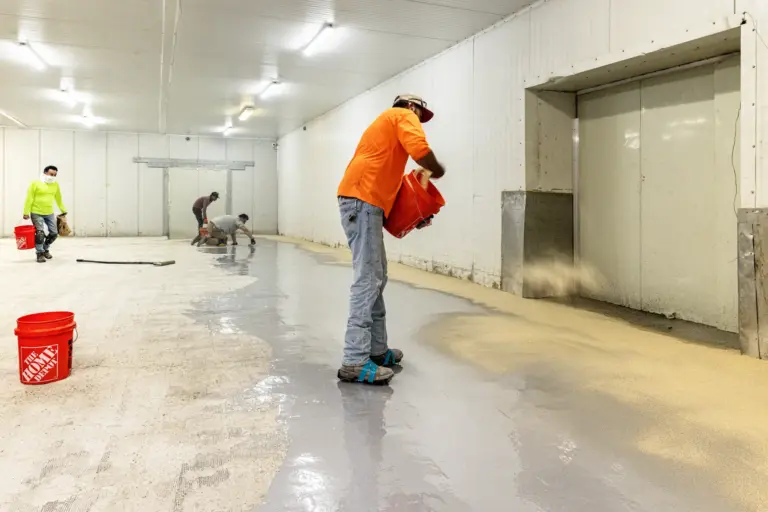
urethane Cement Installation Gallery
Request a Proposal
Bottling Lines and Tasting Rooms on One System
Daily Washdown Meets Line Traffic at Bottling
The bottling line stacks the winery’s two toughest recurring loads. It washes down daily when the line runs, and between rinse cycles the same slab carries pallet-jack traffic under full case loads and the occasional broken bottle. Self-leveling urethane cement at 3/16 to 1/4 inch suits the duty and returns the room to service 24 hours after placement. Vinyl fails this environment at its welded seams under hot rinse water; a monolithic urethane cement pour has no seams to open.
Tasting Room — Front-of-House Finish on Cellar Chemistry
Tasting room flooring can run on the same urethane cement base as the cellar, finished for the public side of the business. Decorative broadcast and topcoat options bring the pour to a hospitality-grade appearance, and the chemistry underneath keeps the same acid resistance under a bar spill as under a tank valve. Service areas behind the bar take the same integral cove base as production rooms, so the floor cleans to the local health authority’s standard on both sides of the wall. A continuous cellar-to-tasting-room pour has no transition strip to fail.
Installation Around the Winery Calendar
Phased Winery Flooring Installation Between Harvests
Most winery flooring installs between harvests. Lead time runs 1-3 weeks from contract execution, driven by material availability, and work phases zone by zone so the rest of the cellar keeps operating while one room is poured. Self-leveling systems return to service in 24 hours; trowel-applied builds take 48 to 72. Night and weekend shutdown-window execution covers rooms that cannot go quiet during a production day.
Substrate Prep on Acid-Etched Cellar Slabs
Acid etching and decades of washdown leave an old cellar slab in a condition that decides whether the next floor survives. Craftsman grinds to an ICRI 310.2 surface profile and tests slab moisture per ASTM F2170 before any material goes down. Both land in the audit-ready closeout package. Urethane cement also tolerates substrate moisture that vapor-impermeable epoxy cannot; on wine-soaked slabs without an intact vapor barrier, moisture drive pushes an epoxy film off the concrete.
In-House W-2 Crews, Two Manufacturer Credentials
In-house W-2 crews provide national service coverage. Craftsman installs winery floors as a Sika Certified + Authorized Sherwin-Williams High Performance Flooring installer, which keeps the manufacturer’s system warranty intact behind documented installation. The crew that starts a phased cellar job is the crew that finishes it.
urethane Cement Flooring Knowledge Center
Resource links
Industries Served
Technical Performance
Selection & Standards
Sherwin-Williams Poly-Crete Systems
Sika Ucrete Systems
Cost, Comparisons & Legacy Names
Frequently Asked Questions
$4-17/sqft installed depending on project size, system thickness, and substrate condition. A decorative tasting room pour and a bare trowel-applied crush pad sit at different points in that range, and small single-room projects price higher per foot than full-cellar programs. The size-band breakdown lives on our urethane cement cost page.
No. 27 CFR Part 24 governs a bonded winery’s registration, bond, recordkeeping, and excise tax, and it is silent on floor construction. The coved, cleanable floor expectations come from local health authorities and the winery’s own sanitation program, and urethane cement with an integral cove base is specified to meet them.
Epoxy films stain and dull under sustained tartaric, malic, lactic, and acetic acid exposure, and they sit on top of the slab rather than bonding into it. Moisture drive finishes the job. On older cellar slabs without an intact vapor barrier, substrate moisture pushes epoxy off the concrete, while urethane cement bonds chemically to the substrate and carries the acid load in a non-porous mortar matrix.
Same chemistry, different build. A crush pad typically takes trowel-applied urethane cement at 1/4 to 3/8 inch with aggressive texture for wet traction under harvest traffic, while a barrel room runs self-leveling at 3/16 inch with a finer profile for rack stability and easier cleaning. Specifying both zones in one system keeps one installer accountable for the whole cellar.
Yes. Decorative broadcast and topcoat options finish the same urethane cement base to a front-of-house standard, so the tasting room floor matches the cellar’s acid resistance under bar service. A continuous pour from production space into public space also removes the transition strip, which is the first thing to fail where two flooring systems meet.
Between harvests is when most winery floors go in. Lead time runs 1-3 weeks from contract execution, driven by material availability, and work phases zone by zone so bottling or barrel storage keeps operating while another room is poured. Self-leveling systems return to service in 24 hours; trowel-applied builds take 48 to 72.
In-house W-2 crews provide national service coverage, and they have since 1999. Pre-bid walkthroughs are available based on project requirements, timing, and resource availability, and remote spec review comes standard for rollouts that span more than one property or metro in a single program. The same crew structure covers estate wineries and custom crush facilities alike.