What can we help you with?
Technical flooring, delivered directly
- ESD flooring, urethane cement, terrazzo, and polished concrete
- In-house W-2 installation crews and experienced field leadership
- National service coverage with project-specific staffing plans
- Testing, documentation, and defined project closeout
- Dedicated support for corporate procurement and multi-site contracting
Phone: +1 (844) 687-1961
Urethane Cement Flooring at a Glance
| Item | Craftsman urethane cement program |
|---|---|
| Company | Founded in 1999 • National commercial & industrial specialty flooring contractor |
| Systems | Sika Ucrete & Sherwin-Williams High Performance Flooring Poly-Crete and Hybri-Flex urethane cement systems |
| Crews | In-house W-2 crews provide national service coverage |
| Multi-site programs | Single-contract multi-site programs under a Master Service Agreement |
| Installation | Phased installation in occupied facilities — night and weekend shutdown-window execution |
| Safety | Experience Modification Rate (EMR) below the industry average |
| Credentials | Authorized Sherwin-Williams High Performance Flooring installer; Sika installer; Westcoat certified |
| Testing and closeout | Pre-install moisture and substrate testing & audit-ready closeout documentation |
| Maintenance | Facility assessments, compliance inspections & lifecycle maintenance programs |
| Vendor qualification | Licensed • Insured • Bonded • Enterprise vendor prequalification package available (COI, W-9, capabilities statement & supporting documentation) |
| Compliance | USDA, FDA inspection ready HACCP, SQF, GFSI program compatible NSF/ANSI 51 food contact |
| Temperature | -40°F to 250°F operating range • 150°F+ thermal shock differential |
| Build | 3/16″ to 3/8″ monolithic build with integral cove base • 24-hour return to service on self-leveling systems |
| Pricing and lead time | $4-17/sqft installed depending on project size, system thickness, and substrate condition • 1-3 week lead time |
Urethane cement is an industrial flooring mortar that combines cement chemistry with a urethane resin matrix. The same system is specified as cementitious urethane or polyurethane cement. Installed at 3/16 to 3/8 inch over prepared concrete, it bonds chemically to the slab and flexes with it through thermal cycling, which is why the category holds a -40°F to 250°F operating range and absorbs thermal shock differentials of 150°F and higher. Urethane cement flooring is the default specification where hot washdown, organic acids, steam, and sanitation requirements exceed what epoxy tolerates. The system installs as a monolithic, seam-free surface with an integral cove base formed in the same pour, and self-leveling builds return a zone to service in 24 hours.
Craftsman Concrete Floors has installed industrial floors since 1999. In-house W-2 crews provide national service coverage, and projects range from a single walk-in cooler to phased multi-plant food and beverage programs. This hub defines urethane cement and routes each decision to the page that owns it, from pricing and the epoxy comparison to manufacturer datasheets and the vertical requirements of each facility type.
What Urethane Cement Is
Urethane cement behaves differently from resin coatings because it is mortar, not film. The three sections below cover the chemistry, the two build methods, and the duty envelope the finished floor carries. Buyers weighing it against epoxy can treat this as the base spec; the urethane cement vs epoxy page carries the head-to-head decision, including where epoxy wins.
Cementitious Mortar With a Urethane Resin Matrix
Urethane cement blends cement, graded aggregate, and urethane resin into a mortar that cures as a chemically bonded layer of the slab itself. The bond is chemical rather than mechanical, and the cured mortar flexes with the substrate through temperature swings instead of resisting them as a rigid film does. That distinction drives every performance claim in the category. Epoxy delaminates at the resin-concrete interface when surface differentials pass what the film can absorb, typically within 12-24 months in hot-washdown rooms; urethane cement carries the same duty for 15-20+ years.
Self-Leveling and Trowel-Applied at 3/16 to 3/8 Inch
Self-leveling systems install at 3/16 to 1/4 inch and return each zone to service in 24 hours. Trowel-applied mortars run 1/4 to 3/8 inch for heavy thermal and impact duty and cure in 48-72 hours. Both builds form the cove base in the same pour, so the wall-floor joint disappears into a cleanable monolithic radius. Duty-class selection by thickness is covered on the system thickness page.
Thermal Shock, CIP Washdown, and Organic Acid Duty
The category positioning is a -40°F to 250°F operating range with 150°F+ thermal shock tolerance. The design case is a 180°F clean-in-place cycle hitting a floor beside refrigerated storage, and the mortar absorbs that swing within its 150°F+ differential rating without letting go of the slab. Chemistry runs the same direction. Lactic, acetic, and citric acids from food production, caustic CIP solutions, and hot oil sit on these floors daily. Thermal shock and CIP washdown design each have their own technical page on this site.
Where Urethane Cement Installs
Food and Beverage Processing
Food and beverage plants account for more urethane cement volume than any other vertical. A floor in a USDA-FSIS inspected plant has to hold up under hot washdown chemistry and daily sanitation while staying monolithic and seam-free, and the integral cove base removes the wall-floor joint where residue collects. Zone-by-zone specification for processing plants, dairy and meat, breweries, distilleries, wineries, and commercial kitchens is carried on the food and beverage flooring hub.
Pharmaceutical and Cleanroom Facilities
Pharmaceutical manufacturing specifies urethane cement where wet processing and thermal duty meet cGMP surface requirements and ISO 14644 cleanroom classification. The spec logic differs enough from food work that it has its own page, covering cleanroom classes, compounding suites, and the documentation that installation qualification requires. The pharmaceutical flooring page carries that scope.
Industrial Plants and Failed-Epoxy Replacement
Industrial facilities outside the regulated verticals run the same physics. Battery plants, chemical processing floors, and automotive paint lines cycle heat and chemistry the way a food plant does, without the inspection layer, and thickness scales with wheel loads and impact. When the project is a floor that has already delaminated, the diagnosis, the repair-versus-replace call, and the replacement process are covered on the replacing failed epoxy page.
Manufacturers and Legacy Product Names
The two primary manufacturer lines Craftsman installs both changed hands within the last four years, so live specifications carry up to three generations of product naming. A spec that reads FasTop or Sikafloor PurCem still routes to a current, installable product. Each brand tree on this site carries per-product datasheet pages with the current data sheet, the full legacy mapping, and spec-substitution answers.
Sika Ucrete and the PurCem Legacy
Sika closed its acquisition of the MBCC Group construction systems business on May 2, 2023, bringing Ucrete under Sika. Ucrete is the current US family. Sikafloor PurCem remains legacy and transitional naming in the US market, mapped product by product into the Ucrete line rather than discontinued, so a spec written around PurCem or BASF Ucrete lands on a current Ucrete system. The Sika tree carries the family and its per-product pages.
Sherwin-Williams Poly-Crete and Hybri-Flex
Sherwin-Williams acquired Dur-A-Flex on July 1, 2022, and kept the Poly-Crete and Hybri-Flex names under Sherwin-Williams High Performance Flooring. FasTop is legacy General Polymers naming, and every FasTop code maps to exactly one current product. The code SL45 alone is ambiguous, because FasTop Multi Topfloor SL45 and FasTop Deco Flake SL45 route to two different current products, which is why spec review works from full legacy names. The Sherwin-Williams tree carries the per-product pages and the FasTop index.
One Bench, Four Certifications
Craftsman is certified across four urethane cement manufacturers — Sherwin-Williams High Performance Flooring, Sika, PIP, and Westcoat. Product-family depth on this site stays with the two primary lines, because Sika Ucrete and Sherwin-Williams Poly-Crete and Hybri-Flex are the systems specified and installed at volume. Spec’d-product buyers can go straight to the Sika or Sherwin-Williams trees; every datasheet page there anchors its product’s current manufacturer data sheet.
Cost, Scheduling, and the Installation Program
$4-17/sqft Installed, and What Moves the Number
$4-17/sqft installed depending on project size, system thickness, and substrate condition is the category envelope. Project size dominates the number because mobilization and equipment spread across the area installed, which pushes large plants toward the low end of the range and small retrofits toward the top. Size-band pricing by project square footage, and what an installed urethane cement quote includes, are on the cost page.
1-3 Week Lead Time and Phased Installation
Lead time runs 1-3 weeks from contract execution, driven by material availability. Installation in occupied facilities is phased zone-by-zone around active operations, with night and weekend shutdown-window execution where production runs around the clock. The step-by-step urethane cement installation sequence, from surface profile and moisture verification through topcoat, is documented on the installation process page, with substrate work covered on the surface preparation page.
In-House W-2 Crews
Craftsman staffs capacity-first: in-house W-2 crews cross-trained across urethane cement, ESD, polished concrete, and resinous systems, sized to the companywide program commitments rather than any single region’s backlog — crew assignments follow project requirements, qualifications, availability, schedule, and committed workload. W-2 installers, not 1099 day-labor. Trained, insured, and accountable to you. Craftsman estimates, schedules, supervises, and self-performs the installation through one company operating structure. The accepted proposal identifies the committed project staffing and field-leadership plan. What to look for in any urethane cement installer, from manufacturer certification to closeout paperwork, is the contractor page’s territory.
National Programs and Documentation
National accounts run under a Master Service Agreement — one contract vehicle across every site in the program. Single-contract multi-site delivery means a multi-plant operator’s phasing and reporting run program-wide rather than site by site. Closeout on every project is an audit-ready documentation package. ASTM F2170 moisture logs, ICRI 310.2 surface profile records, batch records, and warranty registration arrive with the finished floor.
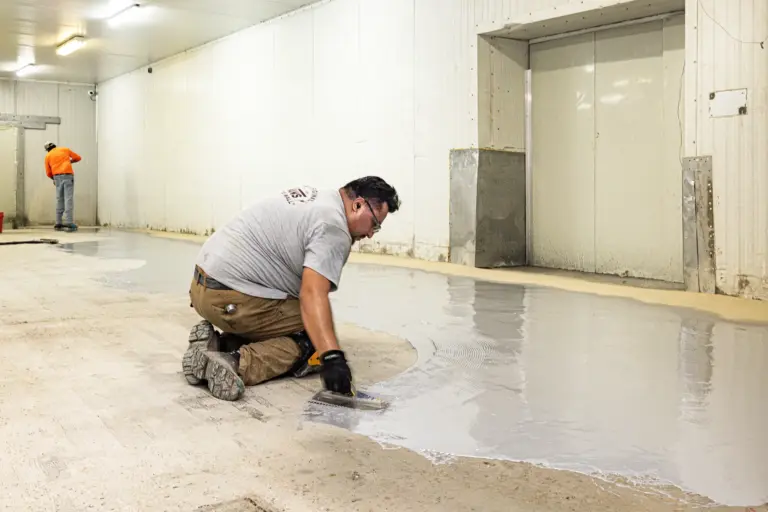
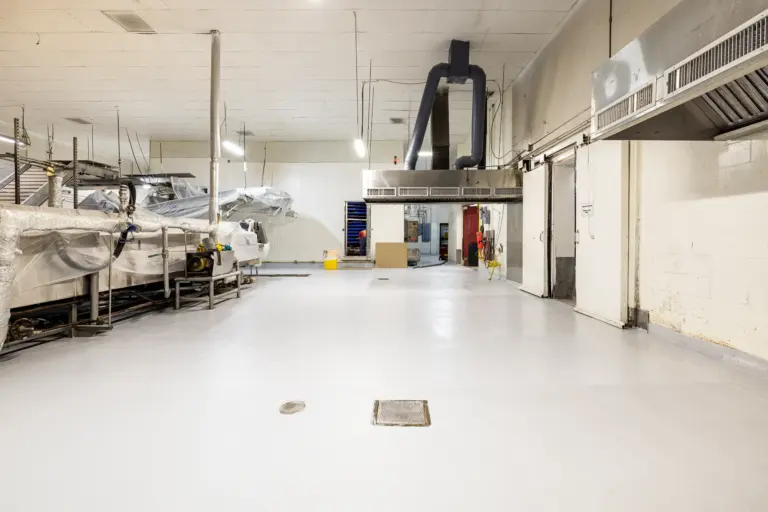
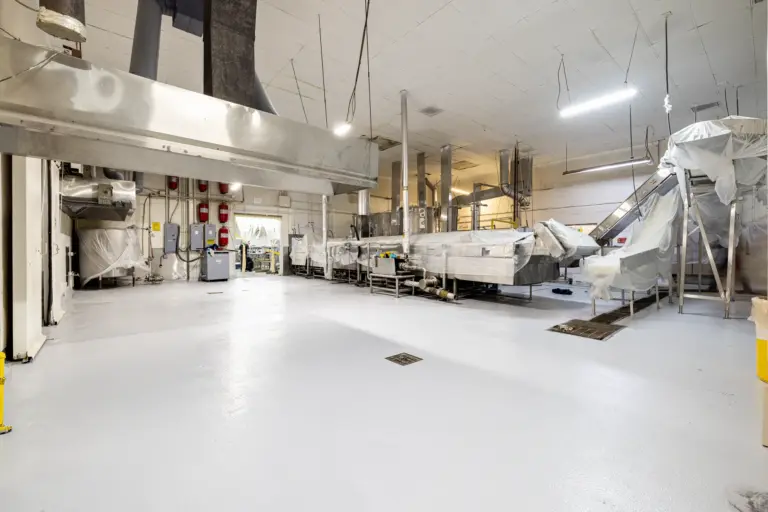
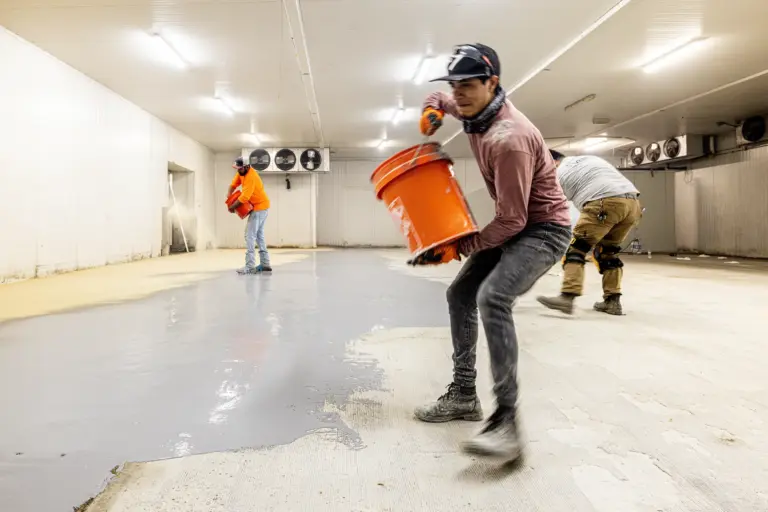
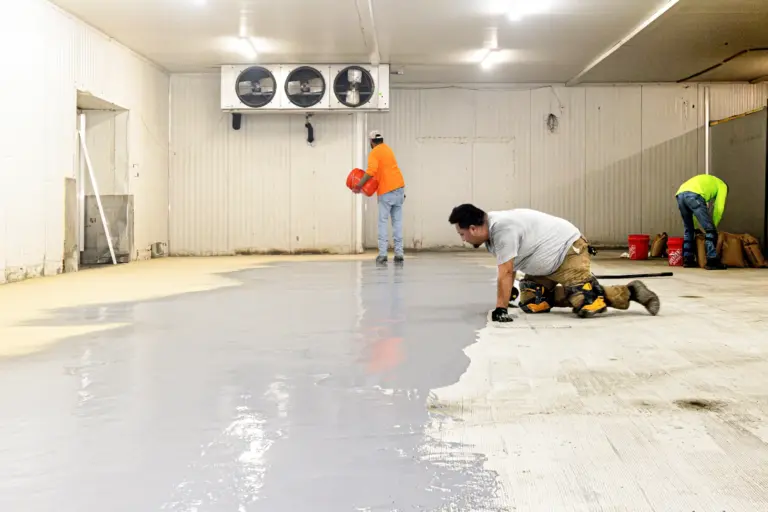
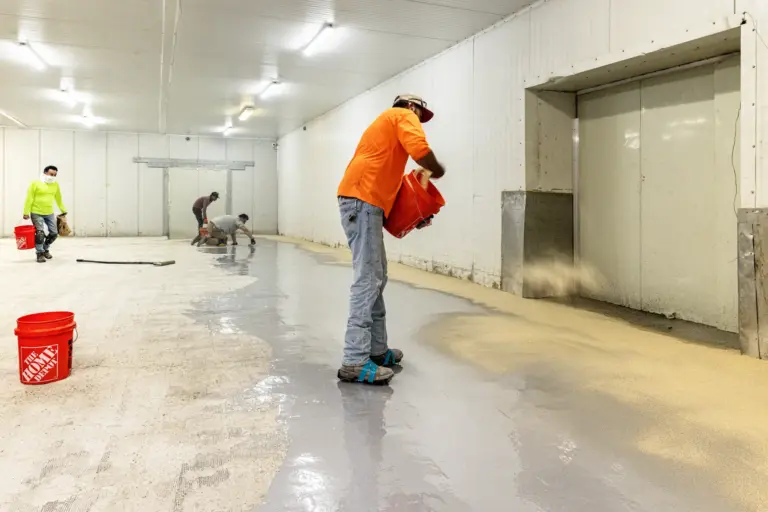
urethane Cement Installation Gallery
Frequently Asked Questions
Urethane cement is a cementitious mortar with a urethane resin matrix, installed at 3/16 to 3/8 inch as a monolithic floor with an integral cove base. It bonds chemically to concrete and flexes with the substrate through thermal cycling, holding a -40°F to 250°F operating range and 150°F+ thermal shock tolerance. Specs also write it as cementitious urethane or polyurethane cement.
Food and beverage processing takes the largest share, with commercial kitchens, breweries, distilleries, pharmaceutical plants, and cold storage behind it. Any floor that sees hot washdown, 150°F+ thermal shock between adjacent zones, or organic acid exposure is category territory. Zone-level requirements live on the vertical pages, starting with the food and beverage flooring hub.
Urethane cement flexes with the slab through thermal cycling; epoxy cures as a rigid film that delaminates at the resin-concrete interface when thermal differentials exceed what it can absorb, typically within 12-24 months under hot washdown. Where the duty is dry and decorative, epoxy can be the right answer. The urethane cement vs epoxy page carries the full decision framework.
No. Polyurethane floor coatings are thin-film resins measured in mils; urethane cement is a mortar placed at 3/16 inch and up. Specs write the same mortar as polyurethane cement, cementitious urethane flooring, or urethane concrete flooring. Four names, one system.
Urethane cement flooring runs $4-17/sqft installed depending on project size, system thickness, and substrate condition. Project size is the dominant driver, since mobilization and equipment spread across the area installed. The cost page carries size-band pricing and the line items inside an installed quote.
Sika Ucrete and Sherwin-Williams High Performance Flooring Poly-Crete and Hybri-Flex are the primary installed families; Craftsman is a Sika Certified + Authorized Sherwin-Williams High Performance Flooring installer. Legacy specs are covered too. A spec that reads Sikafloor PurCem, BASF Ucrete, or FasTop routes to a current product on the manufacturer trees.
Lead time is 1-3 weeks from contract execution, driven by material availability. On-site, each zone returns to service in 24 hours for self-leveling systems and 48-72 hours for trowel-applied. The full sequence is documented on the urethane cement installation process page.
Yes. Phased zone-by-zone install around active operations is the standard method, and night or weekend shutdown windows cover lines that never stop. A zone closed at end of shift on a self-leveling system is back in service 24 hours later.
15-20+ years is the expected service life for urethane cement flooring installed to manufacturer spec. Substrate verification is what protects that number, with moisture testing per ASTM F2170 and surface profile per ICRI 310.2 documented before material goes down.
Urethane cement is installed by specialty industrial flooring contractors, and Craftsman self-performs every install with in-house W-2 crews rather than subcontract labor. The contractor page covers installer evaluation, including what manufacturer certification means and the closeout documentation to expect.
Craftsman installs urethane cement flooring in all 50 states. In-house W-2 crews provide national service coverage, and pre-bid walkthroughs are available based on project requirements, timing, and resource availability; remote spec review is standard for multi-region rollouts.
urethane Cement Flooring Knowledge Center
Resource links
Industries Served
Technical Performance
Selection & Standards
Sherwin-Williams Poly-Crete Systems
Sika Ucrete Systems
Cost, Comparisons & Legacy Names
Blog
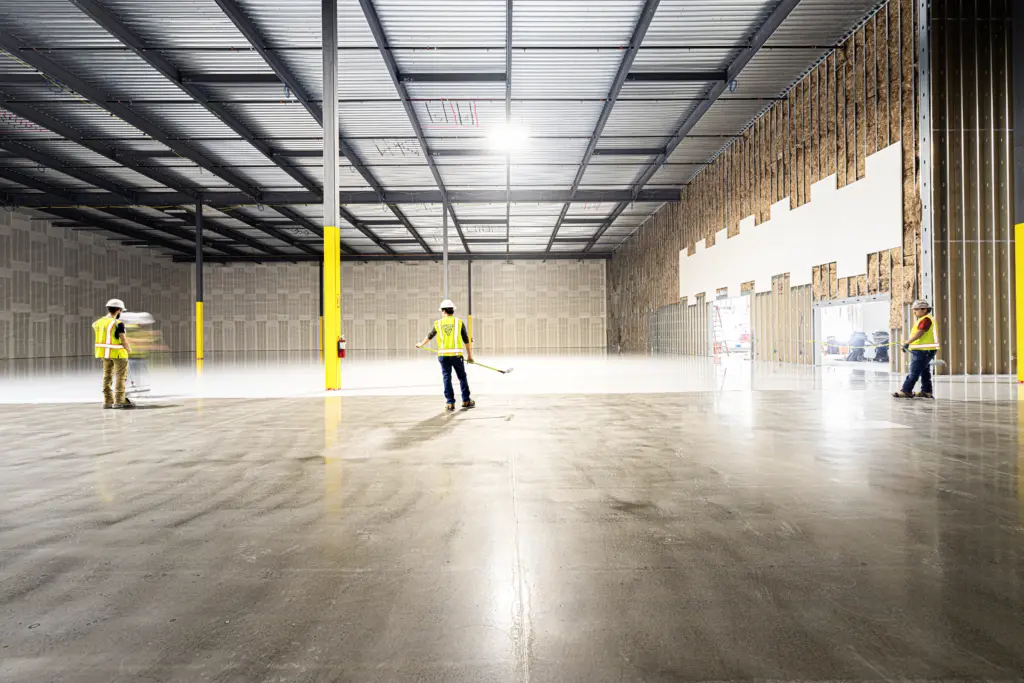
Craftsman Publishes 2026–2027 ESD Flooring Technical Guide
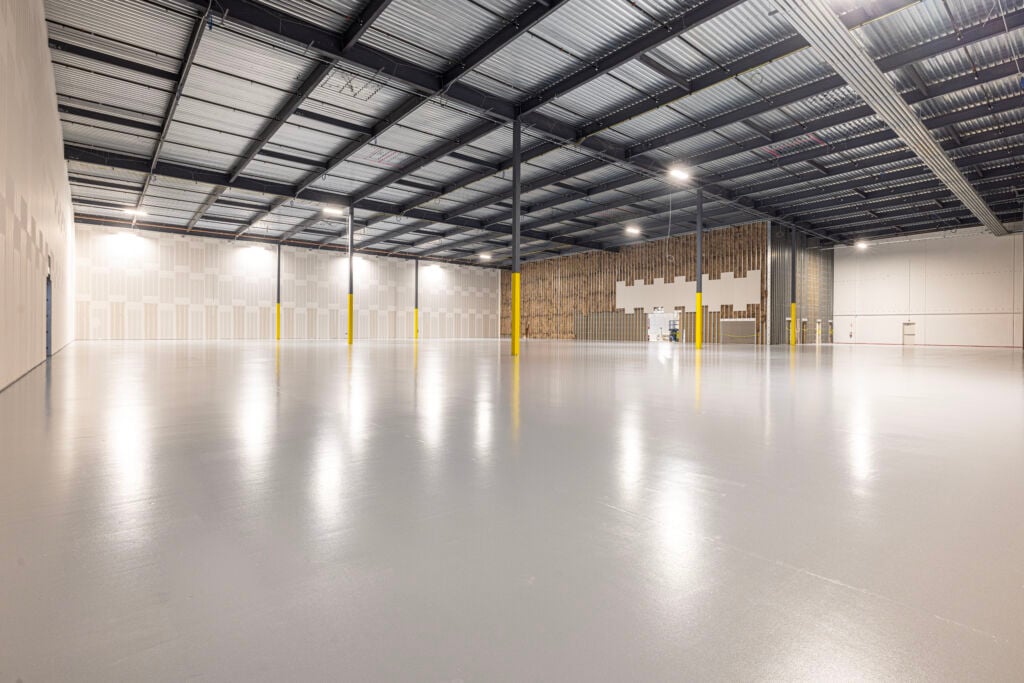
ESD Epoxy Flooring Case Study: 34,000 SF Dallas, TX