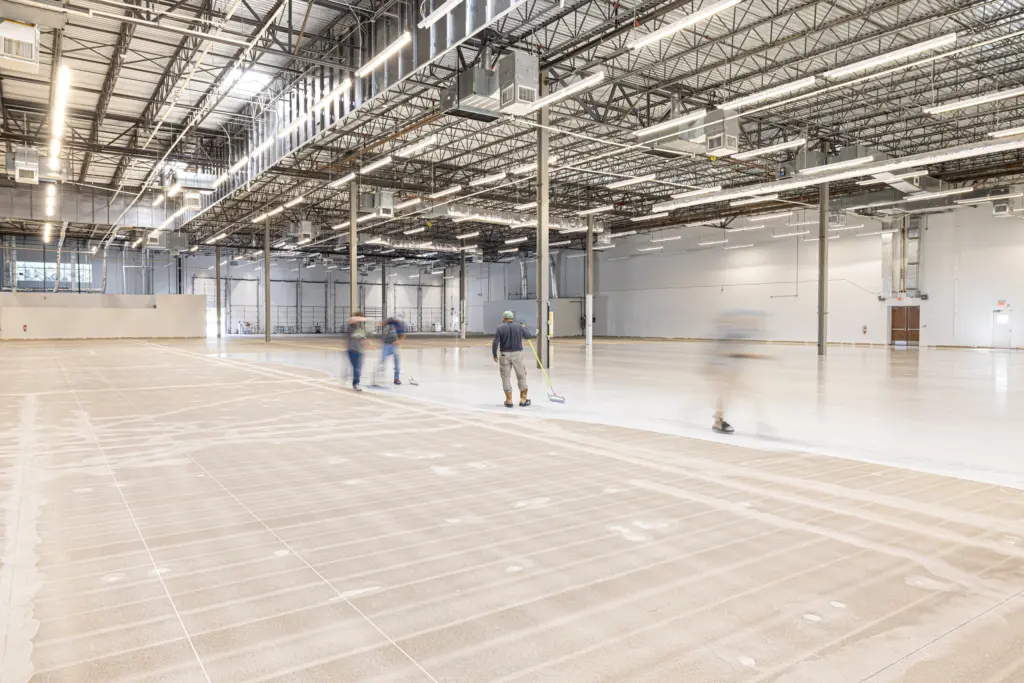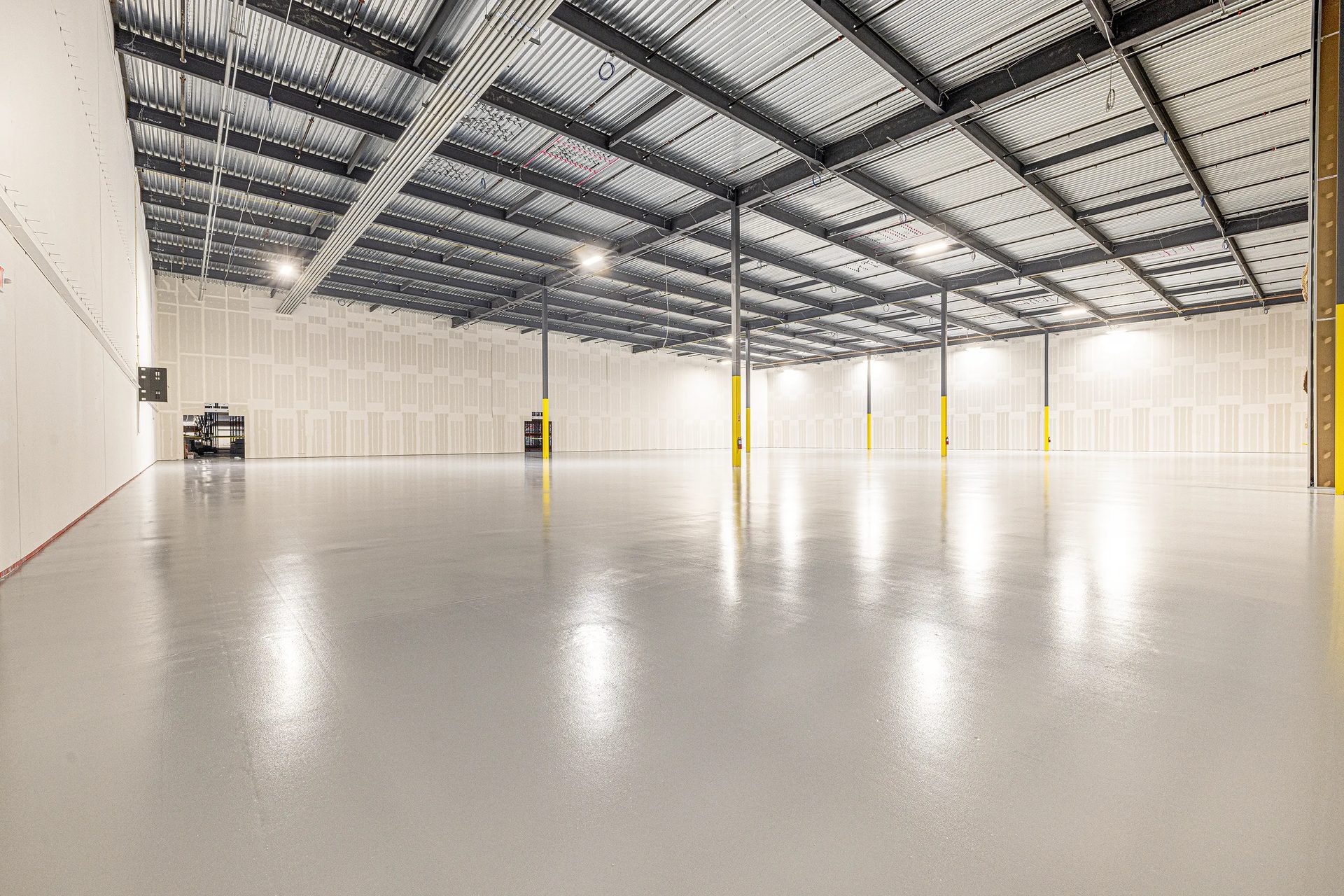
- Failure mode addressed: Joint erosion and membrane breach in dairy brick and acid brick assemblies
- Replacement scope: Full removal — brick, setting bed, membrane — to sound concrete
- Substrate verification:
- – ASTM F2170 in-situ relative humidity testing
- – ICRI 310.2 concrete surface profile
- Systems: Sika Ucrete family; Sherwin-Williams Poly-Crete and Hybri-Flex — severe duty: Ucrete UD 200, Poly-Crete HF, Poly-Crete MDB
- Construction: Monolithic seam-free urethane cement with integral cove base
- Thickness: 3/16″ to 3/8″, matched to duty class
- Thermal performance: -40°F to 250°F operating range; 150°F+ thermal shock differential
- Compliance:
- – USDA, FDA inspection ready
- – HACCP program compatible
- Installed cost: $8-15/sqft installed depending on system thickness, vertical, and substrate condition
- Lead time: 1-3 weeks from contract execution
- Installation: Phased zone-by-zone; 24-hour return to service self-leveling; 48-72 hours trowel-applied
- Crews: In-house W-2 crews; Sika Certified + Authorized Sherwin-Williams High Performance Flooring installer
Phone: +1 (844) 687-1961
Dairy brick replacement starts with a diagnosis most plant engineers have made before they search for it: the brick is fine, the floor is not. Dairy brick and acid brick systems fail at the joints and at the waterproof membrane beneath the setting bed. The ceramic units shrug off acid, caustic, and forklift traffic for decades. The chemical-resistant mortar between them does not. Joints erode, units rock, and once the membrane is breached, process liquid travels under the bed and the floor fails from below. Urethane cement replaces the whole assembly with a monolithic system that has no joints to erode — the engineering answer to a brick floor past its last regrout.
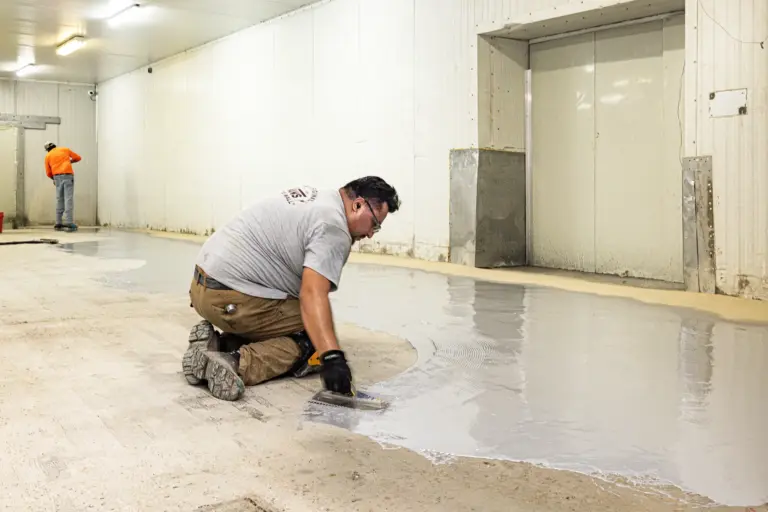
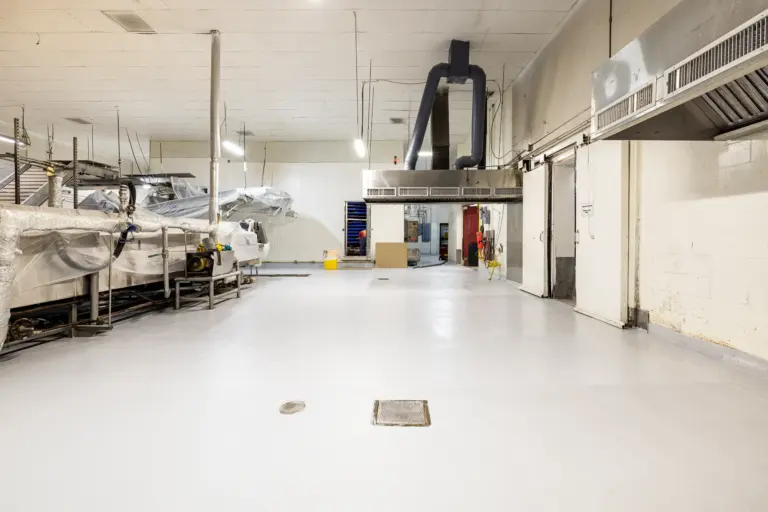
Urethane cement is a cementitious mortar with a urethane resin matrix. It bonds chemically to the concrete substrate and flexes with it through thermal cycling, which is how it survives the washdown duty that destroys brick joints. Installed at 3/16 inch to 3/8 inch with an integral cove base, the system carries a -40°F to 250°F operating range and 150°F+ thermal shock differentials. There is no setting bed, no membrane dependent on joint integrity, and no grout line for an inspector to write up.
Why Dairy Brick and Acid Brick Floors Fail
A failing brick floor rarely announces itself through the brick. The sequence runs joint erosion, rocking units, membrane breach, subsurface contamination — and by the final stage the floor smells wrong before it looks wrong. Locating where the system actually fails is what separates a repair decision from a replacement decision.
The Joints Fail Before the Brick Does
Acid brick units are fired ceramic and close to indestructible in service. The chemical-resistant mortar holding them is the sacrificial element. Daily acid and caustic washdown attacks the joint chemistry while thermal shock from hot cleaning cycles opens micro-cracks, and the erosion runs a little deeper with every shift. Once joints recede below the wear surface, traffic loads start prying individual units instead of compressing a continuous floor. That is when units rock loose at the kerf and failure accelerates.
Membrane Breach Is the Failure You Smell First
Beneath the setting bed sits a waterproof membrane, the system’s real last line of defense. Eroded joints give process liquid a path down. Once the membrane is breached, milk solids, brine, or wash water travel laterally under the bed where no cleaning protocol can reach them. The result is subsurface contamination that announces itself as odor long before the surface looks failed — and as inspection findings under a HACCP program when swabs trace bacteria back to failed joints.
Regrout Economics: Each Cycle Buys Less Than the Last
Regrouting a brick floor is recurring downtime, and the interval shortens as the system ages. While the membrane is intact, joint restoration is legitimate maintenance. After a breach it treats the symptom: new mortar over a contaminated bed fails faster because the assembly is moving from below. The comparison a plant engineer is actually pricing is one-time replacement capital cost against a regrout operating cost that recurs for the life of the floor.
Our Clients




















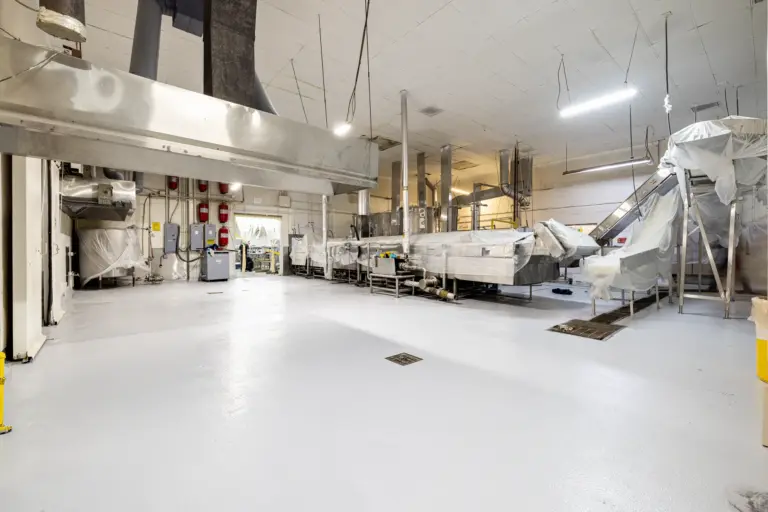
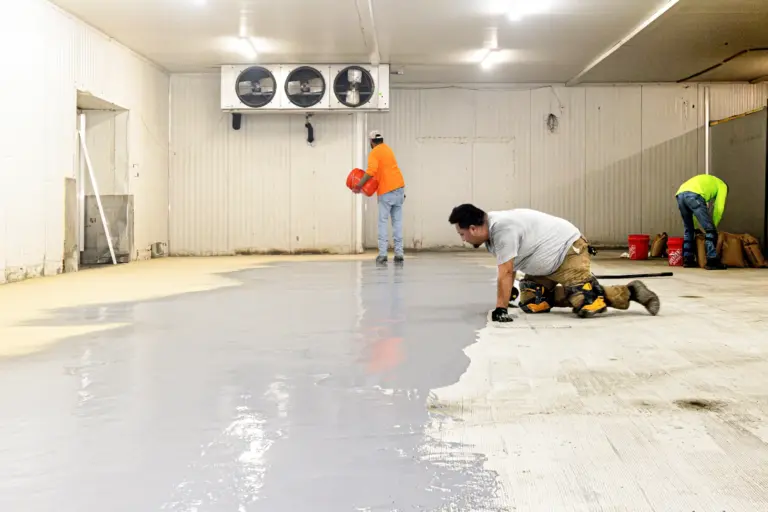
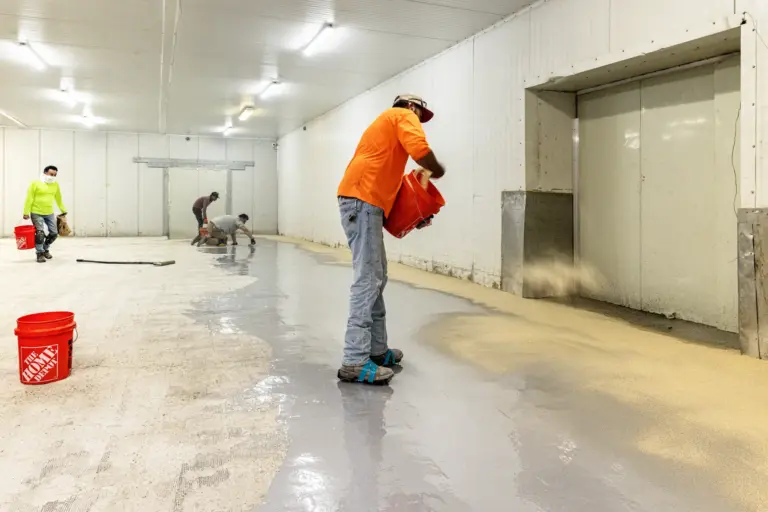
urethane Cement Installation Gallery

Request a Proposal
Submit project parameters for preliminary analysis. Commercial estimates typically returned within 24 hours.
Replacement Scope and System Selection
Dairy Brick Replacement Scope: Full Removal to Sound Concrete
Replacement means taking out the entire assembly: brick units, setting bed, and membrane, down to structural concrete. The exposed substrate gets verified before anything goes back down — in-situ relative humidity testing per ASTM F2170 and surface profiling to ICRI 310.2 CSP standards. Bonding a new monolithic system to an assembly that is already moving transfers the old floor’s failure into the new one, which is why full removal is the standard scope.
Thickness Matched to the Duty the Brick Was Handling
Brick floors were usually specified for severe duty, and the replacement carries the same load profile. Urethane cement installs at 3/16 inch to 3/8 inch, with severe-duty systems like Sika Ucrete UD 200, Sherwin-Williams Poly-Crete HF, and Poly-Crete MDB carrying the point loads and impact a former brick zone sees. An integral cove base forms in the same pour, eliminating the wall-to-floor joint that brick coving never fully closed. System selection by duty class is covered on the system thickness page.
When Dairy Brick Still Wins
Dairy brick is a living construction method, not a relic. Masonry contractors still install it, and on some duty profiles it remains a defensible spec: extreme concentrated point loads and certain sustained high-temperature regimes favor fired ceramic units. The case for replacement is narrower and stronger than calling brick obsolete. The brick was never the problem. The joint system is the failure plane and the maintenance cost center, and a monolithic floor eliminates the joint system entirely.
Installation Around Live Production
Phased Zone-by-Zone Install Around Active Operations
Demolition of a brick assembly is the loudest, dirtiest phase of the project, so scheduling is part of the scope. Phased zone-by-zone install around active operations keeps the rest of the plant producing while one zone is down. Self-leveling systems return to service in 24 hours; heavy trowel-applied systems run 48-72 hours. Weekend shutdown windows handle zones that cannot be isolated. Lead time runs 1-3 weeks from contract execution, driven by material availability.
Documentation, Crews, and Credentials
In-house W-2 crews mobilize nationwide, and they have been installing industrial floors since 1999. Every dairy brick replacement closes out with the records a food-safety audit asks for: ASTM F2170 substrate moisture logs, ICRI 310.2 surface profile verification, and integral cove base completion photos. Craftsman installs as a Sika Certified + Authorized Sherwin-Williams High Performance Flooring installer, which keeps manufacturer warranties intact on the severe-duty systems a former brick floor typically needs.
Knowledge Center
Resource links
Sherwin-Williams Poly-Crete Systems
Sika Ucrete Systems
Industries Served
Technical Performance
Selection & Standards
Costs, Comparisons & Legacy Names
Frequently Asked Questions
Dairy brick floors fail at the joints and the waterproof membrane, not at the brick. The chemical-resistant mortar erodes under acid and caustic washdown and thermal cycling, units begin to rock, and once liquid breaches the membrane, contamination spreads beneath the setting bed where regrouting cannot follow. The ceramic units themselves typically outlast several joint systems.
While the membrane under the bed is intact, regrouting is legitimate maintenance and buys real service life. The diagnostic question is whether process liquid has gotten beneath the bed: persistent odor, weeping at the kerf, or rocking units indicate subsurface contamination that new mortar cannot fix. Past that point, new mortar goes down over a moving, contaminated assembly and its service interval keeps shrinking.
A monolithic urethane cement system, selected for the duty the brick was carrying. Severe-duty systems such as Sika Ucrete UD 200 and Sherwin-Williams Poly-Crete HF install at thicknesses matched to the duty class, with an integral cove base, eliminating the joint system that caused the failure rather than resisting the same attack better.
Full removal of the brick, setting bed, and membrane down to sound concrete is the standard scope. Overlay feasibility is a site-assessment question that depends on the condition of the assembly and what sits beneath it; a new system bonded over rocking units inherits their movement. Substrate verification per ASTM F2170 and ICRI 310.2 precedes any new system.
Urethane cement installs at $8-15/sqft installed depending on system thickness, vertical, and substrate condition, with brick demolition scoped per project. Most plants price it against the alternative: a regrout budget that never closes out, on a maintenance interval the membrane condition keeps compressing.
Lead time runs 1-3 weeks from contract execution, driven by material availability. Installation is phased zone-by-zone around active operations: self-leveling systems return to service in 24 hours, heavy trowel-applied systems in 48-72 hours, and weekend shutdown windows cover zones that cannot be isolated during production.
No. Dairy brick is still installed by masonry contractors and remains a defensible spec for extreme point loads and some sustained high-temperature duty. The replacement case is about the joint system: the mortar and membrane are the maintenance cost center, and a monolithic urethane cement floor designs both out of the assembly.
Blog
ESD Epoxy Flooring Case Study: 34,000 SF Dallas, TX
Residential Terrazzo Floors in Fort Worth, Texas