- Legacy phrase: “USDA approved flooring” / “USDA accepted”
- Program: FSIS prior approval of establishment drawings and specifications, equipment, and certain partial quality control programs
- Status: Program eliminated — final rule Docket No. 95-032F, 62 FR 45016 (August 25, 1997), effective September 24, 1997
- Scope then: Pre-clearance of facility construction, materials, and equipment in federally inspected meat and poultry plants
- Replaced by: Sanitation performance standards, 9 CFR 416 (64 FR 56400, October 20, 1999) under establishment HACCP responsibility
- Third-party successors: NSF nonfood compounds registration (a continuation of the USDA listing program, per NSF) and NSF/3-A equipment standards
- Current-correct spec language: Compliant with FSIS sanitation performance standards, 9 CFR 416
- Authority today: Establishment responsibility, verified by FSIS inspection of the floor in service
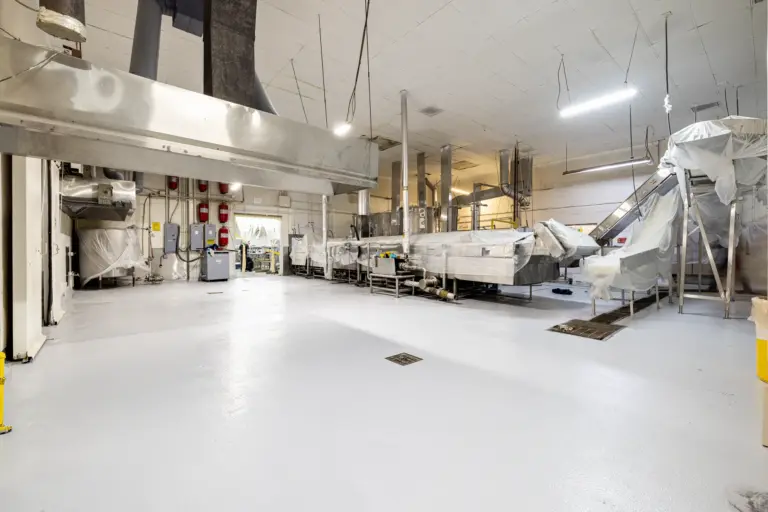
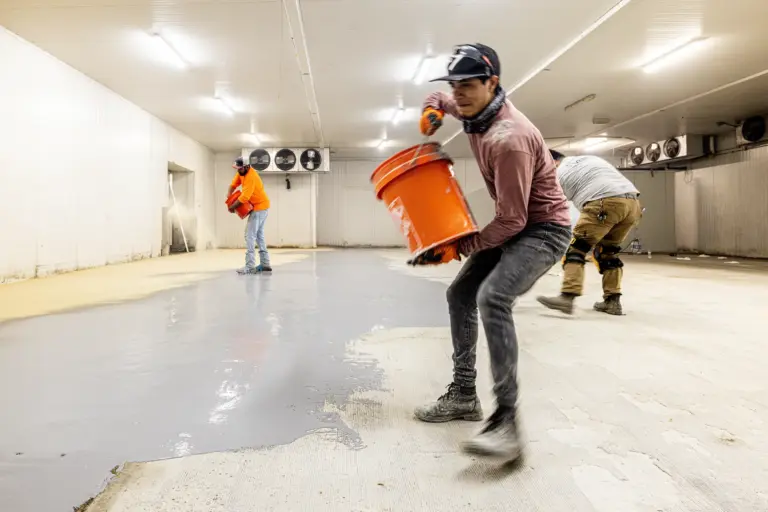
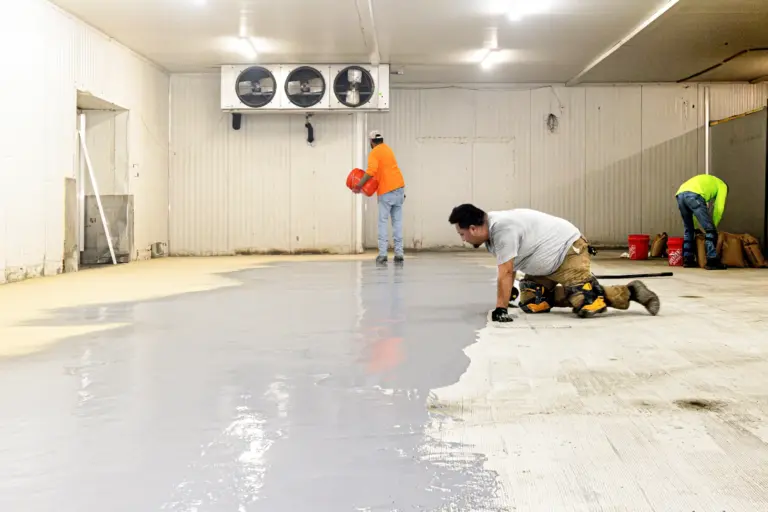
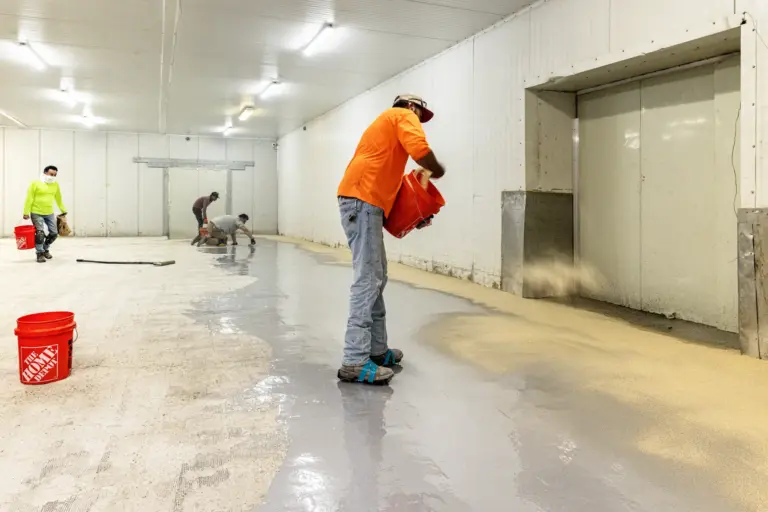
- What installs to meet 9 CFR 416: Monolithic urethane cement — seam-free, impervious, with integral cove base and slope to drain
- Why it passes inspection:
- – No joints or grout lines for bacterial harborage
- – Coved wall junction eliminates the floor-to-wall seam
- – Cleanable under daily caustic and acid sanitation
- System Thickness: 3/16" to 3/8", matched to duty class
- Thermal Performance: -40°F to 250°F operating range; 150°F+ thermal shock differential
- Pre-Bid Support: Legacy USDA-approved spec language translated to current 9 CFR 416 documentation before bid
- Crews: In-house W-2 crews mobilize nationwide — Sika Certified + Authorized Sherwin-Williams High Performance Flooring installer, since 1999
Phone: +1 (844) 687-1961
USDA approved flooring describes an approval that no longer exists. USDA formerly operated a mandatory prior-approval program covering the drawings, specifications, and equipment of federally inspected meat and poultry plants, and flooring materials entered service through that review. FSIS eliminated the program effective September 24, 1997, and no current USDA list of approved or accepted flooring exists. The compliance obligation did not retire with it. Plants answer today to sanitation performance standards under 9 CFR 416, enforced through inspection of the floor in service rather than pre-clearance of the material on paper.
The phrase outlived the program. Specification sections written before 1997 still circulate as templates, and RFP line items still demand USDA approved materials from bidders who have no list to point at. This page covers what approval meant while the program ran, what replaced it after the late-1990s transition, and how to answer the legacy phrase on a live bid. For the current-state requirements an FSIS inspector actually evaluates, the USDA and FDA compliance page carries the full treatment.
The Program Behind the Phrase
Before 1997, a floor got into a federally inspected meat or poultry plant the same way the rest of the building did: USDA reviewed the drawings and specifications before construction. Manufacturers built marketing on the acceptance letters, and the phrase USDA approved flooring entered specification language as if it named a permanent list. The list is gone. The history below is what a bidder needs to answer for it.
Prior Approval — How a Floor Was Accepted Before 1997
For decades, establishments applying for federal inspection submitted multiple sets of facility drawings and specifications to USDA, and the agency held prior-approval authority over equipment and utensils used in preparing edible product. Flooring rode in on those facility submittals. A material with an acceptance history could be specified with confidence, and vendors translated that into the shorthand a spec writer could reuse: USDA approved. The shorthand was always informal. What existed was a pre-clearance process, not a product seal, which is part of why no one can produce the certificate a legacy RFP line item implies.
September 1997 — The Elimination Rule
FSIS removed the program in a final rule titled Elimination of Prior Approval Requirements for Establishment Drawings and Specifications, Equipment, and Certain Partial Quality Control Programs (Docket No. 95-032F, 62 FR 45016, published August 25, 1997, effective September 24, 1997). The rule eliminated the requirement to submit facility drawings and ended agency prior approval of equipment in federally inspected plants. No USDA office has maintained an approval or acceptance list for flooring materials since that date. The discontinued thing is the program, and only the program. Every requirement it served still exists in stricter form.
Why USDA Approved Flooring Still Appears in Specs
Specification masters are copied forward, not rewritten. A Division 9 section drafted in the early 1990s can survive three spec-software migrations with its USDA approved line intact, and flooring vendors kept the phrase in brochures long after the program ended because buyers kept searching for it. A vendor advertising USDA approved flooring in 2026 is either referencing the retired program or loosely gesturing at FDA-compliant ingredients. Neither is a certification an inspector will ask to see. The phrase marks the spec as legacy language, which is useful: it tells the bidder a translation is required.
Our Clients




















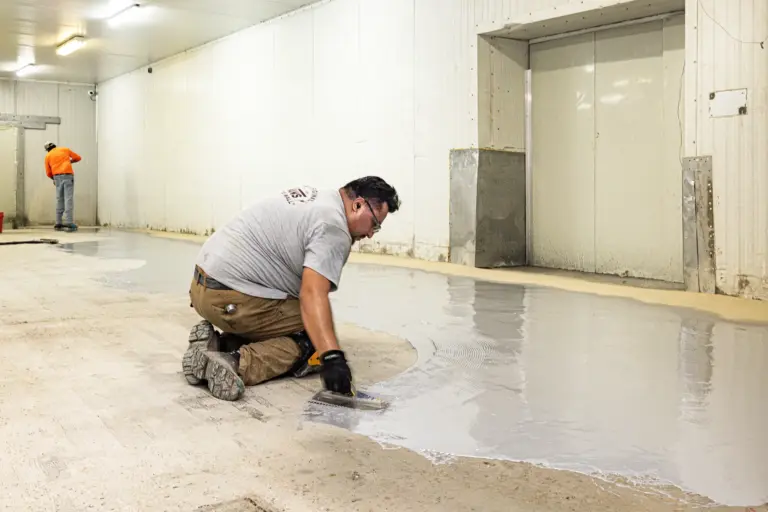
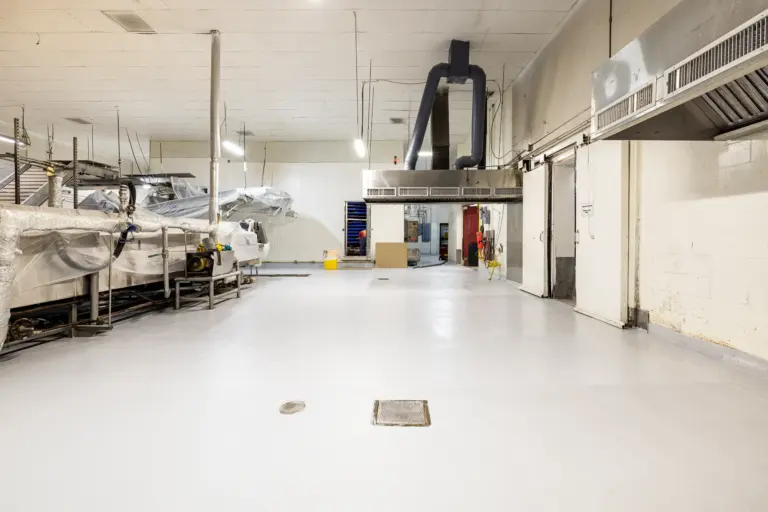
urethane Cement Installation Gallery
Request a Proposal
Submit project parameters for preliminary analysis. Commercial estimates typically returned within 24 hours.
Answering the Legacy Line Item
What Replaced Approval — Performance Standards Plus Third-Party Programs
Two structures absorbed the old program’s function. On October 20, 1999, FSIS published sanitation performance standards (64 FR 56400), now codified at 9 CFR 416, which state objectives rather than prescribe means and place responsibility on the establishment under HACCP. Voluntary third-party programs filled the materials-listing role: NSF describes its nonfood compounds registration as a continuation of the USDA product approval and listing program, and NSF/3-A standards now cover hygienic equipment design. For flooring, that means the question is no longer whose list the product is on. It is whether the installed floor meets the 9 CFR 416 construction standard under inspection.
The Bidder’s Translation — Current-Correct Documentation
A defensible response to the line item has three parts. First, state the fact: USDA eliminated prior approval effective September 24, 1997 (62 FR 45016), so no approval list exists to cite. Second, substitute the current package — the system’s manufacturer data sheet, plus a sanitation-design narrative tied to 9 CFR 416: monolithic seam-free urethane cement construction, integral cove base at the wall junction, slope to drain, and an impervious, cleanable surface. Third, attach third-party material certifications only where the manufacturer’s current documentation carries them. Craftsman runs this translation in pre-bid: available within regional drive radius, with remote spec review standard for multi-region rollouts.
What an Inspector Evaluates Today
Inspection today evaluates the floor in service, not its paperwork ancestry: impervious to moisture, cleanable, monolithic with a coved wall junction, graded to drain, and maintained in sound condition under the plant’s sanitation SOPs. The USDA and FDA compliance page covers the current-state requirements in full, from the 9 CFR 416 construction standard through HACCP and SSOP interaction and the documentation package Craftsman delivers at closeout. That page owns the present tense. This one exists so the legacy phrase routes you there with the history settled.
Knowledge Center
Resource links
Sherwin-Williams Poly-Crete Systems
Sika Ucrete Systems
Industries Served
Technical Performance
Selection & Standards
Costs, Comparisons & Legacy Names
Frequently Asked Questions
No. USDA’s prior-approval program for establishment drawings, specifications, and equipment was eliminated effective September 24, 1997, and no USDA office has maintained an approval or acceptance list for flooring since. A spec or vendor citing USDA approved flooring is referencing that retired program. Compliance today runs through the FSIS sanitation performance standards at 9 CFR 416, evaluated by inspection of the installed floor.
FSIS eliminated the prior-approval program in a final rule published August 25, 1997 (Docket No. 95-032F, 62 FR 45016), then followed in October 1999 with sanitation performance standards at 9 CFR 416 (64 FR 56400) that shifted responsibility from agency pre-clearance to the establishment under HACCP. Inspection verifies the result. Voluntary third-party registration and certification programs absorbed part of the old listing function.
Respond with the translation rather than a claim you cannot document. Cite the 1997 elimination (62 FR 45016), then substitute the current package: the system’s manufacturer data sheet, a sanitation-design narrative tied to 9 CFR 416 covering monolithic construction, integral cove base, and slope to drain, and third-party material certifications where the manufacturer’s current documentation carries them. Craftsman pre-bid support is available within regional drive radius, with remote spec review standard for multi-region rollouts.
Two things replaced it. The sanitation performance standards at 9 CFR 416 made hygienic design and condition the establishment’s responsibility under HACCP, enforced by FSIS inspection. Voluntary third-party programs took over the listing role — NSF describes its nonfood compounds registration as a continuation of the USDA product approval and listing program, and NSF/3-A standards cover hygienic equipment design.
A floor that meets the 9 CFR 416 construction standard in service: impervious to moisture, cleanable, monolithic with a coved wall junction, and graded to drain. Urethane cement systems are specified in federally inspected plants because the monolithic seam-free pour and integral cove base satisfy those criteria structurally. The USDA and FDA compliance page covers the full current-state requirements.
They name different things. USDA approval was a pre-1997 acceptance process run for federally inspected meat and poultry plants; FDA compliance refers to a material’s ingredient status under the Federal Food, Drug, and Cosmetic Act, typically 21 CFR. In practice the old program leaned on FDA ingredient compliance for material acceptability, which is why the two phrases blur together in legacy specs. FSIS inspects establishments; FDA regulates substances.
Yes. Translating retired phrases like USDA approved flooring into current-correct documentation is standard pre-bid work — we map the legacy line item to 9 CFR 416 language and assemble the substitute package before the bid goes in. In-house W-2 crews mobilize nationwide, installing industrial flooring since 1999 as a Sika Certified + Authorized Sherwin-Williams High Performance Flooring installer.
Blog
ESD Epoxy Flooring Case Study: 34,000 SF Dallas, TX
Residential Terrazzo Floors in Fort Worth, Texas