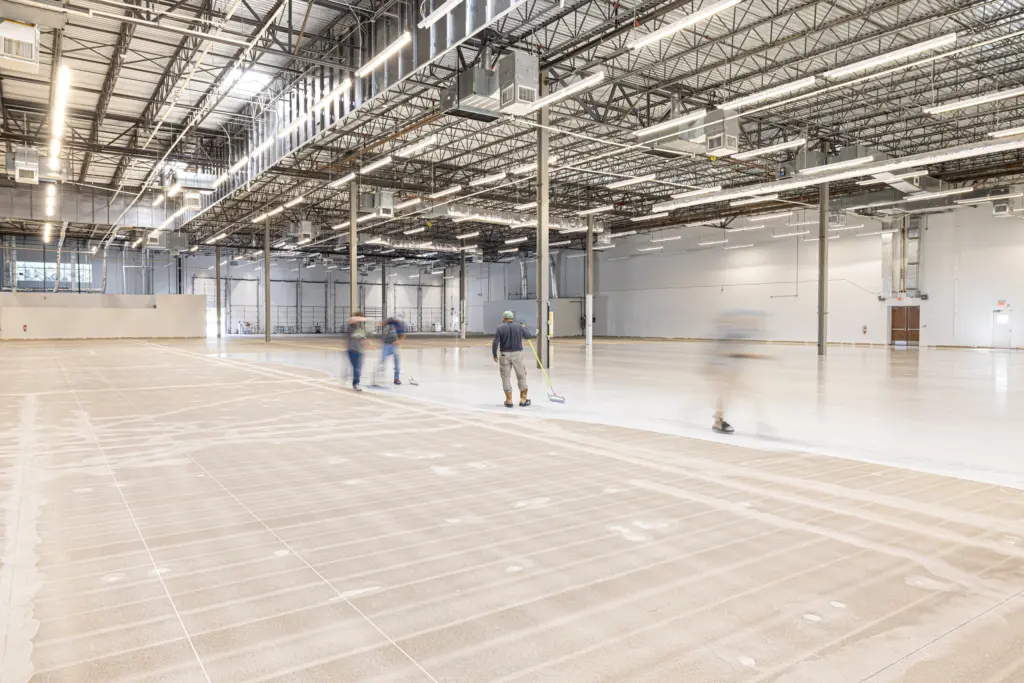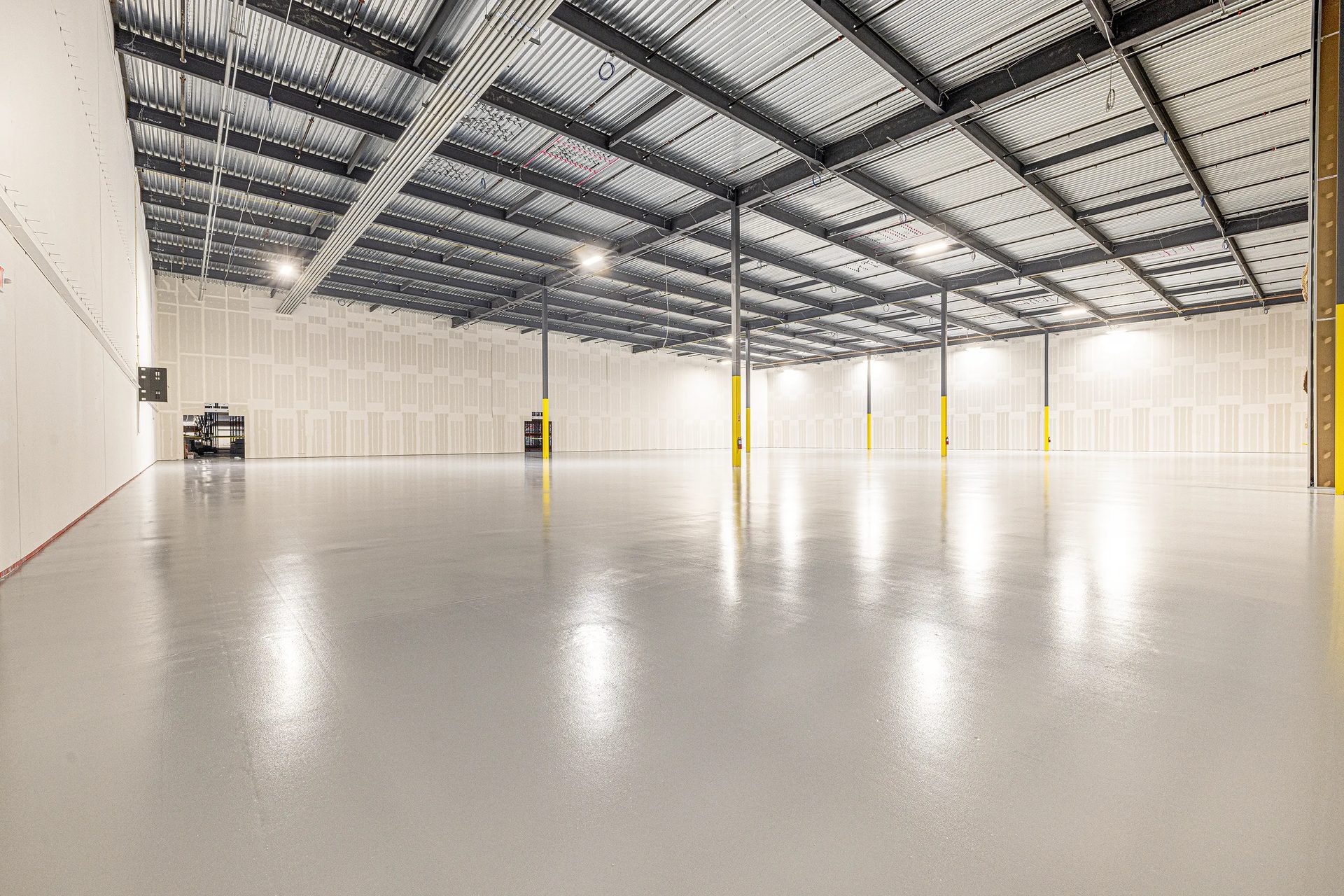
- Operating Range: -40 deg F to 250 deg F sustained service; 100 deg F+ thermal differential at dock transition threshold
- Systems: Sika Ucrete UD 200, Ucrete WR, Sikafloor PurCem; Sherwin-Williams Poly-Crete SL and HF
- Cold Storage Applications:
- – Refrigerated warehouses and distribution centers
- – Walk-in cooler flooring and walk-in freezer floors
- – Blast freezers and cold processing bays
- – Loading dock and threshold zones
- – Restaurant and foodservice walk-in retrofits
- System Thickness: 3/16″ to 1/4″ self-leveling for interior freezer and packaging zones; 1/4″ to 3/8″ trowel-applied for dock transitions and high-load zones
- Substrate Verification:
- – ASTM F2170 in-situ relative humidity (mandatory)
- – ASTM F1869 calcium chloride moisture vapor emission
- – ICRI 310.2 CSP 4-6 surface profile via shot blast or diamond grind
- Slip Resistance: Broadcast aggregate integral to the body coat at threshold and wet zones – not topical coating that wears off
- Compliance (food cold storage):
- – USDA federally inspected food storage
- – FDA 21 CFR 175.300 incidental food contact
- – HACCP, SQF, GFSI program compatible
- – NSF/ANSI 51 food-contact certified
- Authorized Installer: Sika Certified + Authorized Sherwin-Williams High Performance Flooring installer
- Service Life: 25+ years documented
- Pricing: $8-15/sqft installed depending on facility scale, zone specification, and substrate condition
- Lead Time: 1-3 weeks from contract execution
- Phased Installation: Zone-by-zone install with cold-chain integrity maintained; 24-hour cure-and-return-to-service for self-leveling systems
- Crew Structure: In-house W-2 crews mobilize nationwide.
Phone: +1 (844) 687-1961
Cold storage and freezer flooring runs at thermal extremes most industrial floors never see. A freezer interior sustains -10°F to -40°F while the loading dock ambient sits at 60 to 90°F, generating a 100°F+ thermal differential at every dock transition where trucks load and unload across the threshold. Walk-in coolers and walk-in freezers face the same physics at smaller scale: the threshold zone where warm humid air meets cold dry air drives condensation, vapor pressure, and substrate movement that breaks standard epoxy bonds within 6 to 18 months. Urethane cement handles cold storage flooring because the cementitious mortar matrix flexes with the concrete through thermal cycling, and the urethane resin retains mechanical flexibility at -40°F where epoxy turns brittle.
Urethane cement is a cementitious mortar system with urethane resin binder. It is not a thin-film polyurethane coating, not an epoxy with a cold-tolerant additive, and not a freeze-thaw exterior sealer. The system installs at 3/16 inch to 3/8 inch monolithic thickness, bonds chemically to concrete substrate, and tolerates the -40°F to 250°F operating range that cold storage facilities run daily. Craftsman Concrete Floors installs urethane cement across both market scales: small walk in cooler and walk in freezer retrofits for restaurants and foodservice, and large refrigerated warehouse and cold storage distribution center floors for 3PL and food distributor operators. Walk-in retrofit projects run the same chemistry and the same install protocol as 50,000-sqft refrigerated warehouse bays — what changes is the crew size and the phasing plan.
Cold Storage Flooring Applications
Walk-In Cooler Flooring
Walk-in cooler flooring takes the same thermal and moisture physics as a full refrigerated warehouse and compresses it into a smaller footprint with a tighter install window. The door threshold cycles warm-humid to cold-dry continuously, condensing moisture at the door line and driving the vapor pressure and substrate movement that crack standard epoxy within 6 to 18 months. Self-leveling urethane cement at 3/16 inch to 1/4 inch handles the cooler interior; broadcast aggregate goes into the body coat at the threshold and any wet entrance. Most retrofits return to service in 24 hours for self-leveling zones.
Walk-In Freezer Flooring
Walk-in freezer floors sit at -10°F to -40°F continuously, where epoxy embrittles and any slab movement cracks it. Urethane cement holds mechanical flexibility across the full -40°F to 250°F range and bonds chemically to the slab, so the floor moves with the concrete instead of pulling away at the interface. Same chemistry as the cooler — the spec changes by temperature and load, not by box size.
Refrigerated Warehouses and Distribution Centers
Large-format cold storage and 3PL distribution floors run the same system at scale, phased zone-by-zone so cold-chain integrity holds during the install. Self-leveling slurry covers interior bays and packaging zones; trowel-applied urethane cement at 1/4 inch to 3/8 inch carries the point loads at pallet rack legs and forklift wheel positions.
Loading Dock and Threshold Zones
The dock door is where cold storage flooring fails first — a 100°F+ differential across a six-foot threshold with trucks crossing it all day. These zones get the heaviest spec: trowel-applied thickness plus broadcast aggregate integral to the body coat for wet-condition slip resistance that doesn’t wear off under traffic.
Blast Freezers and Cold Processing Bays
Rapid-pulldown environments and cold processing areas combine sub-zero service with washdown and impact. Monolithic, seam-free urethane cement gives a cleanable surface with no grout lines or coating edges to fail, rated for the same -40°F floor as static freezer storage.
Restaurant and Foodservice Walk-In Retrofits
Smaller walk-in cooler and walk-in freezer retrofits for restaurants, commercial kitchens, and foodservice run the same install protocol as the warehouse-scale work — what changes is crew size and phasing. The box is back in operation fast, without an extended shutdown.
Thermal Performance Across Cold Storage Operations
Cold storage cycles through temperature differentials no other industrial environment matches, and floor selection has to account for two failure modes that don’t exist in temperature-stable facilities: thermal movement at the dock transition, and sustained point load on slabs held at -10°F to -40°F. The mechanism that makes urethane cement work here is the same one that makes it work in commercial kitchens and food processing — a chemical bond to concrete with a mortar body that moves with the slab — applied to the inverse thermal problem. The three sections below cover how that mechanism holds across temperature, threshold cycling, and load.
-40°F to 250°F Operating Range — Why Standard Coatings Crack in Freezer Service
Standard epoxy hardens further at sub-zero temperatures, loses what limited flexibility it had at room temperature, and becomes brittle enough that any substrate movement cracks it. Urethane cement retains mechanical flexibility across the full -40°F to 250°F range because the urethane resin matrix does not undergo that low-temperature embrittlement. The cementitious mortar body also carries thermal expansion coefficients close to concrete itself, so as the slab moves through thermal cycling the mortar moves with it rather than pulling away at the interface — the single mechanical difference that determines whether a floor survives continuous freezer service or fails at the bond line.
Dock Transition Threshold — 100°F+ Differential at the Door
The dock threshold is the hardest condition in the building: a freezer interior at -20°F meeting loading dock ambient at 80°F generates a 100°F+ differential across a six-foot zone, and warm humid air condenses there continuously — freezing on the freezer side, staying liquid on the dock side. That wet-to-frozen-to-wet boundary is what breaks thin-film coatings, which can’t tolerate moisture state-change at the bond line. Urethane cement carries it because the mortar body absorbs the daily thermal cycling without losing adhesion, and the system is vapor-tolerant where a film coating is not.
Forklift and Pallet Jack Point Load Resistance — Mortar Thickness vs Coating Failure
Forklifts and pallet jacks run continuously, and point loads at pallet rack legs and wheel positions concentrate stress a thin film can’t distribute. Trowel-applied urethane cement at 1/4 inch to 3/8 inch in dock zones and high-load bays carries those loads through the mortar body rather than concentrating them at a resin-to-concrete interface — which is where coatings shear and fail. Thickness is specified to the load in each zone, not defaulted across the facility.
Our Clients




















urethane Cement Installation Gallery
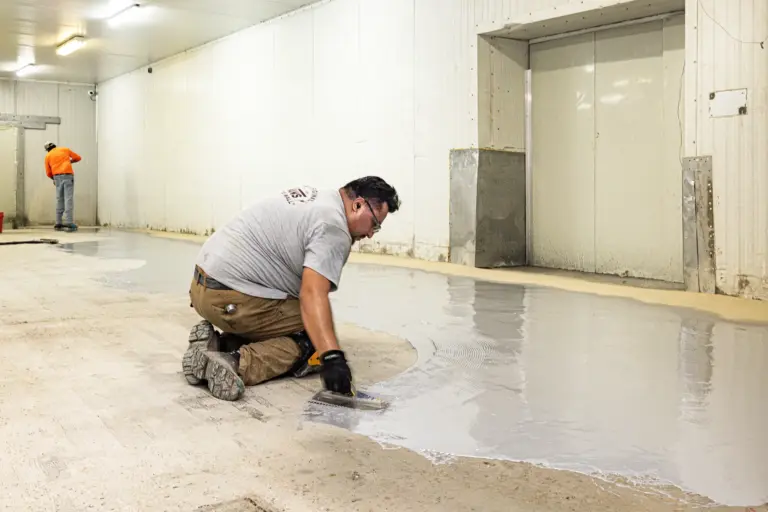
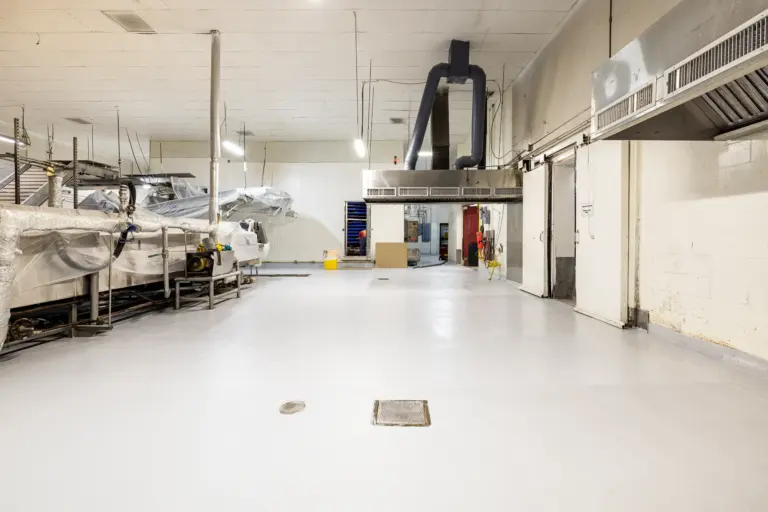
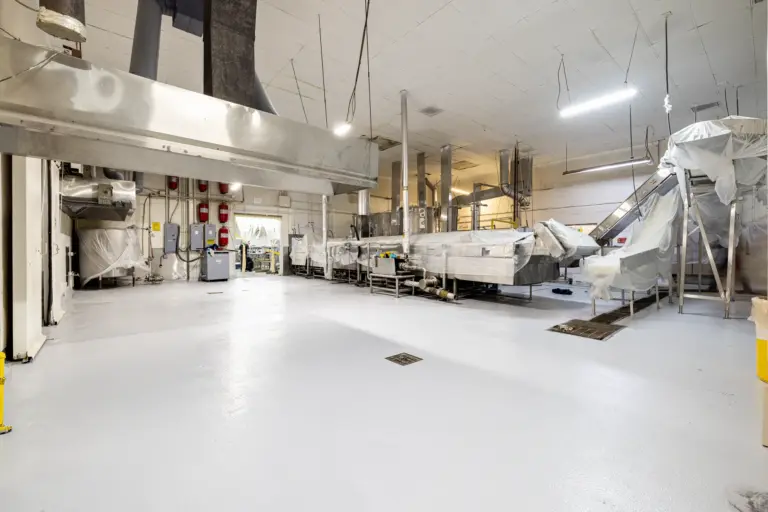
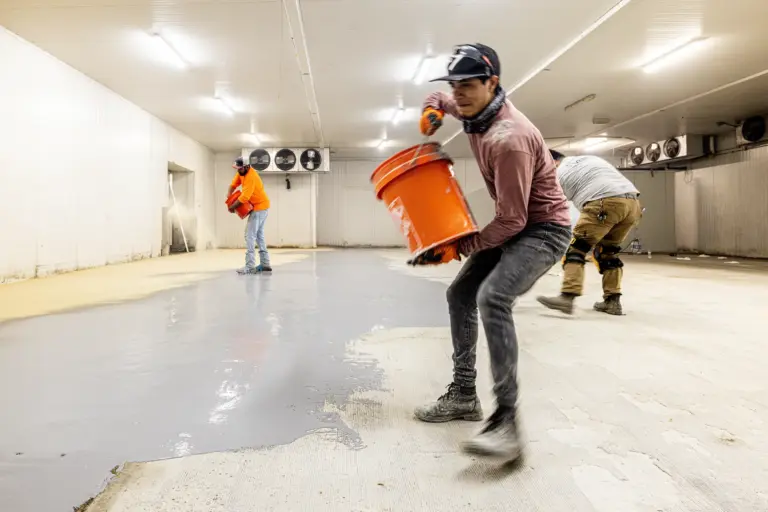
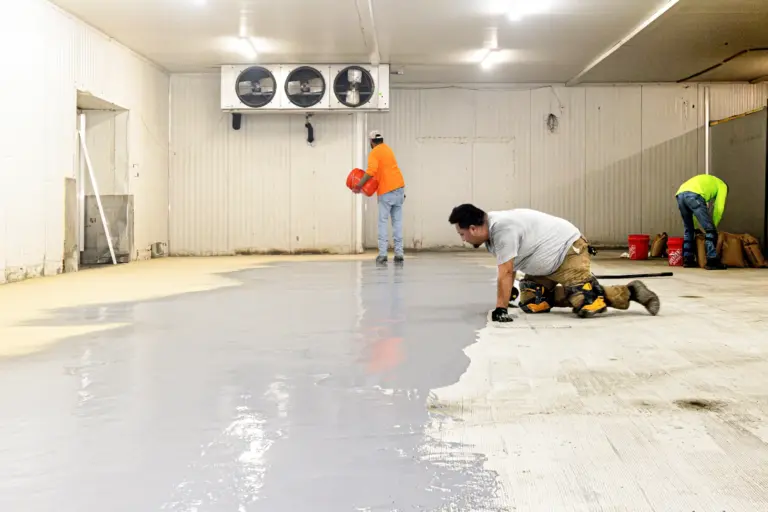
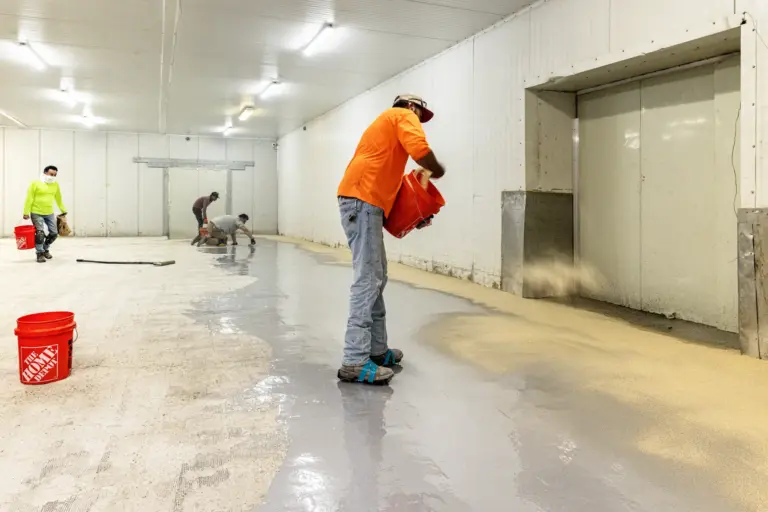
Request a Proposal
Submit project parameters for preliminary analysis. Commercial estimates typically returned within 24 hours.
Substrate Moisture, Slip Resistance, and Installation Logistics
Cold storage installation depth is where generalist contractors fail and specialists earn the long-term warranty. The slab below the coating carries vapor drive from subgrade upward continuously. The threshold zone runs wet-to-frozen-to-wet daily. The facility itself cannot lose cold-chain integrity during the install. Each of these is a separate problem with a separate protocol, and each is where a botched install shows up 12 to 24 months later.
Slab Moisture in Cold Storage — ASTM F2170 Verification as the First Line of Coating Survival
The single largest source of cold storage coating failure is not thermal shock or chemical exposure. It is slab moisture. Cold storage slabs sit on insulated or uninsulated subgrade with vapor barriers that are often imperfect, and the temperature differential between slab interior and subgrade drives vapor toward the slab surface continuously. Coatings that do not allow vapor transmission delaminate from underneath over 6 to 24 months. Urethane cement tolerates wider slab moisture conditions during installation than epoxy can, and the cementitious matrix allows some post-cure vapor transmission without delamination. ASTM F2170 in-situ relative humidity moisture verification before primer is mandatory on every cold storage install Craftsman runs. No exceptions for schedule pressure.
Anti-Slip Aggregate at the Wet-to-Frozen Threshold Zone — Broadcast into the Body Coat
The threshold zone cycles wet to frozen to wet daily. Slip-fall liability at the dock door is high, and topical anti-slip coatings wear off under forklift and foot traffic within months. Urethane cement accepts broadcast aggregate sized for wet-condition slip resistance, broadcast into the wet mortar body during installation so the aggregate is integral to the system rather than a topical layer that wears off. Threshold zones, loading bays, and walk in cooler entrances get the aggregate spec. Interior freezer zones and dry packaging areas that stay dry through operations can run smooth-finish without aggregate. The specification varies by zone, not by facility.
Phased Installation Around Cold-Chain Integrity — Install Without Breaking Operations
Active cold storage facilities cannot lose freezer temperature during an install. Phased zone-by-zone urethane cement installation isolates work zones thermally from adjacent operational zones, with substrate prep happening in a controlled 50 to 90°F environment rather than active freezer ambient. Self-leveling systems return to service in 24 hours. Trowel-applied dock zones take longer. Cold-chain integrity stays intact throughout the install, and adjacent freezer bays continue operating without temperature deviation. In-house W-2 crews mobilize nationwide from 9 operating locations and execute phased installation as the default model for active cold storage facilities, not as a special-case accommodation.
Compliance Picture for Food Cold Storage — USDA, FDA, HACCP When They Apply
Cold storage compliance scales with facility type. Generic refrigerated warehouses without federally inspected food do not trigger USDA. Food cold storage that holds inspected meat, poultry, or dairy meets the same USDA facility-level inspection criteria as upstream food processing: monolithic seam-free construction, cleanable surface, integral cove base where required by the auditor. FDA 21 CFR 175.300 incidental food contact applies to food applications, NSF/ANSI 51 food-contact certification covers the system materials, and HACCP, SQF, or GFSI audits document floor integrity as a control point. Each Craftsman install includes the manufacturer food-contact letter and substrate moisture documentation where the compliance framework applies.
urethane Cement Flooring Knowledge Center
Resource links
Sherwin-Williams Poly-Crete Systems
Sika Ucrete Systems
Industries Served
Technical Performance
Selection & Standards
Costs, Comparisons & Legacy Names
Frequently Asked Questions
Cold storage flooring runs $8-15/sqft installed depending on facility scale, zone specification, and substrate condition. Refrigerated warehouse-scale installs above 100,000 square feet trend toward the lower end due to volume efficiency. Walk-in cooler and walk-in freezer retrofits trend $10-13 due to smaller-scale install logistics and dock transition complexity. Dock zones with broadcast aggregate at the threshold trend $12-15 due to thicker trowel-applied systems and aggregate broadcast.
Thermal differential at the dock transition runs 100°F+ between freezer interior and loading dock ambient, with daily cycling as trucks load and unload across the boundary. Epoxy hardens further at sub-zero temperatures and loses flexibility, becoming brittle enough that substrate movement under thermal cycling cracks the coating. Slab moisture from condensation at the threshold drives vapor pressure upward and breaks the bond from underneath. Urethane cement handles the threshold because the urethane resin matrix retains flexibility at -40°F and the cementitious mortar body has thermal expansion coefficients close to concrete itself.
Yes. Phased zone-by-zone installation isolates the work zone thermally from adjacent operational zones, with substrate preparation happening in a controlled 50 to 90°F environment rather than active freezer ambient. Cold-chain integrity stays intact during installation, and adjacent freezer bays continue operating without temperature deviation. Self-leveling systems return to service in 24 hours; trowel-applied dock zones take longer.
Slab moisture is the single largest source of cold storage coating failure. Vapor drive from subgrade pushes moisture toward the slab surface continuously, and coatings that do not allow vapor transmission delaminate from underneath over 6 to 24 months. Urethane cement tolerates wider slab moisture conditions during installation than epoxy and allows some post-cure vapor transmission through the cementitious matrix without delamination. ASTM F2170 in-situ relative humidity moisture verification before primer is mandatory on every Craftsman cold storage install.
USDA applies if the facility stores federally inspected food including meat, poultry, dairy, or ready-to-eat products with meat content. Generic refrigerated warehouses without inspected food do not trigger USDA. For food cold storage, urethane cement mortar systems meet USDA facility-level inspection criteria for monolithic seam-free construction, cleanable surface, and integral cove base where required. NSF/ANSI 51 food-contact certification applies to the system materials. Each install includes the manufacturer food-contact letter where USDA inspection is in scope.
Documented service life is 25+ years across freezer interior, cooler interior, dock transition, and refrigerated warehouse zones. Manufacturer warranty preservation depends on documented installation including substrate moisture verification, surface profile records, and manufacturer-specified primer application. The failure modes that limit epoxy service life in cold storage — thermal embrittlement, vapor drive delamination, point load failure at pallet rack and forklift positions — are the failure modes urethane cement handles by chemistry, not by additive.
Freezer interior, cooler interior, dock transition, loading bay, pallet rack zones, walk-in cooler retrofit floors, walk-in freezer retrofit floors, blast freezer floors, refrigerated warehouse bays, and refrigerated distribution center floors. Threshold and dock zones get the heaviest-duty specification at 1/4 inch to 3/8 inch trowel-applied with broadcast aggregate. Interior freezer zones and packaging areas run self-leveling slurry at 3/16 inch to 1/4 inch. The specification matches the operational load and slip exposure of each zone.
Craftsman installs food processing flooring nationwide from multiple operating locations. In-house W-2 crews — trained, insured, and accountable — mobilize to project sites instead of subcontracted 1099 day-labor. Craftsman Concrete Floors has been installing industrial flooring since 1999, with hundreds of urethane cement food and beverage installs — large-format food processing facilities up to 60,000 sq ft anchoring a deep portfolio of commercial kitchens and quick-service restaurants.
Blog
ESD Epoxy Flooring Case Study: 34,000 SF Dallas, TX
Residential Terrazzo Floors in Fort Worth, Texas