What can we help you with?
Technical flooring, delivered directly
- ESD flooring, urethane cement, terrazzo, and polished concrete
- In-house W-2 installation crews and experienced field leadership
- National service coverage with project-specific staffing plans
- Testing, documentation, and defined project closeout
- Dedicated support for corporate procurement and multi-site contracting
Phone: +1 (844) 687-1961
Beverage Production
Beverage production flooring is specified against four loads at once: sugar slurry from the syrup room, citric acid at pH 2.2-2.4 off the juice lines, CO2 condensate dropping pH under the carbonation tanks, and 180°F caustic CIP landing on a cold slab at the filler heads. Urethane cement is the category that survives that combination. It is a cementitious mortar carrying a urethane resin matrix, bonded chemically to the concrete, so the floor cycles hot-to-cold with the slab instead of shearing at the interface like a thin-film coating. Beverage facility concrete flooring specs converge on it for that reason. Thickness runs 3/16″ to 3/8″ by zone load, and pricing is $4-17/sqft installed depending on project size, system thickness, and substrate condition.
One monolithic pour carries bottling plant flooring across filler lines, capping, conveyors, and packaging, with an integral cove base formed during the same urethane cement installation so there is no grout joint or caulk line to defend at inspection. FDA Title 21 CFR governs the food-contact chemistry. HACCP, SQF, and GFSI programs govern the documentation, and the system supports NSF/ANSI 51 requirements for food-contact materials. Service life is 15-20+ years under continuous CIP duty, and lead time runs 1-3 weeks from contract execution, driven by material availability.
Beverage Chemistry and Failure Modes
Sugar, Citric Acid, and CO2 — The Load on Beverage Production Flooring
Flooring for drink factories is specified against a combined chemistry load, not any single chemical. Syrup-room sugar is hygroscopic and mildly acidic; it adheres, rehydrates between cleaning cycles, and keeps working on the surface around the filler heads. Citric acid from juice processing runs pH 2.2-2.4 and attacks cementitious grout wherever it pools, while CO2 condensate drops local pH under tanks, at fillers, and along bottle conveyors. Then 180°F caustic sanitizer lands on all of it daily. None of them is exotic alone; the combination is what breaks single-chemistry systems.
Epoxy Softens Under Sugar Attack, Then Delaminates at the Filler Heads
Standard epoxy fails bottling plant flooring through two compounding mechanisms. Continuous sugar spill softens the resin matrix from the surface in over months of exposure, and every CIP cycle then puts a 150°F+ differential between hot caustic and cold concrete across the resin-to-concrete interface, which the rigid film cannot absorb. Delamination follows within 12-24 months in active filler zones. Water and sugar infiltrate the void. What the plant sees is slick patches at the filler heads and a slip-fall exposure that widens every quarter.
Grout Joints and Porosity Are Where Tile and Polished Concrete Fail
Quarry tile’s weak point is its grout. Grout absorbs sugar residue and citric acid between sanitation cycles and harbors bacterial growth at the points a HACCP plan designates as critical control points, while CO2-driven pH drop degrades the joint surface itself. Polished concrete fails on porosity instead. Untreated concrete absorbs sugar slurry and juice concentrate faster than any densifier maintenance cycle, and traffic keeps exposing fresh porosity. Neither surface holds up to FDA Title 21 CFR food-contact expectations once production chemistry sits in the pores.
Food-Grade Polyurethane Chemistry on a Cementitious Body
What Food Grade Polyurethane Means on a Beverage Floor
Food grade polyurethane flooring, in beverage production, means urethane cement — a polyurethane resin matrix carried in a cementitious mortar body, not a thin-film polyurethane coating. The mortar body does the structure; the resin does the chemistry. Thickness, impact resistance, and thermal mass come from the cementitious side, while the urethane matrix carries the acid and sugar resistance buyers are checking when they ask whether polyurethane is food safe. Specified correctly, the cured system meets FDA Title 21 CFR food-contact material requirements, and the manufacturer’s food-contact letter ships in the closeout package.
-40°F to 250°F Operating Range, 150°F+ Thermal Shock Differential
Thermal shock at the filler heads is the design baseline for beverage duty, not the edge case. Hot caustic lands at 180°F+; cold rinse follows within minutes. Urethane cement rides that expansion-contraction cycle because its thermal expansion coefficient sits close to concrete’s own, and the bond at the substrate is chemical rather than a rigid film interface. The category carries a -40°F to 250°F operating range and 150°F+ thermal shock differential, which covers blast-chilled cold rooms and hot-fill lines on the same monolithic pour.
Integral Cove Base, Continuous Floor-to-Wall Under CIP Volume
An integral cove base forms in place during the same mortar pour as the floor, monolithic with it, rather than being installed afterward as a separate component. CIP washdown moves thousands of gallons per cycle. Every seam between floor and wall is a failure point under that volume and a harborage site between sanitation passes; the seam-free construction carries the sanitation case structurally. No grout joint, no caulk line, and no wall-floor gap remain for sugar residue to colonize, and the surface stays compatible with validated HACCP sanitation procedures.
Installing Around 24/7 Bottling Lines
Phased Zones and 24-Hour Return to Service
Phased zone-by-zone install around active operations is how beverage plants get new floors without a facility outage. Crews take zones during scheduled overnight, weekend, or holiday shutdown windows, with 24-hour cure-and-return-to-service on self-leveling systems and 48-72 hours on trowel-applied builds. Zones under 2,000 sqft can complete in a single night when scope and substrate condition allow. Hot-fill areas and syrup rooms get the 3/8″ trowel-applied build; cold-fill packaging runs 3/16″ self-leveling.
W-2 Crews and Single-Contract Multi-Plant Programs
In-house W-2 crews provide national service coverage. W-2 installers, not 1099 day-labor. Trained, insured, and accountable to you. The crew that pours owns the spec, the substrate prep documentation, and the cure timeline the plant scheduled around. For bottling networks running the same floor spec at several plants, Craftsman executes single-contract multi-site programs, with one installer accountable for the same system and prep standard at every site. Pre-bid walkthroughs are available based on project requirements, timing, and resource availability; remote spec review is standard for multi-region rollouts.
The Documentation Package a Beverage Audit Reads
Every beverage install closes out with substrate moisture logs per ASTM F2170 and ASTM F1869, ICRI 310.2 surface profile verification photos, integral cove base photos, manufacturer datasheets, food-contact letters, and mortar batch records. That package keeps the manufacturer warranty valid. It is what a HACCP or SQF auditor reads when the floor system comes up in a plant’s FSMA preventive controls review. Craftsman installs beverage systems as a Sika Certified + Authorized Sherwin-Williams High Performance Flooring installer.
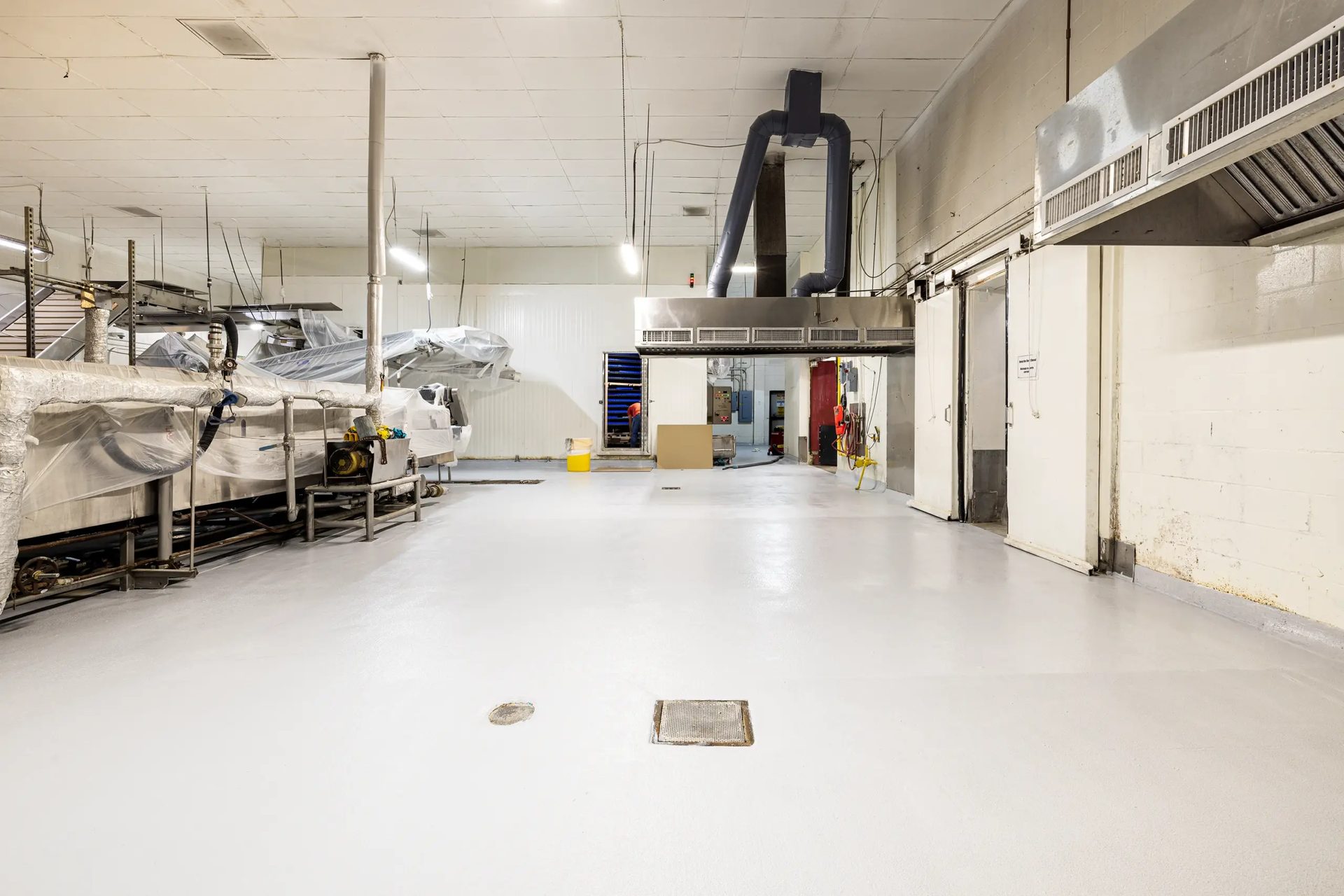
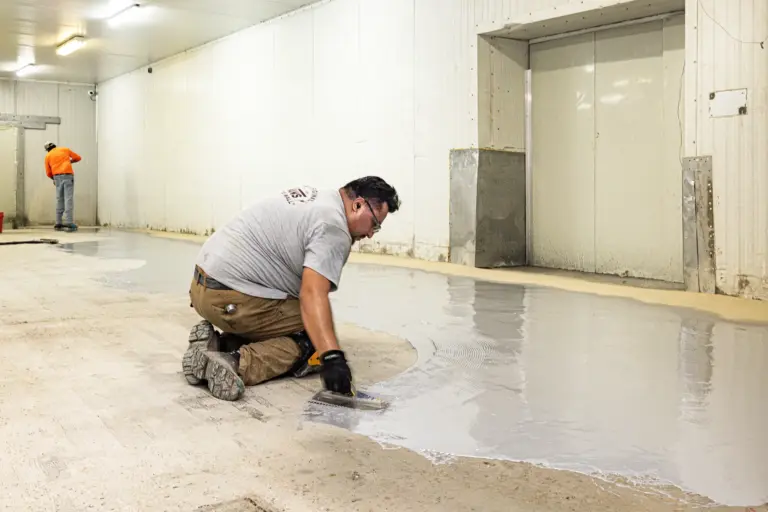
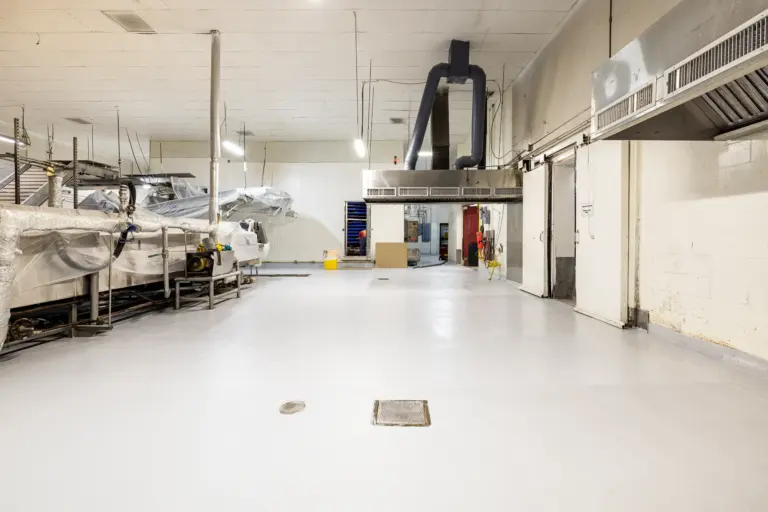
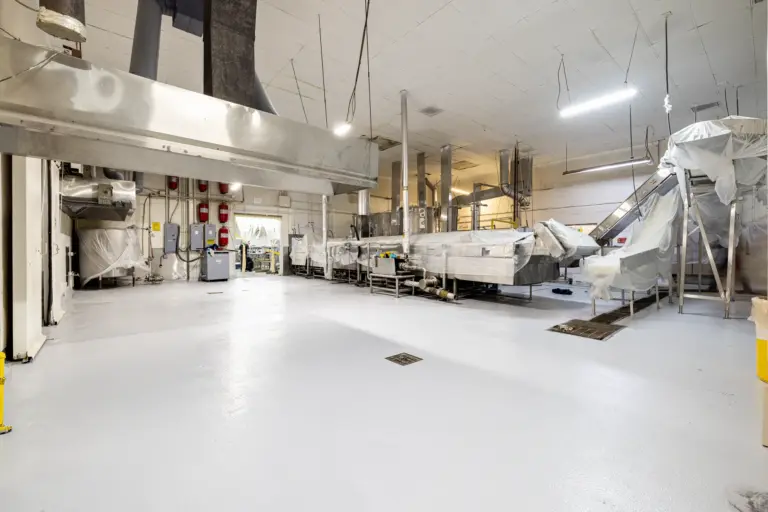
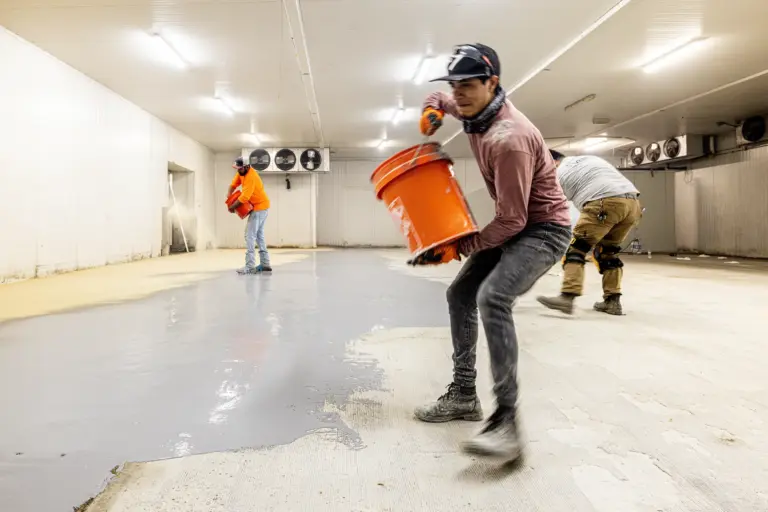
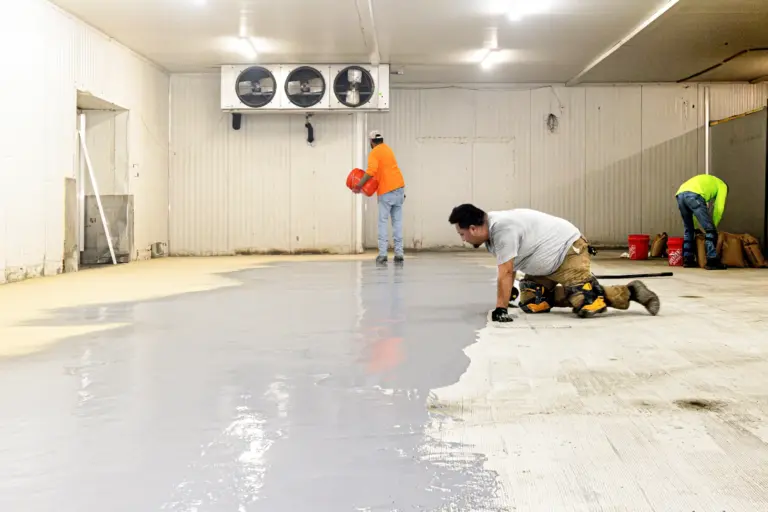
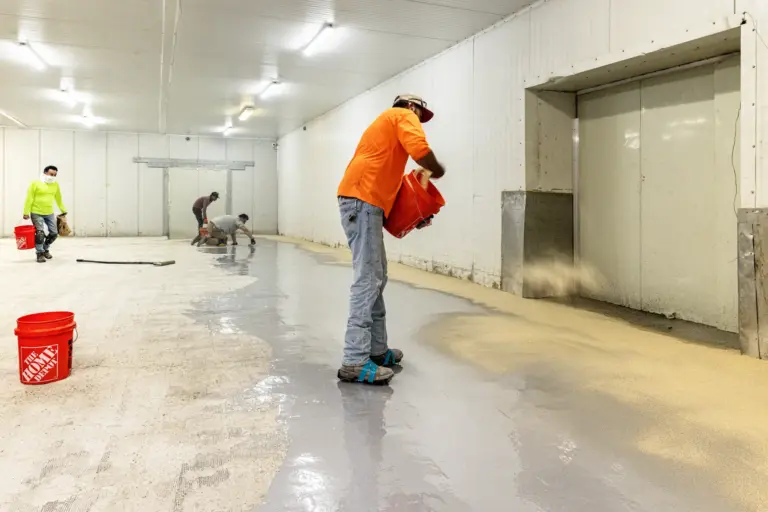
urethane Cement Installation Gallery
Frequently Asked Questions
Beverage production flooring runs $4-17/sqft installed depending on project size, system thickness, and substrate condition, with project size the dominant driver. Cold-fill packaging zones at 3/16″ self-leveling price lower than hot-fill zones and syrup rooms at 3/8″ trowel-applied. Pricing includes substrate prep to ICRI 310.2 profile, moisture verification per ASTM F2170, and closeout documentation; the full size-band breakdown lives on the urethane cement cost page.
Epoxy fails in bottling plants through sugar attack and thermal shock working together. Continuous sugar spill around the filler heads softens the resin matrix over months, and the 150°F+ CIP differential between hot caustic and cold concrete then delaminates the rigid film at the resin-to-concrete interface, typically within 12-24 months. Sugar and water infiltrate the delamination, and the failure spreads into slick zones and slip-fall exposure.
Urethane cement systems meet FDA Title 21 CFR food-contact material requirements when specified correctly, and they support NSF/ANSI 51 requirements for food-contact materials. The systems are compatible with HACCP, SQF, and GFSI programs and align with FSMA preventive controls. Craftsman’s closeout includes the manufacturer’s food-contact letter and the substrate documentation an inspector reads against the facility’s preventive controls plan.
Food grade polyurethane flooring in beverage plants is urethane cement, a polyurethane resin matrix in a cementitious mortar body rather than a thin-film coating. The cured matrix is non-porous, meets FDA Title 21 CFR food-contact requirements when specified correctly, and holds up under the sugar, citric acid, and caustic CIP chemistry beverage production runs daily. Thin-film polyurethane coatings are a different product class and are not what beverage floor specs call for.
Phased installation is the standard approach for active beverage plants, taken zone-by-zone during scheduled overnight, weekend, or holiday shutdown windows. Zones under 2,000 sqft can complete in a single night when scope and substrate condition allow, and self-leveling systems reach 24-hour cure-and-return-to-service for foot traffic. A typical multi-zone install runs 3-5 days across staged shutdowns rather than one full-facility outage, on a 1-3 week lead time from contract execution.
Service life is 15-20+ years for properly specified urethane cement under active beverage duty, through daily CIP cycling, sugar and acid exposure, and forklift traffic. Manufacturer warranties stay valid through documented installation, which is why every Craftsman closeout carries the substrate moisture logs, ICRI 310.2 surface profile documentation, and mortar batch records the warranty terms reference.
Bottling plants, juice production and processing, soft drink and soda bottling, sports and energy drink RTD production, bottled and sparkling water plants, and nutritional shake RTD lines all run the same combined chemistry load and specify the same system. Specification varies by zone, with 3/8″ trowel-applied builds in hot-fill and syrup areas and 3/16″ self-leveling in cold-fill packaging. Brewery and distillery floors carry different chemistry and compliance context and are covered on their own pages.
Nationwide. In-house W-2 crews provide national service coverage; the installing company dates to 1999. Bottling and beverage programs typically start with remote spec review, and a pre-bid walkthrough is available based on project requirements, timing, and resource availability.
urethane Cement Flooring Knowledge Center
Resource links
Industries Served
Technical Performance
Selection & Standards
Sherwin-Williams Poly-Crete Systems
Sika Ucrete Systems
Cost, Comparisons & Legacy Names
Blog
Craftsman Publishes 2026–2027 ESD Flooring Technical Guide
ESD Epoxy Flooring Case Study: 34,000 SF Dallas, TX