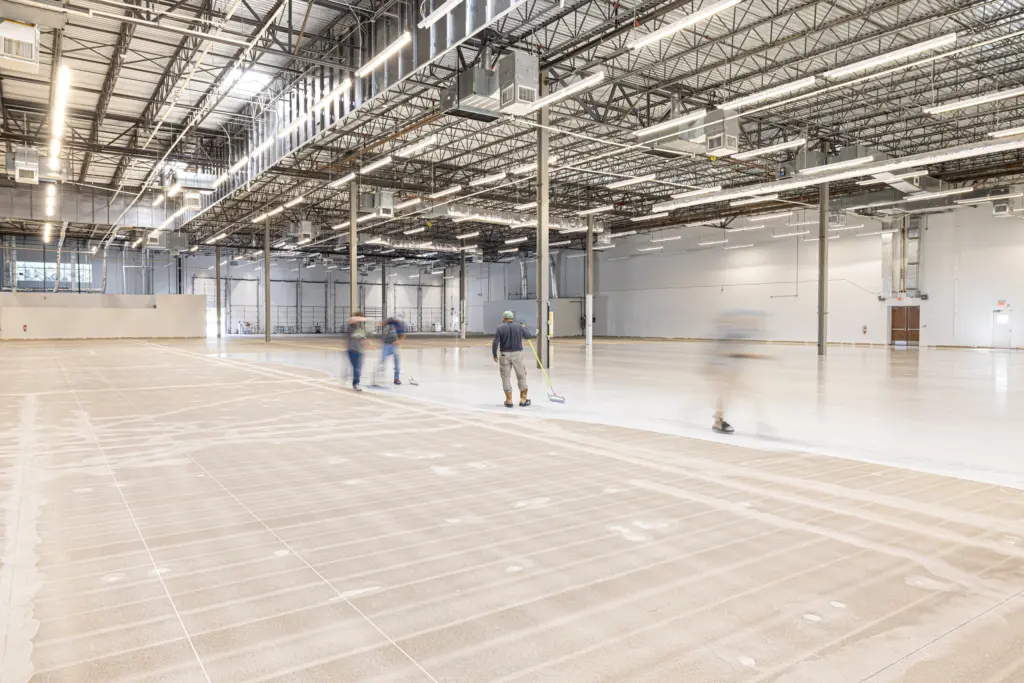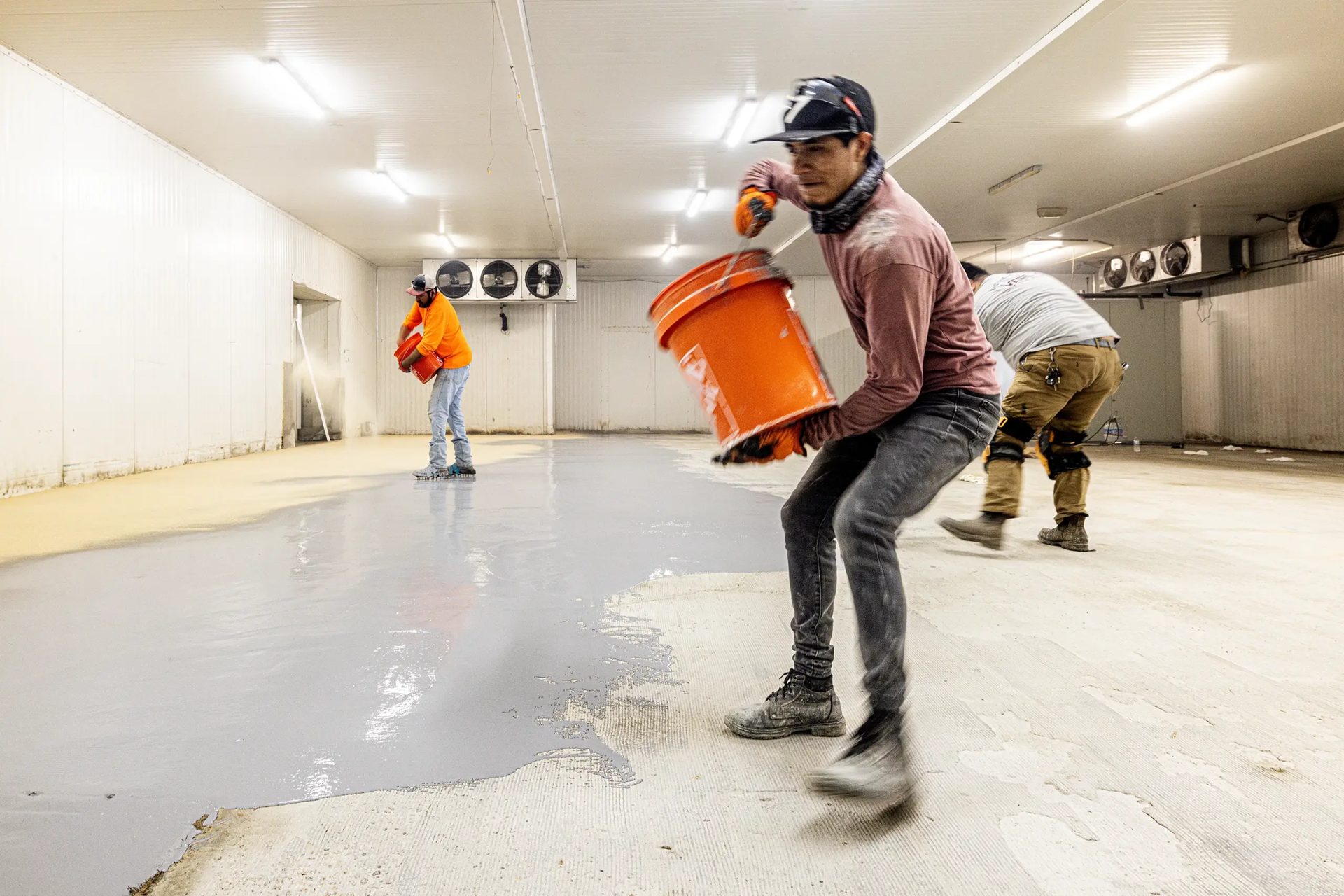
- Founded in 1999 • National commercial & industrial specialty flooring contractor
- Systems: Sika Ucrete & Sherwin-Williams High Performance Flooring Poly-Crete and Hybri-Flex urethane cement systems
- In-house W-2 crews provide national service coverage
- Single-contract multi-site programs under a Master Service Agreement
- Phased installation in occupied facilities — night and weekend shutdown-window execution
- Experience Modification Rate (EMR) below the industry average
- Authorized Sherwin-Williams High Performance Flooring installer; Sika installer; Westcoat certified
- Pre-install moisture and substrate testing & audit-ready closeout documentation
- Facility assessments, compliance inspections & lifecycle maintenance programs
- Licensed • Insured • Bonded • Enterprise vendor prequalification package available (COI, W-9, capabilities statement & supporting documentation)
- MasterFormat: 09 67 23 Resinous Flooring under 09 67 00 Fluid-Applied Flooring — UFGS 09 67 23.13 on federal work
- Legacy numbering: five-digit 09670-era sections retired November 2004 — reissue under 09 67 23
- Spec support:
- – Pre-bid specification review with legacy-name cross-reference (FasTop, Sikafloor PurCem)
- – Current product data sheet & system-document submittal packages
- – Mockup coordination for ANSI A326.3 texture acceptance
Phone: +1 (844) 687-1961
Urethane cement specifications live in Section 09 67 23, Resinous Flooring, under 09 67 00, Fluid-Applied Flooring, in MasterFormat Division 09 — no dedicated urethane cement section number exists, so Part 2 establishes the system type. Federal masters carry the same content as UFGS 09 67 23.13. A urethane cement spec written to that geography survives plan review; one still numbered from the five-digit era gets flagged before anyone reads its product names. Most spec problems in this category are either a section filed under the wrong number or Part 2 product names that no longer exist.
A specification section and a product data sheet do different work. Confusing the two produces unenforceable sections. The section states the system by its current manufacturer name, the build-up layer by layer, the substrate acceptance criteria, and the closeout documentation the owner keeps. The data sheet carries the product’s own numbers, and the section references it rather than reproducing it. In-house W-2 crews provide national service coverage, and Craftsman supports specifiers with pre-bid review and current-document packages, plus legacy-name translation for masters that still read FasTop or Sikafloor PurCem.
Our Clients




















MasterFormat Section Geography for Urethane Cement
09 67 23 Resinous Flooring — the Current Home
Section 09 67 23 carries every fluid-applied resinous system in CSI Division 09, so Part 2 does the work of naming urethane cement specifically. Write the heading as 09 67 23, Resinous Flooring, and identify the system class in Part 2 as cementitious urethane, with acceptable systems listed by current manufacturer name. On federal work, UFGS 09 67 23.13 is the corresponding master section. Sika Ucrete and Sherwin-Williams Poly-Crete both specify into this section. Neither has its own MasterFormat number.
Five-Digit Numbers Date the Whole Section
A master spec that still reads 09670 or 09700 predates the November 2004 MasterFormat expansion, which retired five-digit numbering. The 1995 edition assigned 09700 to Wall Finishes, so flooring content filed under that number is at least two framework revisions old. Sections that old usually carry product names from two ownership cycles back, FasTop under General Polymers and Ucrete under BASF among them, and the naming rot matters more than the header. Reissue under 09 67 23. Then re-verify every Part 2 name against current manufacturer documents.
Boundary Sections That Are Not Resinous Flooring
Not everything fluid-applied on a floor belongs in 09 67 23. Densifiers and penetrating sealers file under 09 61 00, Flooring Treatment. Terrazzo takes 09 66 00. Polished concrete belongs to 03 35 00, Concrete Finishing, in Division 03, and quartz broadcast systems sit one section over at 09 67 26. Filing urethane cement under any of these creates bid coverage gaps, because resinous installers do not carry those sections and finish trades do not carry 09 67 23.
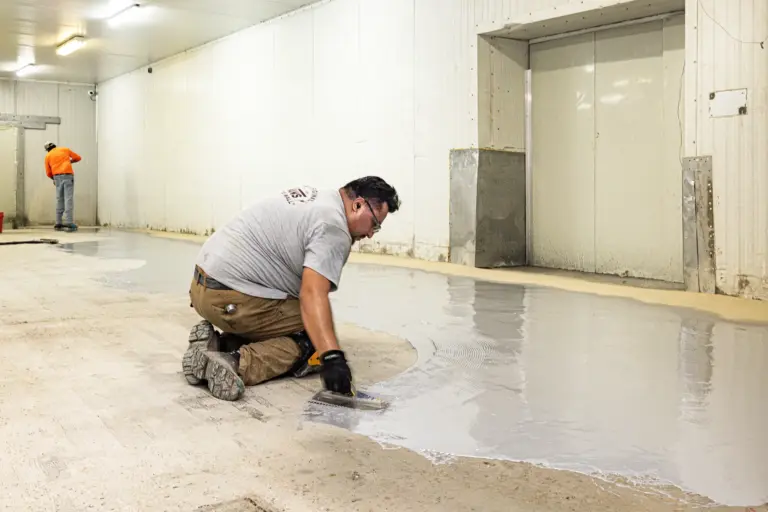
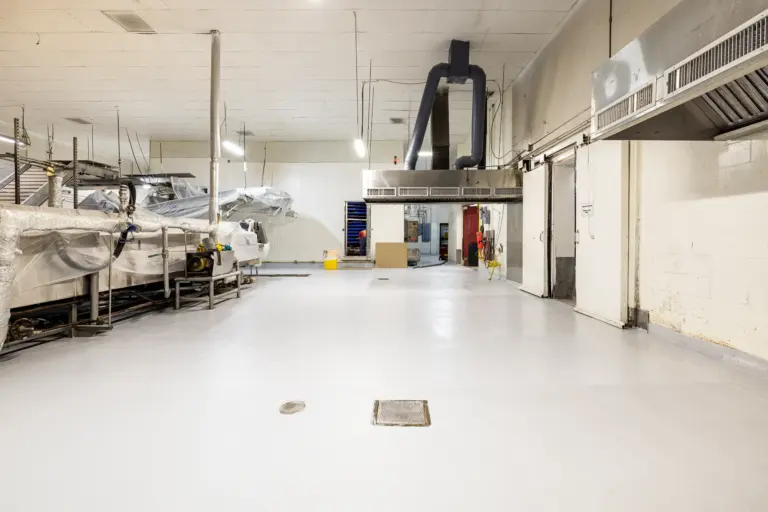
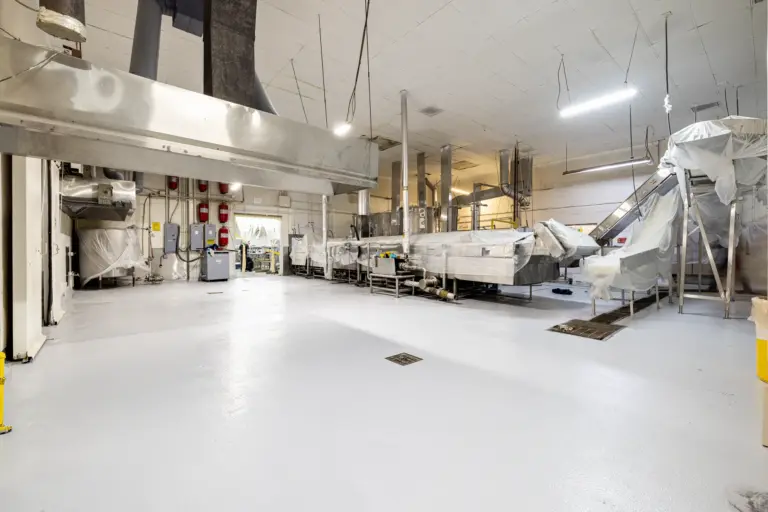
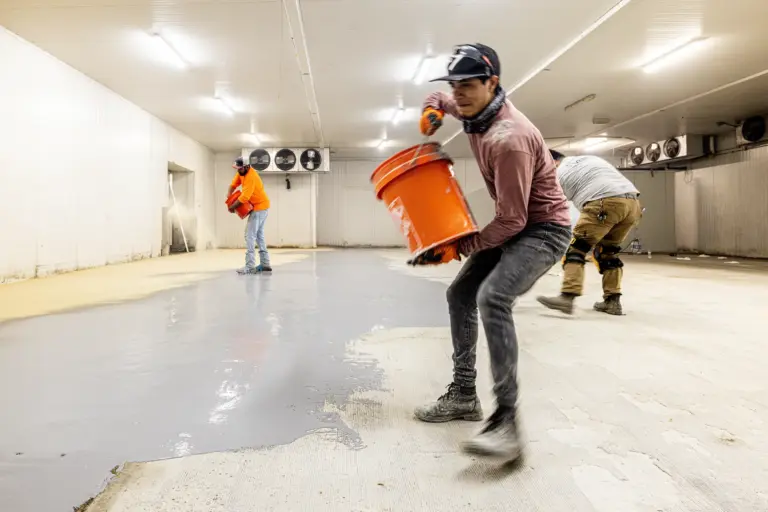
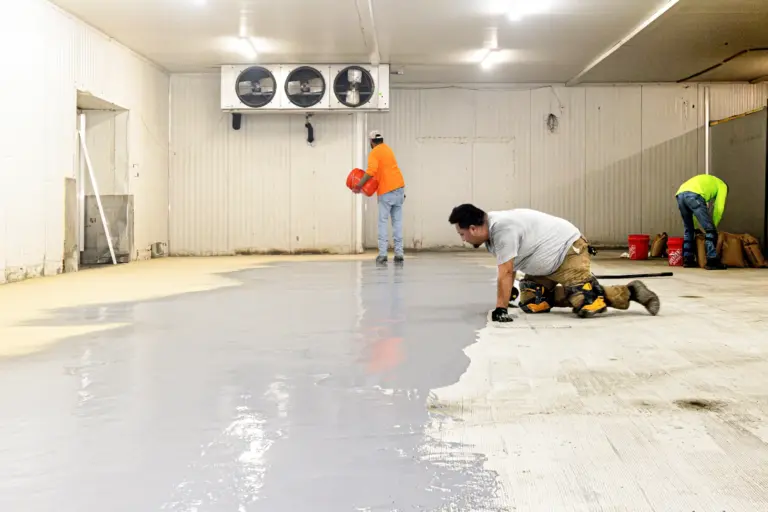
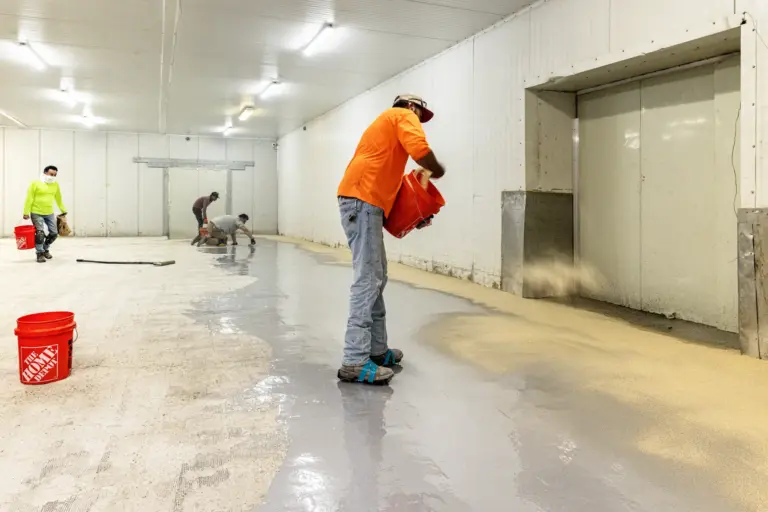
urethane Cement Installation Gallery
Request a Proposal
Submit project parameters for preliminary analysis. Commercial estimates typically returned within 24 hours.
Anatomy of a Complete Resinous Flooring Section
Part 1: Submittals Worth Requiring
Five submittals carry real weight on a urethane cement specification. Require current product data sheets, dated within the manufacturer’s active revision cycle, because superseded sheets carry superseded numbers. The system build-up comes next: full layer-by-layer thicknesses rather than one nominal figure. Installer credentials are verified by manufacturer program name; generic capability letters name no program. The moisture protocol cites ASTM F2170, with the threshold stated and the action at exceedance defined before mitigation gets bid blind. A mockup or sample panel closes the list, because ANSI A326.3 wet DCOF is an acceptance criterion, not a number copied off a data sheet.
Naming Rot Lives in Part 2
The product names in Part 2 age faster than any other line in the section. General Polymers FasTop urethane cement now maps into Sherwin-Williams Poly-Crete; Sikafloor PurCem specs read against today’s Sika Ucrete documents; BASF-era Ucrete sells under Sika. A specification that names the system by its current manufacturer name, with the build-up stated layer by layer, survives those transitions. One that pins a single legacy product code does not. Per-code legacy mappings and product-level data belong to the Sherwin-Williams and Sika product pages; the spec section states the system and references the current data sheet.
Execution Clauses That Prevent Documented Failures
Execution language is where documented failures get prevented or invited. State the substrate profile as an ICRI 310.2 CSP range matched to the system build, and reference ACI 302.1R where new slab construction precedes the flooring scope. Carry the ASTM F2170 threshold from Part 1 into an execution clause with a named mitigation path. Detail the integral cove base as formed in place during the mortar pour, monolithic with the floor, and locate every termination on the drawings. Return-to-service is stated by system type. Self-leveling systems return at 24 hours; trowel-applied builds take 48-72 hours. Phased, zone-by-zone sequencing around active production belongs in this part too.
Thickness, Substitutions, and Pre-Bid Support
Thickness Callouts in Urethane Cement Specifications
The urethane cement thickness specification starts from the duty the floor carries. Standard callouts run 3/16 inch to 3/8 inch. Self-leveling systems at the lower band cover thermal and chemical duty in most process areas, while trowel-applied builds at 1/4 inch and up take sustained impact and point loads; duty-class selection in depth belongs to the thickness selection guide. Performance criteria stay category-level, a -40°F to 250°F operating range and a 150°F+ thermal shock differential — the swing a hot washdown puts on a chilled slab, absorbed because the cementitious matrix moves with the concrete instead of shearing off it. Compressive and bond values come from the manufacturer’s current system documents, with ASTM C579 governing compressive strength for mortar systems, never copied forward from an old master.
The Approved-Equal Problem
Or-equal language gets tested at submittal, not at bid. A defensible substitution package pairs the proposed system’s current data sheets with a point-by-point comparison against the specified properties, installer credential verification, and the manufacturer’s confirmation of the build-up. Naming two acceptable systems in Part 2 heads off most substitution fights before they start. Craftsman is certified across four urethane cement manufacturers — Sherwin-Williams High Performance Flooring, Sika, PIP, and Westcoat. When a specified system has a lead-time or supply problem, Craftsman can propose and price an approved-equal urethane cement system from a second manufacturer, subject to the specifier’s approval.
Pre-Bid Review and the Closeout File
Pre-bid walkthroughs are available based on project requirements, timing, and resource availability; remote spec review is standard for multi-region rollouts. Review flags legacy names for translation and checks the ICRI 310.2 profile call and ASTM F2170 moisture clause against the specified system. Substrate preparation requirements themselves are covered in depth on the surface preparation page. Closeout is specified up front: ASTM F2170 moisture logs, surface profile verification photos, cove completion photos, and an audit-ready closeout package the owner holds against the next audit cycle. In-house W-2 crews provide national service coverage.
Knowledge Center
Resource links
Selection & Standards
Technical Performance
Industries Served
Sherwin-Williams Poly-Crete Systems
Sika Ucrete Systems
Cost, Comparisons & Legacy Names
Frequently Asked Questions
Section 09 67 23, Resinous Flooring, under 09 67 00, Fluid-Applied Flooring, in Division 09. No dedicated urethane cement number exists, so the system type is established in Part 2 of the section. Federal masters carry the same content as UFGS 09 67 23.13.
A complete urethane cement specification runs three parts. Part 1 sets the submittals, Part 2 names the system by its current manufacturer name with the build-up stated layer by layer, and Part 3 carries execution language from the ICRI 310.2 surface profile and ASTM F2170 moisture protocol through cove details and return-to-service by system type.
No. Five-digit MasterFormat numbering was retired in November 2004, and the 1995 edition assigned 09700 to Wall Finishes, which dates any flooring content filed there by at least two framework revisions. Reissue the section as 09 67 23 and re-verify every Part 2 product name against current manufacturer documents.
The system, by current manufacturer name, with every layer and its thickness stated. Single product codes drift across ownership changes; General Polymers FasTop names now map into Sherwin-Williams Poly-Crete, and Sikafloor PurCem specs read against current Sika Ucrete documents. Per-code mappings live on the manufacturer product pages.
3/16 inch to 3/8 inch covers standard duty, with the callout set by thermal exposure and traffic rather than by the previous master. Self-leveling systems at the lower band return to service in 24 hours; trowel-applied builds at 1/4 inch and up take 48-72 hours and heavier loading. The thickness selection guide carries duty-class selection in depth.
Substitution requests are decided at submittal, so the section should state what an or-equal package must contain. A defensible package sets the proposed system’s current data sheets beside the specified properties point by point, with installer credentials verified by manufacturer program name. Naming two acceptable systems in Part 2 removes the incentive to fight the spec at all.
Yes. Pre-bid walkthroughs are available based on project requirements, timing, and resource availability; remote spec review is standard for multi-region rollouts. The review reads the section against the manufacturers’ current documents, translating legacy names like FasTop and Sikafloor PurCem and confirming the moisture and profile clauses are biddable as written.
Blog
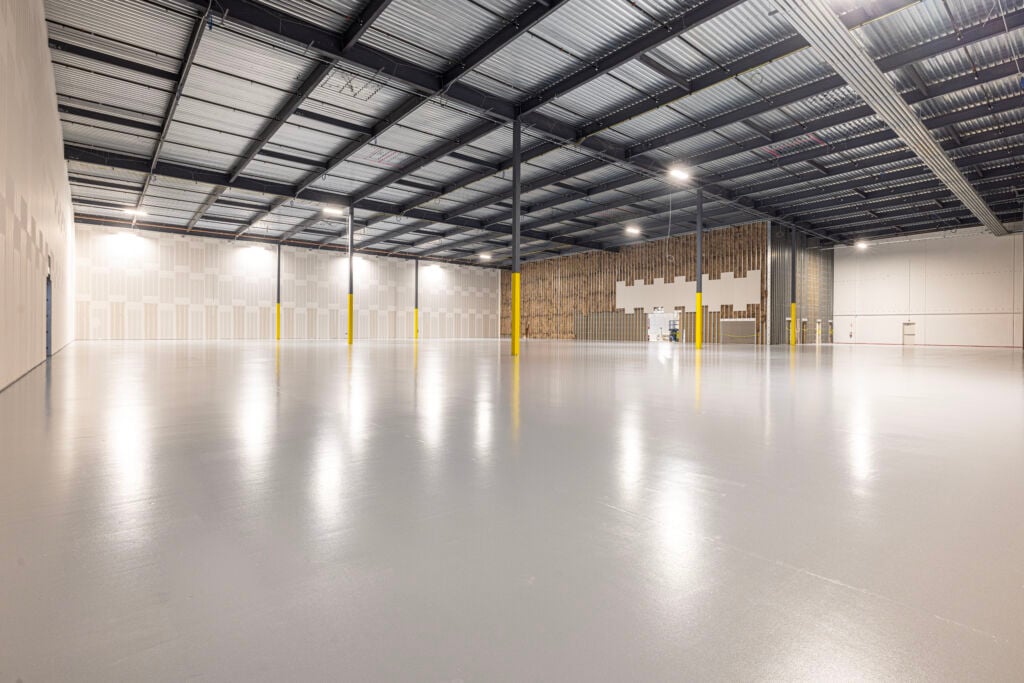
ESD Epoxy Flooring Case Study: 34,000 SF Dallas, TX
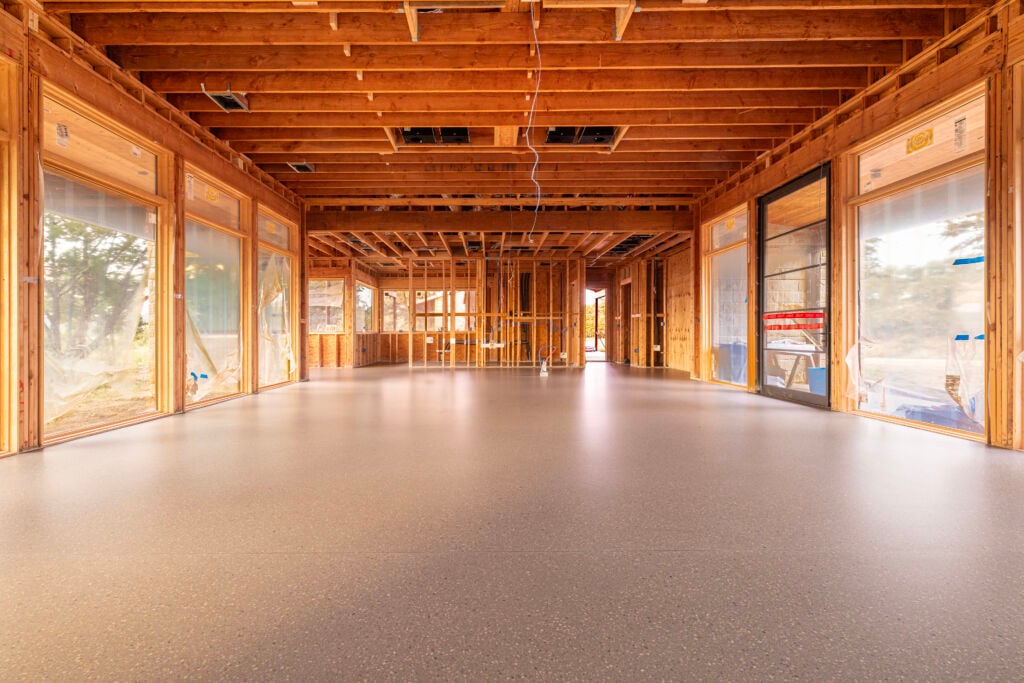
Residential Terrazzo Floors in Fort Worth, Texas