What can we help you with?
Technical flooring, delivered directly
- ESD flooring, urethane cement, terrazzo, and polished concrete
- In-house W-2 installation crews and experienced field leadership
- National service coverage with project-specific staffing plans
- Testing, documentation, and defined project closeout
- Dedicated support for corporate procurement and multi-site contracting
Phone: +1 (844) 687-1961
Ready-to-Eat Flooring
Ready-to-eat flooring is specified by the hygiene zone, not ordered from a datasheet. RTE names a food-safety classification, and the floor inside a post-lethality exposed area answers to the strictest harborage-elimination standard in the plant. Under the FSIS Listeria Rule (9 CFR 430.4), an establishment running post-lethality exposed ready-to-eat product must control Listeria monocytogenes through its HACCP plan and sanitation program, and the floor is part of the environment that control depends on. Once product is open to the room after its kill step, every seam, crack, and floor-to-wall angle becomes a place Listeria can seat. That is why an RTE zone is almost always finished in urethane cement: a monolithic, chemical-resistant surface built to carry the harborage rules and the sanitation load at once.
The zone sets the spec because the risk is not spread evenly across a plant. A post-lethality exposed area sees the most frequent and most aggressive sanitation in the building, while a dry-blend or sealed-package room never carries that exposure. Writing the whole facility to RTE standard over-builds the low-risk rooms; cutting the exposed zone to trim scope under-builds the one area where a single harborage point can drive a recall. Craftsman writes the floor to each zone’s classification, putting the top-tier monolithic system where product is exposed post-lethality and matching the rest of the plant to its actual risk.
How the FSIS Listeria Rule Sets the RTE Floor Spec
The regulatory weight in a ready-to-eat area sits on how well the processing environment is controlled. FSIS expects the establishment to keep Listeria monocytogenes out of that environment, and the floor is one of the surfaces it is judged on. The subheads below trace how the zone classification and its harborage rules land on the same monolithic urethane cement build.
Post-Lethality Exposed — The Line That Sets the Spec
Post-lethality exposed means product is open to the plant environment after it has already passed its lethality step. That single condition triggers the strictest floor requirement, because no later processing catches contamination the room introduces. Under 9 CFR 430.4, an establishment operating these areas controls Listeria through a post-lethality treatment, a growth-suppressing agent in the product, or sanitation measures alone, and the sanitation-only path draws the heaviest testing scrutiny. A dry-blend or sealed-package area does not carry that exposure, so it does not inherit the same floor. Zone exposure is what sets the spec. For where these zones sit inside a full plant, the food processing page covers the facility at production scale.
Harborage Elimination — Where Listeria Actually Lives
The floor-to-wall joint is the most common Listeria harborage point in a wet plant, and it is the first thing an RTE floor has to close. Urethane cement run with an integral cove base forms that joint in place during the same mortar pour, so there is no applied cove seam to lift or crack. The monolithic surface carries no grout lines or field seams for bacteria to colonize, and positive slope to drain keeps standing water from settling where it can host growth. Environmental monitoring programs are built to swab exactly these points; the floor’s job is to give the swab nothing to find.
The Urethane Cement System Ready-to-Eat Flooring Calls For
The floor an RTE zone demands has to answer the sanitation chemistry and the thermal load in one system. The USDA approved flooring page defines the agency programs behind the zone; this page stays on how that zone drives the system choice and where the heavier builds belong.
Sanitation Duty — The Chemistry the Floor Runs Daily
RTE sanitation runs on caustic and acid cleaners at temperatures that would craze a rigid coating within a season. Urethane cement absorbs the thermal swing from hot washdown to a chilled room because the mortar’s thermal expansion coefficient sits close to concrete’s — so the two move together instead of shearing at the bond line. Its -40°F to 250°F operating range and 150°F+ thermal shock tolerance cover the differential a hot cleaning cycle puts on a floor beside refrigerated storage. The daily caustic, acid, hot-water, and steam load that strips a sealed or epoxy floor is the load this system was formulated for.
Severe-Duty Tiers Where Impact and Point Loads Peak
Not every RTE zone needs the same thickness. Standard self-leveling slurries handle the general post-lethality exposed floor, while heavier trowel-applied and broadcast systems go where impact, point loads, and thermal cycling are heaviest, including Sika Ucrete UD 200 and Sherwin-Williams Poly-Crete HF and MDB. The heavier builds add mortar thickness and aggregate for zones that take pallet traffic, dropped tooling, and equipment loads next to constant washdown. Matching the tier to the duty is the other half of writing the floor to the zone.
Installing an RTE Floor Without Shutting the Plant Down
An RTE floor goes in while the rest of the plant keeps running. Craftsman sequences the work zone by zone around the sanitation calendar, so post-lethality areas are rebuilt during windows already reserved for cleaning rather than through a full-facility shutdown.
Phased Zone-by-Zone Around Sanitation Windows
Craftsman installs on a phased, zone-by-zone schedule built around the sanitation windows a food plant already runs. A post-lethality exposed room comes offline for its cleaning cycle, the floor goes in, and self-leveling systems return to service in 24 hours, with trowel-applied builds taking 48 to 72 hours. Because the exposed zones are scheduled independently, the plant never goes fully dark, and production areas outside the work zone keep running through the install. That sequencing is how a floor gets rebuilt in an operating facility without a line-wide stoppage.
In-House W-2 Crews From Prep Through Closeout
In-house W-2 crews provide national service coverage, which keeps an RTE install accountable to one contractor from surface prep through closeout. The same crews handle substrate preparation, moisture verification, cove forming, and the monolithic pour, so responsibility for the harborage-critical details never passes across a subcontractor boundary. Craftsman self-performs as a Sika Certified and Authorized Sherwin-Williams High Performance Flooring installer, the two lines the RTE-zone urethane cement systems are drawn from. Documentation from each phase, including substrate moisture logs, surface-profile records, and cove completion, closes out as the plant’s audit trail for the work.
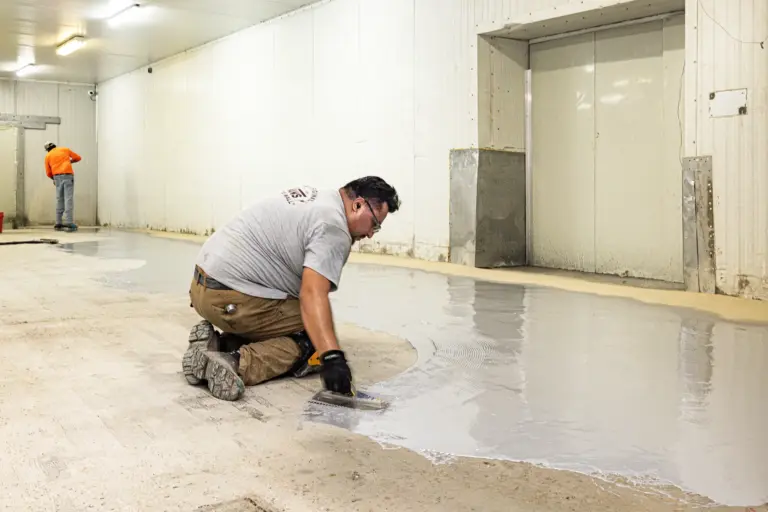
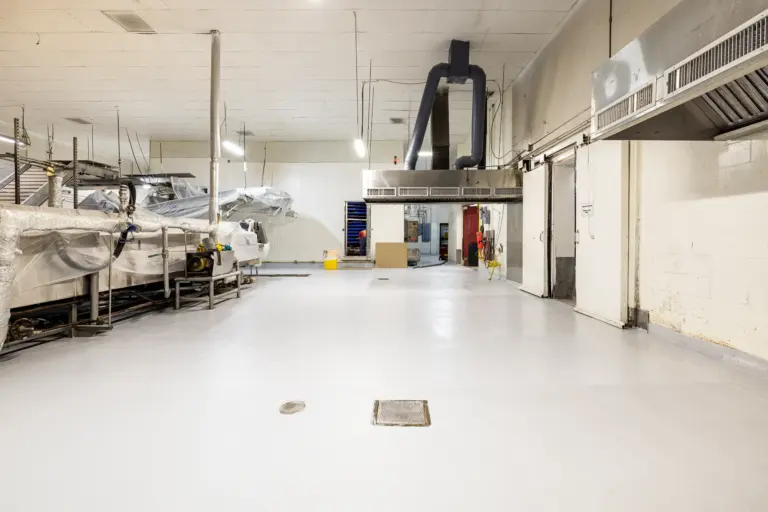
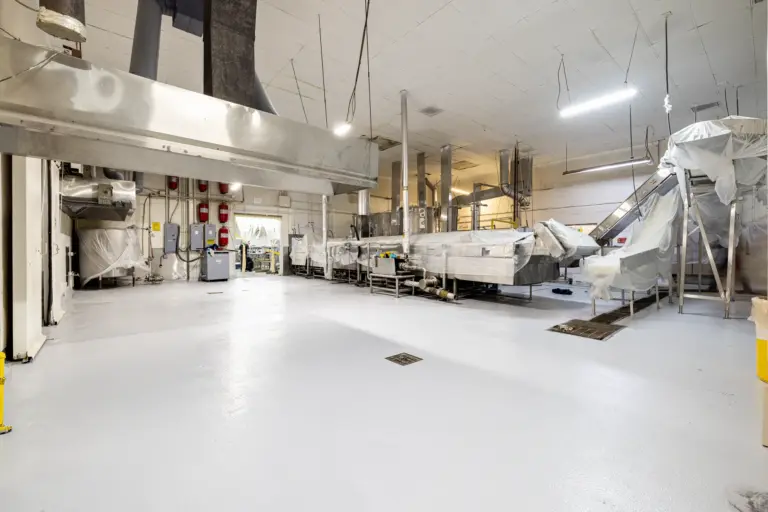
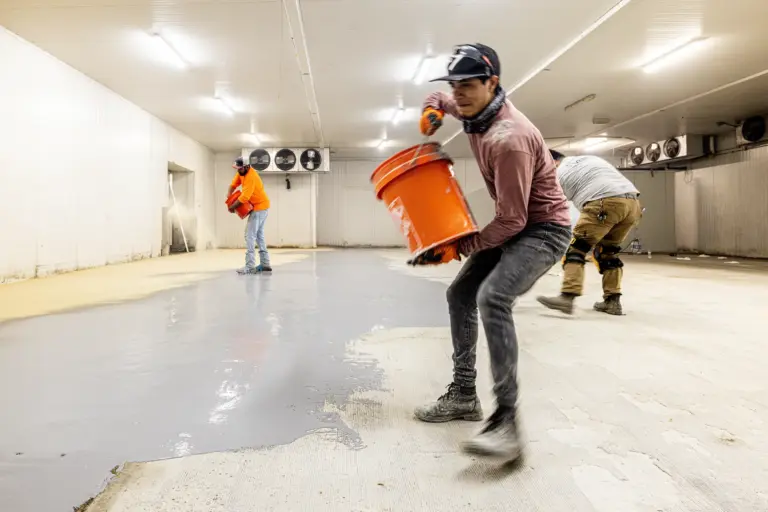
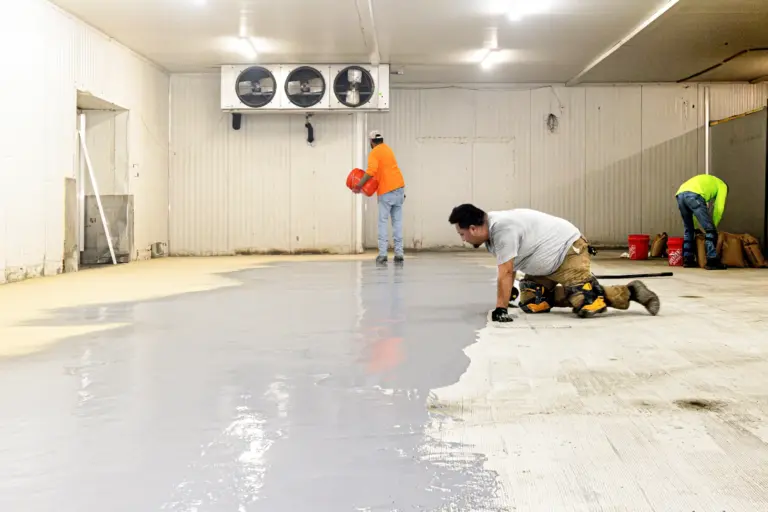
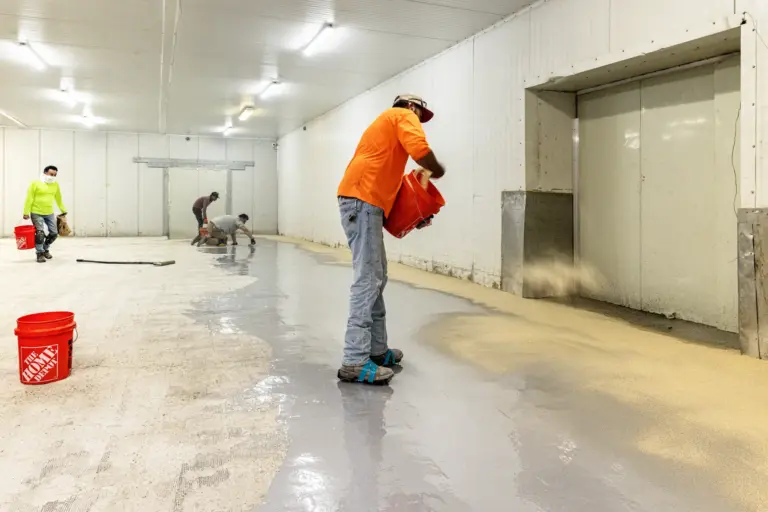
urethane Cement Installation Gallery
Frequently Asked Questions
RTE flooring is not a single product — it is whatever floor system satisfies a ready-to-eat hygiene zone’s requirements. In a post-lethality exposed area, that almost always means urethane cement, because the zone demands a monolithic surface Listeria cannot seat into and a daily caustic-and-acid sanitation routine cannot break down. The label describes the standard the floor has to hit under FSIS rules, and the material is whatever meets it.
No FSIS or FDA regulation names a specific flooring material, so the requirement is functional: the floor must give Listeria monocytogenes nowhere to harbor and must survive the zone’s sanitation chemistry and temperatures. A monolithic urethane cement floor with an integral cove base and positive slope to drain is the standard answer, and it maps cleanly to FDA and FSIS sanitation expectations. Grout lines and square floor-to-wall corners are what disqualify tile and coating alternatives.
Because a post-lethality exposed zone leaves product open to the room after its kill step, so nothing downstream catches contamination the environment introduces. Under the FSIS Listeria Rule (9 CFR 430.4), that environment, the floor included, is what the establishment has to control, while a dry-blend or sealed-package room carries no such exposure. One plant can correctly run several floor grades because each zone’s risk profile sets its own spec.
Urethane cement is the default because it answers both problems the zone creates at once. It cures into a seam-free monolithic floor with no joints or grout for bacteria to colonize, and it absorbs the thermal swing from hot washdown to chilled storage without crazing at a 150°F+ differential. Paired with an integral coved base and positive drainage, it removes the harborage points an environmental monitoring program is built to swab. For the heaviest zones, severe-duty systems like Sika Ucrete UD 200 and Sherwin-Williams Poly-Crete HF add thickness over a standard slurry.
Usually not, and specifying it that way is a costly overbuild. RTE-grade floor belongs where the RTE risk lives, in post-lethality exposed areas and the wet, high-sanitation rooms feeding them, while dry storage and ambient packaging rarely justify the top-tier system. Mapping each room to its zone classification protects the area that can drive a recall and skips over-building the rooms that cannot. That zone-by-zone scoping is how Craftsman writes a plant’s floor.
Craftsman Concrete Floors self-performs the work with in-house W-2 crews that provide national service coverage and have installed industrial flooring since 1999. Installation runs as a Sika Certified and Authorized Sherwin-Williams High Performance Flooring installer, the two lines the RTE-zone urethane cement systems come from. Floors go in on a phased, zone-by-zone schedule built around sanitation windows, with self-leveling systems back in service in 24 hours, so post-lethality areas are rebuilt without a full plant shutdown.
Knowledge Center
Resource links
Industries Served
Technical Performance
Selection & Standards
Sherwin-Williams Poly-Crete Systems
Sika Ucrete Systems
Cost, Comparisons & Legacy Names
Blog
Craftsman Publishes 2026–2027 ESD Flooring Technical Guide
ESD Epoxy Flooring Case Study: 34,000 SF Dallas, TX