- Founded in 1999 • National commercial & industrial specialty flooring contractor
- Systems: Sika Ucrete & Sherwin-Williams High Performance Flooring Poly-Crete and Hybri-Flex urethane cement systems
- In-house W-2 crews provide national service coverage
- Single-contract multi-site programs under a Master Service Agreement
- Phased installation in occupied facilities — night and weekend shutdown-window execution
- Experience Modification Rate (EMR) below the industry average
- Authorized Sherwin-Williams High Performance Flooring installer; Sika installer; Westcoat certified
- Pre-install moisture and substrate testing & audit-ready closeout documentation
- Facility assessments, compliance inspections & lifecycle maintenance programs
- Licensed • Insured • Bonded • Enterprise vendor prequalification package available (COI, W-9, capabilities statement & supporting documentation)
- Chemical exposure: organic acids (lactic, acetic, citric), mineral acids per system resistance charts & alternating caustic washdown chemistry
- Service temperature: -40°F to 250°F operating range, 150°F+ thermal shock differential
- System build: 3/16″ to 3/8″ monolithic urethane cement with integral cove base
Phone: +1 (844) 687-1961
Acid resistant flooring in an industrial plant is a matrix property, not a coating property. Urethane cement, a cementitious mortar bound in a urethane resin matrix and installed at 3/16″ to 3/8″ thickness, resists acid attack through its full depth because the wearing surface and the chemical-resistant material are the same thing. Thin-film chemical resistant flooring protects the slab only while the film stays intact; once traffic or thermal cycling opens it, acid reaches the concrete and dissolves the cement paste beneath. Where the resistance lives — through the mortar body or in a surface film — decides how each system fails, and how fast.
The acid load on a production floor is rarely one chemical. Dairy and food plants run organic acids from product spills, then push caustic cleaning chemistry over the same surface hours later. Craftsman Concrete Floors has installed urethane cement against exactly this alternating exposure since 1999, with in-house W-2 crews that provide national service coverage. This page covers what makes acid proof flooring earn the name, why concentration and temperature matter as much as the chemical, and what the system costs installed.
Our Clients




















Acid Exposure by Class
Organic Acids — Lactic, Acetic, and Citric
Organic acids are the default exposure in food and beverage production, and they destroy bare concrete despite their mild reputation. Lactic acid from milk residue, acetic acid from fermentation, and citric acid from juice lines dissolve the calcium compounds in cement paste; once the paste goes, the surface ravels under traffic. Urethane cement carries the exposure because its cementitious body is bound in a urethane matrix that the acids do not attack. Dairy duty is specified on our dairy and meat processing page; fermentation-acid contexts live on the winery and brewery flooring pages.
Mineral Acids and Process Chemistry
Sulfuric acid in battery and plating areas, phosphoric acid in cleaning blends, and nitric acid in acid-wash cycles appear on plant chemical lists at widely different concentrations, and concentration decides the duty. A system that carries a dilute acid can fail against the same acid concentrated. The manufacturer’s chemical resistance chart for the specific installed product is the deciding document, never a category-level claim. Where the chart shows a gap, the fix is usually a topcoat selection or a thickness change, decided before bid day.
Acids and Caustics on the Same Floor
CIP cycles put acid and caustic chemistry across one floor in the same shift, caustic wash then acid rinse then sanitizer, repeated daily. A surface that resists acid but softens under high-pH caustics fails just as fast, so the specification has to hold at both ends of the pH range. Urethane cement handles the alternation because one matrix carries both exposures; there is no film to strip. Washdown duty itself, including water temperature, cycle frequency, and drainage design, is specified in depth on our CIP washdown flooring page rather than repeated here.
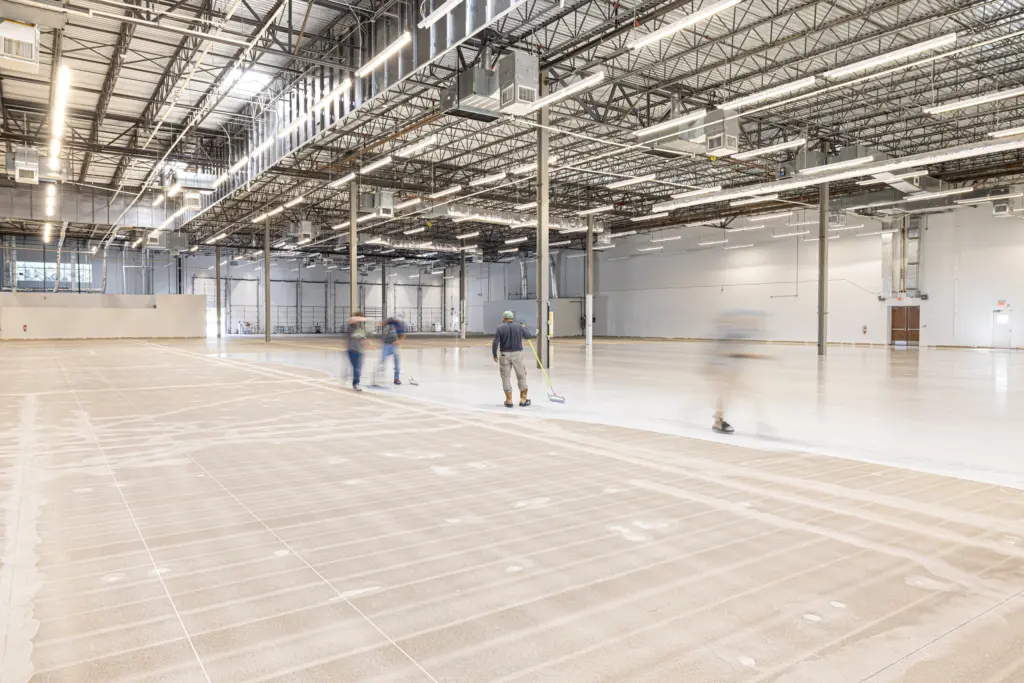
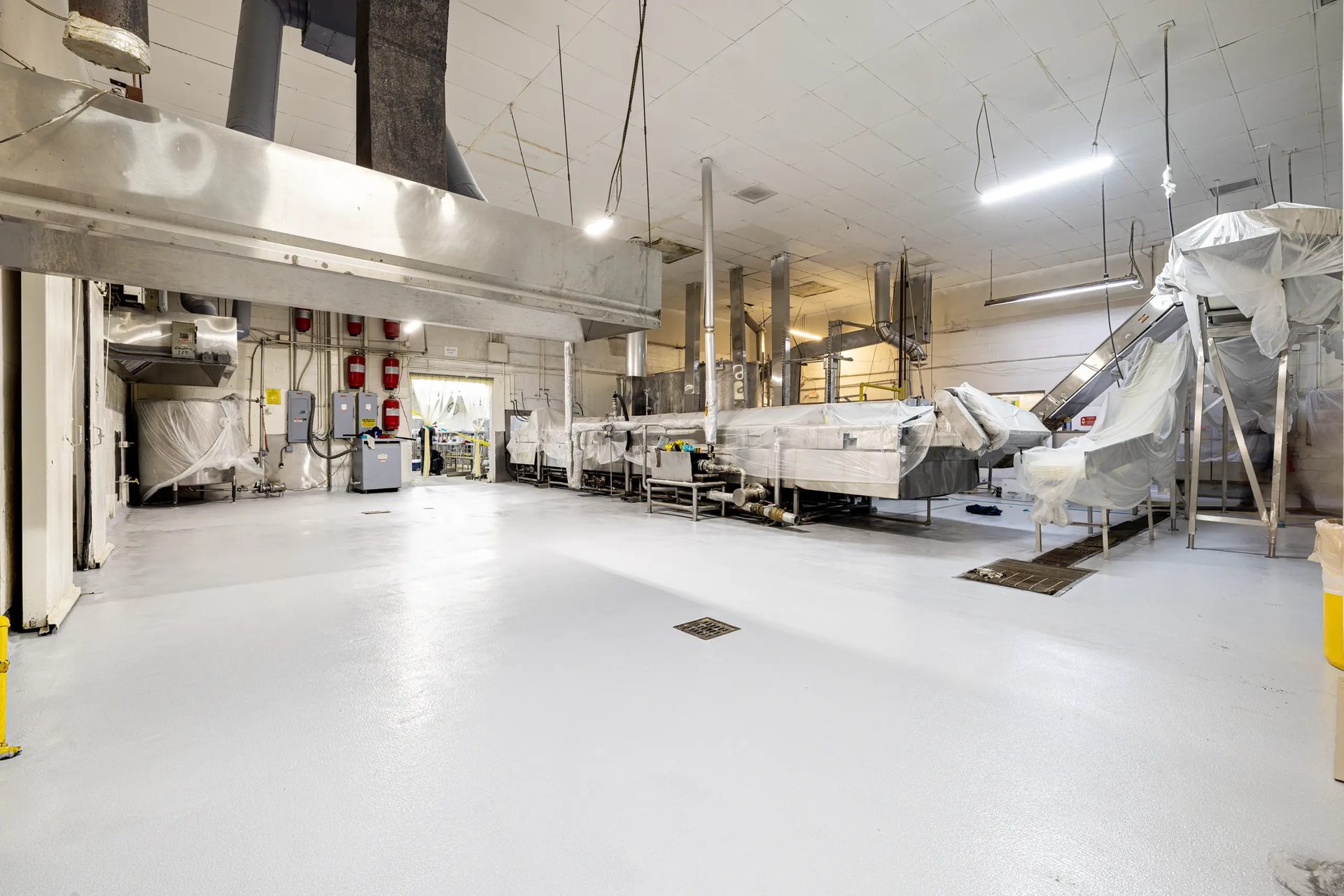
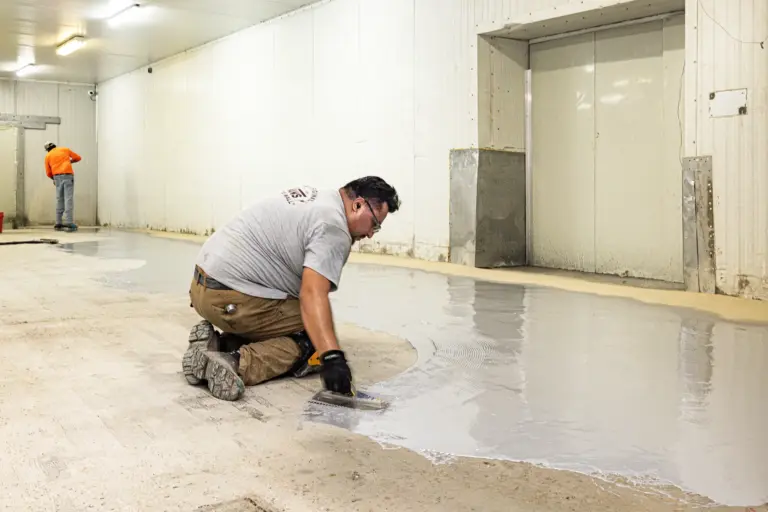
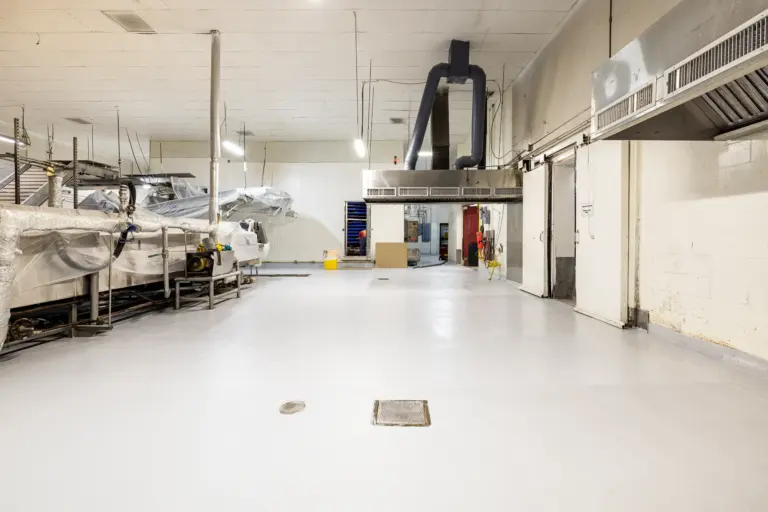
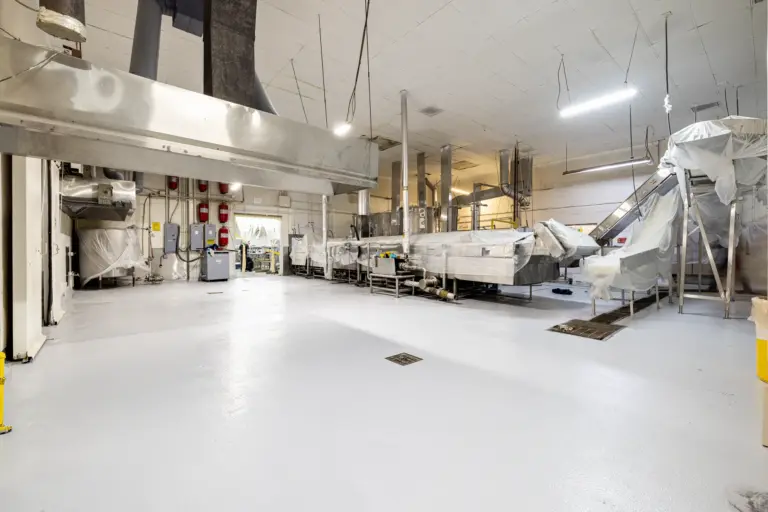
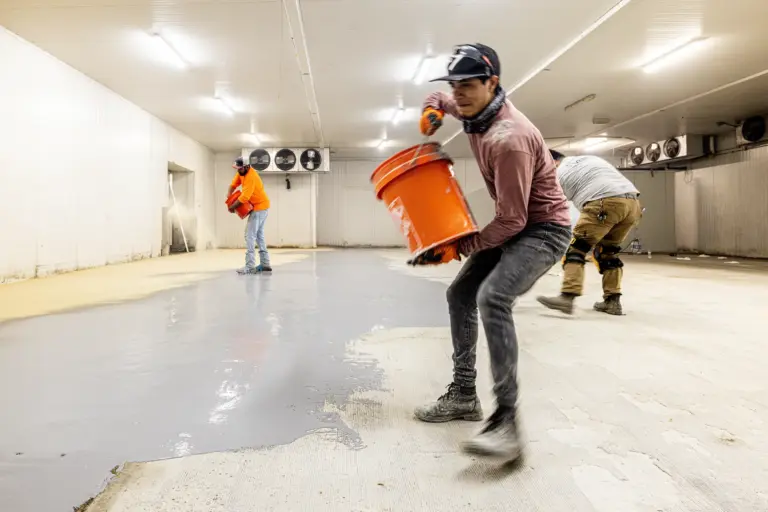
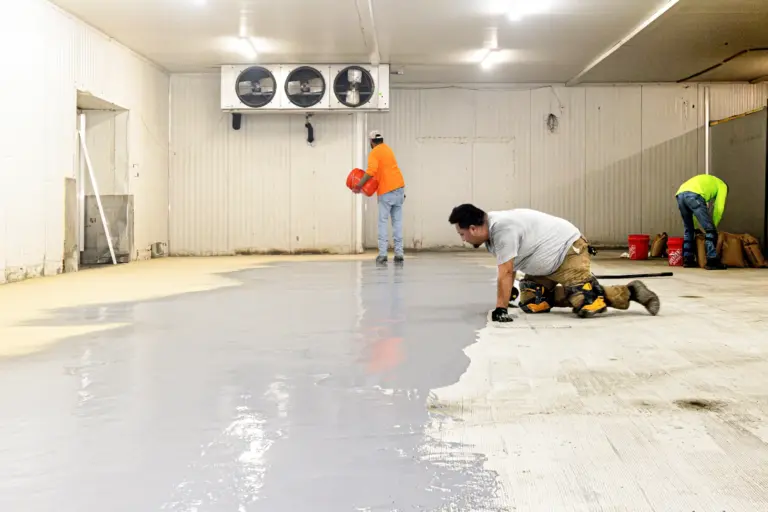
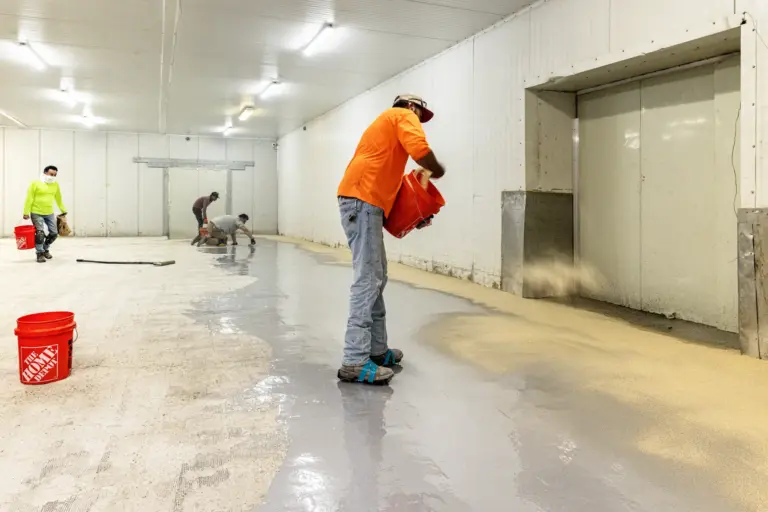
urethane Cement Installation Gallery
Request a Proposal
Submit project parameters for preliminary analysis. Commercial estimates typically returned within 24 hours.
Matrix Chemistry, Not Coating Thickness
Where Epoxy’s Acid Resistance Ends
Epoxy resists many chemicals as a film, a thin hard layer over the slab at a fraction of a urethane cement system’s thickness. Its acid resistance ends where the film does. Forklift abrasion, gouges from dropped tooling, and thermal cycling from hot washdown open paths through the coating; acid then works under the edges, dissolves the paste beneath, and lifts the film from below. An acid resistant floor coating over a busy production slab fails at the damage points first, while the open field can still look sound.
Acid Resistant Flooring at Full System Thickness
Urethane cement is the wearing surface and the chemical barrier in one material, installed at 3/16″ to 3/8″ and bonded across the full slab. Damage that would end a thin film’s protection exposes more of the same matrix instead. The pour is monolithic and seam-free, with an integral cove base where wall-floor transitions see the same chemistry. Under sustained chemical duty the system carries a 15-20+ year service life inside a -40°F to 250°F operating range, with tolerance for a 150°F+ thermal shock differential.
Hot Chemistry Is the Real Test
Temperature multiplies chemical attack. An acid a floor tolerates at ambient becomes a materially harder exposure at washdown temperature, which is why manufacturer resistance charts rate each chemical at a stated concentration and temperature. Urethane cement’s advantage compounds under heat because the matrix that carries the chemistry also absorbs the thermal swing; a rigid film must survive both at once at its bond line. Thermal cycling in its own right is covered on our thermal shock flooring page, and slip texture under wet acid conditions on our slip resistant flooring page.
Installing Acid Resistant Flooring in a Working Plant
SUBHEAD (Verification Before the Pour) 1
Every acid resistant flooring installation starts below the surface: in-situ relative humidity testing per ASTM F2170, calcium chloride testing per ASTM F1869 where the spec calls for it, and mechanical preparation to an ICRI 310.2 surface profile matched to the system build. Chemistry is not the only way these floors die; moisture drive and weak surface paste break bonds before acid gets the chance. Test logs and profile documentation land in an audit-ready closeout package, so the manufacturer warranty rests on recorded numbers rather than assumptions.
Phased Installation Around Production
Production floors get replaced zone by zone rather than plant-wide. Phased installation in occupied facilities, with night and weekend shutdown-window execution where schedules demand it, keeps lines running while finished sections cure. Self-leveling urethane cement returns to service in 24 hours; trowel-applied builds run 48-72 hours. Lead time is 1-3 weeks from contract execution, driven by material availability. For a plant replacing a failed floor under live production, sequencing usually matters more than system selection.
Who Installs It
Buyers searching for acid proof flooring installers are usually vetting the crew as much as the material. Craftsman’s answer is structural. W-2 installers, not 1099 day-labor. Trained, insured, and accountable to you. How to evaluate a urethane cement contractor, what manufacturer certification means when hiring one, and what closeout documentation to demand are covered in full on our urethane cement contractor page.
Knowledge Center
Resource links
Technical Performance
Selection & Standards
Industries Served
Sherwin-Williams Poly-Crete Systems
Sika Ucrete Systems
Cost, Comparisons & Legacy Names
Frequently Asked Questions
Acid resistance comes from the binder chemistry of the wearing surface. Urethane cement resists organic and many mineral acids because its urethane-bound cementitious matrix does not dissolve the way cement paste does, and the resistance runs through the full 3/16″ to 3/8″ system rather than sitting in a film. For any specific chemical, the manufacturer’s resistance chart for the installed system is the controlling document.
Urethane cement is the standard floor specification for sustained organic acid exposure, and lactic, acetic, and citric acid drive most of its food-industry use. These acids dissolve the calcium compounds in unprotected concrete, but the urethane-bound matrix gives them nothing to attack at the temperatures production floors actually see. How each vertical’s acid duty is specified lives on the vertical pages, from dairy processing to winery fermentation areas.
Epoxy’s failure mode under acid is breach-then-undercut: traffic damage or thermal cycling opens the thin film, acid reaches the concrete, dissolves the paste under the coating’s edges, and the film lifts from below. The floor fails at damage points first rather than wearing evenly, which is why the deterioration often looks sudden. The full comparison, including the applications where epoxy remains the right choice, is on our urethane cement vs epoxy page.
Both change the duty. Manufacturer resistance charts rate each chemical at a stated concentration and temperature, and the same acid can pass at ambient and fail hot, which matters because cleaning chemistry usually reaches the floor heated. A complete specification names the chemical, its concentration range, and the temperature at contact. Craftsman verifies the plant’s full chemical list against the installed system’s resistance chart during spec review.
$4-17/sqft installed depending on project size, system thickness, and substrate condition. Aggressive chemical duty tends to push toward the thicker end of the 3/16″ to 3/8″ range and can add a chemical-resistant topcoat, both of which move the price within that envelope. The full size-band breakdown by project square footage is on our urethane cement flooring cost page.
A urethane cement floor carries acid and caustic exposure in the same matrix, which is what CIP washdown demands when caustic wash, acid rinse, and sanitizer cross one surface daily. Film-type coatings commonly fail under alternating pH because each end of the range attacks a different weakness. Washdown-specific design, from water temperature to drainage, is specified on our CIP washdown flooring page.
Craftsman Concrete Floors installs acid resistant urethane cement flooring nationwide with in-house W-2 crews, and has since 1999. Pre-bid walkthroughs are available based on project requirements, timing, and resource availability; remote spec review is standard for multi-region rollouts. What to check before hiring any installer, from certification to closeout documentation, is covered on our urethane cement contractor page.
Blog
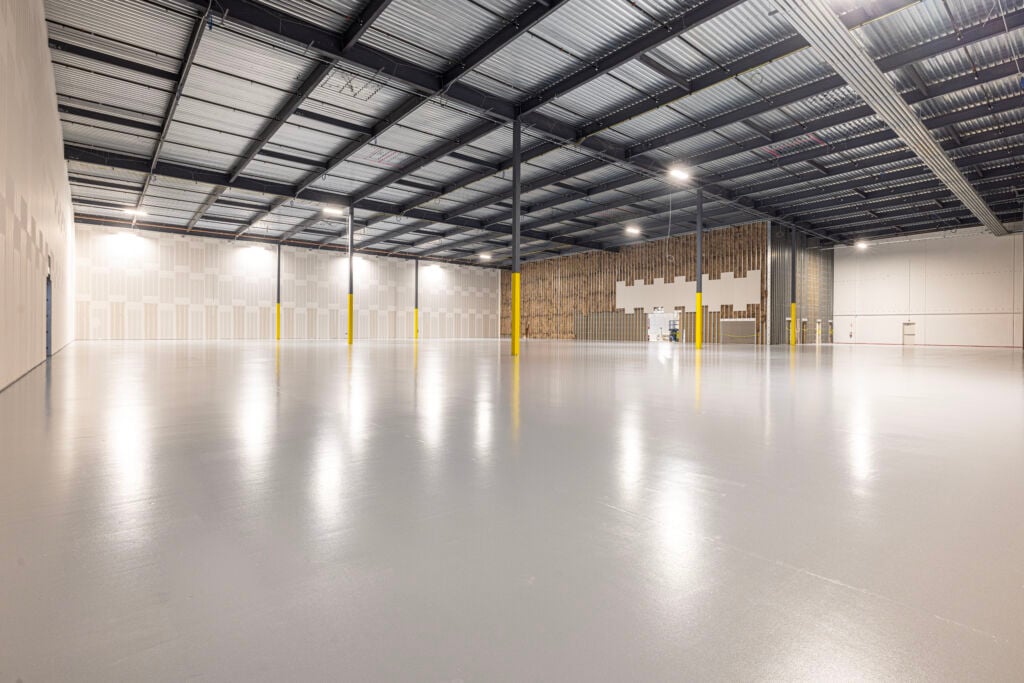
ESD Epoxy Flooring Case Study: 34,000 SF Dallas, TX
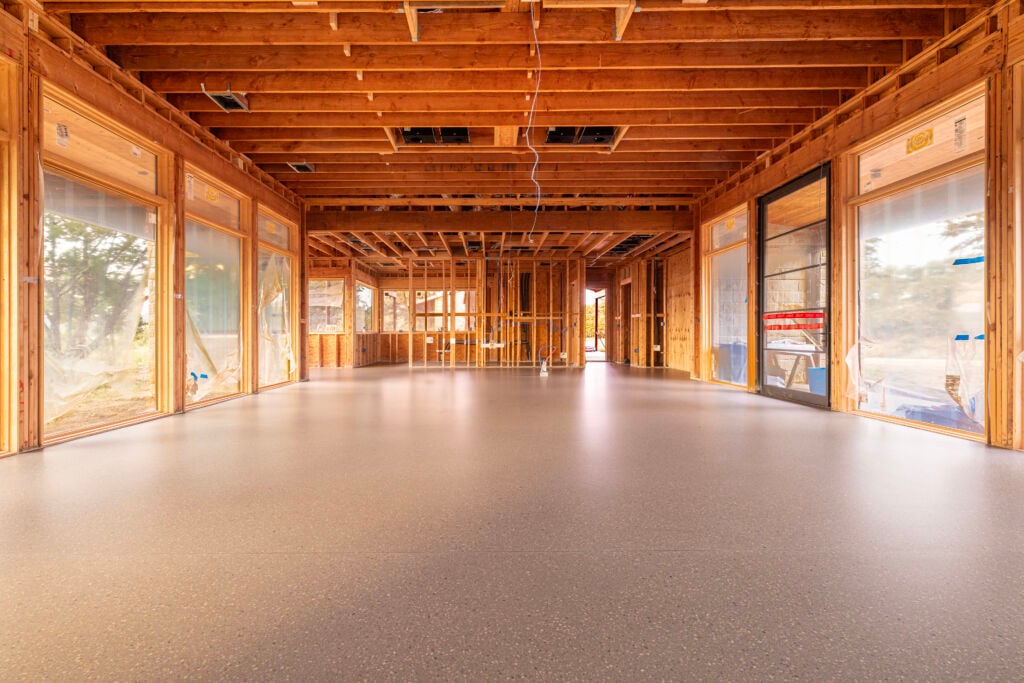
Residential Terrazzo Floors in Fort Worth, Texas