What can we help you with?
Technical flooring, delivered directly
- ESD flooring, urethane cement, terrazzo, and polished concrete
- In-house W-2 installation crews and experienced field leadership
- National service coverage with project-specific staffing plans
- Testing, documentation, and defined project closeout
- Dedicated support for corporate procurement and multi-site contracting
Phone: +1 (844) 687-1961
Polished Concrete and Sustainability
Polishing a suitable existing concrete slab can reduce material use by turning it into the finished floor, without adding another floor covering. The environmental benefit depends on the preparation, repairs and treatments required, how the floor is maintained, and the alternative finish being considered.
At Craftsman, that decision starts with the slab. We evaluate its condition and use a representative mockup to establish the appearance before proceeding with the full installation.
Reusing the slab as the finished floor
An existing slab may provide both the building’s structural floor and its finished surface. Keeping it in service can avoid the materials, installation and eventual removal associated with an additional covering.
Slab condition
The slab still needs to suit the project. Previous coverings, contamination, cracks and repairs affect preparation and appearance. Removing carpet, tile or adhesive does not guarantee a uniform surface beneath it.
Planning the work
Craftsman’s commercial polished concrete installation team plans the work around these conditions. Our polished concrete specification and builder coordination guide covers slab requirements, mockups and construction sequencing.
New concrete has its own environmental impacts
Polishing a new slab can also avoid a separate floor covering, but the concrete’s production impacts remain. Extracting and transporting materials, manufacturing cement and placing concrete are separate from the work needed to produce the polished finish.
Polishing also requires equipment energy, abrasives, repairs, densifiers and protective treatments. Wet processes require water and slurry handling. Those inputs belong in the comparison alongside the materials saved by leaving out another covering.
Comparing polished concrete with other flooring
Compare floors that provide equivalent service over the same period. Include what each option requires for installation, cleaning, refurbishment, replacement and eventual removal.
Comparison points
| Comparison point | What to check |
|---|---|
| What is included | Does the assessment cover a treatment product, the complete finish system, the slab or the whole building? Compare equivalent scopes. |
| Floor area and service | Compare the same area serving the same purpose over the same period. |
| Installation | Include preparation, repairs, installation materials, equipment and waste handling. |
| Maintenance and renewal | Account for cleaning, refurbishment and replacement. A modeled service period is not a guaranteed floor life. |
| End of life | Check whether removal, disposal and recovery are included. An omitted stage does not have zero impact. |
| Project conditions | Consider the actual slab, transport distances, location and energy assumptions. |
What an environmental product declaration tells you
An environmental product declaration, or EPD, reports environmental impacts for a defined product and scope. It is based on a life-cycle assessment under product category rules and carries third-party verification. An EPD does not, by itself, show that a product has lower impacts than its alternatives.
Check what the declaration includes. A cradle-to-gate declaration covers production through the factory gate. A broader assessment may include installation, maintenance and end of life, but the stages actually reported matter more than the label.
A declaration for polishing treatments, such as Curecrete’s EPD for polished concrete flooring products, does not describe the footprint of the entire concrete slab. Check its products, geographic scope and reported life-cycle stages before using it in a comparison.
Installation products and indoor air
Densifiers, protective treatments and other installation products should be evaluated against the project’s indoor-air requirements.
VOC content and tested indoor emissions are different information. A low-VOC or zero-VOC content label alone does not establish that a product produces no indoor emissions. Request the applicable documentation for the actual products proposed.
Craftsman selects installation products according to the specification, slab conditions, intended use and schedule. Identify required product and emissions documentation before award so it can be included in the project records and closeout package.
Polished concrete and LEED
Polished concrete may be part of a LEED project, but choosing it does not automatically earn credits or certification. The project’s registered rating system, version and pursued credits determine the requirements.
Evaluate the concrete substrate and its applied treatments separately. Confirm each product’s classification and required documentation under the version registered for the project.
Maintenance and service life
Keeping a floor in service is part of its environmental performance. Include routine cleaning and condition-based renewal when comparing polished concrete with other finishes.
Polished concrete can stain, acidic spills can etch its surface, and abrasive dirt can dull the finish. Cleaning frequency should reflect traffic and operating conditions, with spills addressed promptly.
The slab’s continued use and the finish’s need for renewal are separate questions. A usable slab may remain in place while worn areas receive mechanical re-refinement, repairs or a stain-guard refresh appropriate to the installed system.
If high-traffic areas have dulled or the floor is showing wear, contact Craftsman. We can assess the finish and recommend cleaning, stain-guard reapplication or mechanical restoration as appropriate for the installed floor. Our guide to cleaning polished concrete floors explains routine care and when additional work may be needed.
Recovery at the end of use
Retaining a usable slab avoids generating demolition waste in the first place.
If demolition eventually occurs, concrete may be recovered as aggregate or other construction material where suitable processing facilities and markets exist. The project’s waste plan should identify who will accept the material and how it will be handled. Potential recyclability is useful, but actual recovery depends on those arrangements.
Thermal mass and building energy use
Concrete absorbs heat and releases it later. That thermal mass can contribute to a building’s heating and cooling strategy. Any energy benefit depends on the building’s design and operation; a cool-feeling floor alone does not establish lower cooling costs.
Project Gallery




Frequently Asked Questions
Reusing a suitable existing slab can avoid an additional floor covering. Whether that produces a lower overall environmental impact depends on preparation, installation products, maintenance, refurbishment and the alternative finish. Compare equivalent flooring service over the same period.
No. VOC content and tested indoor emissions measure different things. Review emissions documentation for the actual densifier and protective treatment proposed for the project; a low-VOC content label alone does not establish zero emissions.
No. Credits depend on the requirements of the project’s registered LEED rating system and version. Evaluate the concrete and applied treatments separately, and obtain the documentation required for the products and credits being pursued.
Polished Concrete Knowledge Center
Resource links
Compare polished concrete with other flooring systems
Establish slab feasibility
Set the desired appearance
Evaluate use, care and environmental documentation
Plan installation and project handover
Company, Capabilities & Project Delivery
- Flooring guides and technical resources
- National installation capabilities
- Manufacturer-direct vs. independent flooring contractors
- Direct-workforce vs. subcontracted flooring contractors
- Active-facility flooring installation
- Flooring closeout and acceptance
- Contractor safety and prequalification
- Leadership and project accountability
Blog
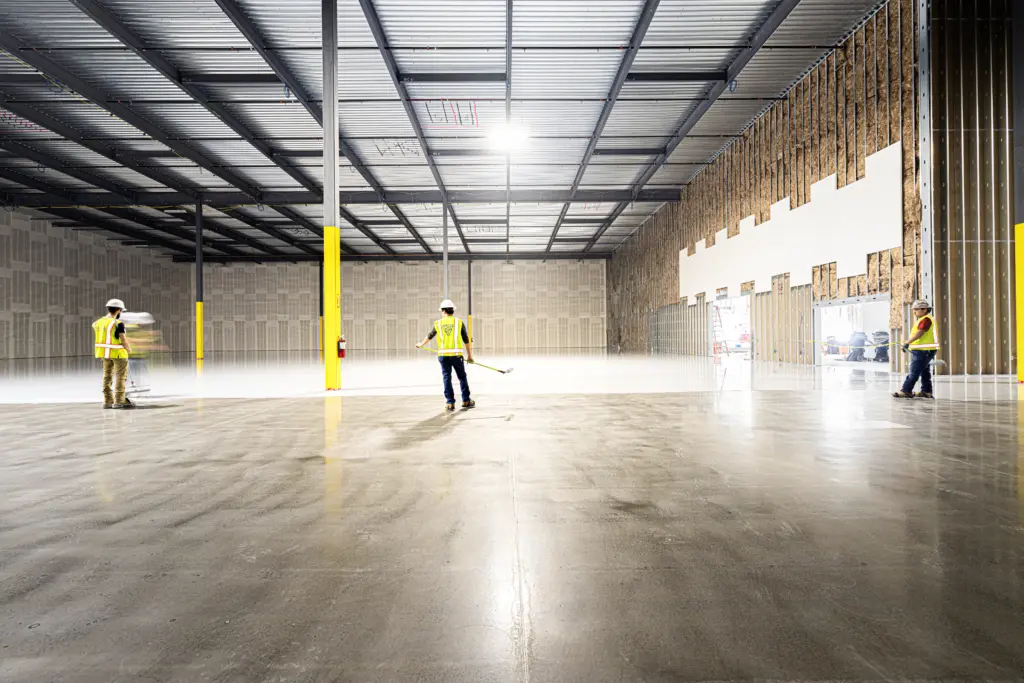
Craftsman Publishes 2026–2027 ESD Flooring Technical Guide
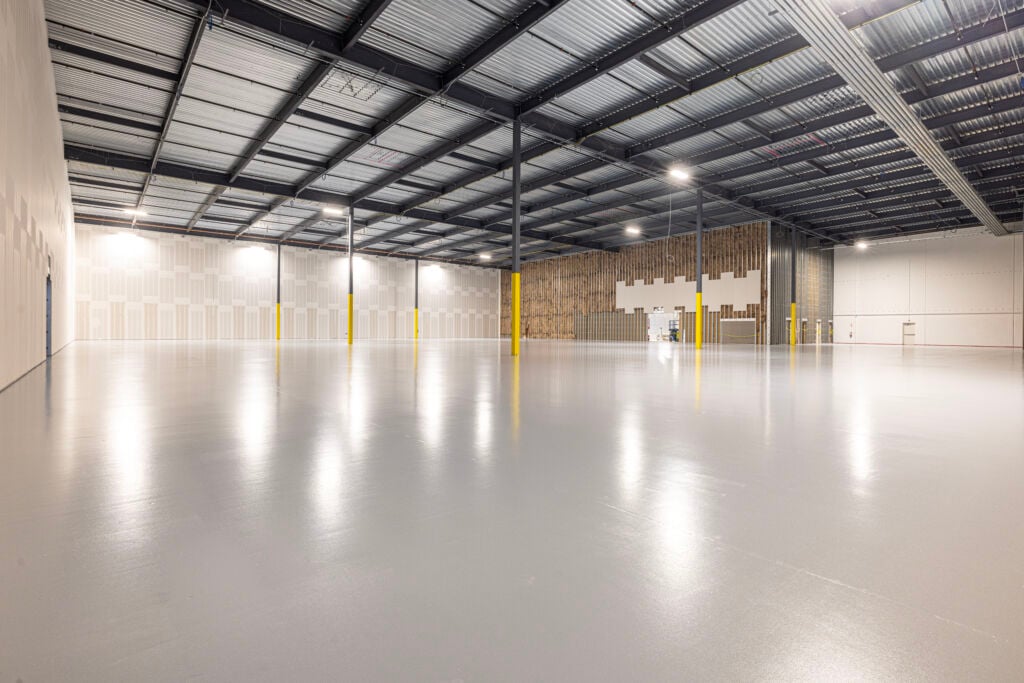
ESD Epoxy Flooring Case Study: 34,000 SF Dallas, TX